
Updated October 2026
Quick answer
Across Houston, the plumbing problems that matter most are slab leaks on copper or galvanized supply lines, cracked or root-filled sewer lines, cast iron drains failing under older slabs, and backups after heavy rain. Reach us today or tonight; the phone is answered 24/7. We locate leaks and camera-inspect sewer lines before recommending a repair.
What plumbing calls look like in Houston
No single era defines Houston's houses. A large share predates 1970, when galvanized steel supply lines and cast iron drains were standard. Another large share went up between 1970 and 1999, mostly with copper under the slab. Newer homes run PEX and plastic drains. Each generation fails differently: galvanized rusts closed from the inside, cast iron scales and cracks, and copper develops pinholes and stressed joints where the ground has moved it.
Sewer lines carry the heaviest load. In older neighborhoods the line from the house to the city connection may be clay tile or cast iron, both open to roots and to separation at the joints when the soil shifts. Camera footage shows the break before anyone digs. Where the yard, driveway or landscaping makes excavation costly, trenchless lining or bursting can replace the line through one or two access pits.
Houston sits north of Pearland, and we cover it from our service office in Rosharon, south of Pearland, with the phone answered around the clock. Slab leak calls begin with a meter test and line isolation. Sewer calls begin with clearing the line enough to run a camera, so the price you hear is based on what the pipe actually shows.
Local conditions
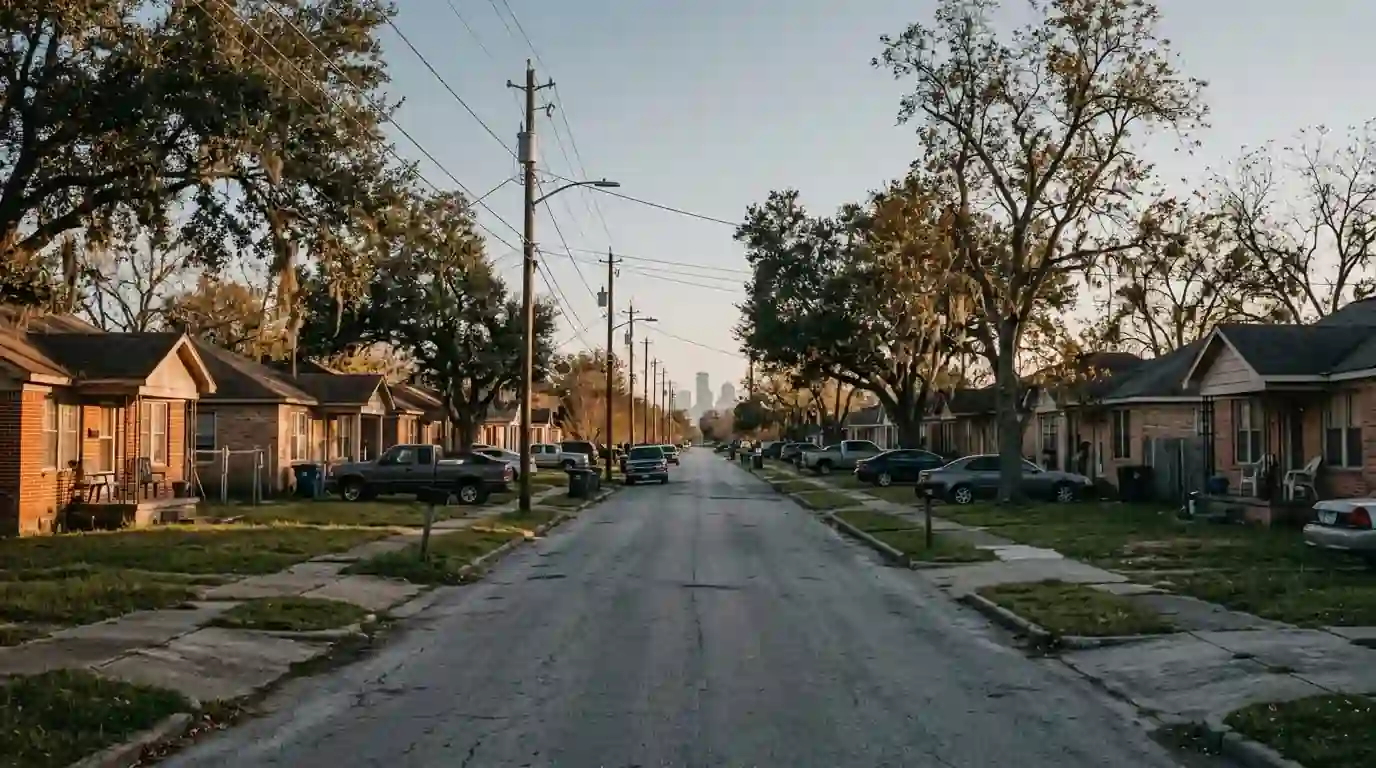
In the Houston ISD area, 35.4% of structures were built before 1970, 35.4% from 1970 to 1999 and 29.2% in 2000 or later. Under them, Gulf Coast expansive clays shrink with moisture loss and swell with moisture gain, and the City of Houston normally experiences 12 waterline breaks a day. Water also arrives from above: Harvey flooded 154,170 homes across Harris County, and a little less than half of the flooded homes were outside the 100- and 500-year floodplains. Old pipe, moving clay and heavy rain all point to slab leaks and sewer trouble.
Sources: nces.ed.gov, cigmat.cive.uh.edu, communityimpact.com, houstonpublicworks.orgPlumbing jobs that come up in Houston
- Slab Leak RepairCopper and galvanized lines under Houston slabs have moved with expansive clay for decades; we locate the leak, then price a spot repair against a reroute.
- Sewer Line RepairClay tile and cast iron sewer lines in older homes crack and separate as the soil shifts, letting in roots and causing repeat backups.
- Cast Iron Drain ReplacementHomes built before 1970 often still have cast iron drains under the slab, which scale shut or crack along the bottom after decades of use.
- Trenchless Sewer RepairWhere a driveway, mature trees or landscaping sit over the sewer line, lining or pipe bursting replaces it without trenching the whole yard.
- Whole-House RepipingGalvanized supply lines rust from the inside, cutting pressure and staining water; a repipe in PEX or copper replaces them throughout the house.
- Backwater Valve InstallationFlooding reached many homes outside mapped floodplains, and a backwater valve on the sewer line stops city sewage from pushing back into the house.
Plumbing problem in Houston right now?
Call (281) 845-9645Questions from Houston homeowners
A slab supply leak usually moves the meter with everything off and can warm the floor. A sewer leak under the slab does not move the meter but can cause odors, slow drains or damp spots. Between a meter reading and a camera inspection, we can tell the two apart.
Frequently, depending on the pipe. The method needs a line that a camera can travel and a pipe that can hold a liner, or room to pull a new pipe through the old. Collapsed sections or sharp sags may need excavation instead. We decide from the camera footage.
Houston's water report lists chloramines averaging 2.8 ppm and total hardness averaging 135.5 ppm. Hardness leaves scale in water heaters and fixtures, and chloramine can wear some rubber seals. Neither causes slab leaks, but both affect upkeep.
Stop using water in the house so you don't add to the backup, keep clear of the water, and call us. After the line is cleared and inspected, a backwater valve may keep it from happening again.