Updated October 2026
Quick answer
Shut-off valves in Pearland homes fail in two ways: older gate valves seize or stop sealing, and builder-grade fixture stops crack or weep. Replacing them means closing the main, cutting the old valve out and fitting a quarter-turn ball valve, which closes fully with one motion and is easy to see open or shut.
Every home has a main valve that shuts off the whole house and a stop at each fixture: under sinks, behind toilets, at the water heater, ice maker and washer. Most sit untouched for years, which is exactly why they stick when you finally turn them.
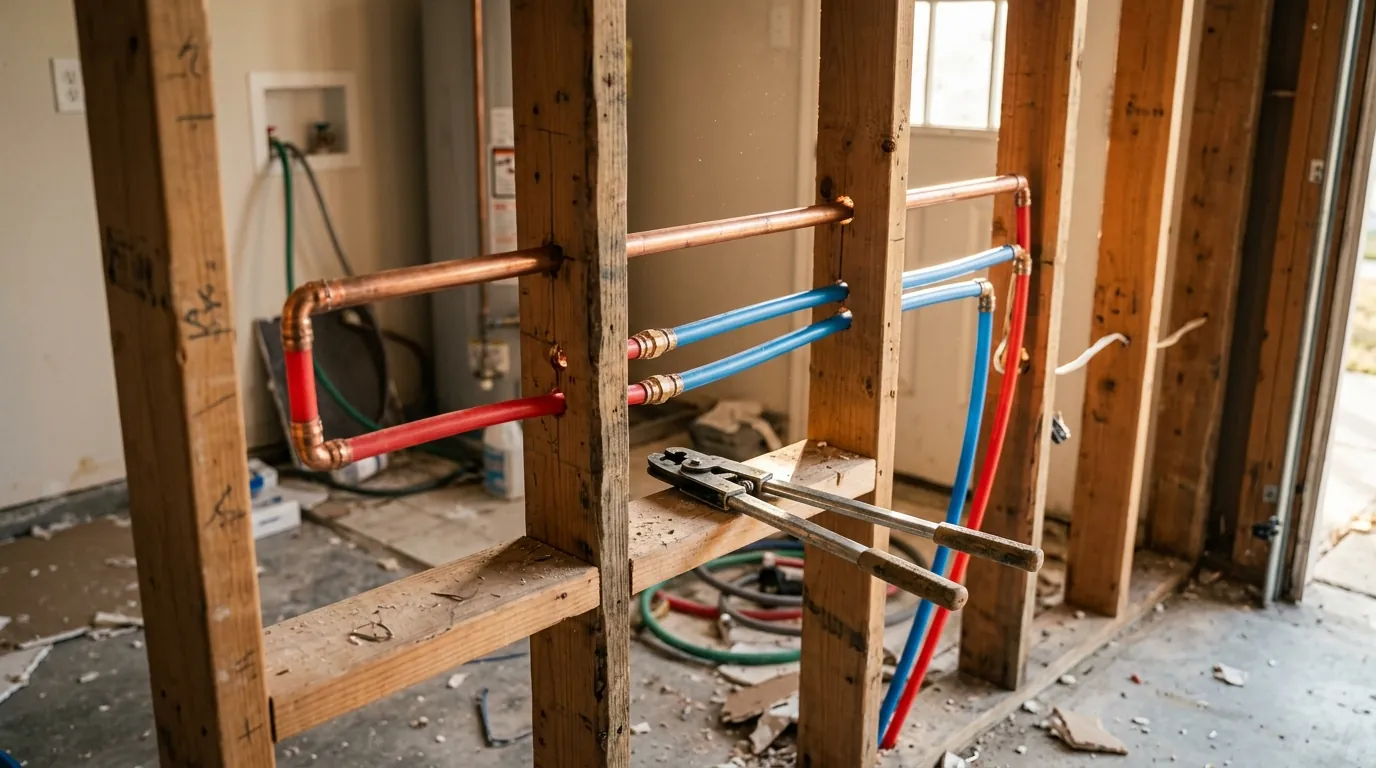
We replace bad valves with quarter-turn ball valves where the layout allows, matched to the pipe material: compression, sweat or press on copper, and the right fittings on PEX or CPVC. Swapping several at once is efficient, because the main only has to be shut and drained once.
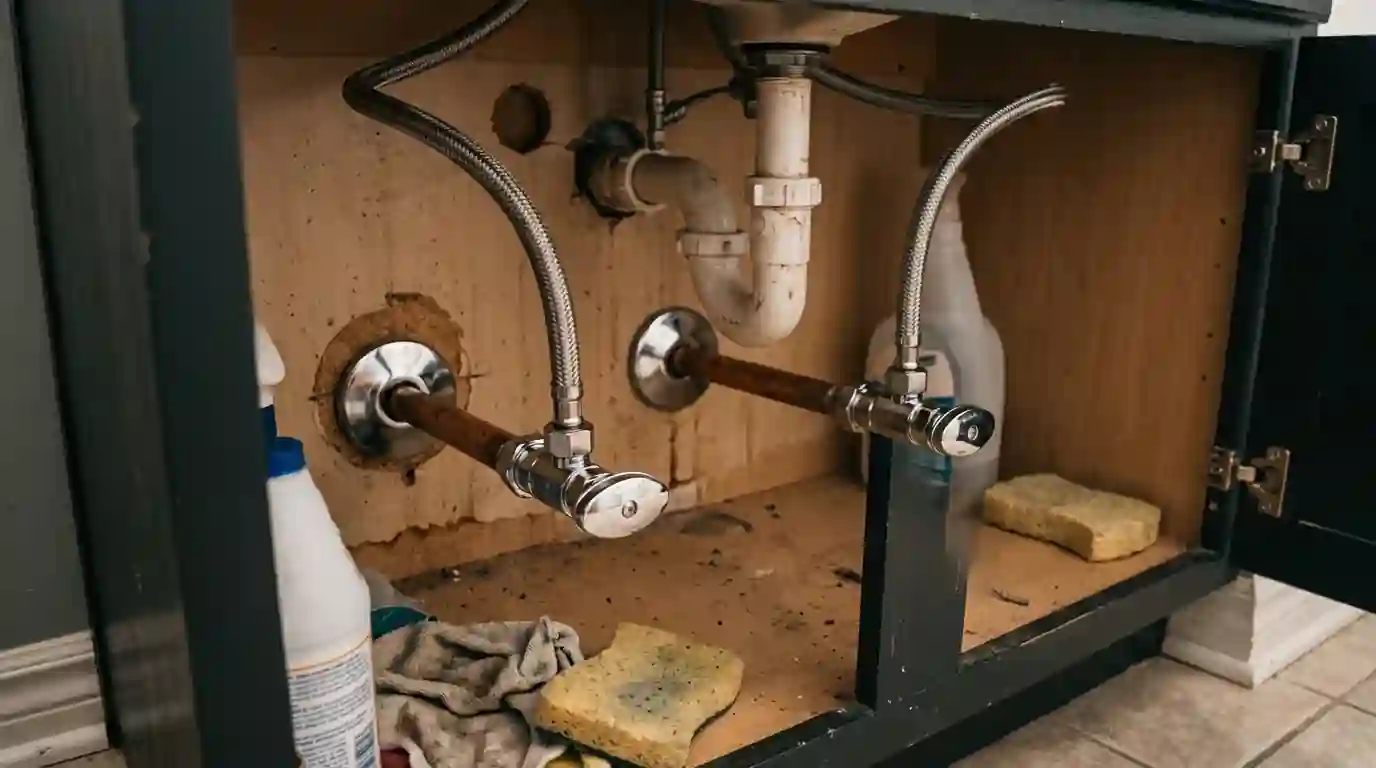
Gate valve or quarter-turn ball valve
| Question | Gate valve | Ball valve |
|---|---|---|
| How it closes | Several turns lower a wedge | A quarter turn rotates a ball |
| Open or closed at a glance | Hard to tell | Lever shows position |
| Common failure | Seized stem or leaking seat | Stiff handle after long disuse |
| Emergency use | Slow and may not seal fully | Fast, full shutoff |
| Where we use it | Rarely, on new work | Main, heater and fixture stops |
How valve work gets priced
We don't publish a range for this work because the number and type of valves vary so much. You get a price per valve after we see the pipe material and access.
- Which valve. A main valve needs the meter shut off and more prep than a stop under a sink.
- Pipe material and joint type. Soldered copper, compression, PEX and CPVC each need different fittings and tools.
- Access. A valve in an open garage is quicker than one behind a vanity back or inside a wall box.
- How many at once. Doing several valves on one shutdown saves draining and refilling the system again.
Main house shut-off
The main valve is the one that matters in an emergency, and on older homes it's often a gate valve with a round handle that takes many turns and rarely seals fully. If you've never closed yours, or it only slows the water, it's due for replacement. Because the main can't shut itself off, the utility's meter valve has to be closed while we work. We cut in a full-port ball valve with a lever handle, so the whole house goes off in a quarter turn.
Fixture stops under sinks and toilets
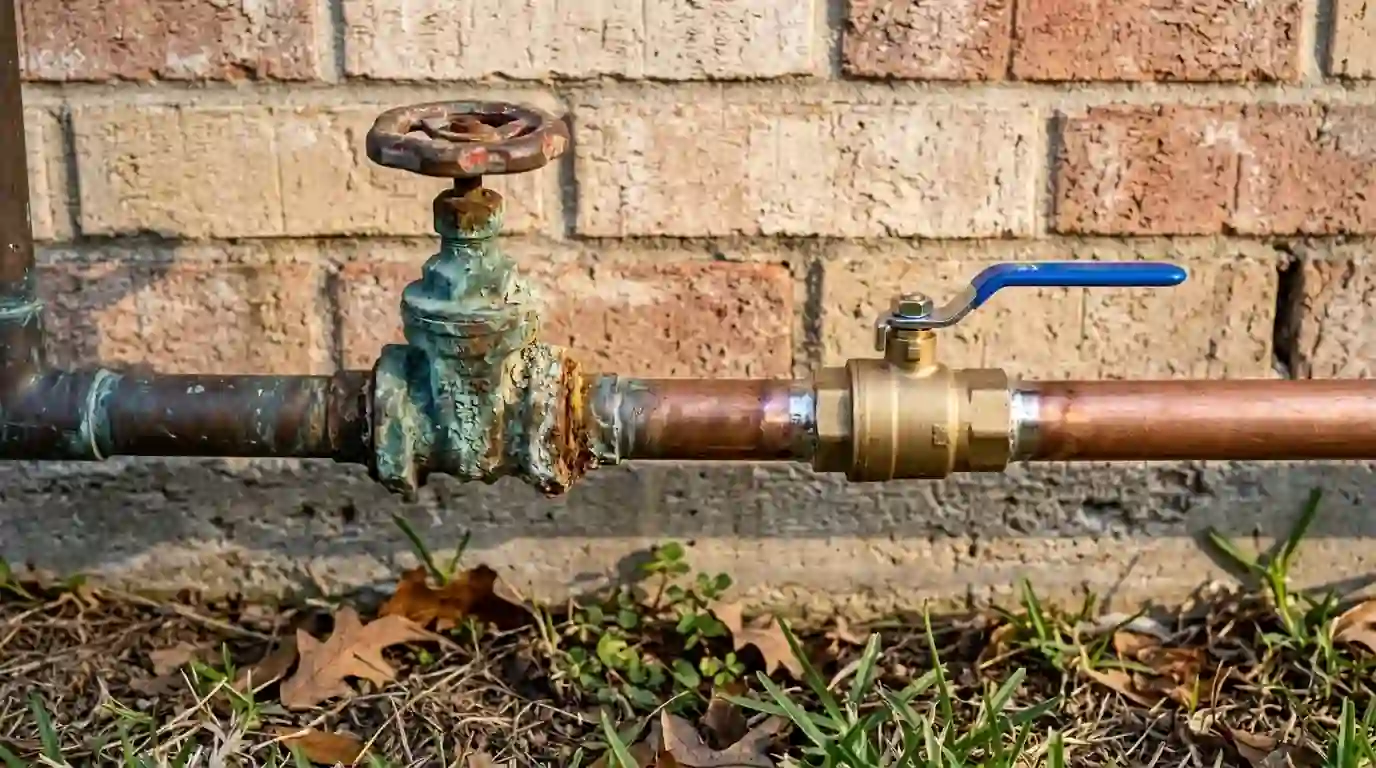
The small chrome stops under sinks and behind toilets are often the lowest-cost valves in the house. Signs one is failing: a drip at the stem, a crust of mineral around the nut, or a handle that turns but doesn't stop the flow. We replace them with quarter-turn stops sized to the pipe and fit new braided supply lines at the same time, since an old supply hose is a common leak source. Each stop is tested closed and open before we leave.
Water heater supply valves
The cold valve above the water heater is the one you reach for when the tank leaks, so it has to close completely. Many original heaters have a gate valve here that sticks or weeps at the stem. We replace it with a ball valve, and it's worth doing when the heater is swapped, since the line is already open. If your heater is due for service, ask us to check that the valve closes fully and the relief valve discharges where it should.
Seized gate valves
A gate valve closes by lowering a wedge into the flow. Over years, scale builds in the seat and the stem corrodes, so the handle won't turn, turns without closing, or snaps off. Forcing it can break the stem inside the valve body, which turns a planned swap into an emergency. If a valve resists, stop and leave it open. We replace gate valves on the main, the water heater and branch lines with ball valves, which have fewer parts to seize.
Local conditions
Shut-offs matter most when the system is under stress. During the February 2021 freeze, TCEQ required Pearland's public water system to issue a boil water notice on February 16, 2021, and residents were told to flush water heaters and lines that had not been used recently. A stuck valve makes isolating a split pipe or flushing a heater much harder. Newer houses aren't exempt: Pearland's new residential permit process requires a plumbing ground inspection before the foundation is poured, a plumbing rough-in at framing, and a gas test, but fixture stops are usually basic builder parts.
Sources: pearlandtx.gov, pearlandtx.govHow a valve swap goes, from shutoff to test
- Shut and drainWe close the next valve upstream, or the meter valve, and drain the line.
- Remove the old valveThe failed valve is cut out or unthreaded without stressing the pipe behind it.
- Fit the new valveA quarter-turn ball valve goes in with fittings matched to your pipe material.
- Refill and testWe refill slowly, purge air, then close and reopen each valve to confirm it seals.
What you can do and what needs our tools
What you can do safely
- Find and label your main and fixture valves
- Exercise valves gently once or twice a year
- Snug a packing nut on a weeping stem
- Replace a toilet or faucet supply hose
When to call a plumber
- Replacing the main, which needs the meter shut off
- Sweating or pressing valves onto copper
- Removing a seized valve without twisting the pipe
- Swapping a water heater valve on a live system
Questions about shut-off valve replacement in Pearland
In many Pearland slab homes it's in the garage near the water heater or on an outside wall where the line enters. The utility's valve at the meter box is the backup and usually needs a meter key.
Turning each valve closed and open once or twice a year keeps scale from locking it. If a valve feels stiff, stop rather than force it, and have it replaced.
On some gate and globe valves, snugging the packing nut a quarter turn stops a stem drip. If it keeps weeping, or the valve is a crimped builder stop, replacement is the lasting fix.
A valve that hasn't been closed in years may not close when you need it. Swapping an old gate valve on the main before a leak means you can stop the water in seconds.
Usually yes. Rubber supply hoses to toilets, faucets and washers age and burst without warning. Braided stainless hoses are a small cost while the stop is already being replaced.