Updated October 2026
Quick answer
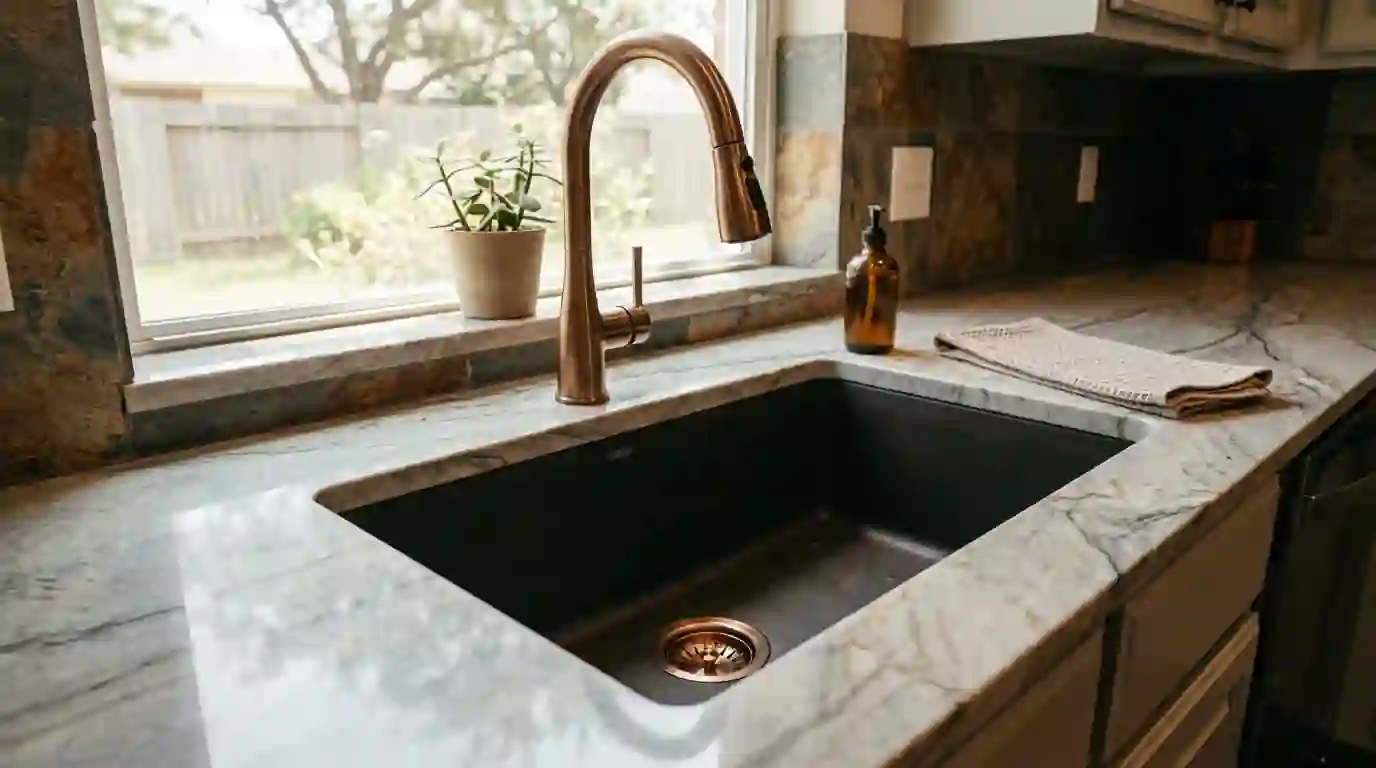
For a Pearland sink installation, the first question is how the sink mounts: drop-in sinks rest on the counter, while undermount sinks hang beneath it and must be fixed in place before the faucet and drain go on. The second is whether the existing drain stub sits at the right height for a new, deeper bowl.
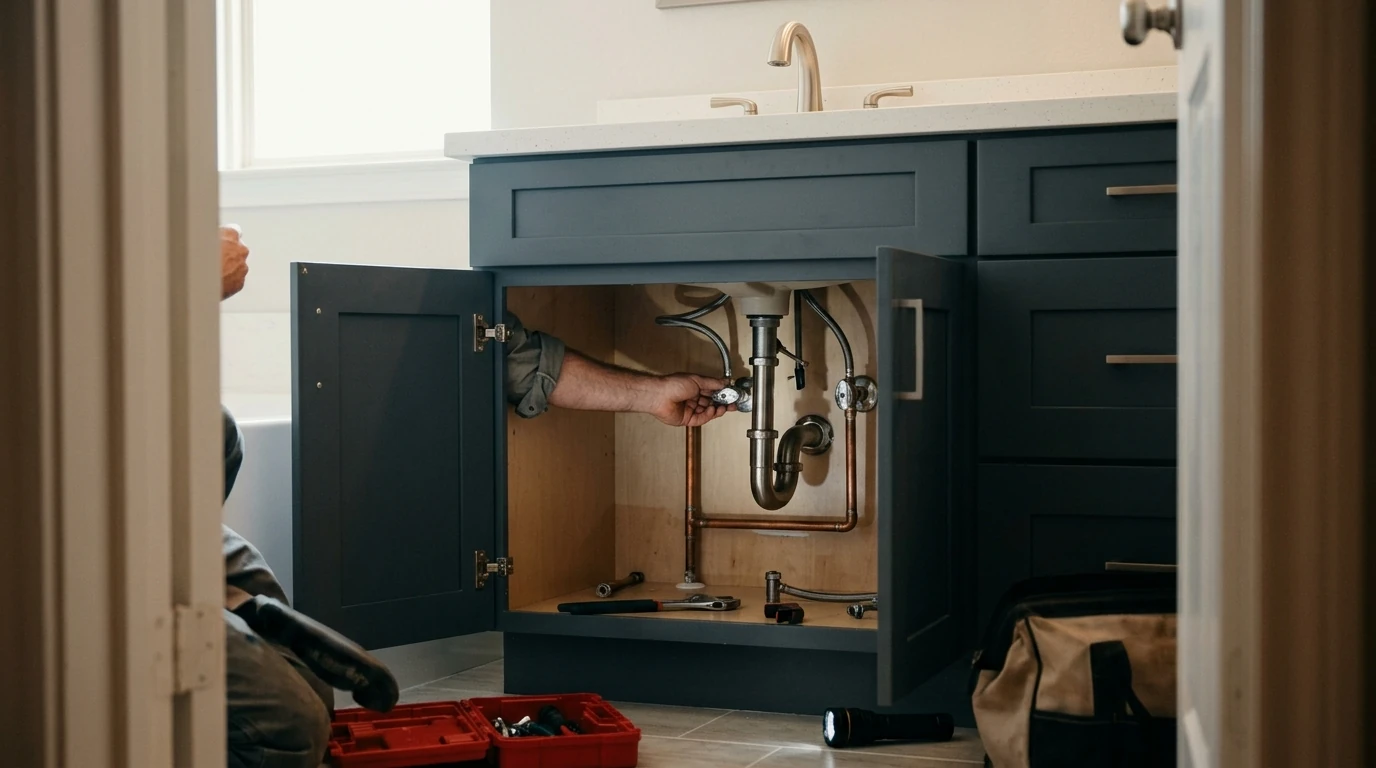
Under every sink sits the same set of parts: hot and cold shutoff valves, supply lines, a tailpiece, a P-trap and the drain arm into the wall. A new sink changes the geometry. A deeper bowl lowers the tailpiece, a second bowl adds a branch, and a disposal or dishwasher adds more connections.
We coordinate with your countertop installer when the sink is undermount, because the sink is mounted to the stone and the faucet holes are drilled to match. For drop-in sinks, we cut or check the opening, seal the rim, and connect everything below.
Undermount or drop-in: which fits your counter
| Question | Undermount | Drop-in |
|---|---|---|
| Counter material | Stone or solid surface | Any, including laminate |
| Cleaning | Wipe crumbs straight in | Rim catches debris |
| Who sets it | Countertop installer, then plumber | Plumber, with the counter in place |
| Replacing later | Harder, attached under the stone | Easier, lifts out from above |
Where sink installation costs come from
Sink work is priced after we see the cabinet, the drain and the counter, because the plumbing below matters more than the bowl.
- Mounting style. Undermount sinks need coordination with the stone installer; drop-in sinks need an opening checked or cut.
- Drain height changes. A deeper bowl may mean lowering the drain arm inside the wall.
- Added connections. A disposal, dishwasher or second bowl adds fittings under the sink.
- New location. An island or bar sink needs new supply, drain and vent lines run to it.
What a sink installation includes
- Checking drain height and shutoff valves
- Setting or connecting the sink
- Faucet and drain assembly installed
- New P-trap and supply lines
- Disposal or dishwasher connection if present
- Fill and drain test for leaks
Kitchen sinks
Kitchen sinks come in single and double bowls, stainless or composite, drop-in, undermount or apron front. A deep single bowl is easier for big pans but drops the drain lower, which can leave the trap below the wall stub so water drains slowly. We check that before the sink is set and lower the drain arm in the wall if needed. A farmhouse sink needs cabinet changes and support underneath. Plan the faucet, disposal and dishwasher connection with the sink, not after.
Undermount bathroom sinks
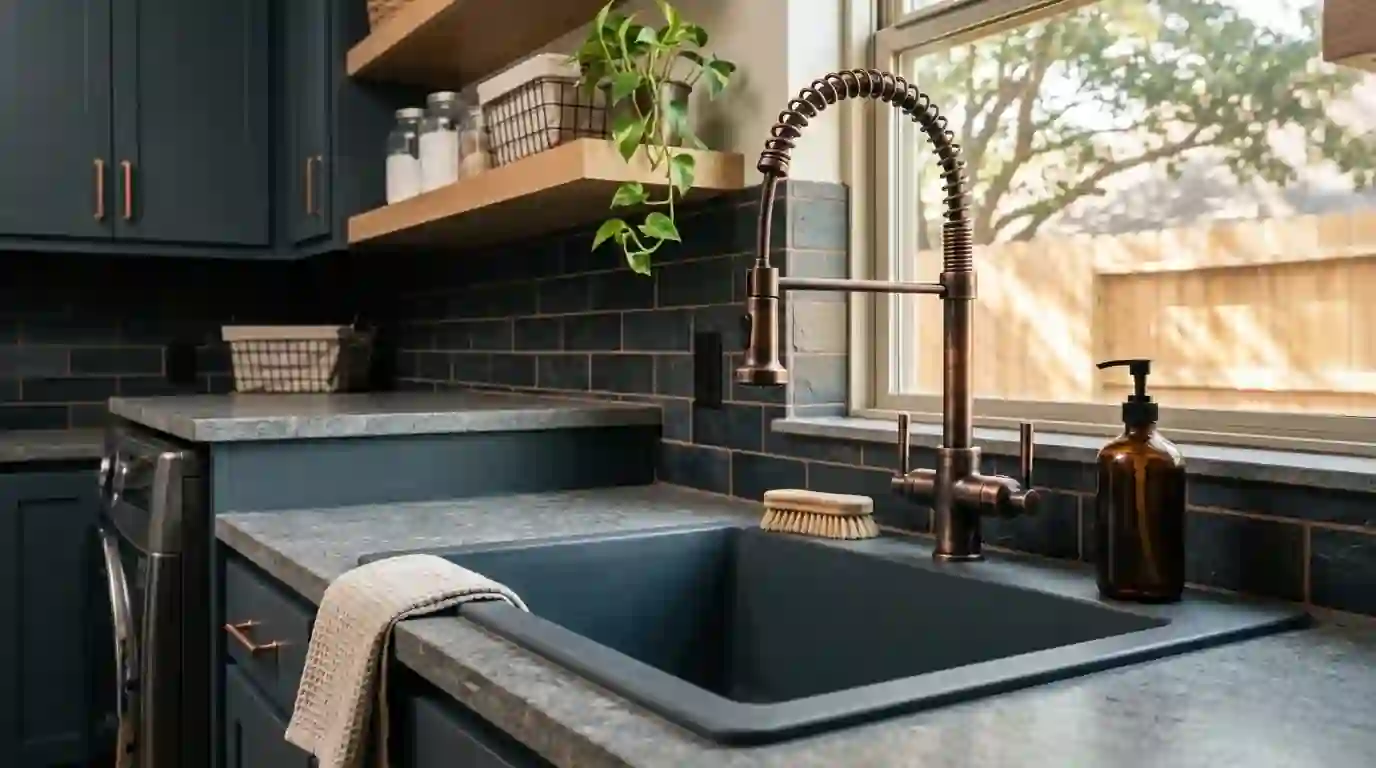
Undermount bowls give a clean counter edge that wipes straight into the basin. The bowl is glued and clipped to the underside of the stone, so it is usually set by the countertop fabricator or with them on site. Once the top is in, we install the faucet, pop-up drain and supply lines, and adjust the trap to meet the wall drain. Reusing an old vanity under a new top? Check the overflow and drain position against the cabinet frame first.
Utility and laundry sinks
A laundry sink is useful for soaking, rinsing paint brushes or draining a washing machine. Freestanding tubs on legs are the simplest to add; cabinet-mounted units look neater in a finished laundry room. Most draw supply from the same hot and cold lines as the washer, and drain into the washer standpipe or a nearby branch. The trap and vent are sized so the washer discharge does not back up into the sink. A garage install also needs freeze protection.
Bar and prep sinks
A small second sink in an island, butler's pantry or outdoor kitchen means running new supply and drain lines to a spot that may not have either. Slab floors make the drain the hard part: it needs a cut through the concrete, plus a vent path. Some bar sinks use a mechanical vent valve under the cabinet when a full vent is not practical, where local code allows. Decide on the faucet early, since prep sinks often use a taller single-hole faucet.
Local conditions
HAR counts 993 single-family properties in Southern Trails with a median build year of 2012, and Shadow Creek Ranch is an approximately 3,500-acre community whose first model homes broke ground in October 2001. Many kitchens and baths in those Pearland neighborhoods still have the sinks and tops the builder chose. When a top comes out for new stone, the sink often changes to undermount, and that is the time to replace older shutoff valves and plastic traps too, while everything under the counter is open.
Sources: har.com, shadowcreekranch.netHow a new sink goes in
- Check the plumbingWe measure the drain stub height and check the valves before the sink and top are set.
- Set the sinkWe mount a drop-in sink or connect to an undermount once the countertop crew finishes.
- Connect belowWe fit the faucet, drain, trap, supplies and any disposal or dishwasher connection.
- Fill and drain testWe fill the bowl, release it and check every joint under the sink for drips.
Questions about sink installation in Pearland
The countertop fabricator usually mounts the sink to the stone, since it has to be glued and clipped before the top is set. We connect the faucet, drain and supplies afterward.
The drain may now sit below the wall stub, so the trap cannot slope properly. Lowering the drain arm inside the wall usually fixes it. Check this before choosing a deep bowl.
Sometimes. The new sink or counter must have the same hole pattern, and an older faucet is often worth replacing while everything is open. See our faucet page.
If the valves are older, stiff or show any corrosion, replacing them while the sink is out costs little extra. Stiff valves often fail to close fully when you finally need them.
Yes, but it means cutting the slab for the drain and planning a vent, which takes more work than a wall sink. After seeing the layout, we explain the routing before you commit.