Updated October 2026
Quick answer
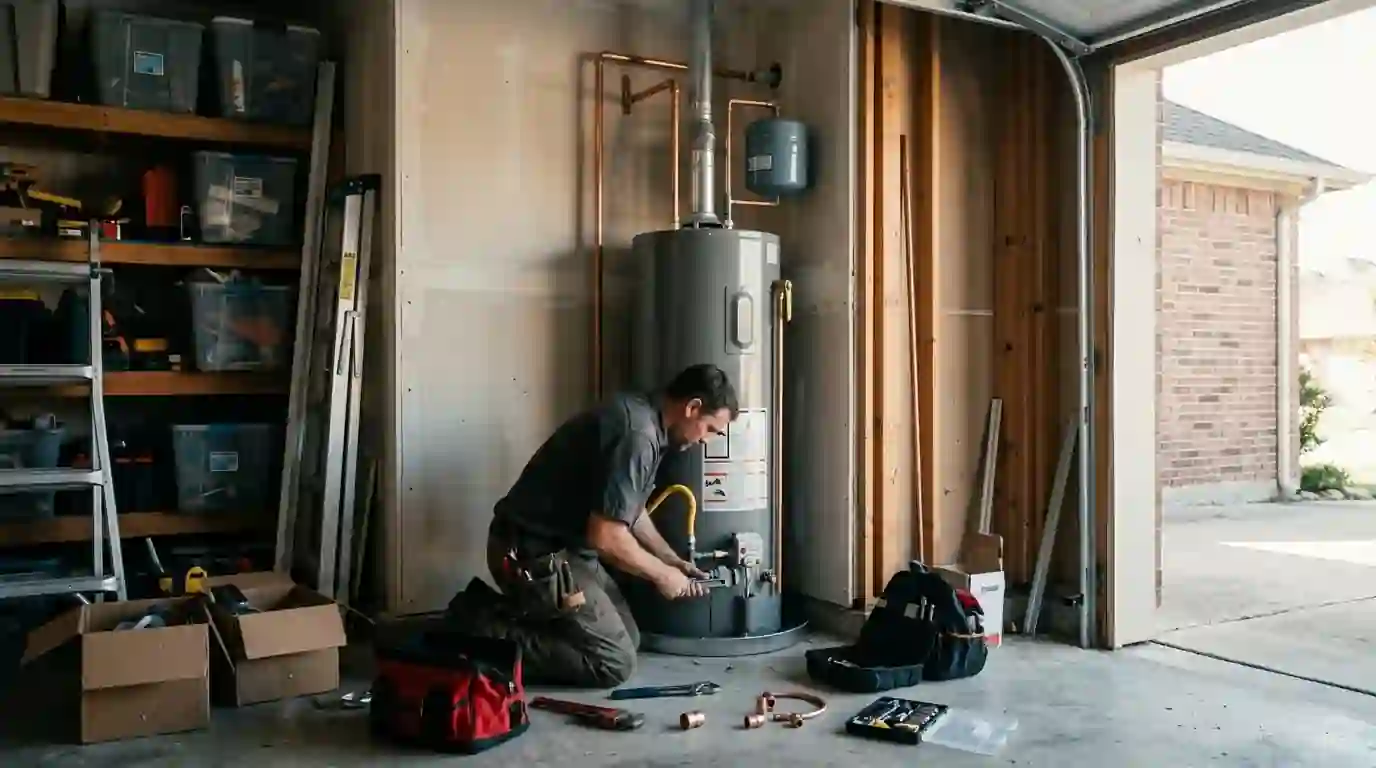
Most Pearland water heater repairs come down to one failed part: a thermocouple or flame sensor on gas units, an element or thermostat on electric units, or a valve that drips. A tank that leaks from its body cannot be repaired, and at that point the honest answer is a replacement.
Signs your water heater needs a repair visit
- Hot water runs out much sooner than it used to
- Popping or rumbling while the heater runs
- Rusty or smelly hot water
- A pilot that will not stay lit
- Water in the pan or a drip from the relief valve line
How we diagnose and fix your heater
- Hear the symptomYou tell us what changed: no heat, short heat, a smell, a noise or water on the floor.
- Test the partsWe meter elements and thermostats, or watch the gas burn sequence, to find the failed part.
- Repair or recommendYou get the repair price, plus our honest view if the tank is near the end of its life.
- Run a full cycleThe heater fires or heats through a complete cycle, and we check the relief valve and connections.
Gas and electric heaters fail in different ways. Gas units depend on a pilot or igniter, a sensor that proves the flame and a control valve. Electric units heat with two elements, each run by its own thermostat, so one failure can leave you with half a tank of hot water.
We start with the symptom you describe, then test the specific part with a meter or by watching the burn sequence. Age and tank condition matter too. Putting a new control on a leaking tank only delays the bill, so we tell you when repair stops making sense.
No hot water
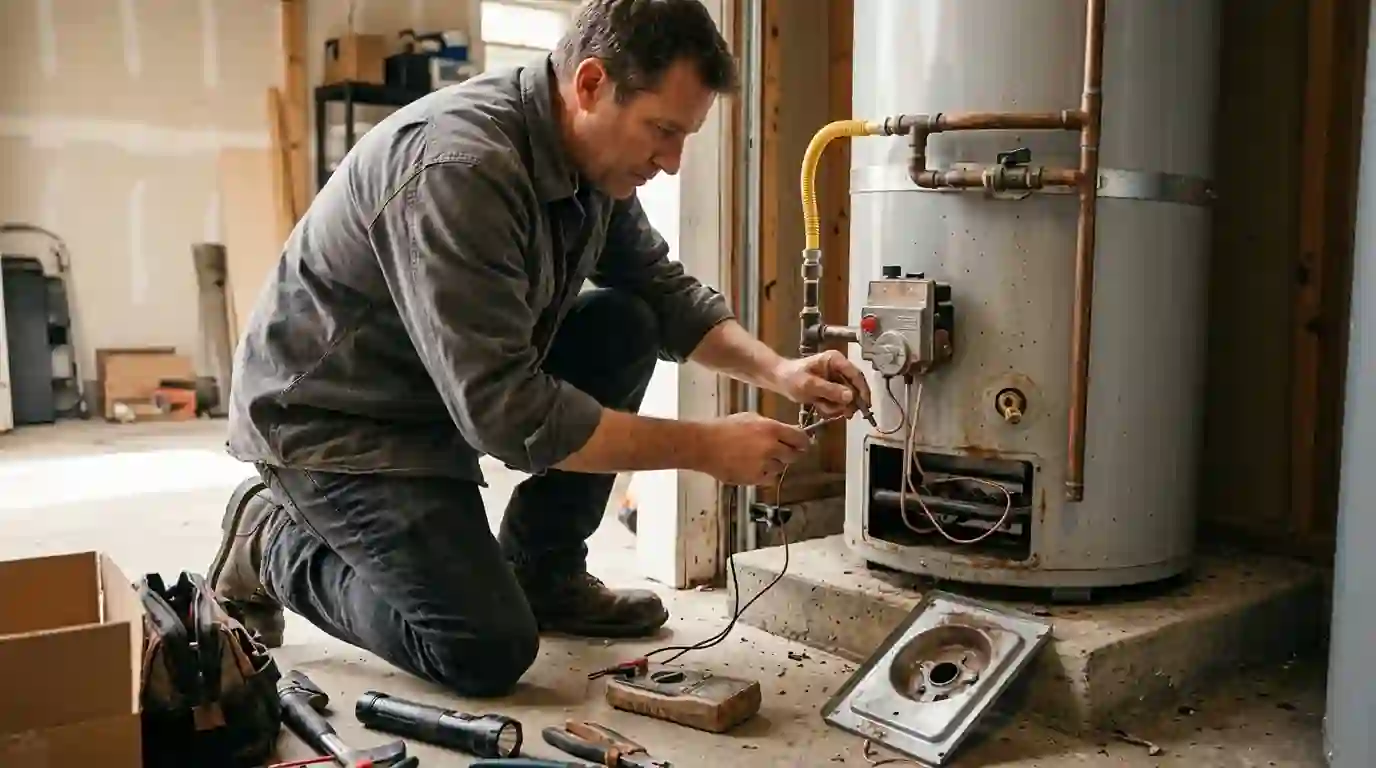
First check the obvious: is the gas on and the pilot lit, or has the breaker for an electric heater tripped? If it trips again after one reset, leave it off. On gas units, a failed thermocouple, flame sensor or control valve is the usual cause. On electric units, the upper element or its thermostat is the first suspect, since the lower element cannot heat until the upper one is satisfied. Each part gets tested, and only the failed one is replaced.
Pilot or burner will not stay lit
A pilot that lights and then goes out when you release the knob almost always points to the thermocouple or thermopile, which proves the flame to the gas valve. On newer sealed-combustion units, a dirty intake screen or a tripped flammable vapor sensor can also shut the burner down. A lazy yellow flame or soot around the burner door means poor combustion, which is a safety problem. Shut the gas valve and call. We clean the burner and screen, replace the failed sensor and check the draft.
Water still running? Call before it spreads.
Call (281) 845-9645Electric element and thermostat failure
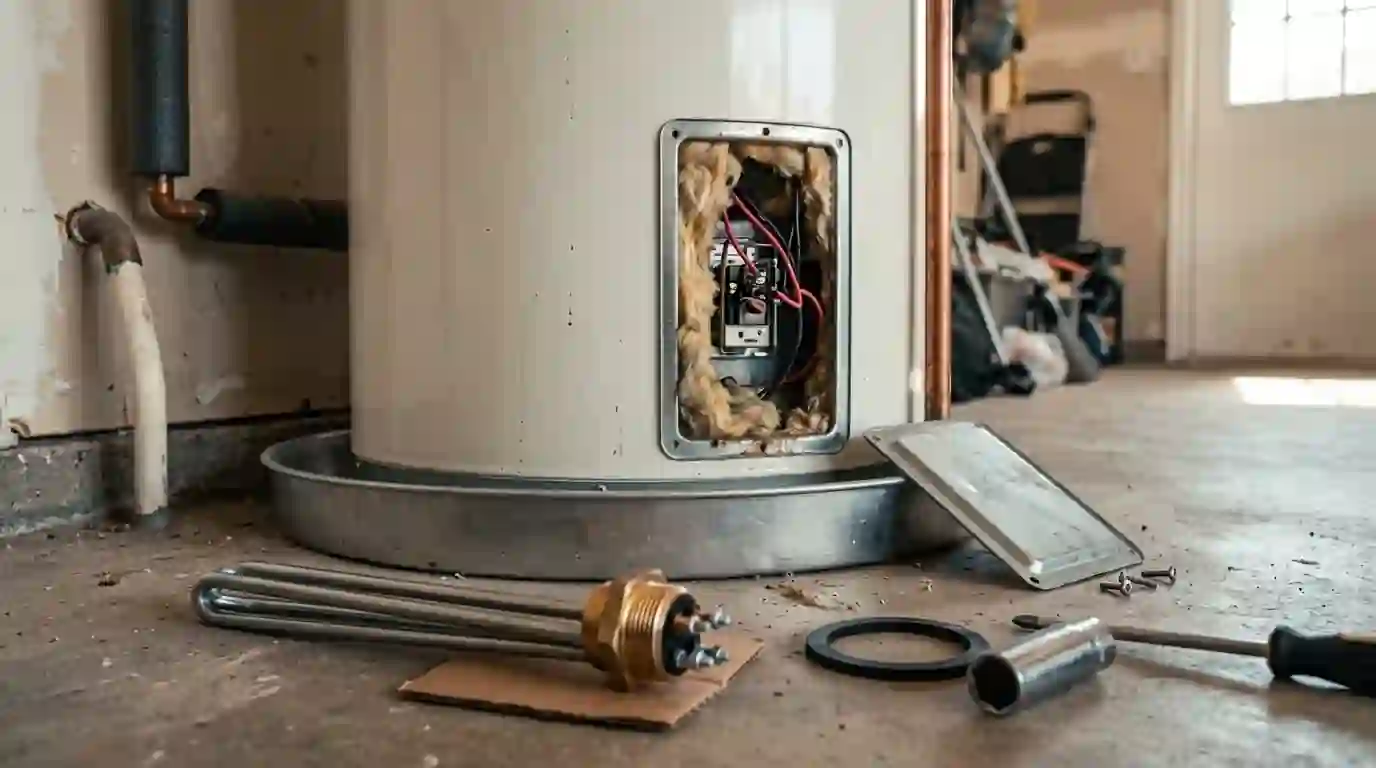
An electric heater with a bad element often gives a short burst of hot water before it turns cold, or takes far longer to recover. A tripped high-limit reset button on the upper thermostat is another clue. We test each element for continuity and each thermostat for proper switching with the power off. Replacing an element means draining the tank below it, a good time to flush out sediment. Elements caked with scale tend to fail sooner.
Leaking relief valve or drain valve
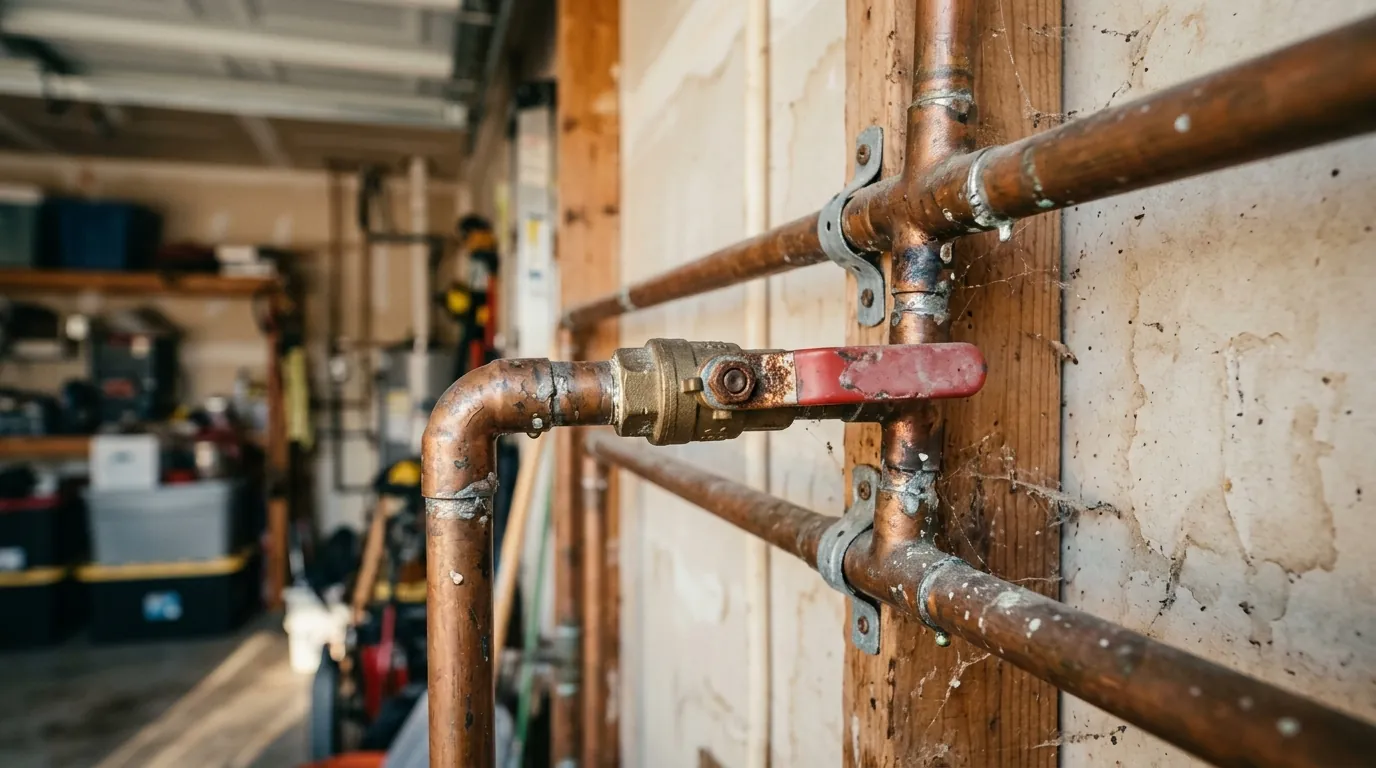
Water at the base of the tank is not always a dead heater. The temperature and pressure relief valve can drip because it is worn, because the thermostat is set too high, or because pressure builds in a closed system with no expansion tank. The plastic drain valve near the bottom often weeps at its stem. Both parts are replaceable. Water seeping from the tank body itself or from under the jacket insulation means the steel has rusted through, and the heater needs replacing.
Local conditions
What comes out of the tap in Pearland shapes how water heaters wear. The city's water quality report lists chloramines as the primary disinfectant (average 3.143 ppm) and total dissolved solids averaging 321 ppm (range 321-522 ppm) for the city system, versus 271 ppm in the City of Houston supply. Minerals settle as sediment on the tank floor and coat electric elements, and chloramines are hard on some rubber seats and washers. Friendswood and Houston homes see the same wear at a different pace.
Sources: pearlandtx.govWhy some water heater repairs cost more than others
A Houston planning range from a national cost guide is shown below. You get your own price, based on the part and its access, before the repair.
Published planning ranges
- $237 to $1,010 in Houston (typical $624), per Angi (Aug 4, 2026)
- The failed part. A thermocouple or element costs less than a gas control valve or an electronic control board.
- Gas or electric. Gas repairs often add combustion and draft checks; electric repairs often mean draining the tank.
- Heater location. An attic heater takes more time to work on than one in a garage or utility closet.
- Extra parts it needs. A missing expansion tank or a corroded drain pan may be worth adding while we are there.
Repair or replace: where the line falls
| Question | Repair makes sense | Replacement makes sense |
|---|---|---|
| Tank condition | Dry, with no rust at the base | Leaking from the tank body |
| Failed part | Thermocouple, element, thermostat or valve | Several parts failing at once |
| Age | Well within its expected life | At or past its expected life |
| Hot water supply | Enough for the household | Too small for how you use it now |
Questions about water heater repair in Pearland
If the tank is sound and the failed part is a thermocouple, element, thermostat or valve, repair usually makes sense. If the tank body leaks, or an old unit needs major parts, replacement is the better spend.
That is usually sediment on the tank floor. Water trapped under the mineral layer flashes to steam and pops as the burner heats it. A flush can help if the layer is not too thick, and it also improves recovery.
Bacteria in the tank can react with the anode rod and make a sulfur smell. Flushing and disinfecting the tank, or a different anode alloy, often fixes it. A smell at the burner instead means treat it as a gas leak.
The drip is a warning, not the danger. The valve may be worn, or pressure or temperature may be too high. Never cap the discharge line. We check the setting and system pressure, then replace the valve.
Yes. We answer 24/7, including nights, weekends and holidays. While you wait on a leaking tank, close the cold supply valve on top and turn off the gas or the breaker.