Updated October 2026
Quick answer
Softener size in Pearland comes from your own hardness reading, your household's daily water use and how often you want it to regenerate. We test at the tap before recommending a unit, because an oversized tank wastes resin it never uses and an undersized one regenerates so often it burns through salt.
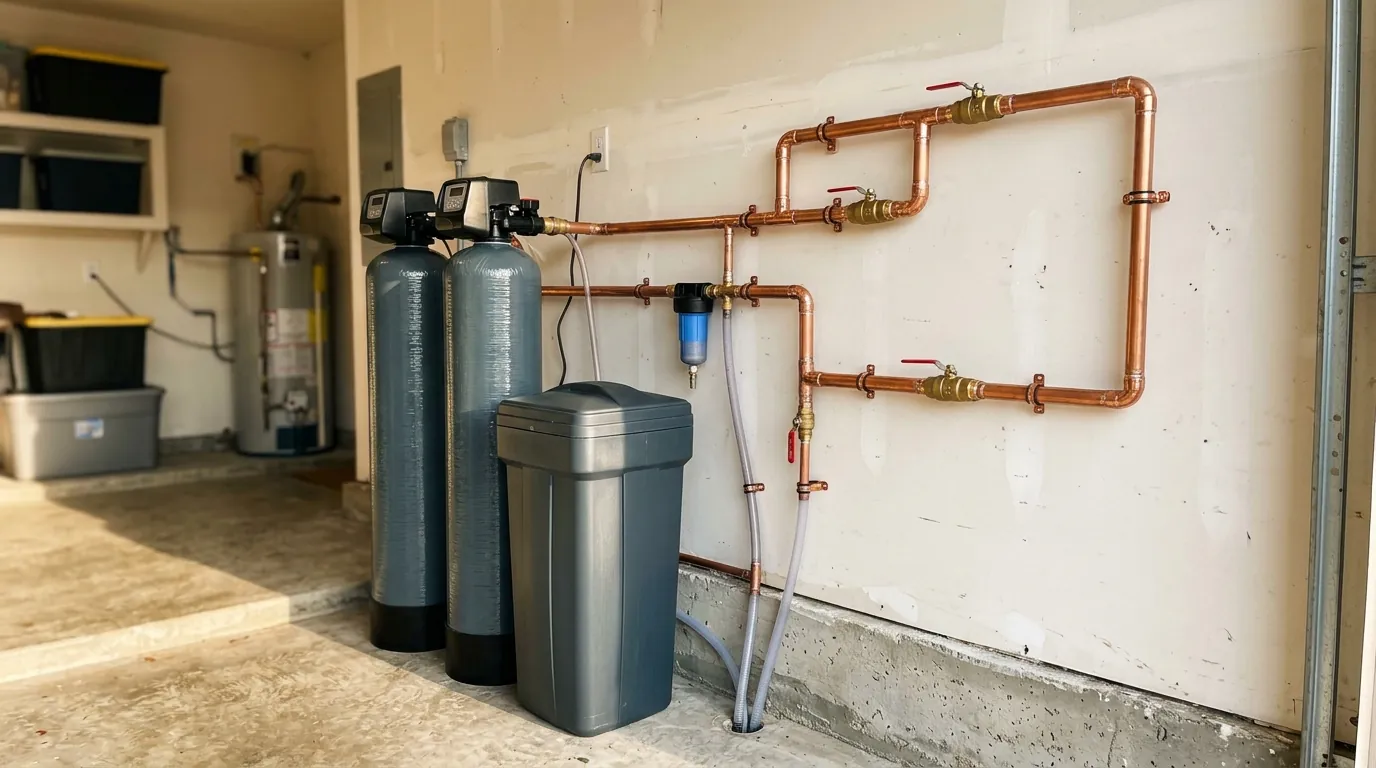
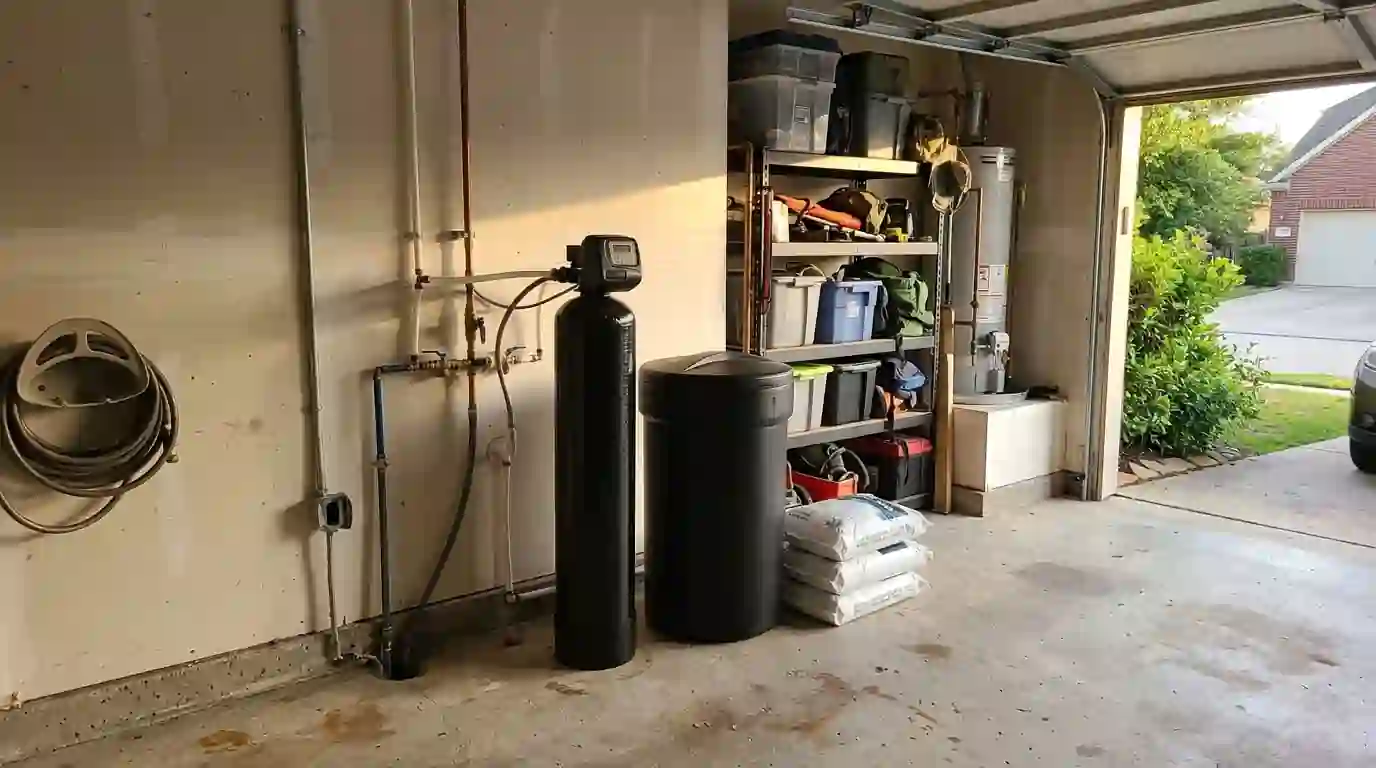
A softener swaps the calcium and magnesium in your water for sodium or potassium as it passes through a tank of resin beads. When the beads fill up, the control valve flushes them with brine from the salt tank and sends that rinse down a drain. The payoff is less scale in pipes, fixtures and the water heater.
The install is straightforward when the house has a softener loop. Most of our time goes into getting the size, the drain line and the bypass right, so the unit runs for years needing little beyond salt.
Salt softener or no-salt conditioner
| Question | Salt-based softener | No-salt conditioner |
|---|---|---|
| What it does | Removes calcium and magnesium | Changes how they form scale |
| Spots on glass | Greatly reduced | Still show up |
| Salt and drain | Needs both | Needs neither |
| Upkeep | Salt refills and resin care | Media changes every few years |
What changes the price of a softener install
A national cost guide's range for a softener with installation is shown below. These four factors decide where your system lands.
Published planning ranges
- $1,200 to $3,800 with installation, per HomeGuide (July 25, 2025)
- Capacity and valve. A larger tank or a metered valve that regenerates by actual use costs more than a basic timer model.
- Loop or no loop. Connecting to an existing loop is quicker than cutting into the main line and running new pipe.
- Drain and power. A distant drain or no outlet near the spot adds line and work.
- Added stages. A carbon or sediment filter ahead of the softener adds equipment and a little space on the wall.
What a softener install includes
- A hardness and iron test at your tap
- Sizing based on your household
- Connection to the loop or main with a bypass valve
- A drain line with an air gap
- Programming the control valve
- A first regeneration and a retest
Softener sizing
Sizing starts with three numbers: hardness in grains per gallon, the number of people in the house and roughly how many gallons each uses a day. Multiply them and you get the grains the softener removes daily; the tank should handle several days of that between regenerations. Iron in the water counts against capacity too, so we test for it. You will see a softener's capacity listed in grains, often 32,000 or 48,000. Bigger is not better if the resin sits half used and goes stale.
Loop and bypass installs
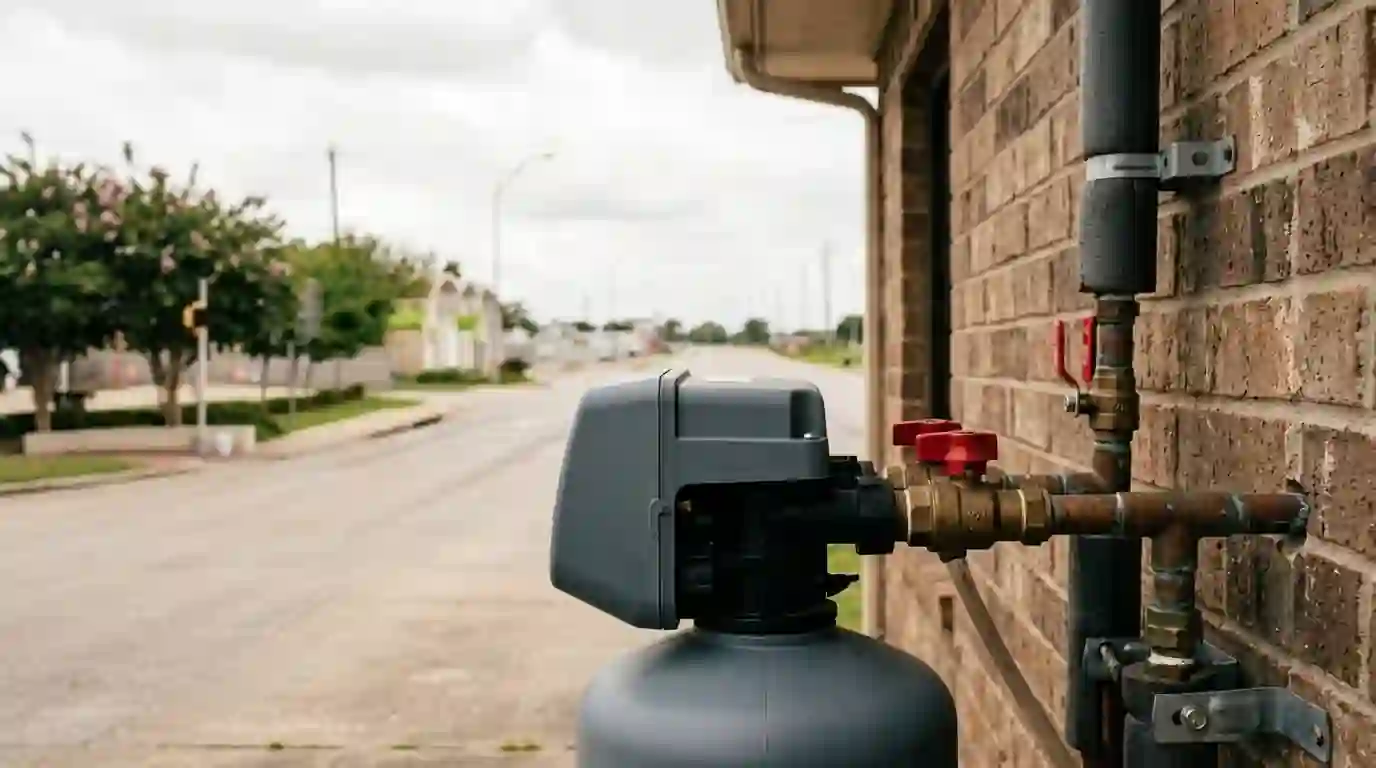
Many newer houses are built with a softener loop: two capped stubs, often in the garage near the water heater, that route house water through a softener while leaving outdoor faucets on hard water. If yours has one, we connect to it with a bypass valve so the unit can be serviced without shutting off the house. If not, we cut into the main line where it enters. Either way, the softener needs a drain with an air gap and an outlet for the control valve.
Softener repair and resin
When hard water comes back, the cause is usually one of a few things. A crust of salt can bridge across the brine tank so no brine forms. The injector or brine line can clog. The control valve's seals and motor wear out. Tiny amber beads in a faucet aerator mean the distributor tube or the screen at the bottom of the tank has cracked. Resin also wears out after years of chlorine exposure. We check the brine draw first.
Softener plus filter combos
A softener removes hardness, not chlorine, chloramine or taste. Pairing it with a carbon filter ahead of the softener protects the resin, which chlorine slowly breaks down, and improves what you drink and shower in. A sediment filter goes first to catch sand and grit. Softened water also carries a little added sodium, so many families keep one unsoftened cold tap at the kitchen or add a reverse osmosis system for drinking water. We lay out the order of the stages before anything goes on the wall.
Local conditions
Pearland's water quality report for the 2023 reporting year lists 12 sources: 10 groundwater wells in the Evangeline and Chicot aquifers plus surface water through two connection points. The city's surface water treatment plant was built to deliver 10 million gallons of drinking water a day from Brazos River water. Well water and river water seldom carry the same minerals, so the hardness at your tap can shift with the blend. We take our reading at your faucet on install day and show you how to retest.
Sources: pearlandtx.gov, communityimpact.comHow a softener install goes in
- Test the waterWe check hardness and iron at your tap and ask how many people live in the house.
- Pick the sizeWe match capacity and valve type to your numbers and show you the math behind it.
- Plumb and drainThe unit goes on the loop or main with a bypass, and the drain line gets an air gap.
- Program and testWe set hardness and regeneration time, run a cycle and retest the softened water.
Signs hard water is costing you
- White crust on faucets and showerheads
- Spots and film on glasses after the dishwasher
- Soap and shampoo that barely lather
- A water heater that pops or rumbles while heating
- Stiff towels and dull laundry
Questions about water softener installation in Pearland
Your hardness reading and how much scale bothers you decide it. If you scrub crust off faucets every week or your water heater rumbles, a softener usually earns its keep. Our water softener guide walks through the decision.
Hardness, household size and the unit's settings decide that. Check the brine tank monthly and keep the salt a few inches above the water line. If the salt level never drops, the softener may not be drawing brine.
Yes, most softeners run on potassium chloride. It costs more per bag and the softener may need a higher salt setting, since potassium works a little less efficiently. It's an option for anyone limiting sodium.
With the hardness gone, soap rinses off more completely and no mineral film forms on your skin. The slick feeling is normal and not leftover soap. Use a little less soap and shampoo and it fades.
Yes. Scale settles in the tank and coats electric elements or the bottom of a gas tank, cutting efficiency. Soft water keeps that from building up, though a yearly flush is still a good idea.