Updated October 2026
Quick answer
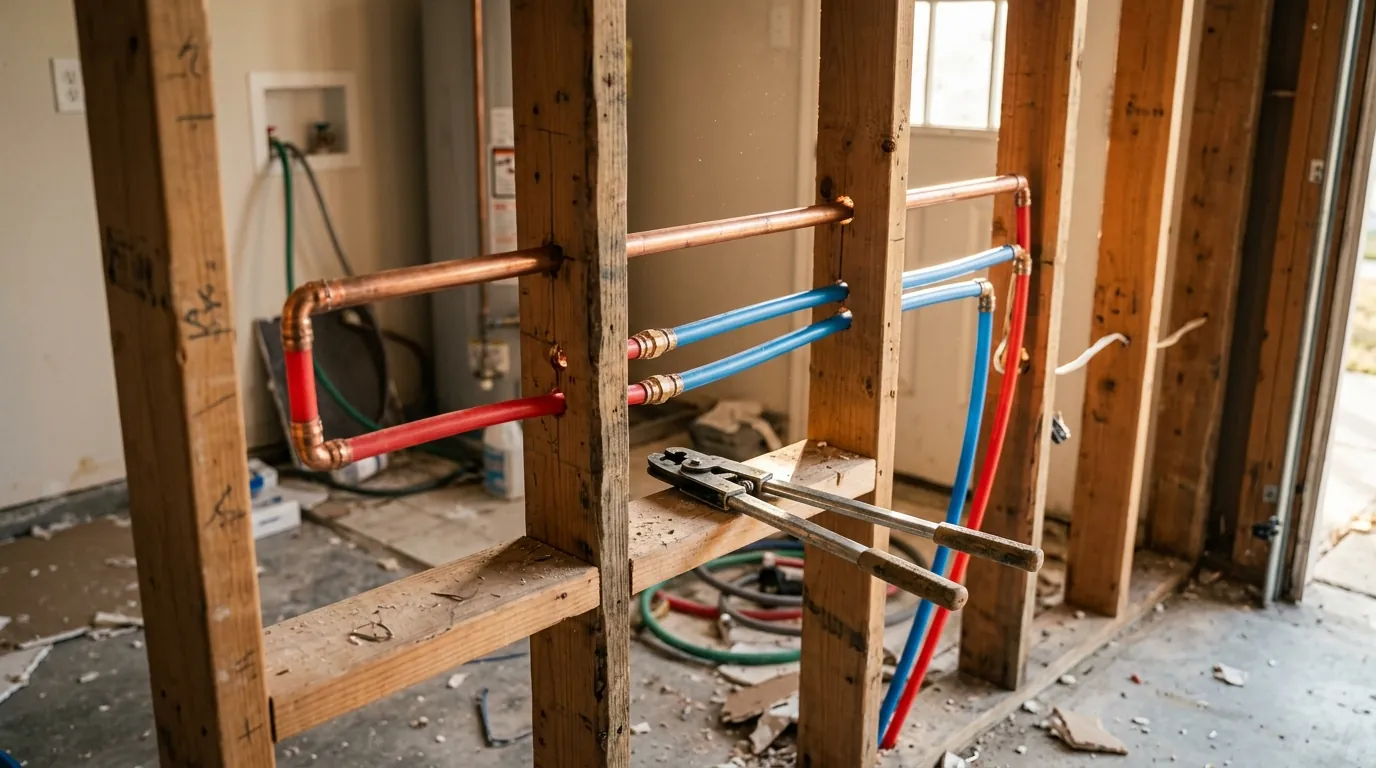
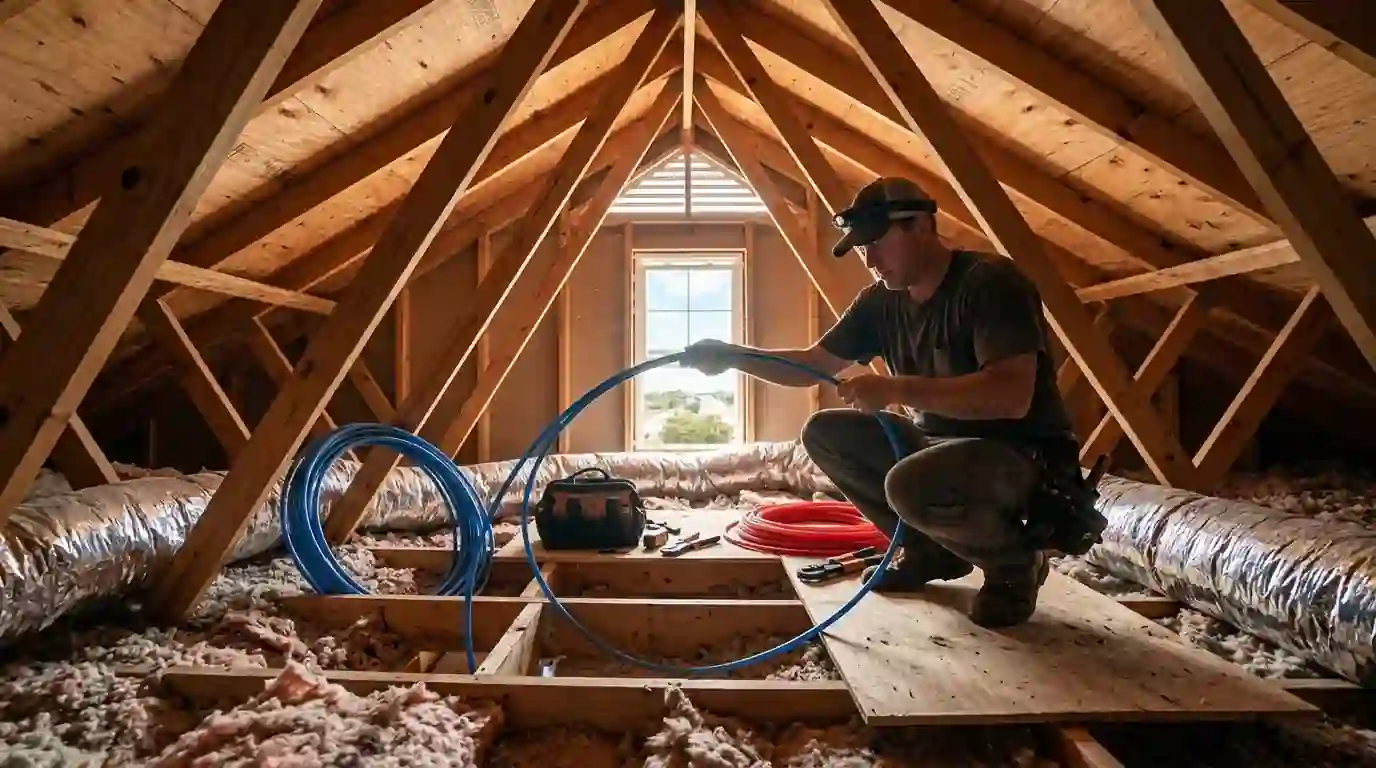
In Pearland, most whole-house repipes replace the hot and cold supply lines rather than drains, running new PEX or copper through the attic and down inside the walls to every fixture. The old lines are capped and left in place, so the slab stays closed and drywall is opened only where pipe drops to a fixture.
A repipe replaces the water supply system, from the main entry to each sink, tub, toilet, appliance and the water heater. It's planned work, not a patch, and it makes sense when the pipe itself is the problem: an aging material, repeated leaks or corrosion that keeps showing up.
We map every fixture, plan the new route and give you a written scope before anything is cut. Drywall openings stay small and squared so they patch cleanly, and the new system is pressure-tested before any wall is closed.
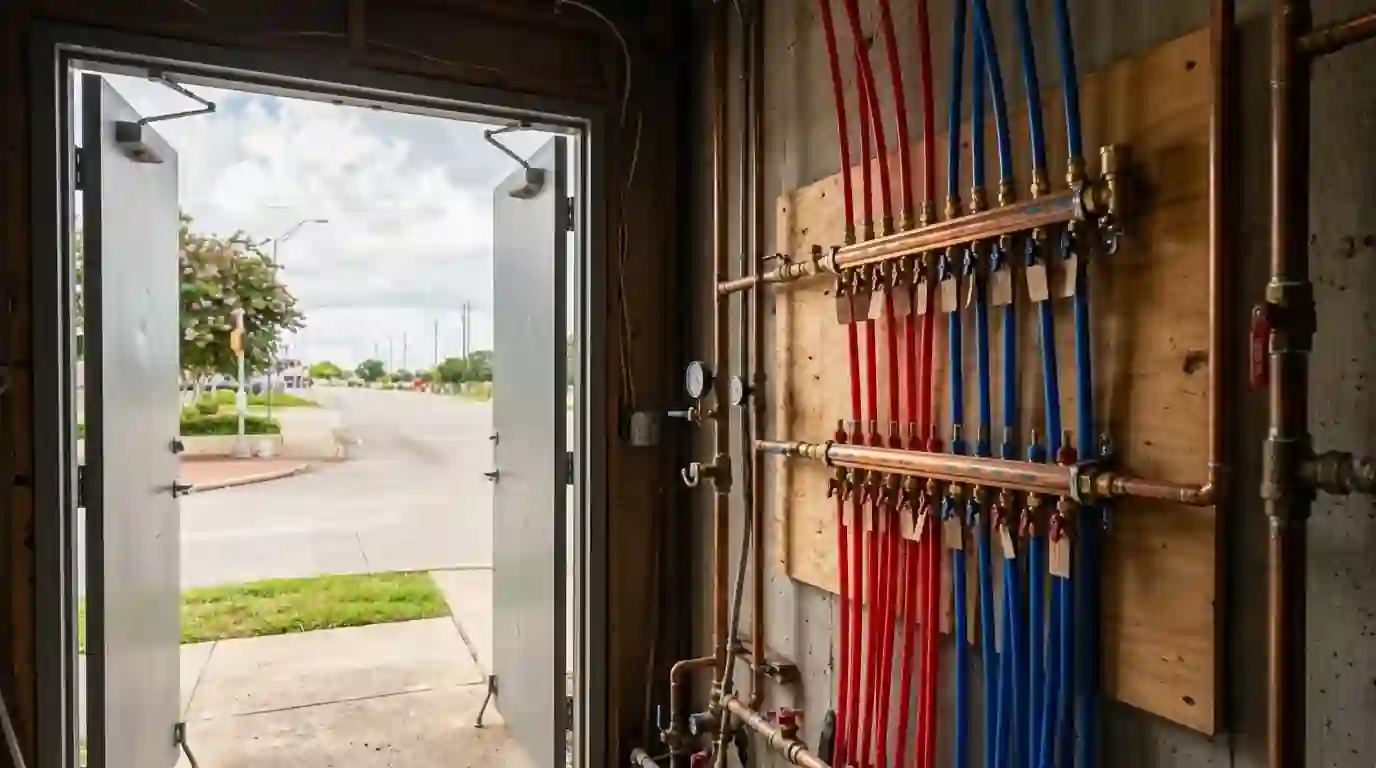
PEX or copper for your new lines
| Question | PEX | Copper |
|---|---|---|
| Installed cost | Lower | Higher |
| Joints in the walls | Fewer, since it bends | More fittings at turns |
| Freeze tolerance | Expands somewhat before splitting | Splits more readily |
| Sun exposure | Must be kept out of sunlight | Not affected |
| Best fit | Most repipes through attics | Owners who prefer metal pipe |
What drives the cost of a whole-house repipe
A Houston cost guide and a national one publish the planning ranges shown below. Your quote depends mostly on the size and layout of the house.
Published planning ranges
These are third-party planning ranges, not our prices and not a quote. You get a price for your job before work starts.- Number of fixtures. Every sink, toilet, tub, appliance and hose bib adds a branch to run and connect.
- Pipe material. PEX costs less in material and labor; copper costs more but some owners prefer it.
- Attic and wall access. Single-story homes with open attics are simpler than two-story homes with finished ceilings between floors.
- Drywall patching. Each opening needs patching and paint, and the number of openings follows the layout.
What our repipe scope includes
- Fixture-by-fixture map and route plan
- New hot and cold lines to every fixture
- New stop valves at sinks and toilets
- Insulation on runs crossing open attic
- Pressure test before walls close
- Old supply lines capped and abandoned
Polybutylene pipe replacement
Polybutylene is a gray, sometimes blue, plastic supply pipe often stamped PB2110, installed in many homes from the late 1970s into the mid-1990s. It breaks down from the inside, and the plastic fittings crack without warning. Look where the main enters, at the water heater and under sinks. There's no reliable repair beyond replacing it, and some insurers ask about it on a policy or at sale. We replace the whole system, so you aren't left with old lines feeding new ones.
Galvanized pipe replacement
Galvanized steel was standard supply pipe in many homes built before the 1970s. It rusts from the inside, so the opening slowly narrows. You notice weak flow at upstairs or far fixtures, brown water after a trip, and leaks at threaded joints. Replacing a single section rarely helps for long because the rest of the run is in the same shape. Galvanized homes often have older drains too, so we look at those while we're in the walls.
Copper to PEX repipes
Copper lasts a long time in many homes, but once it starts pinholing, more follow. Most repipes now use PEX: it bends around framing with fewer joints, tolerates freezing better than rigid pipe, and costs less in material. Copper is still an option if you prefer it, and costs more in material and labor. Either way we use a manifold or a trunk-and-branch layout, insulate runs crossing open attic, and strap the pipe so it can't rub or sag.
Repiping after repeat slab leaks
In most Pearland slab homes the original supply lines run under the concrete. After a second or third slab leak, the question becomes whether to keep opening the floor or retire the under-slab lines entirely. A repipe caps every line in the slab and replaces them overhead, which ends that cycle. If only one branch keeps failing, a partial reroute may be enough. You'll see which lines have failed before, so you can weigh a full repipe against a targeted slab leak repair.
Local conditions
Pearland's housing spans several pipe eras. Across the Pearland ISD area, 42.6% of housing was built in 2000 and after, 51.5% between 1970 and 1999 and 5.9% before 1970. That middle group covers the polybutylene years and early copper under slabs. HAR's subdivision table shows several older east-side subdivisions with early average build years from 1964 to 1978, the age when galvanized supply lines and cast iron drains were still common. Those are the homes where a repipe question usually comes up first.
Sources: nces.ed.gov, har.comHow a repipe runs, day by day
- Map and scopeWe trace every fixture, plan the new route and give you a written scope.
- Run the new linesNew pipe goes through the attic and walls while the old system keeps running.
- Switch overEach fixture moves to the new lines, and the old ones are capped and abandoned.
- Pressure test and patchThe system holds pressure, then openings are closed and each fixture is checked.
Signs your house is due for new supply lines
- Pinhole leaks on more than one copper run
- Gray polybutylene pipe at the heater or sinks
- Brown or rusty water after a few days away
- Weak flow at fixtures far from the main
- A second or third slab leak
Questions about whole-house repiping in Pearland
Check where the main enters the house, at the water heater and under sinks. Gray or blue flexible plastic pipe, often stamped PB2110, is polybutylene. Some homes have it only in the walls, so we confirm during an inspection.
Usually not. The new system goes in alongside the old one, and water is shut off mainly during the switchover. Expect noise and some dust in rooms where pipe drops into the walls.
A supply repipe doesn't include drains. If the house has original cast iron or the drains are causing trouble, we can camera-inspect them and price that work separately.
PEX used for potable water is made and tested to drinking water standards. Some owners notice a plastic taste in the first days, which fades as the lines are flushed. Copper is an option if you prefer it.
It can help. Some insurers ask about polybutylene or galvanized pipe, and replacing it may matter when you renew or sell. Ask your agent, and keep the paperwork we give you after the job.