Updated October 2026
Quick answer
Most Pearland toilet repairs come down to four parts: the fill valve, the flapper, the wax seal at the floor and the closet flange under it. A running toilet usually needs the first two; water at the base or a rocking bowl points to the last two, which means lifting the toilet off the floor.
Signs your toilet needs a repair
- Tank refills on its own with nobody using it
- Water on the floor around the base after flushing
- Toilet shifts or rocks when you sit down
- Bowl drains slowly or needs two flushes
- Sewer smell near the toilet that will not air out
How we track down a toilet problem
- Watch it workWe flush, listen to the refill and check the water level, flapper and supply line.
- Test the seal and baseWe check for rocking, look at the floor and test whether water comes from the tank or base.
- Fix the failed partWe replace the valve, flapper, seal or flange, pulling the toilet only when the fix needs it.
- Flush and recheckSeveral flushes confirm the tank shuts off, the bowl clears and nothing weeps at the floor.
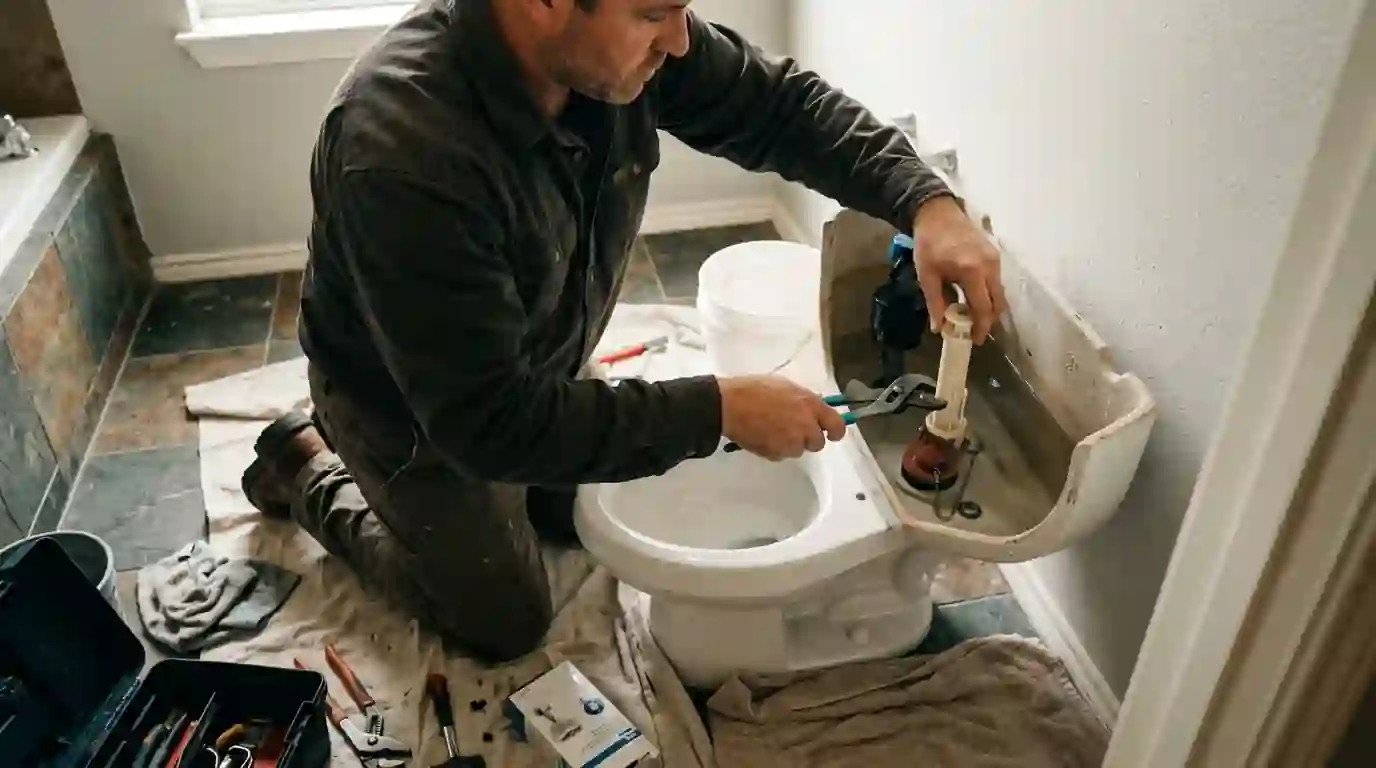
Inside the tank, the fill valve refills it and the flapper holds the water until you flush. Rubber hardens and valves wear, so a tank that once sealed starts leaking into the bowl or refilling on its own. Those repairs happen at the tank, without moving the toilet.
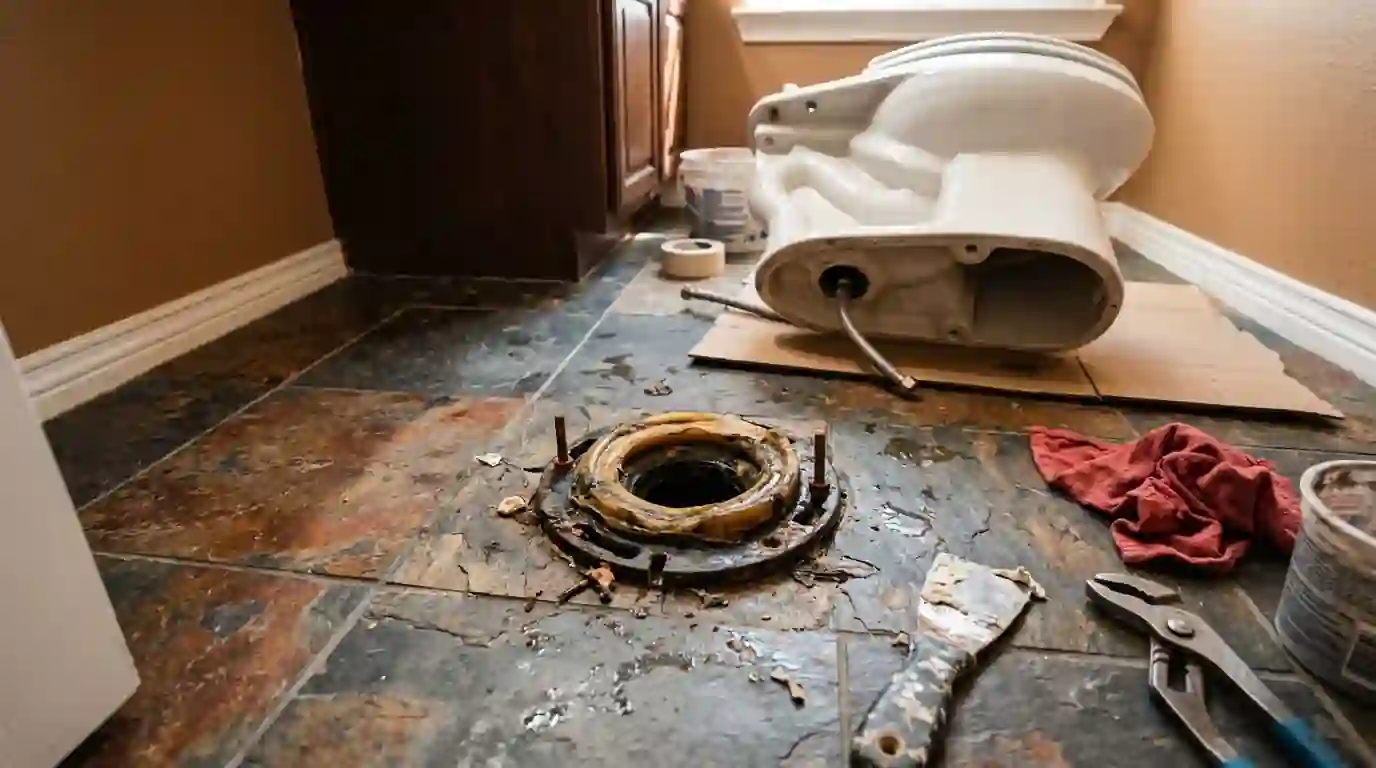
Problems at the floor are different. The wax ring seals the toilet to the drain, and the flange anchors it to the slab. Once the seal breaks, water and sewer gas escape with every flush. We pull the toilet, look at the flange and reset it on a new seal.
Running toilet
You hear the tank hiss or trickle long after a flush, or it refills briefly in the middle of the night. A worn flapper lets water seep into the bowl; a failing fill valve either overfills into the overflow tube or never shuts off. A few drops of food coloring in the tank tell you which: if color reaches the bowl without a flush, the flapper is leaking. We replace the flapper or fill valve, set the water level and adjust the chain.
Leak at the base
Water pooling around the toilet after flushes, a stained floor at the base, or a sewer smell in the bathroom usually means the wax seal has failed. First we rule out the easy causes: a sweating tank, a loose supply nut or a cracked tank dripping down the back. If the seal is the culprit, the toilet comes off, the old wax is scraped clean and we check the flange before setting a new seal. If it ran a while, check the flooring too.
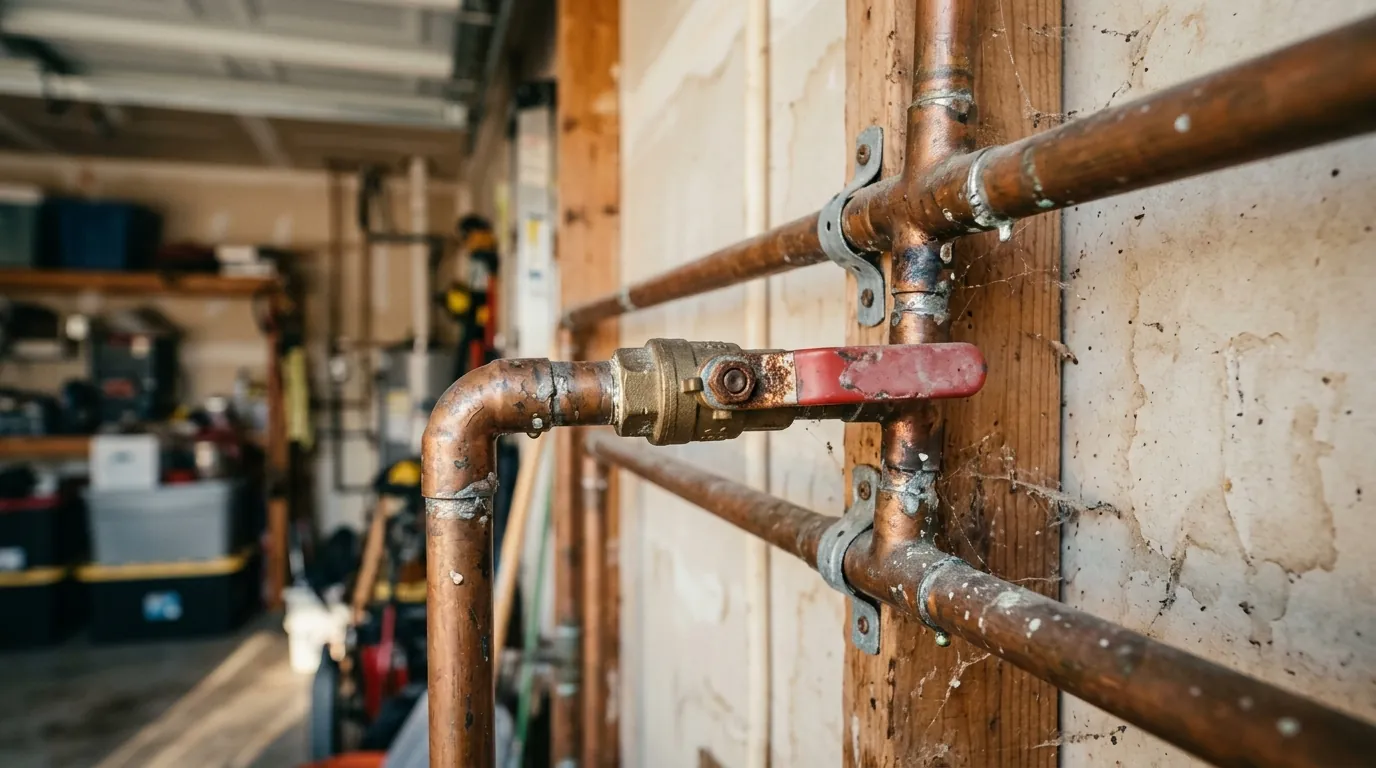
Water still running? Call before it spreads.
Call (281) 845-9645Weak or double flushing
If you hold the handle down or flush twice to clear the bowl, the toilet is not moving enough water fast enough. Common causes are a low tank water level, a flapper closing too early, mineral scale clogging the rim holes and siphon jet, or a partial clog in the trapway. We check the water level and flapper first, then clear the jets and run an auger through the bowl. If the drain line beyond the toilet is slow, that is a separate job.
Loose or rocking toilet
A toilet that shifts when you sit is breaking its own seal every time it moves, even if no water shows yet. Sometimes the closet bolts just need snugging. More often the flange has cracked, sits too low after new tile, or the bolts have rusted through. Pulling the toilet lets us repair or replace the flange, adding a spacer or repair ring where the floor height changed, before resetting it on a new seal. Cranking the nuts harder only cracks porcelain.
Local conditions
HAR counts 1,496 single-family properties in Southdown with a median build year of 1994. Toilets in houses of that era often still carry the original flange and closet bolts, and many bathrooms have had new tile laid since. A new tile floor raises the finished surface above the old flange, so the wax ring has to bridge a bigger gap and fails sooner. In that part of Pearland, a rocking toilet after a remodel is often a flange height problem rather than loose bolts.
Sources: har.comWhat decides the price of a toilet repair
The range below is a national planning figure for plumber toilet repairs. Whether the toilet comes off the floor matters most.
Published planning ranges
- $130 to $300 for plumber repairs, per HomeGuide (June 26, 2024)
- Tank or floor. Tank parts are reached in place; a seal or flange job means pulling and resetting the toilet.
- Flange condition. A cracked or low flange needs a repair ring, spacer or replacement before a new seal goes on.
- Clog location. A trapway clog clears at the bowl; one further down the line needs the drain cleared too.
- Repair or replace. On an old or cracked toilet, several new parts can approach the cost of a new one.
Toilet fixes you can try and ones to leave to us
What you can do safely
- Swap a worn flapper that matches your flush valve size
- Adjust the float so water stops below the overflow tube
- Clear a simple clog with a flange plunger
- Run the food coloring test to find a silent leak
When to call a plumber
- Pulling the toilet to replace the wax seal and bolts
- Repairing or replacing a cracked or low flange
- Clogs that come back after plunging or affect other drains
- A corroded shutoff valve that will not close
Questions about toilet repair in Pearland
Yes. A toilet that runs nonstop can send a lot of water down the drain every day, and you pay for all of it. The fix is usually a flapper or fill valve.
No. Caulk hides a failed seal without stopping the leak, and water can then spread under the flooring unseen. Caulk the front and sides only after the seal is fixed, leaving the back open.
A failed wax seal often lets sewer gas escape at the base before any water shows. A dry trap in a rarely used toilet does it too, so flush guest toilets now and then.
Close the shutoff valve behind the toilet by turning it clockwise, or lift the tank lid and push the flapper down. If more than one drain is backing up, the main line may be blocked.
A cracked bowl or tank, repeated clogs from a weak older design, or several worn parts at once can tip the math. We can walk you through toilet installation options if replacement wins.