Updated October 2026
Quick answer
Hydro jetting in Pearland suits lines that keep clogging after they've been cabled, because the jet scours the full pipe wall instead of boring a hole through the clog. It needs a pipe in sound condition and an access point such as a cleanout, so we usually confirm both with a camera before the hose goes in.
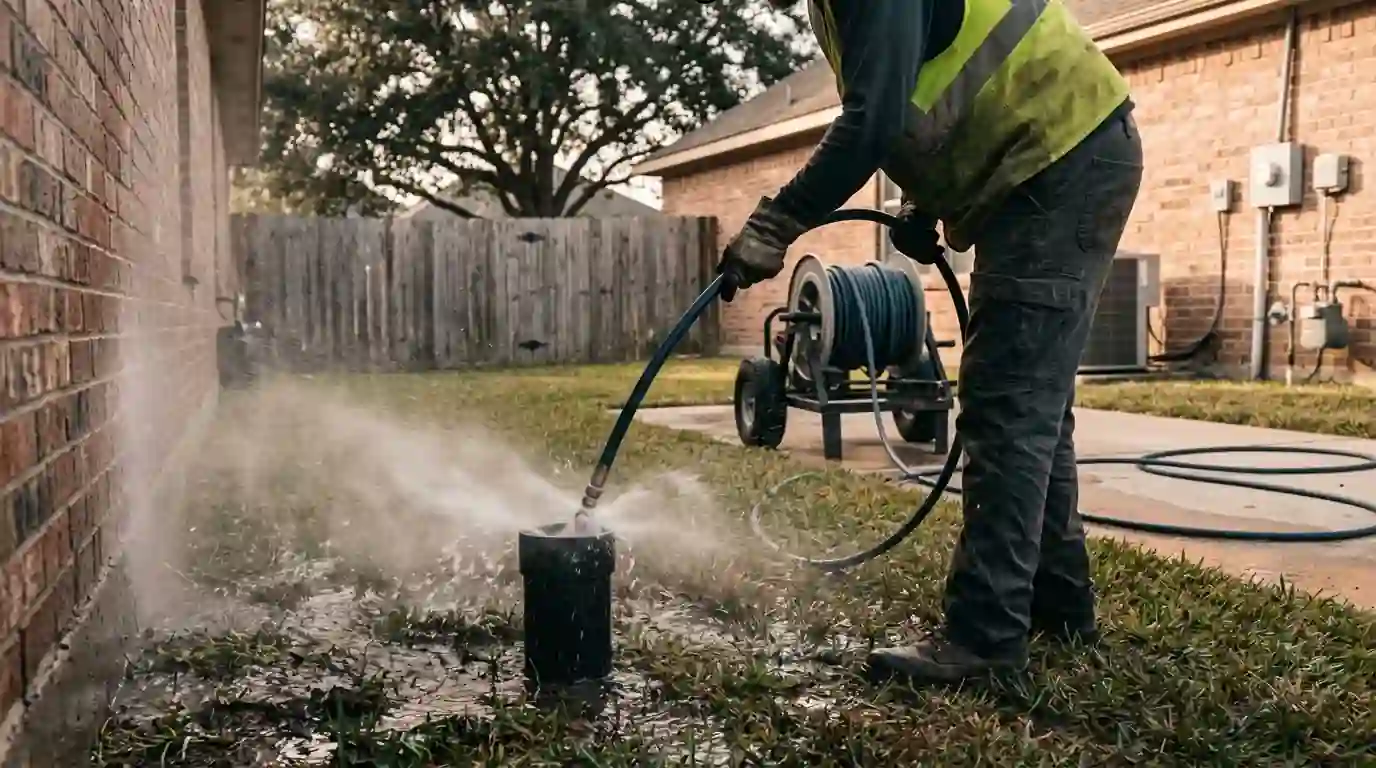
A jetter pushes water at several thousand psi through a hose with a nozzle built for the job. Rear-facing jets pull the hose forward and scrub the walls on the way back out, flushing debris downstream. Different heads handle grease, roots and mineral buildup.
It's not the answer for every clog. A single hairball in a tub trap needs a hand tool, not a jetter, and a pipe with a break or a belly can lose soil through the gap when blasted. That's why we look before we jet.
Cable snaking or hydro jetting: which fits your clog
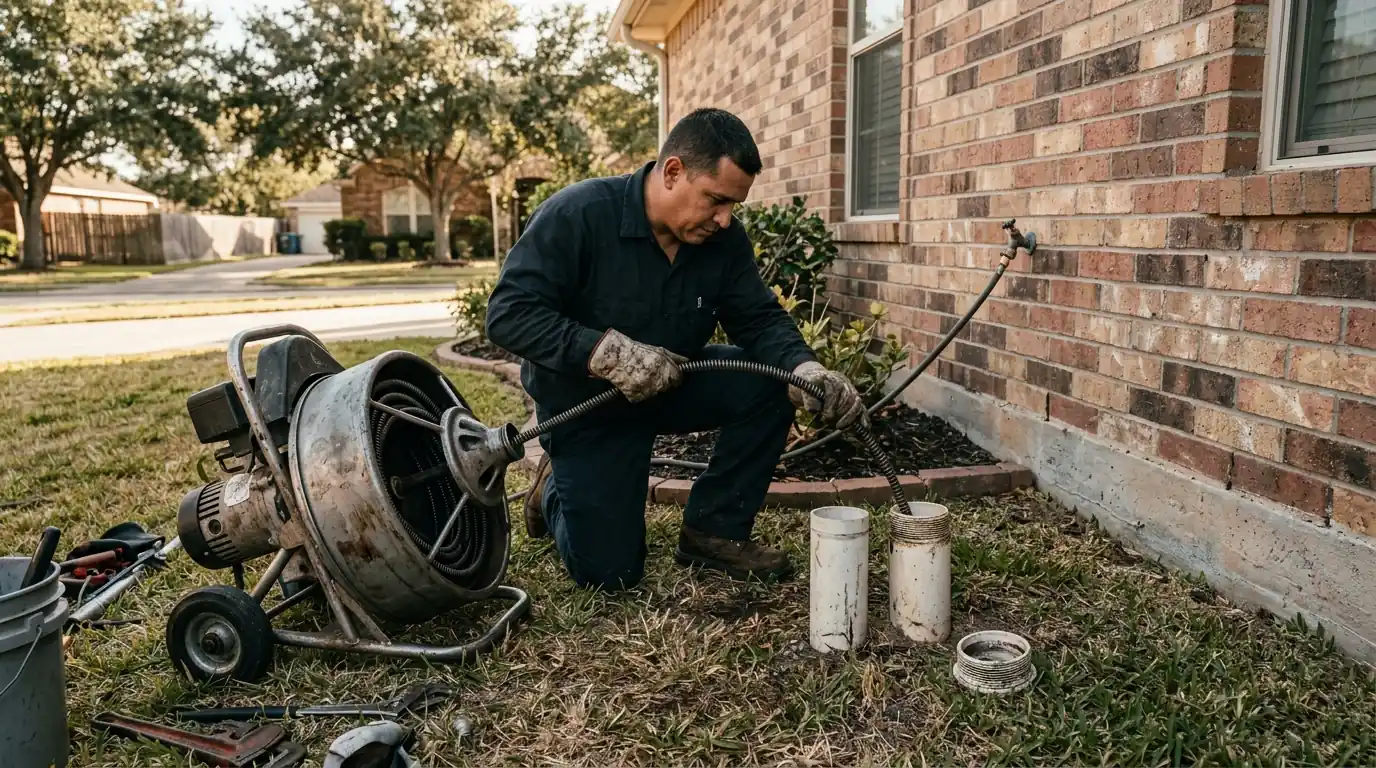
| Question | Cable snaking | Hydro jetting |
|---|---|---|
| How it works | A spinning cable bores through the clog | High-pressure water scours the pipe wall |
| What stays behind | Buildup on the walls | Little; debris is flushed downstream |
| Best fit | Single clogs, hair, toilet obstructions | Grease, roots, scale, repeat clogs |
| Pipe condition needed | Tolerates rougher pipe | Sound pipe, checked on camera first |
Pricing a jetting visit on your line
The Houston planning range below for jetting jobs comes from a national cost guide. Your price depends mostly on access and on what's inside the line.
Published planning ranges
- $345 to $592 in Houston, per Angi (Jul 9, 2026)
- Access point. An open cleanout near the trouble beats pulling a toilet or working through a roof vent.
- Length of the run. A kitchen branch is shorter work than a main line out to the city tap.
- What's in the pipe. Soft grease flushes quickly; root mats and hard scale need special heads and more passes.
- Camera before and after. Inspecting first protects a fragile pipe, and a second look shows you the result.
Grease-packed kitchen lines
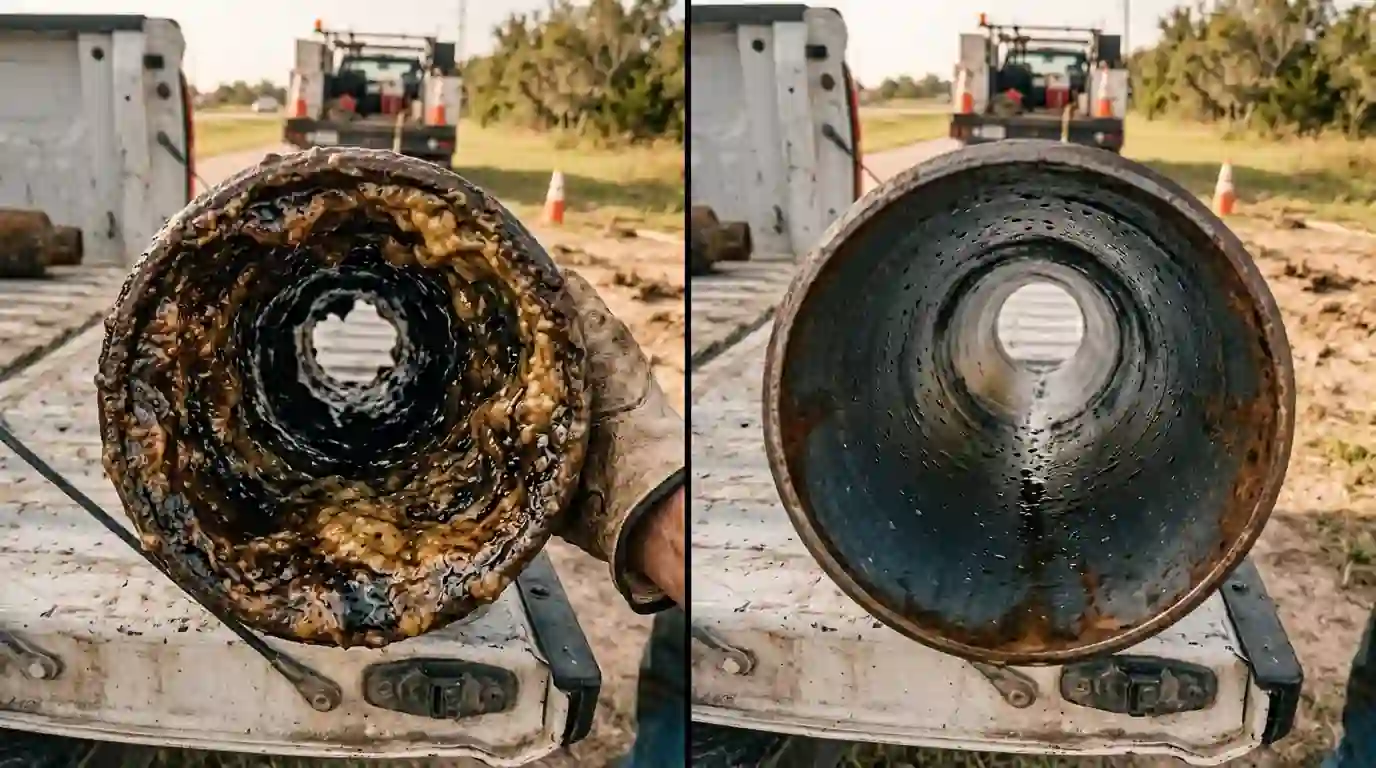
Cooking grease coats the inside of a kitchen line in layers, narrowing a 2-inch pipe until rice or coffee grounds finish the job. Cabling punches a hole through the middle and the line clogs again within weeks. Jetting from the cleanout or the trap arm cuts the grease off the walls and flushes it toward the main, where it can't regroup in the same spot. Plan on clearing the cabinet under the sink, and on hearing the jet work for a while on a long run.
Root intrusion
Roots enter sewer lines at joints and cracks, then fan out into a mat that catches paper. A rotating root-cutting nozzle on the jetter chews through that mat and flushes the pieces downstream, leaving a cleaner bore than a cable usually does. It does not seal the joint, so roots can grow back. We run the camera afterward to see how many entry points there are, which helps you decide between regular maintenance and repairing the damaged section.
Scale in cast iron
Older cast iron drains build up a rough crust of rust and scale that snags paper and narrows the pipe. Jetting can wash out the loose layers, while a chain or descaling head on the jetter or a cable machine removes the harder buildup. The honest risk is what's underneath: some old cast iron is thin enough that cleaning exposes holes the scale was hiding. We check wall condition on camera first, so you know whether descaling or replacement is the better spend.
Commercial line jetting
Restaurant kitchens, salons and multi-tenant buildings push more grease, hair and solids through their drains than a house does, and a backup closes the doors. Jetting from the cleanout or the line between the grease trap and the sewer keeps those runs at full bore. Many businesses schedule it on a regular cycle rather than waiting for a backup. We can work before opening or after close, and we'll tell you if the trap itself needs pumping as a separate service.
Local conditions
Two local numbers explain why jetting comes up here. NWS 1991-2020 normals for a Houston station show an annual precipitation normal of 55.62 inches, and that much rain keeps soil moist around sewer joints, which roots follow. Housing age matters too: across much of Houston, census survey data shows 35.4% of structures were built before 1970, the era of cast iron drains that scale up inside. A Pearland home of that age can have the same pipe, so we check it on camera before choosing a nozzle.
Sources: weather.gov, nces.ed.govHow a jetting job runs on your line
- Camera firstWe check that the pipe is intact and find the buildup before any pressure goes in.
- Set up at the cleanoutThe hose goes in from the cleanest access point, with the jetter staying outside.
- Jet in passesWe work the nozzle through the buildup in sections, flushing debris toward the main.
- Confirm the boreA second camera run or full-flow test shows the pipe walls are clear.
Signs your line is a jetting candidate
- A drain that clogs again a few weeks after snaking
- Greasy, gray sludge comes back on the cable
- Root fragments show up after a main line clearing
- Gurgling and slow draining across several fixtures
- A camera shows heavy buildup on the pipe walls
Questions about hydro jetting in Pearland
On sound pipe, yes. On cracked clay, separated joints or thin cast iron, the jet can wash soil in or widen a gap, which is why we inspect with a camera first and adjust pressure and nozzle to the pipe.
A snake bores a path through the clog and leaves most of the buildup on the walls. Jetting scours the walls themselves, so grease and scale lines usually stay open longer afterward.
No. It cuts and flushes the roots inside the pipe, but the joint they came through stays open. Roots return over time unless that section is repaired or relined.
Sometimes, after pulling the toilet off the flange, but an outdoor cleanout is better: less mess, a straighter shot at the main and the jetter stays outside. If you don't have a cleanout, ask about adding one.
It depends on volume, menu and how well the grease trap is kept up. Watch how quickly the line slows after each cleaning and set the schedule from that; a camera look between visits helps.