Updated October 2026
Quick answer
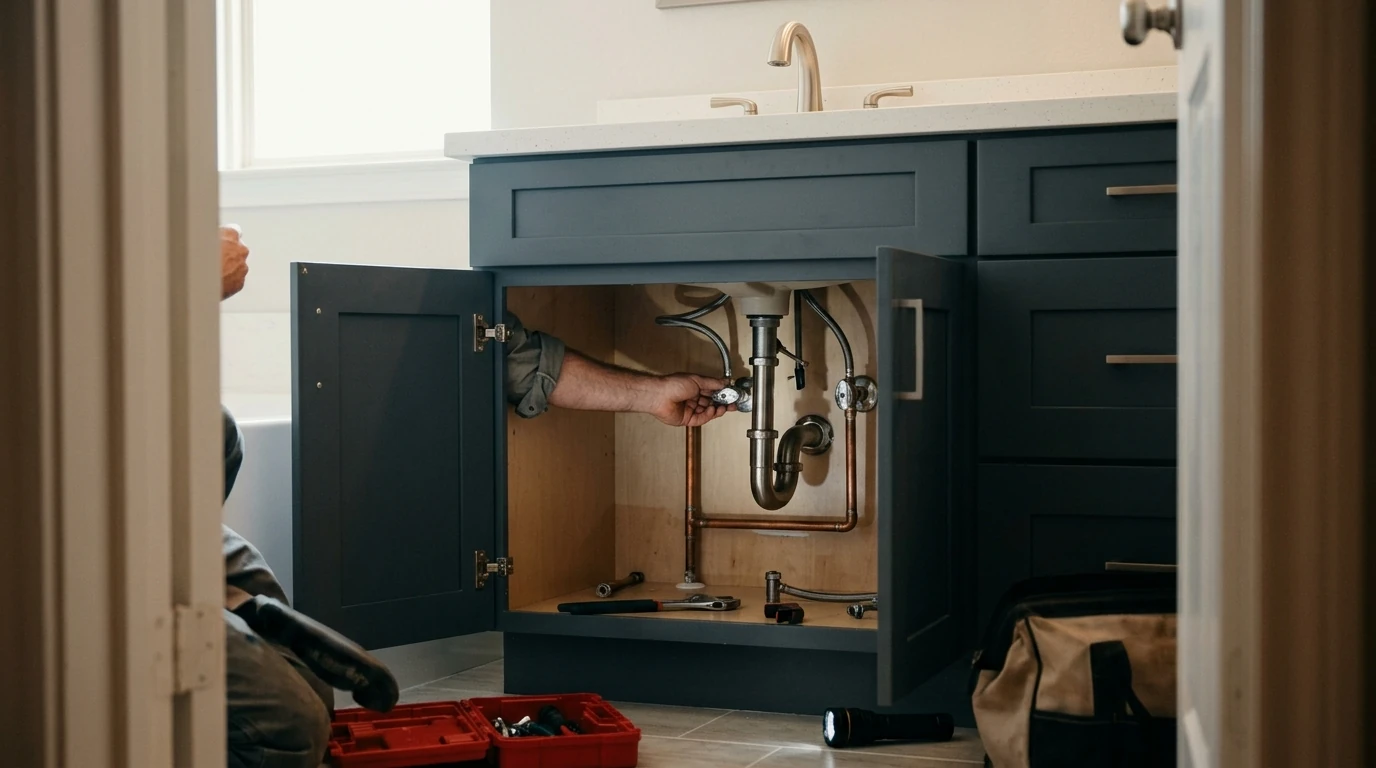
Most Pearland appliance hookups depend on three things already behind the appliance: a working shutoff valve, a drain the hose can reach at the right height, and for gas units a properly sized gas connector with its own valve. When any of those is missing or worn out, the hookup becomes a small plumbing job before the appliance can go in.
Delivery crews often connect appliances to whatever valves and hoses are already there, or decline to connect them at all. Old valves that have not been turned in years can drip once they move, and a rubber hose left in place is a common source of leaks behind washers and dishwashers.
We install or replace the valves, run new lines where they are missing, connect drains with the proper high loop or air gap, and for gas appliances check the connector and test the joints. Then we run the appliance through a cycle and look underneath before leaving.
Why one hookup costs more than another
Appliance hookups are priced by what has to change behind the appliance, so we confirm the valves, drains and lines first.
- Existing valves and lines. Working valves mean a simple connection; seized or missing ones have to be replaced or added first.
- New location. A dishwasher or fridge where none existed needs new supply or drain lines run.
- Gas or water. Gas connections need leak testing and sometimes a line extension to reach the appliance.
- Access and fit. Tight cabinets, built-in panels and stacked laundry units take more time to connect.
What an appliance hookup includes
- Checking valves, drains and power behind the unit
- Replacing worn shutoff valves
- New braided supply or ice maker line
- Drain connection with a high loop or air gap
- Gas connector and leak test for gas units
- A test cycle with a leak check underneath
Dishwasher installs
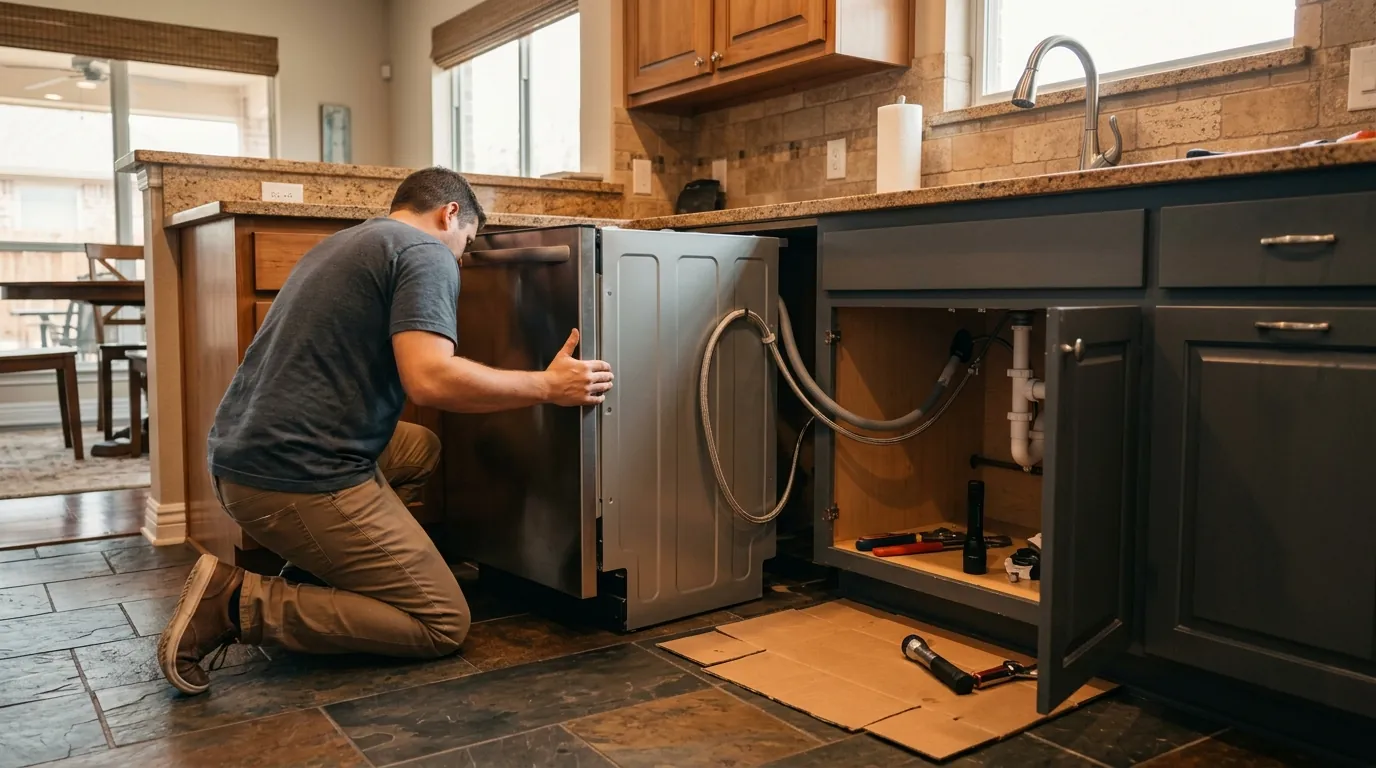
A dishwasher needs a hot water supply, a drain and power. The supply usually comes from a tee or dual-outlet valve under the sink, and the drain hose connects to the disposal or a tailpiece with a high loop or air gap so sink water cannot siphon back. Adding one where there was none means cutting a cabinet, adding a valve and providing an outlet. Leveling and securing the unit to the counter keeps it from tipping forward.
Ice maker lines
A refrigerator with an ice maker or water dispenser needs a cold supply with a shutoff valve behind or near it. Old setups used saddle valves clamped onto a pipe and thin plastic tubing, both of which tend to fail and leak inside the wall or under the fridge. We install a recessed valve box in the wall where possible and use braided or copper line with enough slack to pull the fridge out. Flush the filter after the hookup before using ice.
Washer boxes
A washer box is the recessed panel in the laundry wall with hot and cold valves and a drain opening. Older ones have two separate valves that seize or drip; newer ones use quarter-turn valves or a single lever that shuts both. We replace a worn box, set the drain standpipe at the right height so it does not siphon or overflow, and swap rubber hoses for braided ones. A washer pan with a drain is worth adding in a second-floor laundry room.
Gas dryer and range connections
Gas appliances connect through a flexible connector to a shutoff valve on the gas line. The connector has to be the right size, not kinked or reused from an old appliance, and the valve must be reachable after the appliance is pushed back. If the house has no gas outlet where the new range or dryer goes, the line has to be extended. We connect, test every joint for leaks and light the burners or start a dryer cycle before we leave.
Local conditions
Across Shadow Creek Ranch, HAR counts 6,180 single-family properties in its Brazoria (median built 2005) and Fort Bend (median built 2013) sections, and 993 single-family properties in Southern Trails with a median build year of 2012. In newer Pearland neighborhoods like these, the first round of builder appliances is reaching replacement age, and the hoses and plastic ice maker lines behind them are just as old. A new fridge or washer is the right time to replace them too.
Sources: har.com, har.comHow an appliance hookup runs
- Check what is thereValves, drain, power and gas behind the appliance get checked before anything is connected.
- Replace or add partsWe swap seized valves, install a washer box or ice maker valve, and run lines as needed.
- Connect the applianceWe connect supply, drain and gas, then set the appliance in place and level it.
- Run a full cycleA fill, drain or burner cycle runs while we check every connection for leaks.
Hookup tasks you can do and ones to leave to us
What you can do safely
- Measure the space and check door clearances
- Swap rubber washer hoses for braided ones
- Clean the dishwasher filter and level the feet
- Flush a new fridge filter before using ice
When to call a plumber
- Replacing seized valves or adding new ones
- Running new water or drain lines
- Any gas connection or line extension
- Installing a washer box in the wall
Questions about dishwasher & appliance hookups in Pearland
Some do, some do not, and many reuse whatever valves and hoses are already there. An old valve or a rubber hose should be replaced first; do it before the appliance goes back in.
Without one, dirty water from the sink or disposal can siphon back into the dishwasher. A high loop secures the hose up under the counter; an air gap is a small fitting on the sink deck.
Rubber washer hoses crack and burst with age, so swap them for braided hoses when you replace the washer or if they show bulges. Turning the valves off when away for long stretches helps too.
No. Gas connectors are not made to be bent and reused, and an old one may be the wrong size for the new appliance. A new connector is a small part of the job. See our gas line page for extensions.
That is a saddle valve, and it tends to leak or clog over time. We replace it with a proper shutoff valve and a braided or copper line.