Updated October 2026
Quick answer
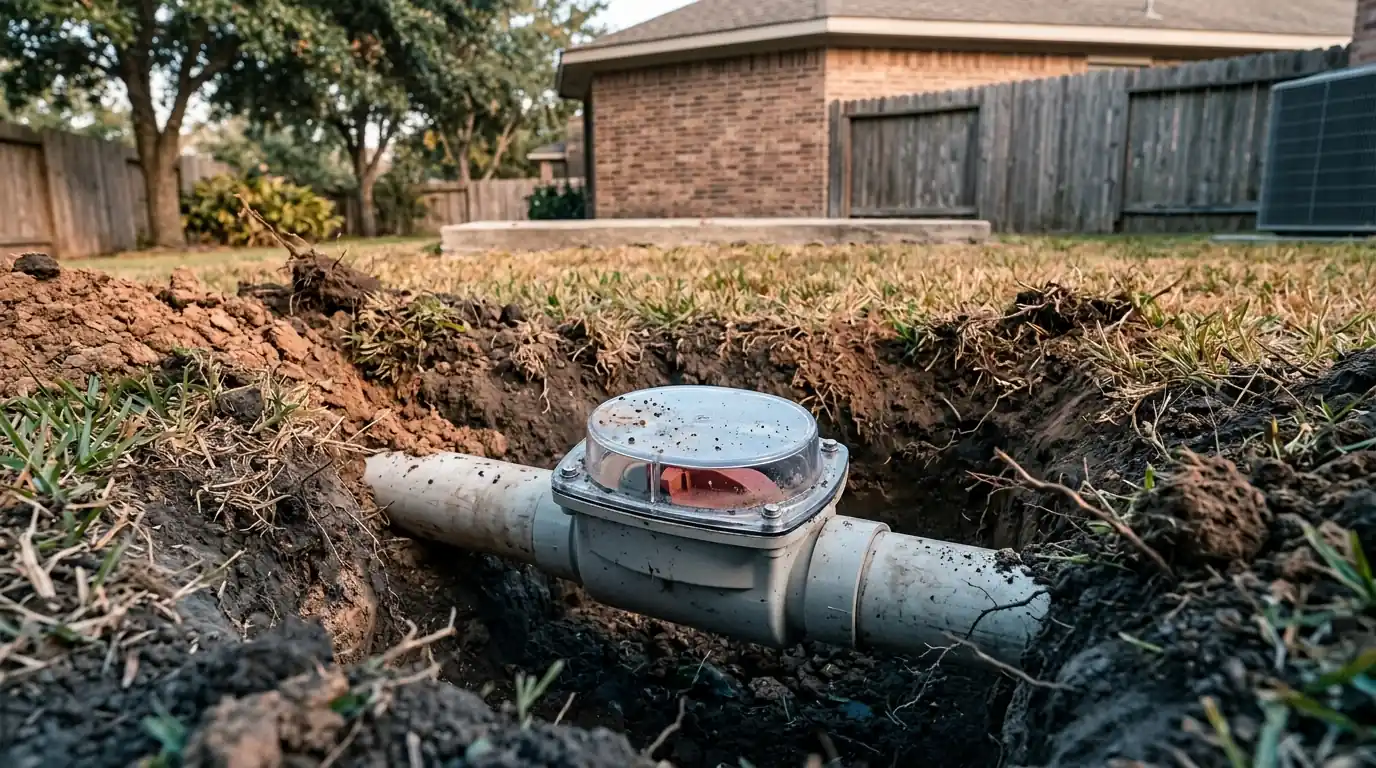
In Pearland, a backwater valve goes on the building sewer outside the house, past every fixture, where it lets waste flow toward the street and closes when the public main surcharges in heavy rain. It needs an access riser to grade, because a stuck or clogged flap blocks your own drains.
Most slab homes here drain through one main line to the city sewer. When a storm overloads the public main, sewage can climb that line and spill out of the lowest opening, usually a shower or downstairs toilet. A backwater valve is a one-way gate: outgoing flow lifts the flap, reverse flow presses it shut.
Know the limits before buying one. While the flap is closed, nothing in the house can drain. It does nothing about floodwater coming through doors, and it will not fix a clog in your own line. We run a camera first so the valve goes on sound pipe.
Backwater valve or pop-up relief cap
| Question | Backwater valve | Pop-up relief cap |
|---|---|---|
| What it does | Closes the line to reverse flow | Lets sewage spill out in the yard |
| Where it goes | In the buried sewer line | On top of the yard cleanout |
| Upkeep | Yearly flap check and flush | Keep the cap clear of soil |
| Best fit | Repeat backups from the city main | Lots with good fall to the cleanout |
What sets the price of a backwater valve
We price this job after a camera look at your line, because depth and pipe condition change the work more than the valve itself does.
- Depth of the sewer. A line that runs deep under the yard needs a bigger, slower dig to reach safely.
- What sits over the pipe. Open lawn is simpler than a driveway edge or patio that has to be cut and restored.
- Pipe condition at the valve spot. A cracked or sagging section there has to be replaced before the valve is set.
- Cleanout and riser work. Adding a two-way cleanout or a taller riser in the same trench adds parts and labor.
Valves on the main sewer line
The usual spot is the building sewer between the house and the property line, past the last fixture so the whole house is covered. We dig to the pipe, cut out a short section, set a full-port valve body level in the line and bring a riser and lid up to the surface. A valve on one low branch can work when only one fixture floods, but the main is the more complete fix. Plan for a trench in the yard and some sod repair afterward.
Low-lying and flood-prone lots
Lots that sit below the street or back up to a drainage ditch tend to show the problem first: a tub that gurgles in a downpour, or a yard cleanout cap that lifts and seeps. Here the valve's position matters as much as the valve. We check how your lowest drain sits against the cleanout and the street, because a valve set too deep can sit in wet soil and silt. Keep the access lid reachable, not buried under mulch.
Flap checks and maintenance
This is not an install-and-forget part. Grease, wipes and stringy debris can catch on the flap or its seat. A flap held partly open stops protecting you, and one stuck shut slows every drain in the house. You might notice drains running sluggish for no clear reason, or a storm backup that got past the valve anyway. We open the lid, flush the body, check the hinge and seal, and replace a worn flap or gasket. Plan on a look yearly and after big storms.
Combined with cleanout work
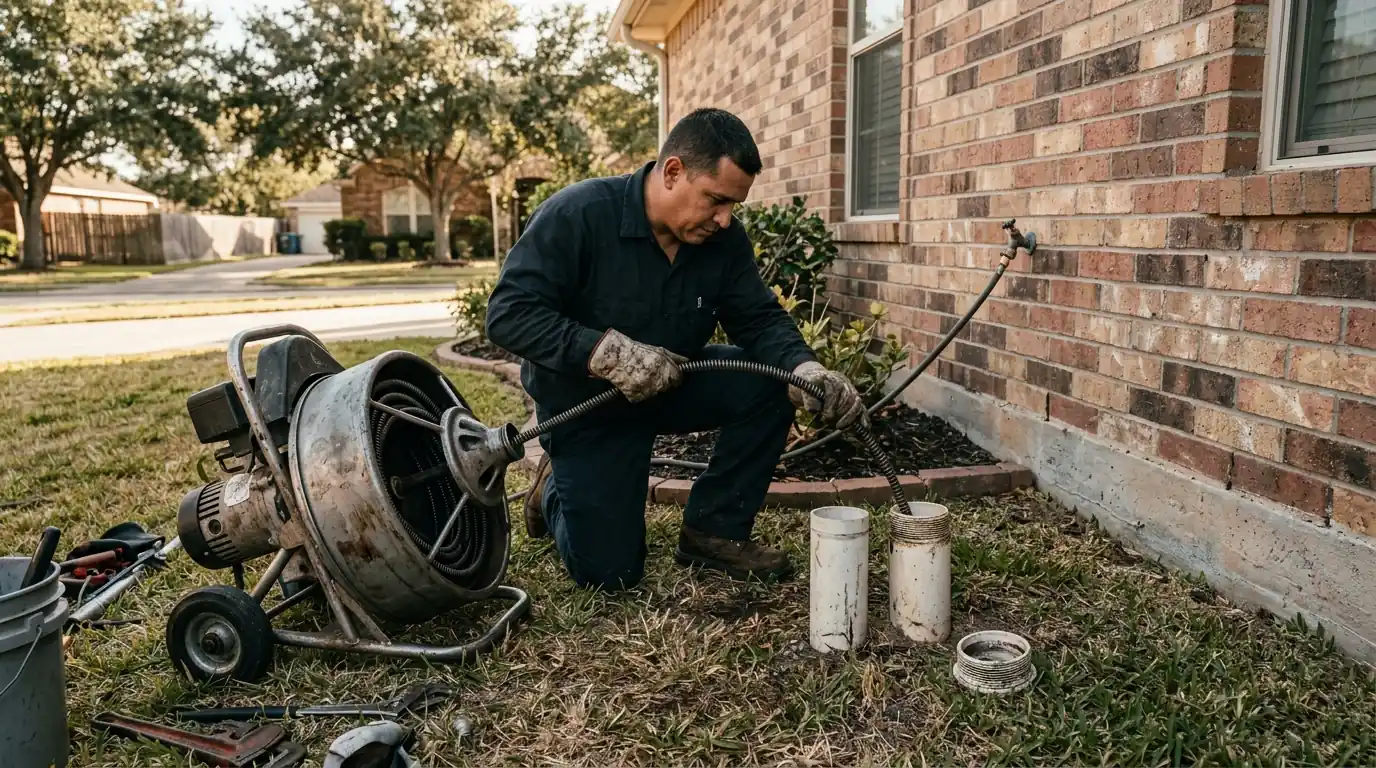
Plenty of older lines have no outside cleanout, or one buried and forgotten. Both jobs expose the same stretch of pipe, so adding a two-way cleanout just upstream of the valve during the same dig saves a second trench. That cleanout lets us clear a clog without forcing debris through the flap, and it gives a camera an easy way in. If your line needs a new cleanout anyway, plan both so the yard is opened once.
Local conditions
After Hurricane Harvey, officials said up to 30 to 40 inches of rain fell in Pearland over four days, causing 500-year flood events through Friendswood into League City. Harvey flooded 154,170 homes across Harris County, and a little less than half of the flooded homes were outside the 100- and 500-year floodplains. For a sewer line, that second point matters: a flood map cannot tell you whether the main in front of your house will surcharge. A past backup during heavy rain is the better guide.
Sources: communityimpact.com, communityimpact.comHow a backwater valve install runs
- Camera the lineWe run a camera from the cleanout to check the pipe and pick the valve location.
- Dig and cut inWe expose the building sewer, remove a short section and set the valve body level.
- Bring up the accessA riser and lid go up to grade so the flap can be checked without digging.
- Test and backfillWe run water through the fixtures, confirm the flap seats, then backfill the trench.
Signs your line takes water back from the street
- Water rising in the lowest shower or tub during a downpour
- Toilets gurgling or bubbling while it storms
- A yard cleanout cap lifting or seeping after heavy rain
- A sewer smell indoors that comes with storms
- Drains that slow only while the streets are flooded
Questions about backwater valve installation in Pearland
It stops sewage from rising through your drains when the public main overloads. It does not stop surface water coming under doors, so treat it as one layer of protection, not a flood barrier.
No. With the flap shut, anything sent down a drain rises in your lowest fixture. During a storm backup, hold off on showers, laundry and the dishwasher until the street drains.
Plumbing codes call for one when a fixture sits below the rim of the next upstream sewer manhole, which some low lots do. Most existing homes are not required to add one, so backup history usually decides it.
A pop-up relief cap lets sewage spill in the yard instead of inside, but only when the cleanout sits lower than your lowest drain. A backwater valve blocks reverse flow in the pipe itself.
Backups that happen only in heavy rain and clear on their own point to the public main; dry-weather backups point to your line. Our guide on drains backing up after rain covers the clues.