Updated October 2026
Quick answer
In older Pearland slab homes, cast iron drains fail from the inside: the bottom of the pipe rusts thin, scale catches paper, and cracks let water into the soil under the foundation. Replacement swaps the failed runs for PVC, reached either by tunneling under the slab or by cutting trenches through the floor.
Cast iron was the standard drain pipe in homes built before PVC took over, and inside a slab it can't be seen until it fails. The camera shows how far the damage runs, which decides whether one section or every branch needs to go.
This is a big job, and the access method matters as much as the pipe. Tunneling keeps the floors intact; breaking the slab is more direct. We price both where both are possible, with the footage in hand.
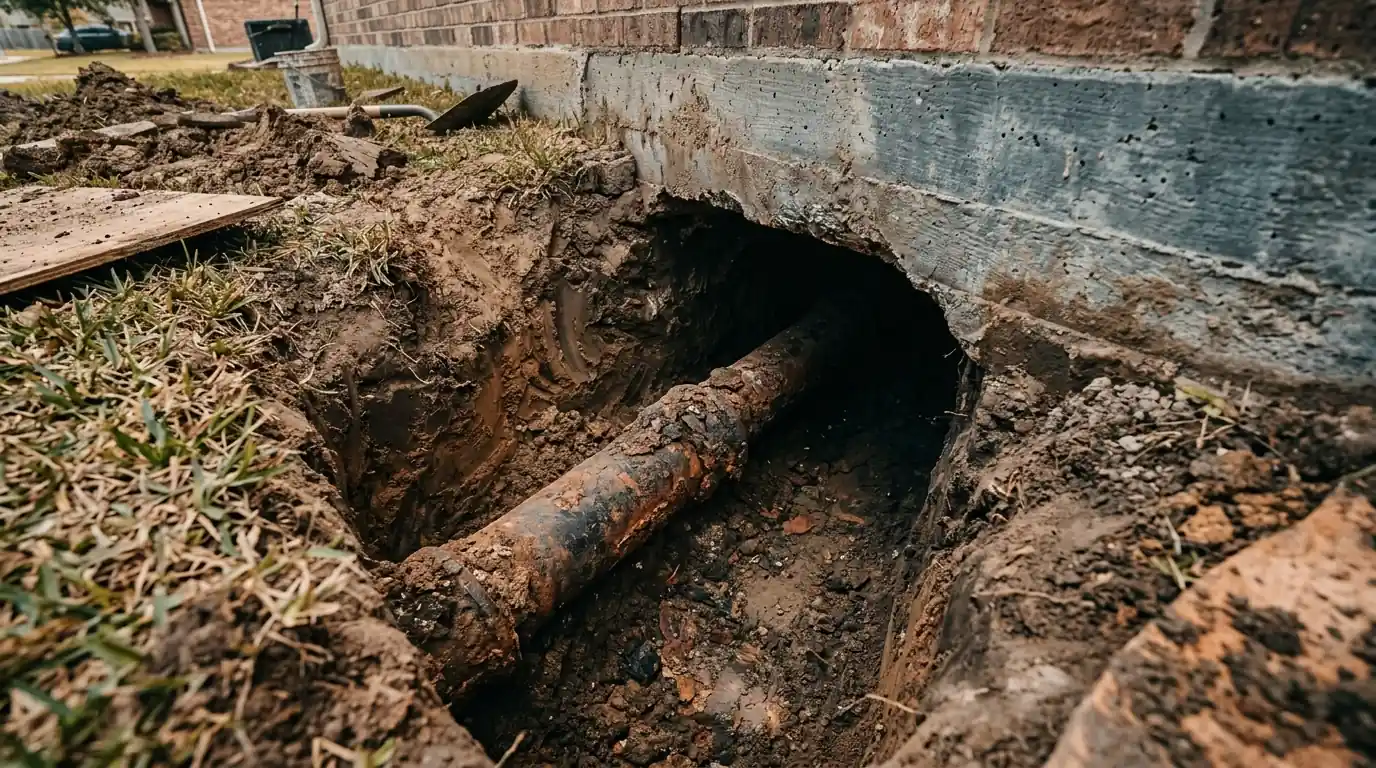
Tunneling or slab cuts for under-slab drains
| Question | Tunneling | Slab cuts |
|---|---|---|
| Where the digging happens | Outside, then under the foundation | Through the floor over the pipe |
| Inside disruption | Little to none | Flooring and sometimes cabinets |
| Restoration | Yard and backfill | Concrete patch and new flooring |
| Best fit | Long runs under finished rooms | Short runs or floors being replaced |
How cast iron replacement gets priced
Per-foot and per-run planning ranges for drain line replacement, from a national cost guide, appear below. Under-slab work adds access costs that a yard line doesn't have.
Published planning ranges
- $50 to $250 per linear foot, or $2,000 to $10,000 for 40 linear feet, per HomeGuide (December 22, 2025)
- How many branches fail. One kitchen run is a fraction of the work of replacing every drain under the slab.
- Tunnel or slab cut. Tunneling adds digging outside; slab cuts add concrete and flooring repair inside.
- Flooring and fixtures. Tile, wood, cabinets and tubs over the pipe change how much restoration follows.
- Transition to the yard line. If the line outside is also cast iron or clay, replacing it in the same project may make sense.
What a cast iron replacement includes
- Camera inspection of each under-slab branch
- Permit and inspection before the pipe is covered
- Removal of failed cast iron sections
- New PVC drains at proper slope
- Water test and camera check of the new line
- Backfill and compaction under the slab
Under-slab cast iron
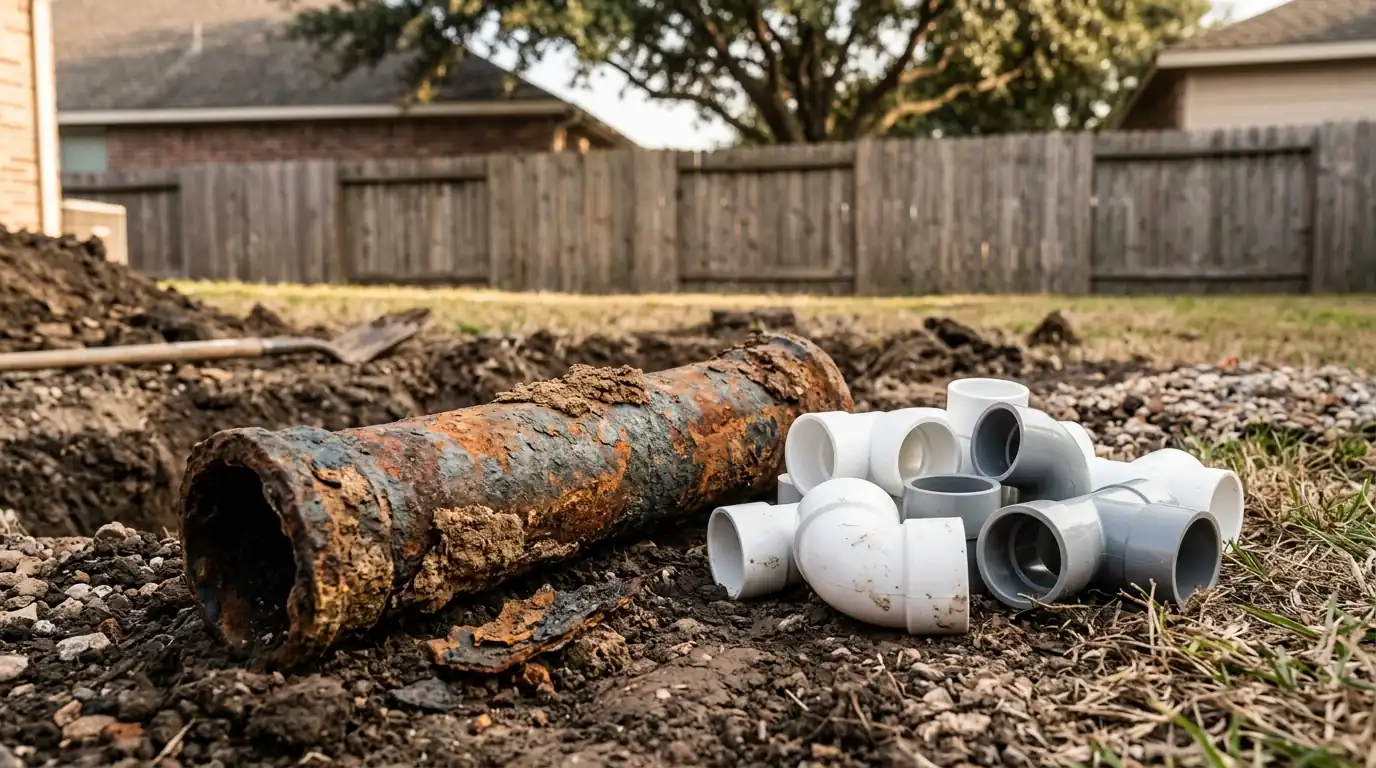
Inside a slab, cast iron sits in soil that stays damp, and the pipe corrodes from the inside where wastewater runs along the bottom. Over decades the bottom wears into a channel, then opens. You may notice repeat clogs, slow drains throughout the house, sewer smell near a floor drain or tub, or cracks and damp spots in flooring. A camera run shows scale, holes and channeling. Once the bottom has opened, water leaves the pipe and moistens the soil under the foundation.
Tunneling vs breaking the slab
Tunneling digs from outside the foundation and runs under the slab to reach the drains, so floors, cabinets and finishes stay put. It suits long runs under finished rooms but takes more digging and leaves a large spoil pile in the yard. Breaking the slab cuts trenches through the floor directly over the pipe, which is quicker when the run is short or the flooring is already coming out. Both get backfilled and compacted; slab cuts also get a concrete patch and new flooring.
Partial vs full replacement
Some homes have one failed branch, often the kitchen or a bathroom group, with the rest of the cast iron still holding. Replacing only that section costs less and is reasonable when the camera shows the other runs in fair shape. The tradeoff is that the same-age pipe stays in service and may fail later, possibly under new flooring. When several branches show channeling or holes, replacing the full under-slab system at once avoids paying for access twice.
Testing after the new line
New drains under a slab get tested before anything is buried. The common method is to plug the system and fill it with water to a set height, then watch for any drop that would signal a leaking joint. A camera run confirms slope and connections. Only then does backfill and slab or tunnel restoration begin. If a foundation company is involved, we can coordinate so the test results are on record for both trades, and a later hydrostatic test has a baseline.
Local conditions
Cast iron replacement follows housing age. Across much of Houston, census survey data puts 35.4% of structures as built before 1970, the era when cast iron drains under slabs were common. Pearland has its own older pockets: HAR's subdivision table shows some of them averaging a 1973 build year and others 1974. Shadow Creek Ranch, averaging 2005 and 2013, was built well into the PVC era, so cast iron there is unlikely. On older homes we start with a camera run before recommending any replacement.
Sources: nces.ed.gov, har.comHow a cast iron replacement runs
- Camera every branchWe record each drain run under the slab and mark where the damage is.
- Choose the accessYou compare tunneling and slab cuts with prices, based on what sits above the pipe.
- Replace with PVCFailed cast iron comes out and new PVC goes in at proper slope with tested joints.
- Test and restoreA water test and camera check happen before backfill, concrete and floor repair.
Signs your cast iron drains are failing
- Repeat clogs in several drains with no clear cause
- Sewer smell inside near tubs or floor drains
- Slow drains throughout the house at once
- Damp spots or new cracks in flooring
- Camera footage of scale, channeling or holes
Questions about cast iron drain replacement in Pearland
It varies with water, soil and use, so the age of the house alone won't tell you. A camera inspection shows the actual wall condition, which is a better guide than any rule of thumb.
Sometimes. Lining works when the pipe still holds its shape and slope. Where the bottom has rusted out or the line has sagged, lining can't bridge the gap, and replacement is the reliable fix.
Usually, especially with tunneling, but some fixtures will be out of service while their drains are replaced. We'll schedule the work so you know which bathrooms and sinks are usable each day.
Water leaving a broken drain wets the soil under the slab, and in expansive clay that can cause uneven movement. A foundation company can assess the slab; we confirm and stop the drain leak.
Yes. Replacing drains under a slab is permitted plumbing work, inspected before the pipe is covered. Permit and inspection scheduling are part of our job, not something you chase.