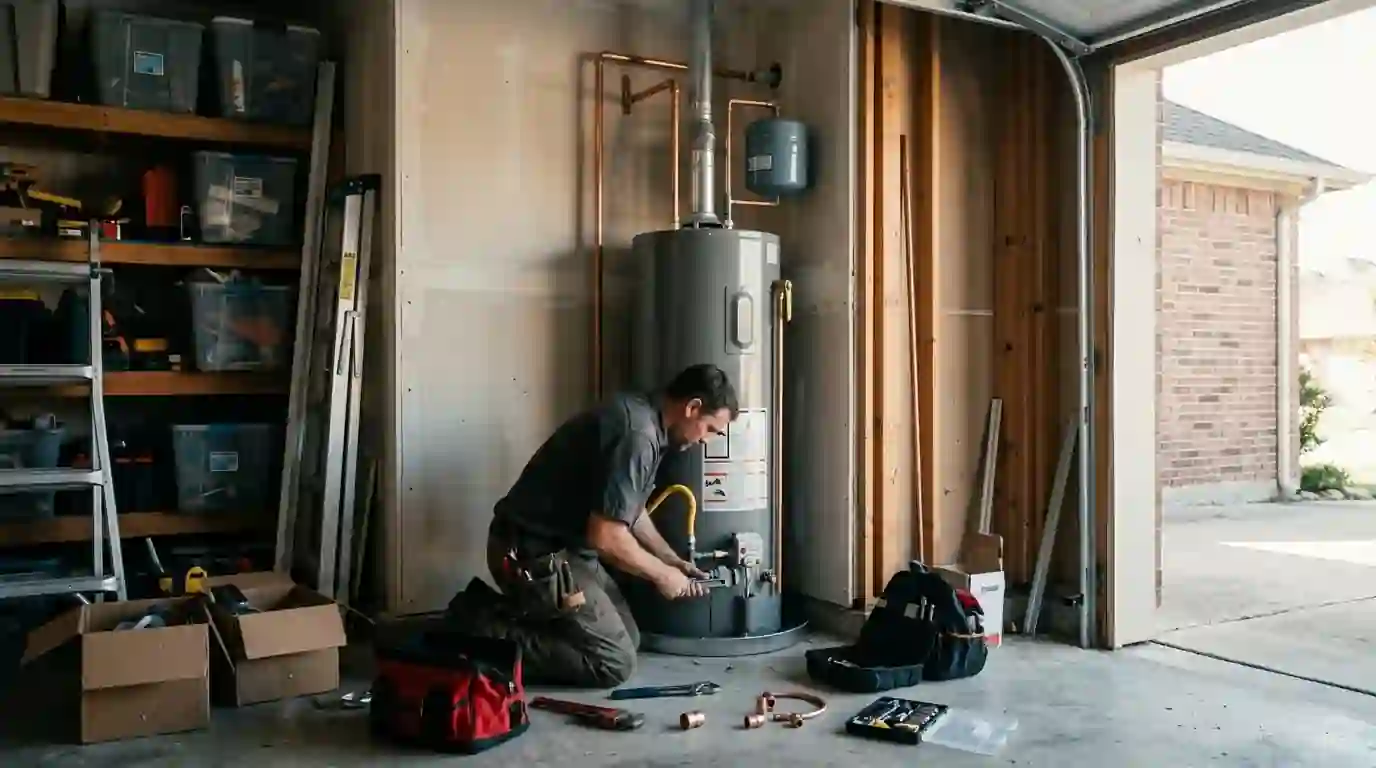
Updated October 2026
Quick answer
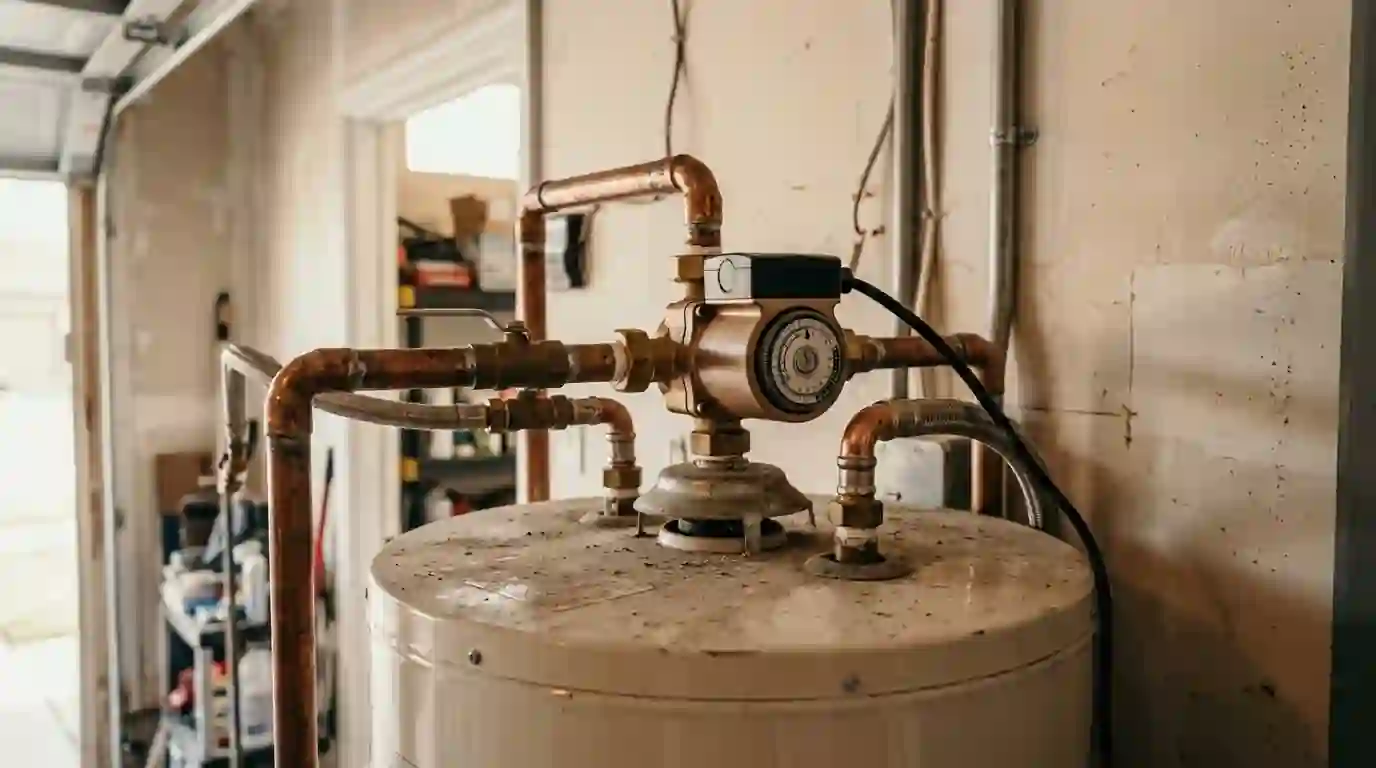
A recirculation pump in a Pearland home keeps hot water moving to the far fixtures, so it arrives in seconds instead of after a long wait. Most existing homes use a pump at the water heater with a comfort valve under the farthest sink, which sends cooled water back through the cold line.
The wait for hot water is just the cooled water sitting in the pipe between the heater and the tap. The longer the run, the longer you wait and the more water goes down the drain. Recirculation moves that water back toward the heater so hot water stays close to the fixture.
The tradeoff is energy. A pump that runs around the clock keeps the pipes warm all day and night, and the heater makes up that heat loss. Timers, on-demand buttons and insulated pipe keep the system working only when you would actually use the hot water.
Comfort valve system or dedicated return line
| Question | Comfort valve | Dedicated return |
|---|---|---|
| New piping | None | A return pipe back to the heater |
| Wall or attic work | None | Usually needed |
| Cold tap at the far sink | Briefly warm after the pump runs | Stays cold |
| Best fit | Existing homes | Remodels and repipes |
Where the cost of a recirculation setup comes from
We price your setup after looking at the heater, the pipe layout and where the far fixtures are.
- System type. A pump with a comfort valve is simpler to add than a new dedicated return line.
- Heater type. Tankless units may need a model-specific pump kit or setup.
- Controls. Basic timers cost less than on-demand buttons, motion sensors or app control.
- Outlet and access. An outlet near the heater and an open sink cabinet make the install quicker.
What your recirculation install includes
- Layout check to find the longest hot water run
- Pump matched to your tank or tankless heater
- Comfort valve or return line connection
- Timer or on-demand control setup
- Check valves to stop backflow in the loop
- Wait-time test at the far fixtures
Under-sink comfort valves
In a home without a return line, the simplest setup is a pump at the water heater plus a crossover or comfort valve under the sink farthest from it. The valve lets cooled water in the hot line pass into the cold line and return to the heater, then closes as hot water reaches it. Expect a brief stretch of lukewarm water from the cold tap at that sink after the pump runs. A plug-in outlet near the heater is needed for the pump.
Dedicated return lines
A dedicated return line is a third pipe that runs from the farthest fixture back to the bottom of the water heater, forming a loop. That makes it the cleanest system: no warm water in the cold tap and steady performance at every fixture on the loop. The catch is that it is the hardest to add later, because the new pipe has to travel through the attic or walls. It makes the most sense during a remodel or a whole-house repipe, when the walls are already open.
Timers and on-demand buttons
How the pump is controlled decides how much energy it uses. A timer runs it during the hours your household actually uses hot water, such as early mornings and evenings. Some pumps learn your routine and run before you usually need hot water. On-demand controls run the pump only when someone presses a button, waves at a motion sensor or uses a phone app, and shut it off once hot water reaches the far fixture. For most homes, on-demand control wastes the least heat.
Tankless-compatible pumps
A tankless heater needs a minimum flow to fire, and a standard recirculation pump may not push enough to ignite it. Many tankless units now include a built-in pump or a recirculation setting, and some makers sell a compatible pump kit. Running a tankless unit with constant recirculation makes it cycle often, which adds wear, so timers or on-demand control are a better fit. Check your model's manual before buying a pump, or ask us which kit suits it.
Local conditions
HAR counts 6,180 single-family properties in Shadow Creek Ranch across its two county sections, one with a median build year of 2005 and the other 2013. Citywide, Pearland's median year built is 2001 for ACS 2020-24. In a larger single-story or two-story plan from those years, the far bathroom can sit a long pipe run from the water heater. That is the layout where a recirculation pump with a comfort valve cuts the wait for hot water without opening walls.
Sources: har.com, bestneighborhood.orgHow we add recirculation to your home
- Map the runsWe find the farthest fixture from the heater and see how the hot line gets there.
- Choose the setupYou pick between a comfort valve system and a dedicated return, plus the control type.
- Install pump and valveThe pump mounts at the heater, and the valve or return line connects at the far fixture.
- Set and testWe time the wait at each far fixture and set the timer or on-demand control with you.
Questions about hot water recirculation pump in Pearland
It can if it runs around the clock, because the pipes lose heat the heater has to replace. A timer, on-demand control and insulated hot lines keep that loss small while still cutting the wait.
With a comfort valve system, hot water returns through the cold line, so the cold tap at that sink can run warm for a few seconds. A dedicated return line avoids that.
Usually, yes. A pump at the heater and a comfort valve under the farthest sink use the existing pipes. Only a dedicated return line requires new pipe through walls or the attic.
It can, if the pump and the unit are matched. Many tankless models have a built-in pump or a recirculation mode. A pump that is too weak will not trigger the burner, so check compatibility first.
It saves the cold water you would run down the drain while waiting for hot. The amount depends on the pipe length, how many times a day you wait and how long each wait is now.