Updated October 2026
Quick answer
Freeze protection in Pearland means keeping water in exposed pipes above freezing: foam insulation on attic, garage and exterior-wall lines, covers on hose bibs and backflow devices, heat cable on the few runs that can't be kept warm otherwise, and a plan to drain the house if you leave during a freeze.
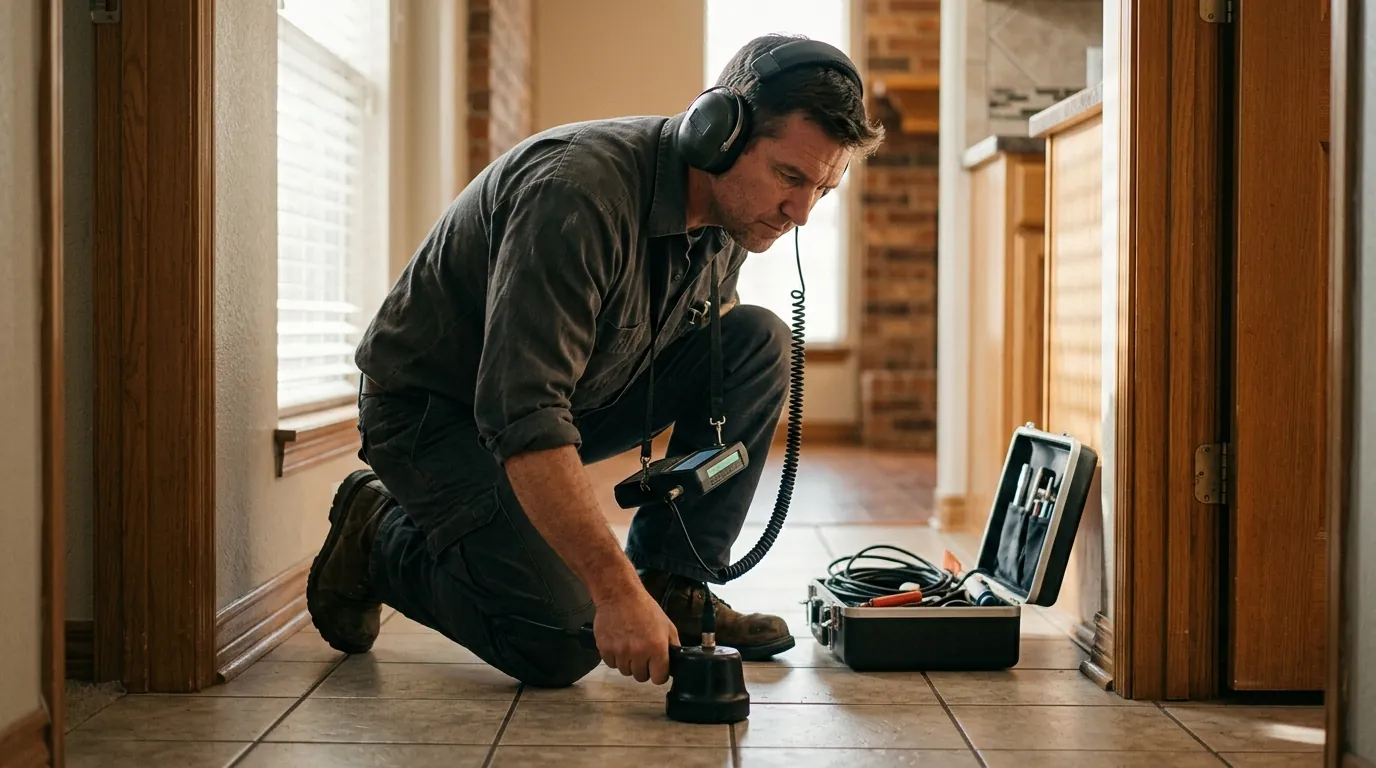
What a freeze protection visit covers
- Walk-through of attic, garage and exterior-wall lines
- Foam insulation on exposed supply pipe
- Insulated covers for each outdoor spigot
- Insulated cover for the irrigation backflow device
- Heat cable on runs that need it
- Main shut-off check and drain-down walkthrough
Homes built for a mild climate put plumbing where cold air reaches it: attics above the garage, outside walls, slab-level spigots and sprinkler backflow devices standing in the open yard. Those spots freeze first, and they're easy to find on a walk-through.
Insulation slows heat loss but doesn't add warmth, so a long, windy freeze can still get through a sleeve on a bare attic pipe. That's why we combine measures: insulate everything exposed, cover what sits outside, add heat cable only where needed, and make sure you can shut off and drain the system yourself.
Local conditions
Freezes here are short but they come almost every year. Houston's Bush Intercontinental Airport averages 9.6 days a year with freezing temperatures and has recorded at least one freeze every winter since 1969 except 2023. A hard one reaches the public system too: TCEQ required Pearland's public water system to issue a boil water notice on February 16, 2021, rescinded February 21, 2021. Protecting exposed pipes ahead of time keeps your house off the repair list when the next one comes.
Sources: en.wikipedia.org, pearlandtx.govAttic and exterior wall pipe insulation
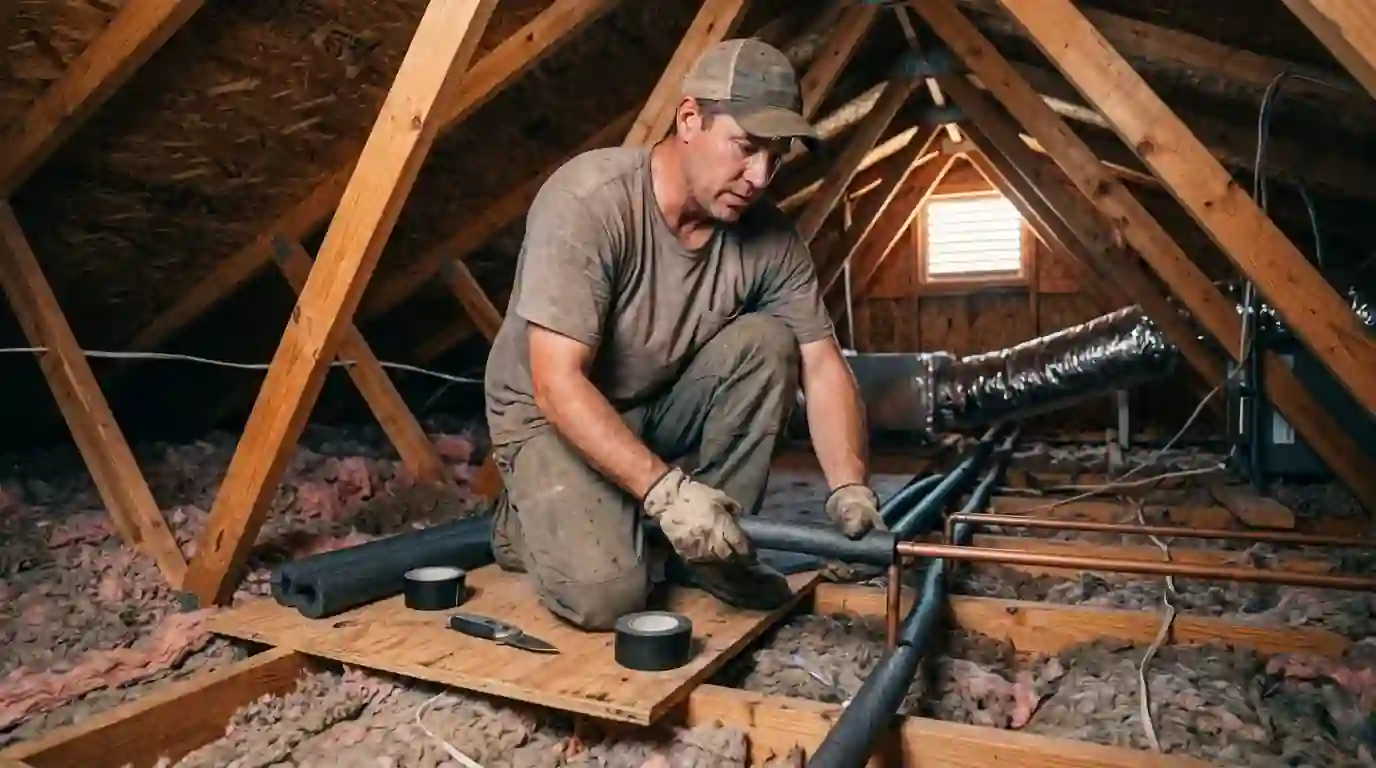
Supply lines in the attic or inside a north or garage wall are the ones that split in a freeze. We fit closed-cell foam sleeves sized to the pipe, tape the seams and cover elbows and tees, where gaps usually get left. In the attic, the pipe does better tucked under the ceiling insulation on the warm side than sitting on top of it. Some exterior-wall runs can't be reached without opening drywall, so we'll tell you which ones need that and which can be handled from the attic.
Hose bib and backflow covers
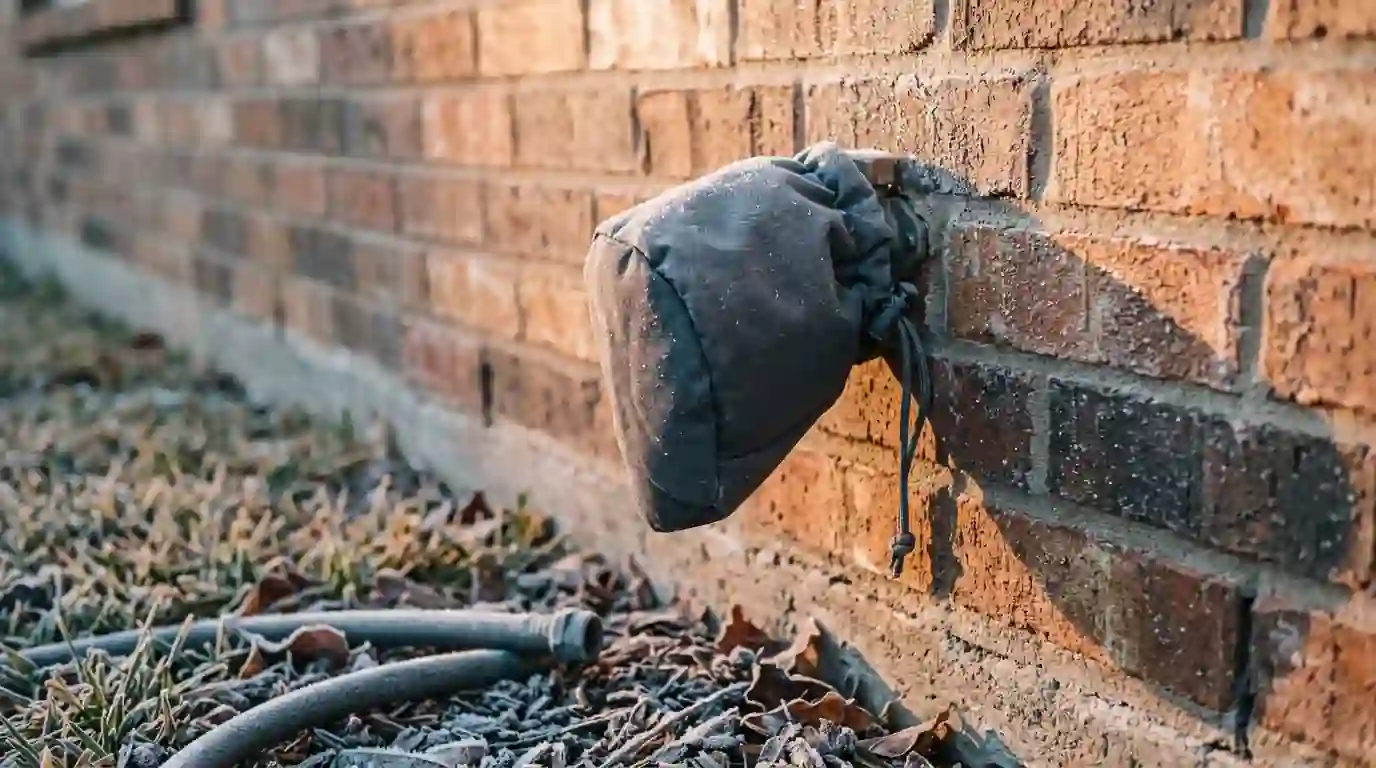
Outdoor spigots and the irrigation backflow device are the most exposed plumbing on the house. Disconnect hoses, since a hose left on traps water in the valve and can split even a frost-free hose bib. An insulated dome over each spigot holds in heat from the wall. The backflow device needs an insulated bag or box, and in a hard freeze the irrigation line should be shut off and drained. A spigot that already drips or leaks inside the wall should be replaced; see hose bib repair.
Heat cable on exposed lines
Some runs can't be buried or boxed in: a line crossing an open garage wall, a pipe on the exterior of a raised addition, or a section in a cold crawl space. Self-regulating heat cable runs along the pipe under the insulation and warms only as temperatures drop. Each run needs a protected outdoor-rated outlet nearby, and it must be installed according to the cable's instructions, without kinks and without tape that traps moisture. We use it sparingly, since insulation and a covered spigot handle most of the house.
Drain-down plans for trips
If you're leaving town and a freeze is forecast, an empty pipe can't burst. Close the main, open the highest and lowest faucets and the outside spigots to let the lines drain, and flush each toilet once. Set a gas water heater to vacation or pilot, and switch off the breaker to an electric one. Keep the thermostat set to heat the house. We walk you through the steps at your own valves so the plan works when you need it.
How we freeze-proof a house before winter
- Walk the exposed runsWe check the attic, garage walls, exterior walls, spigots and the irrigation backflow device.
- Insulate and coverFoam sleeves go on exposed pipe, and spigots and backflow devices get insulated covers.
- Heat where neededHeat cable goes only on runs that can't be kept warm with insulation alone.
- Plan the shutdownWe show you your main valve and how to drain the house before a trip.
Pricing freeze protection for your house
The range below from a national cost guide is for replacing an outdoor spigot, the most common part this work involves. Insulation and covers are priced by how much exposed pipe your house has.
Published planning ranges
- $150 to $450 on average, per HomeGuide (June 29, 2024)
- Feet of exposed pipe. A short garage run takes far less material and time than a long attic loop.
- Attic access and clearance. Low-pitch attics and runs near the eaves take longer to reach and insulate properly.
- Condition of spigots. A spigot that already leaks or splits should be replaced with a frost-free one, not just covered.
- Heat cable and power. Runs that need heat cable also need a protected outlet within reach of the pipe.
Freeze prep you can do, and work to leave to us
What you can do safely
- Disconnect hoses and fit insulated spigot covers
- Open sink cabinets on exterior walls during a freeze
- Drip faucets fed by the most exposed pipes
- Learn where the main shut-off is and test it
When to call a plumber
- Replacing a split spigot with a frost-free one
- Insulating pipe deep in a tight attic or wall
- Fitting heat cable correctly under insulation
- Draining and protecting an irrigation backflow device
Questions about pipe freeze protection in Pearland
Yes, on faucets fed by the most exposed lines. Moving water is slower to freeze, and an open faucet relieves the pressure that builds between ice and the valve, which is what actually splits the pipe.
They're far safer than standard spigots because the valve seat sits inside the warm wall. They only drain if the hose is disconnected, though. On the coldest nights, a cover adds protection for very little effort.
Open the faucet the line feeds and warm the pipe slowly with a hair dryer or a space heater kept clear of anything flammable. Never use an open flame. Keep watch as it thaws in case a split opens.
It slows heat loss, which buys hours, but adds no warmth. In a long, windy freeze an insulated attic pipe can still freeze, so pair it with dripping faucets or heat cable on the worst runs.
In fall, before the first freeze is forecast, when attics are cool enough to work in and parts are easy to find. Our freeze-proofing guide covers the steps you can take yourself.