Updated October 2026
Quick answer
A heat pump water heater in Pearland suits most garages, because it needs room around it, warm surrounding air and a drain for condensate. It pulls heat from the air into the tank, so it uses much less electricity than a standard electric tank, and it switches to backup elements when demand runs high.
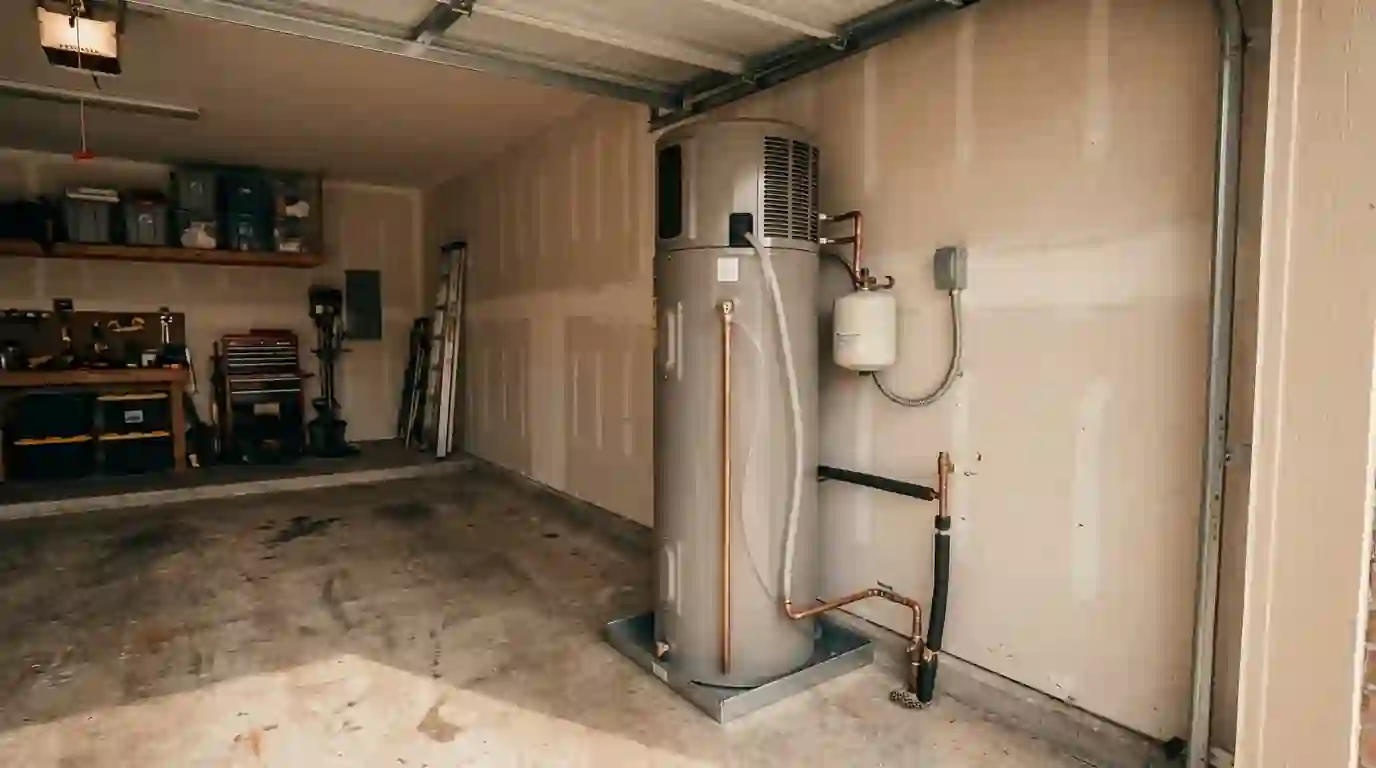
A heat pump water heater is a storage tank with a small compressor on top, working like an air conditioner in reverse. It draws warm air across a coil, moves that heat into the water and blows out cooler, drier air. In a Gulf Coast garage, that cool exhaust is a side benefit for much of the year.
The tradeoffs are real. These units cost more up front than a plain electric tank, they are taller and heavier, they hum while running, and they recover more slowly in heat pump-only mode. Most models have a hybrid setting that adds the electric elements when you need hot water faster.
Heat pump or standard electric tank
| Question | Heat pump tank | Standard electric tank |
|---|---|---|
| How it heats | Moves heat from the air, elements as backup | Electric elements only |
| Running cost | Much lower | Higher |
| Up-front cost | Higher | Lower |
| Space needs | Taller, needs air around it | Fits a small closet |
| Extras | Condensate drain and filter | None |
What shapes the cost of a heat pump water heater
We price your install after checking the space, the drain route and the electrical supply. Rebates and tax incentives come and go, so check what applies when you buy.
- Tank size and model. Larger tanks and models with more features cost more than a basic 50 gallon unit.
- Existing fuel. Replacing an electric tank is simpler than replacing gas, which adds capping and an electrical run.
- Condensate route. A gravity drain through the wall is simple; a condensate pump or a long run adds parts.
- Location changes. Moving the heater to a roomier spot adds piping and electrical work.
What your heat pump install includes
- Site check for height, room volume and airflow
- Removal and haul-away of the old heater
- Pan, relief valve line and water connections
- Condensate drain to a safe outlet
- Mode setup and a walkthrough of the controls
- Permit and inspection
Garage installs
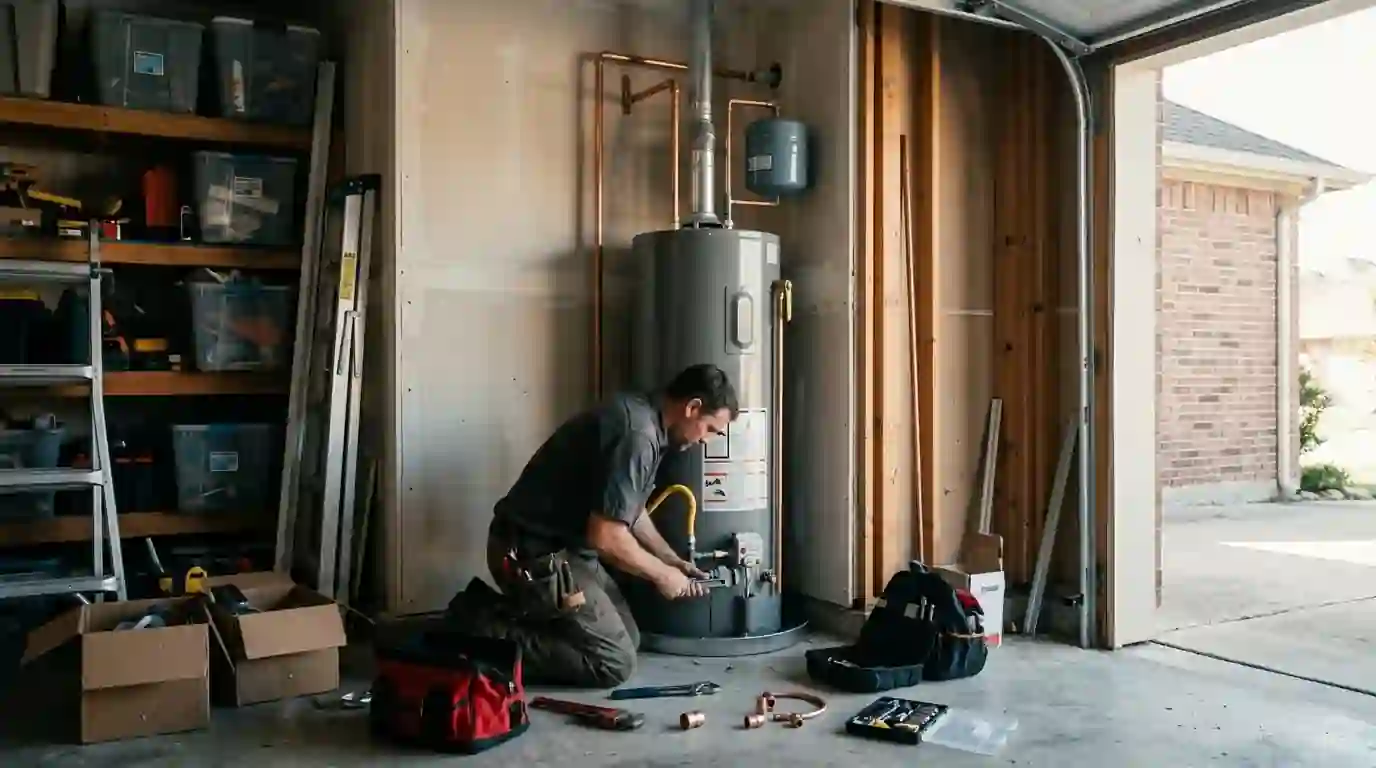
Garages are the natural home for these units in this area. The air there stays warm for most of the year, there is usually height for the taller tank, and the fan noise and cooler exhaust air bother no one. Check the clearance above your current heater: many heat pump models need several more inches of height than a standard tank. We make sure the air intake and outlet are not blocked by shelving and that the unit sits on a level stand or pan.
Condensate drain routing
Pulling heat from humid Gulf Coast air also pulls out water, and a heat pump water heater can produce a steady trickle of condensate on a muggy day. That water needs somewhere to go. In a garage we can run the drain to the outside through the wall, to a floor drain or into a nearby laundry standpipe. Where gravity will not work, a small condensate pump lifts it. A clogged drain line overflows into the pan, so the line gets cleaned during routine service.
Electrical and space needs
Most whole-house models run on the same 240-volt circuit a standard electric tank uses, so a straight electric swap often needs no panel work. Some newer 120-volt models plug into an ordinary outlet, often on its own circuit, which helps when replacing a gas heater, though they recover more slowly. Space matters as much as power. Each model lists a minimum room volume or venting option so the unit does not chill the space and starve itself of heat. A small closet usually needs louvered doors or ducting.
Tank to hybrid swaps
Swapping an electric tank for a heat pump model is the simplest conversion: same circuit, same water lines, plus a condensate drain. Replacing a gas tank takes more planning. The gas line is capped, the old flue is removed and sealed, and a circuit is added unless a 120-volt model fits the household. In every case we size the tank with recovery in mind, since a 50 gallon heat pump tank in efficiency mode refills more slowly than the same size gas tank.
Local conditions
Timing favors this choice across much of the city, since Pearland's median year built is 2001 for ACS 2020-24 (up from 1996 in 2006-10), and a large share of homes are on their second water heater or shopping for one. Shadow Creek Ranch fits that picture: its first model homes broke ground in October 2001, so its earliest houses are well past the usual life of an original tank. Weigh a heat pump unit at replacement time, before a leak forces a rushed like-for-like swap.
Sources: bestneighborhood.org, shadowcreekranch.netHow a heat pump water heater install runs
- Check the spotWe measure height, room volume, airflow and the path for the condensate drain.
- Confirm powerWe check the circuit and breaker, or plan the new circuit with an electrician if gas is being replaced.
- Remove and setThe old heater is drained and removed, the new unit is set in a pan and connected.
- CommissionWe fill the tank, run the compressor, check the drain and set the operating mode with you.
Questions about heat pump water heater installation in Pearland
It uses a fraction of the electricity a standard electric tank needs for the same hot water, because it moves heat rather than making it. Actual savings depend on your usage, settings and garage temperature.
It makes a steady fan and compressor hum, roughly like a window air conditioner or a dehumidifier. Garages and utility rooms suit it better than a closet next to a bedroom for that reason.
Yes. Most models run in heat pump mode down to fairly cool temperatures and switch to the electric elements below that. Our winters are short enough that the unit spends most of the year in its efficient mode.
It can, with more work: capping the gas line, sealing the old flue and adding power. A 120-volt plug-in model can avoid a new circuit in some homes. We help you weigh that against a new gas tank.
Clean the air filter every few months and keep the condensate drain clear. The tank itself still benefits from a yearly flush and anode check, the same as any tank water heater.