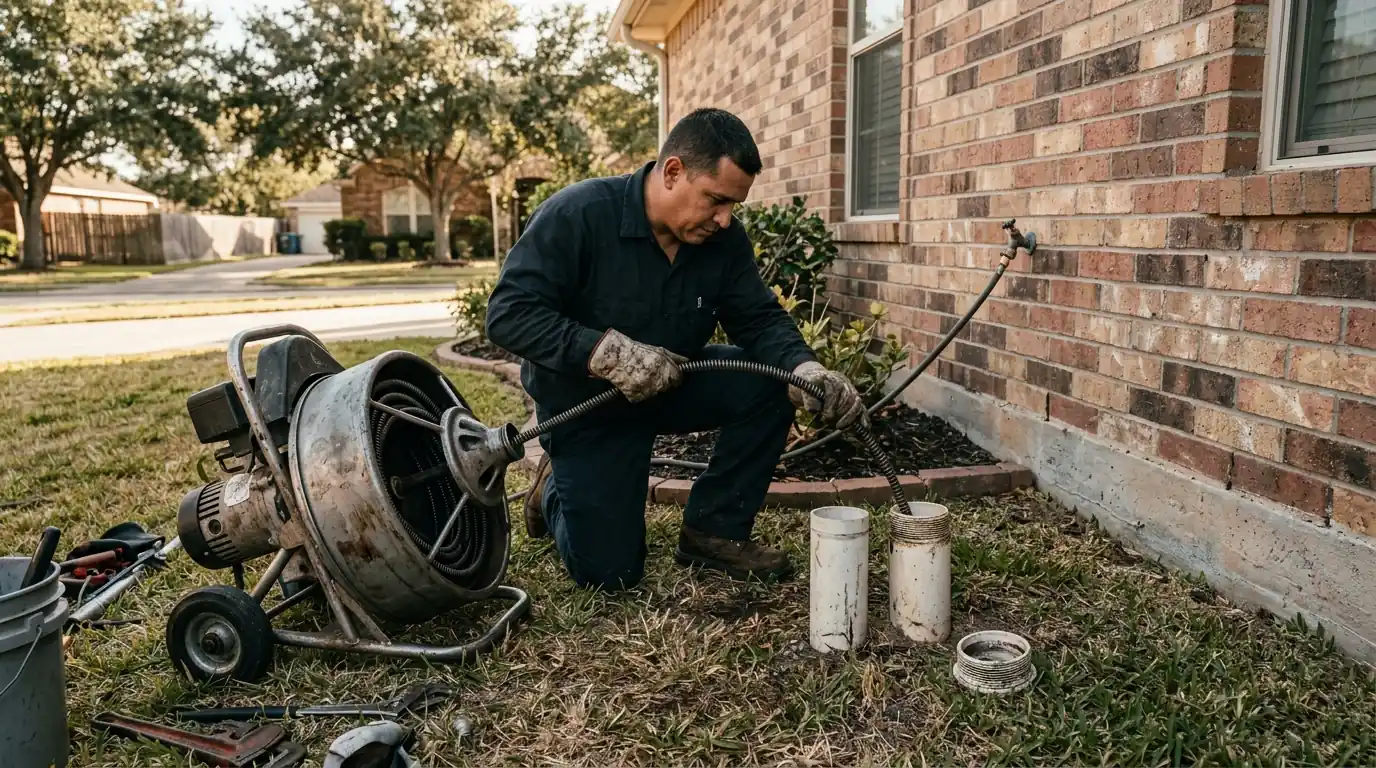
Updated October 2026
Quick answer
A Pearland sewer line replacement swaps the whole private run, from where the drain leaves the house to the connection at the city tap, for new PVC laid at a steady slope. It makes sense when the camera shows failing material along the length rather than one bad spot, and the open trench is inspected before backfill.
Replacement is a bigger decision than repair, so it should rest on footage. When defects show up at joint after joint, or the pipe material itself is breaking down, patching one hole at a time costs more over a few years than doing the run once.
A new line is usually Schedule 40 or SDR PVC with glued or gasketed joints, which resists roots and corrosion. The method is open trench or trenchless, depending on what sits above the pipe and how its path runs.
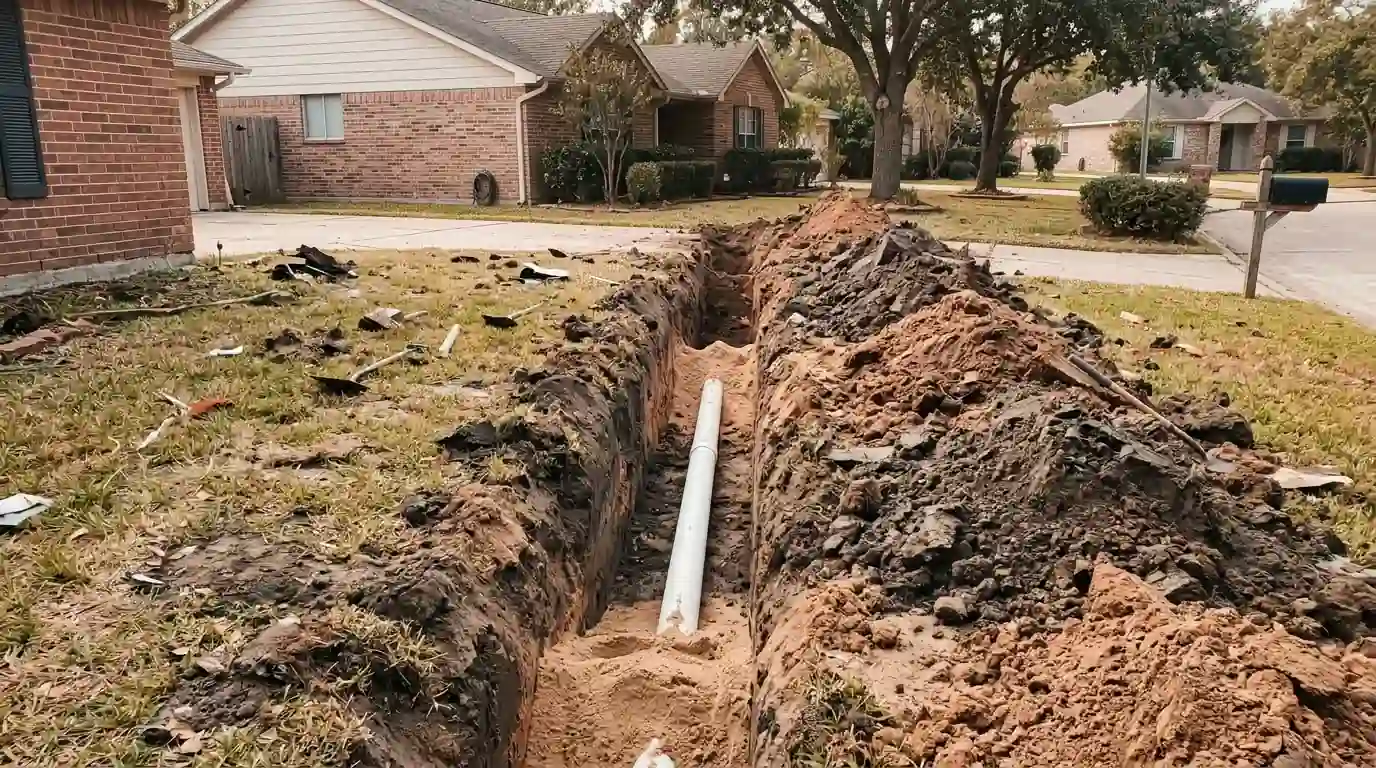
Open trench or trenchless replacement
| Question | Open trench | Trenchless |
|---|---|---|
| Excavation | A trench along the whole route | Pits at each end of the run |
| Surface impact | Yard, beds or paving along the path | Mostly limited to the two pits |
| Fixes slope problems | Yes, the bed and fall are rebuilt | Limited; follows the existing path |
| Best fit | Bellies, collapsed pipe, open lawns | Lines under paving or landscaping |
Length, depth and method: pricing a new sewer line
Two national cost guides publish replacement ranges, including per-foot figures, shown below. Length, depth and method do most of the work in setting your price.
Published planning ranges
These are third-party planning ranges, not our prices and not a quote. You get a price for your job before work starts.- Length of the run. Distance from the house to the tap sets how much pipe and digging the job needs.
- Depth and soil. A deeper line or wet, sticky clay needs a wider trench and more care backfilling.
- Surface on top. Driveways, walks and mature landscaping cost more to cross or restore than open lawn.
- Trench or trenchless. Trenchless trims surface repair but needs a pipe path it can follow.
What a full sewer replacement includes
- Camera record of the old line before work starts
- Permit and city inspection of the open trench
- Utility marking before excavation
- New PVC line on a compacted bed at proper slope
- Two-way cleanout near the house
- Flow test, camera check and backfill
Clay and Orangeburg lines
Vitrified clay pipe lasts a long time in still ground, but its short sections and mortar or early gasket joints invite roots and shift with the soil. Orangeburg, a tar-impregnated fiber pipe used in some mid-century homes, deforms into an oval and eventually collapses. The camera tells them apart quickly. Neither material is worth patching once it's failing in several places, because each repair joins new pipe to old pipe that is breaking down beside it. Full replacement removes the weak material entirely.
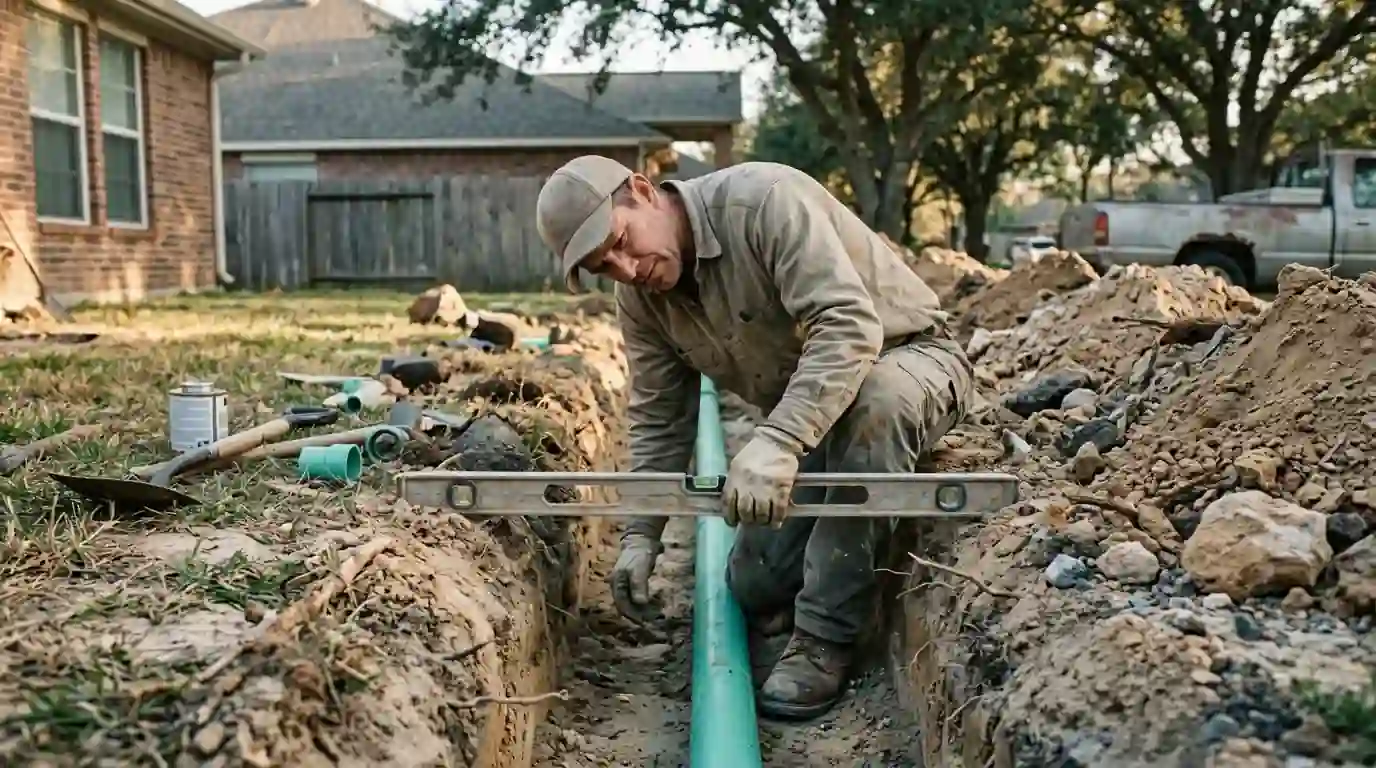
Yard line replacement to the tap
The private sewer runs from the house to the public connection, often near the street or an easement at the back of the lot. Replacing it end to end means a trench along that path, or entry and exit pits if the job goes trenchless. Plan for the yard: sod, beds and sprinkler lines along the route will be disturbed and need restoring. Before work starts, the line is located and its path marked, and buried utilities are flagged so the dig avoids gas, power and cable lines.
Cleanout added during replacement
Many older homes have no outdoor cleanout, which makes every future clog harder to reach. A replacement is the cheapest moment to add one, because the pipe is already exposed. A two-way cleanout near the foundation lets a cable or camera go toward the house or toward the street. It costs little extra during the job, and it means the next backup can be cleared from the yard instead of through a toilet. We set the cap at grade where it stays visible and protected.
Permits and inspection
Replacing a sewer line is permitted work. The inspector checks the new pipe, its bedding and its slope while the trench is still open, and the line stays exposed until that happens. Plan on a short wait between laying the pipe and backfilling, and keep pets and children away from the open trench. We schedule the inspection, and the permit record stays with the house, which buyers and their inspectors often ask about when you sell.
Local conditions
Age and soil both work against the sewer under older Pearland lots. HAR's subdivision table shows several older east-side subdivisions with average build years as early as 1964 and 1965, homes old enough for clay or cast iron yard lines. A Houston Geological Society Bulletin article says Houston sits largely on the Beaumont Formation and that structures on its expansive soils have built-in construction and maintenance problems. Rigid joints in old pipe don't ride that soil movement well, which is why full replacement comes up most in these neighborhoods.
Sources: har.com, archives.datapages.comHow a sewer replacement runs
- Scope and locateWe record the old line on camera and mark its path, depth and tap location.
- Permit and utility marksThe permit is pulled and buried utilities are marked before any digging starts.
- Lay the new lineNew pipe goes in on a compacted bed at a steady slope, with a cleanout near the house.
- Inspect, test, restoreAfter inspection and a flow test on camera, the trench is backfilled and the surface regraded.
Questions about sewer line replacement in Pearland
Repair it if the camera shows one defect in otherwise sound pipe. When the footage shows trouble at joint after joint, or the material itself is failing, replacement usually costs less over the next several years.
Not during the stretch when the old line is cut and the new one isn't connected yet. Before work starts you'll know when that window begins and ends, so you can plan showers, laundry and cooking around it.
PVC sewer pipe for most residential lines, which resists roots and corrosion and comes in long sections with fewer joints. Where a trenchless method is used, the new pipe may be HDPE pulled in as one continuous length.
Not always. If the line runs under a driveway, we can often tunnel beneath it, angle the trench around it or go trenchless for that section. We'll walk the path with you and price the options.
We backfill and compact the trench and rough-grade the surface. Sod, plants and irrigation repairs are usually separate; we'll tell you what to expect so you can plan for them.