Updated October 2026
Quick answer
A hidden leak in a Pearland home is narrowed down by elimination: a meter test proves water is escaping, closing valves separates the house from the yard line and the hot side from the cold, and listening gear or thermal imaging marks the spot. The goal is one small opening, not exploratory holes.
Clues that water is escaping somewhere
- The meter's leak indicator turns with everything off
- A water bill that rises with no change in use
- Sound of running water in a quiet house
- Warm or damp spots on the floor
- A strip of lawn that stays green or soggy
How we narrow a leak down to one spot
- Read the meterWe confirm water is escaping with every fixture off, and note how fast it moves.
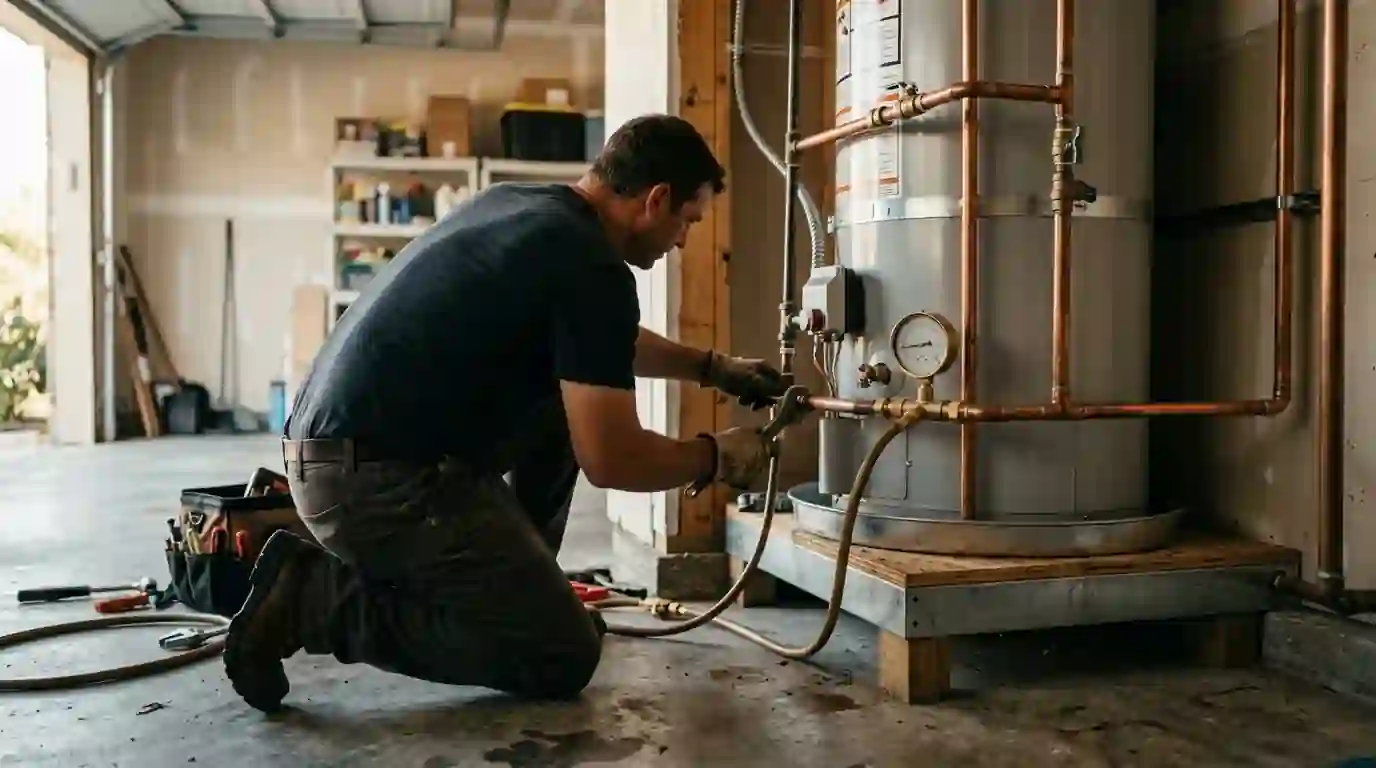
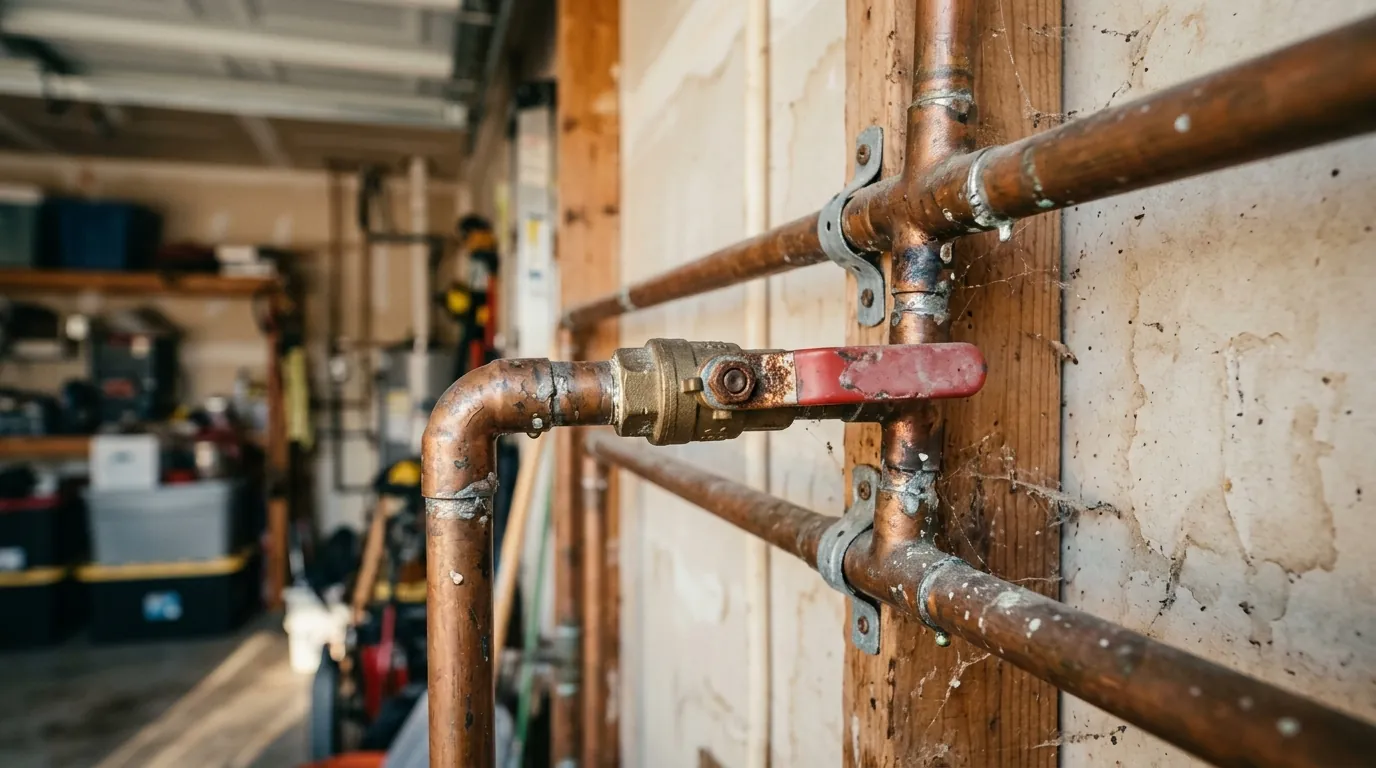
- Split the systemClosing valves separates house from yard, then hot from cold, and pressure tests each run.
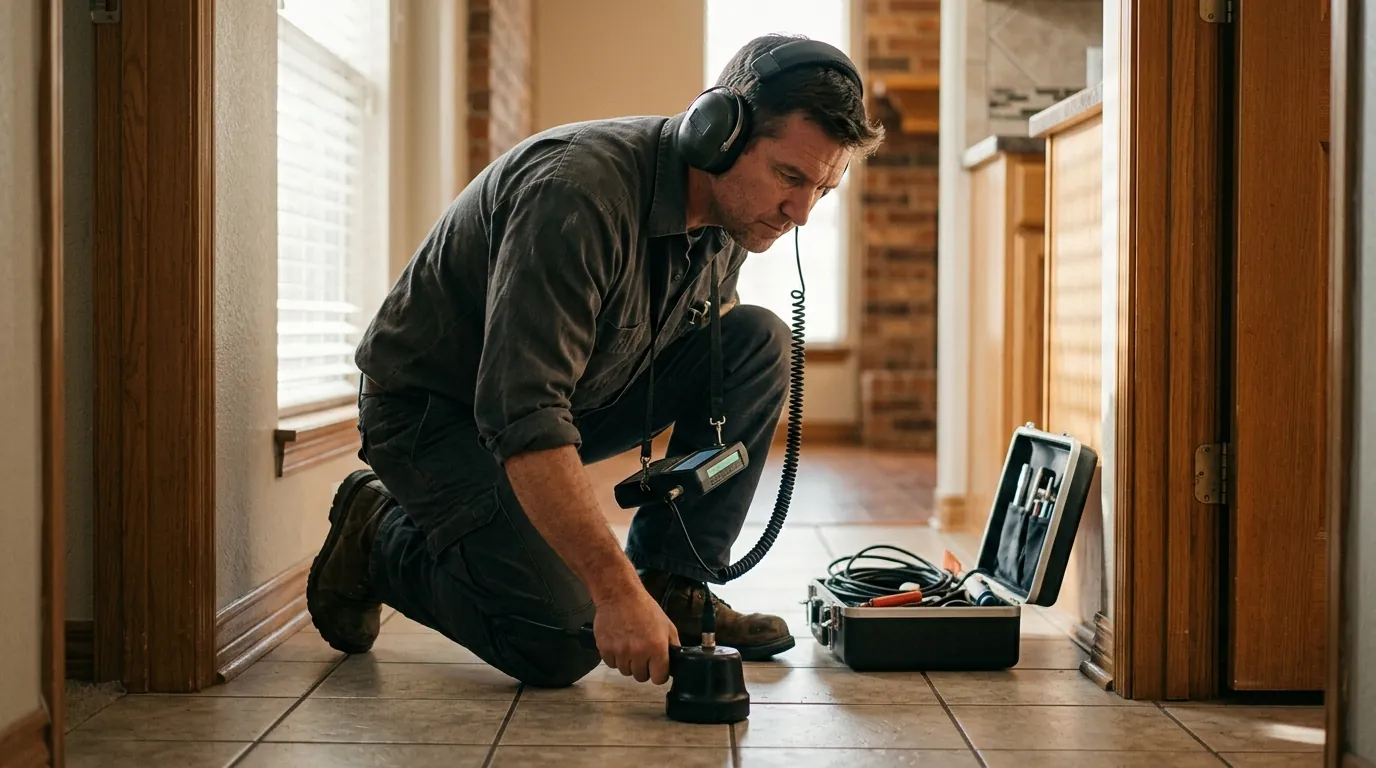
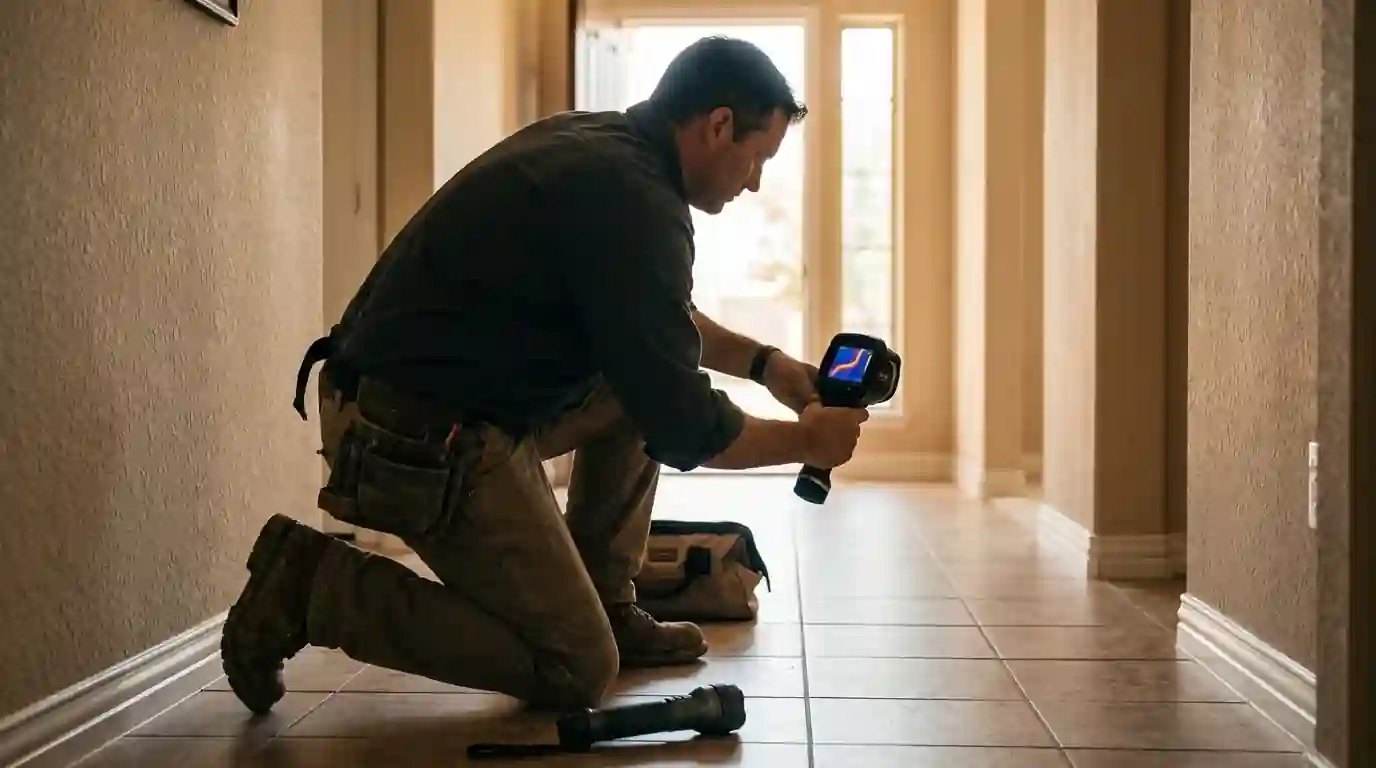
- Listen and scanGround microphones, thermal imaging and moisture meters close in on one small area.
- Mark and explainWe mark the spot and talk through repair options before anything is opened.
Most hidden leaks give themselves away on the water meter long before they show on a floor or ceiling. The trouble is that a meter tells you water is leaving, not where. Every step after that is about shrinking the search area until one spot is left.
We use the least destructive tools first: valve isolation, pressure tests on single lines, acoustic listening, thermal imaging and moisture meters. You see the readings as we go. When the location is marked, we explain what it would take to open and repair it, so the finding is useful even before any repair is booked.
High water bill with no visible leak
A bill that climbs while your habits stay the same is the most common reason people call us. Start with the toilets: a flapper that leaks into the bowl can waste a lot of water silently, and a few drops of food coloring in the tank will show it. If the toilets pass, close every fixture and watch the meter's leak indicator. If it still turns, we close the house valve to see whether the loss is inside the home or on the line from the meter.
Electronic slab leak location
When the loss is inside the house and nothing is wet, the line under the concrete is the next suspect. We isolate hot and cold, pressure-test each, and then listen through the floor with ground microphones that pick up the hiss of water leaving a pipe. On hot-side leaks, a thermal camera often shows a warm streak that follows the line. Expect us to mark the floor with tape. Opening it is a separate decision covered on our slab leak repair page.
Water still running? Call before it spreads.
Call (281) 845-9645Leaks inside walls and ceilings
A brown ring on a ceiling or paint bubbling low on a wall tells you water is there, but water travels along framing and drywall before it shows. We trace it back with moisture meters and thermal imaging, then run fixtures one at a time to see which one feeds it. A shower that only leaks while running points to the valve or the drain; a stain that grows overnight points to a supply line. The opening goes where the source is, not where the stain is.
Irrigation and yard line leaks
If the meter stops when the house valve is closed, the loss is outside: the service line from the meter, the sprinkler system or a hose bib line. A soggy strip of lawn in dry weather, a sinkhole or grass that greens up in one stripe are typical clues. We isolate the sprinkler backflow and zones first, since they're the easiest to rule out. Service lines often run through clay that shifts, so expect us to check the whole run, not just the wet spot.
Local conditions
Soil is a big reason hidden leaks are common here. The USDA's Lake Charles soil series, extensive in Southeast Texas and mapped through Brazoria County, Harris County and Fort Bend County, has very slow permeability and develops cracks 1 to 5 cm wide when dry. Breaks are routine on public mains too: a University of Houston CIGMAT presentation says the City of Houston normally experiences 12 waterline breaks a day. Pipes under Pearland slabs and lawns ride the same shrink-and-swell cycle, and slow-draining clay can hide a leak below the surface for a long time.
Sources: soilseries.sc.egov.usda.gov, cigmat.cive.uh.eduWhat changes the cost of finding a hidden leak
A national cost guide publishes the planning range shown below for leak detection on its own. The time it takes to pin a leak down varies with these factors.
Published planning ranges
- $150 to $400 (typical $280), per Angi (Sep 22, 2026)
- Inside or outside. Telling the house apart from the yard line is quick, while chasing a quiet leak under a slab takes longer.
- How fast it is leaking. A strong leak is loud and easy to hear; a slow seep needs more isolation and listening.
- Floor coverings. Tile and bare concrete carry sound well, while thick carpet and pad muffle it.
- Number of lines. Homes with several branch runs, a sprinkler system or a pool line have more to rule out.
What a leak locating visit covers
- Meter test with all fixtures closed
- House versus yard line isolation
- Hot and cold side pressure tests
- Acoustic and thermal scanning
- Marked location on the floor, wall or ground
- Repair and reroute options explained
Questions about leak detection in Pearland
Turn off every faucet, appliance and the sprinkler controller, then watch the small leak indicator on the meter face for a few minutes. If it moves, water is leaving somewhere. Our meter guide walks through it.
Locating itself is non-invasive: valves, pressure gauges, listening gear and cameras. The only opening comes later, at the marked spot, if you choose to repair it there rather than reroute the line.
Water can escape into the clay under a slab or yard for a long time without surfacing. A running toilet is also silent and leaves no puddle. Both are common causes of a jump with no visible water.
Often, yes. We isolate irrigation and pool fill lines early because ruling them out is fast. If the loss is there, we'll tell you whether it's a plumbing fix or one for your irrigation or pool contractor.
No. A leak only grows, and water under a slab or behind a wall keeps wetting materials you can't see. Once the meter test shows a loss, finding it sooner keeps the repair smaller.