Updated October 2026
Quick answer
A Pearland whole-house filter needs carbon rated for chloramine if your utility disinfects with it, because ordinary carbon removes chlorine but lets much of the chloramine through. The water quality report names the disinfectant in use. A sediment pre-filter goes ahead of the carbon so grit doesn't clog it early.
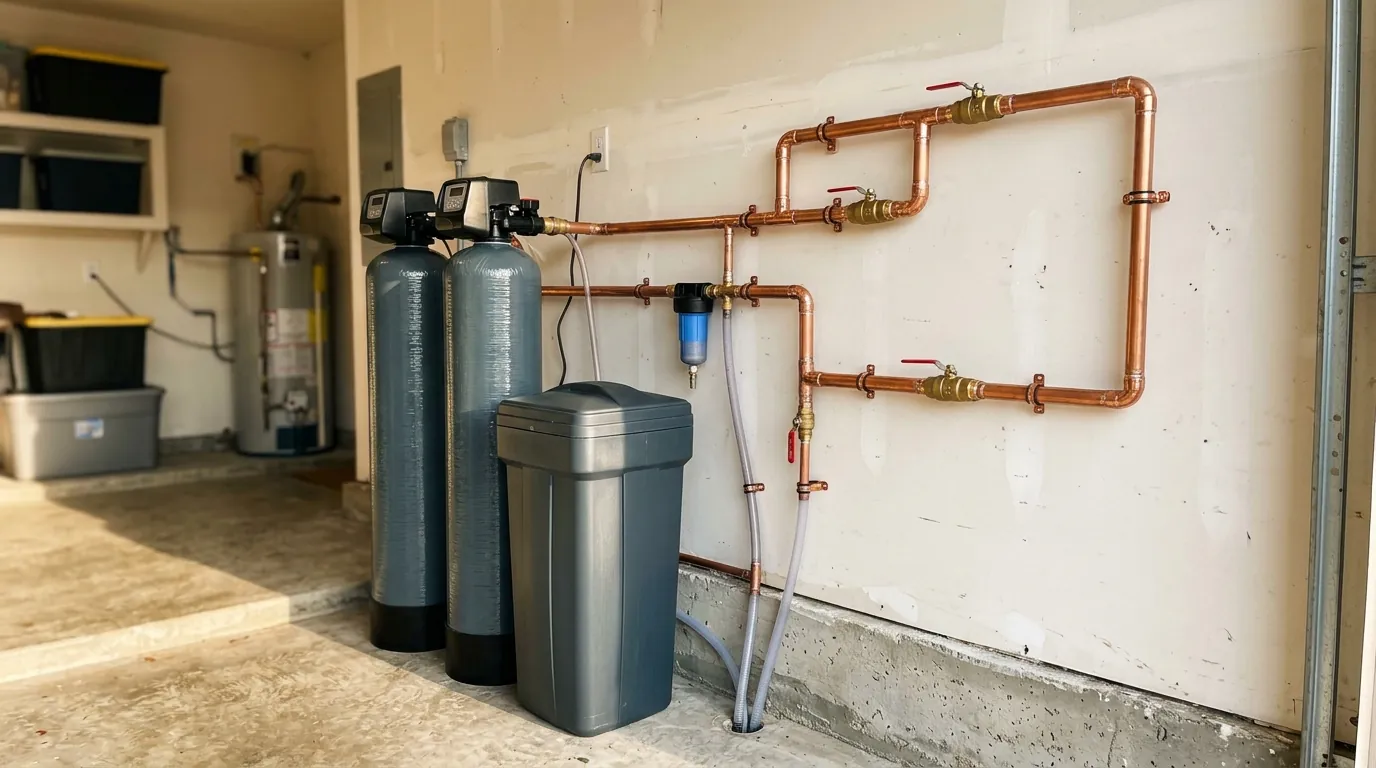
A point-of-entry filter sits where the main line comes into the house, usually in the garage, so every faucet, shower and appliance gets the same treated water. It typically pairs a sediment stage with a large carbon tank or cartridge housing sized for the flow of the whole house.
Getting it right is mostly about matching media to the water and keeping pressure up. A filter too small for your flow rate drops pressure in the shower when the washer runs. We size by flow, not just by the number of bathrooms.
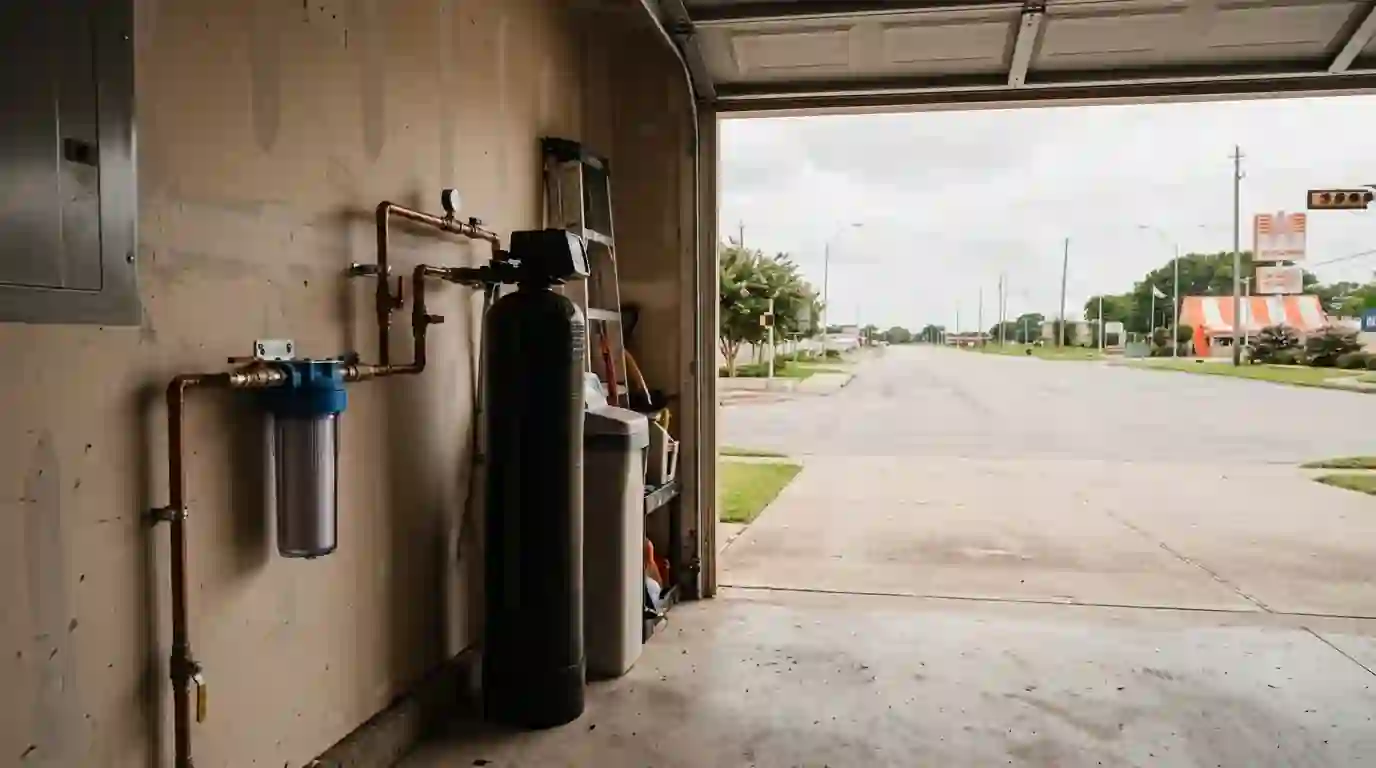
Cartridge housings or a backwashing carbon tank
| Question | Cartridge housings | Backwashing tank |
|---|---|---|
| Chloramine | Limited contact time | Better, with catalytic media |
| Upkeep | Cartridge changes every few months | Media change every several years |
| Drain line | Not needed | Required |
| Space | Small wall footprint | A tall tank on the floor |
Why whole-house filter quotes vary
A national cost guide's regional range for whole-house filtration appears below. These factors decide where your system lands within it.
Published planning ranges
- $1,382 to $3,225 in Houston, per Angi (Jul 8, 2026)
- Media and tank size. A catalytic carbon tank for chloramine costs more than a basic cartridge housing.
- Number of stages. Adding sediment, carbon and a softener means more equipment and more plumbing.
- Where the main enters. A garage loop is quick to tap; cutting into the main elsewhere adds pipe and labor.
- Drain needs. Backwashing tanks need a drain line, while cartridge systems do not.
What a filtration install includes
- A water test and a review of the utility report
- Sediment and carbon stages sized to your flow
- A bypass valve for service without shutting off water
- A pressure gauge to track cartridge life
- A drain line for backwashing tanks
- A first flush and a chlorine check
Chloramine-rated carbon
Utilities use chloramine, a blend of chlorine and ammonia, because it lasts longer in the pipes than chlorine. That staying power makes it harder to filter. Standard granular carbon pulls chlorine out quickly, but chloramine needs catalytic carbon and more contact time, which means a larger tank and slower flow through the media. If you notice a chlorine smell even with a basic carbon filter in place, this is usually why. Catalytic media also lasts longer between changes than cartridge carbon.
Sediment pre-filters
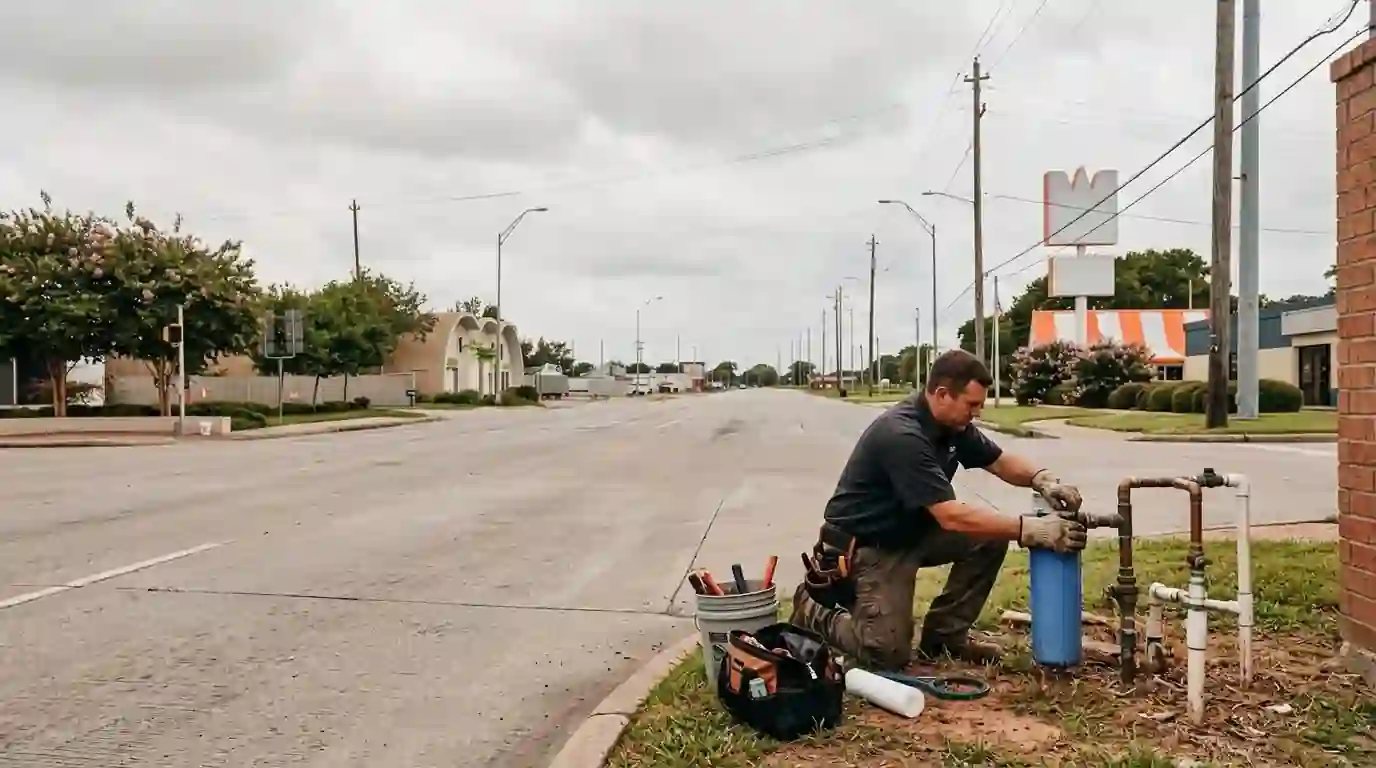
Sand, pipe scale and grit stir up after a main break or a utility flush. They plug faucet aerators, scratch valve seats and coat carbon so it stops working. A sediment pre-filter goes first, rated by micron size: a coarser cartridge or spin-down screen catches the heavy grit, and a finer one can follow. Clear housings let you see when the cartridge darkens. If your aerators clog every few weeks, start here, since sediment is the cheapest stage to fix and protects everything after it.
Filter changes
Every filter stops working at some point. Sediment cartridges clog and drop pressure. Carbon cartridges keep flowing but stop removing chlorine and taste. Backwashing carbon tanks run longer, with the media replaced every several years depending on water use. We change cartridges, swap tank media, lubricate housing O-rings and check that the bypass works. If you'd rather do cartridge changes yourself, we'll show you how to shut the bypass, release pressure and seat a new O-ring without cross-threading the housing.
Point-of-entry vs point-of-use
A point-of-entry system treats all the water coming into the house. A point-of-use filter treats one tap, usually the kitchen sink or the refrigerator line. Whole-house carbon covers bathing and laundry, where chlorine dries skin and fades fabric. A point-of-use filter or reverse osmosis system goes further for drinking water, removing dissolved solids that whole-house carbon leaves behind. Many homes do both: whole-house carbon for comfort and a dedicated drinking-water tap at the kitchen sink.
Local conditions
Pearland's surface water treatment plant was built to deliver 10 million gallons of drinking water a day from Brazos River water carried by the Gulf Coast Water Authority canal. Water treated for a system that size leaves the plant disinfected to stay safe over miles of main, and that residual is what a carbon stage removes at your house. In Silverlake, a 1,000-acre community of 2,500 single-family homes developed in 1995, the main shutoff where a filter gets cut in may still be the original valve, so we check that it closes fully before we start.
Sources: communityimpact.com, pearlandedc.s3.edsuite.comPutting a whole-house filter on your main
- Check the waterWe look at the utility's water report and test at your tap for chlorine and hardness.
- Size for flowWe count fixtures and peak flow so the filter keeps up with two showers and a washer.
- Install with a bypassThe system goes on the main with a bypass valve so water stays on during changes.
- Flush and confirmWe flush new media to drain, then test chlorine at a tap to confirm it is working.
Questions about whole-house water filtration in Pearland
A properly sized one should not be noticeable. Pressure drops when the filter is too small for your peak flow or when a sediment cartridge is overdue for a change. We size for flow to avoid that.
No. Carbon and sediment filters don't remove calcium and magnesium. For hardness, you need a water softener, usually installed after the carbon stage so chlorine doesn't break down the softener resin.
Sediment cartridges often last a few months; carbon cartridges somewhat longer. Large carbon tanks can go several years before media replacement. Your water use and sediment level set the schedule, and a pressure gauge helps you time it.
It improves taste and smell, but it doesn't remove dissolved minerals or salts. For drinking and cooking, many homeowners add reverse osmosis at the kitchen sink.
We cut into the main line where it enters the house, usually in the garage or on an exterior wall, and install the housings with a bypass. Outdoor faucets can stay unfiltered.