Updated October 2026
Quick answer
Most Pearland sewer line repairs fix one section rather than the whole run: a cracked joint, a belly that holds water, or a stretch roots have broken into. A camera and locator mark the defect and its depth first, so the dig or liner targets that spot, and the repaired line is flow-tested before backfill.
Signs your sewer line has a damaged section
- Clogs that return at the same distance from the cleanout
- A soggy, sunken or extra-green strip over the line
- Sewer smell in the yard with no backup inside
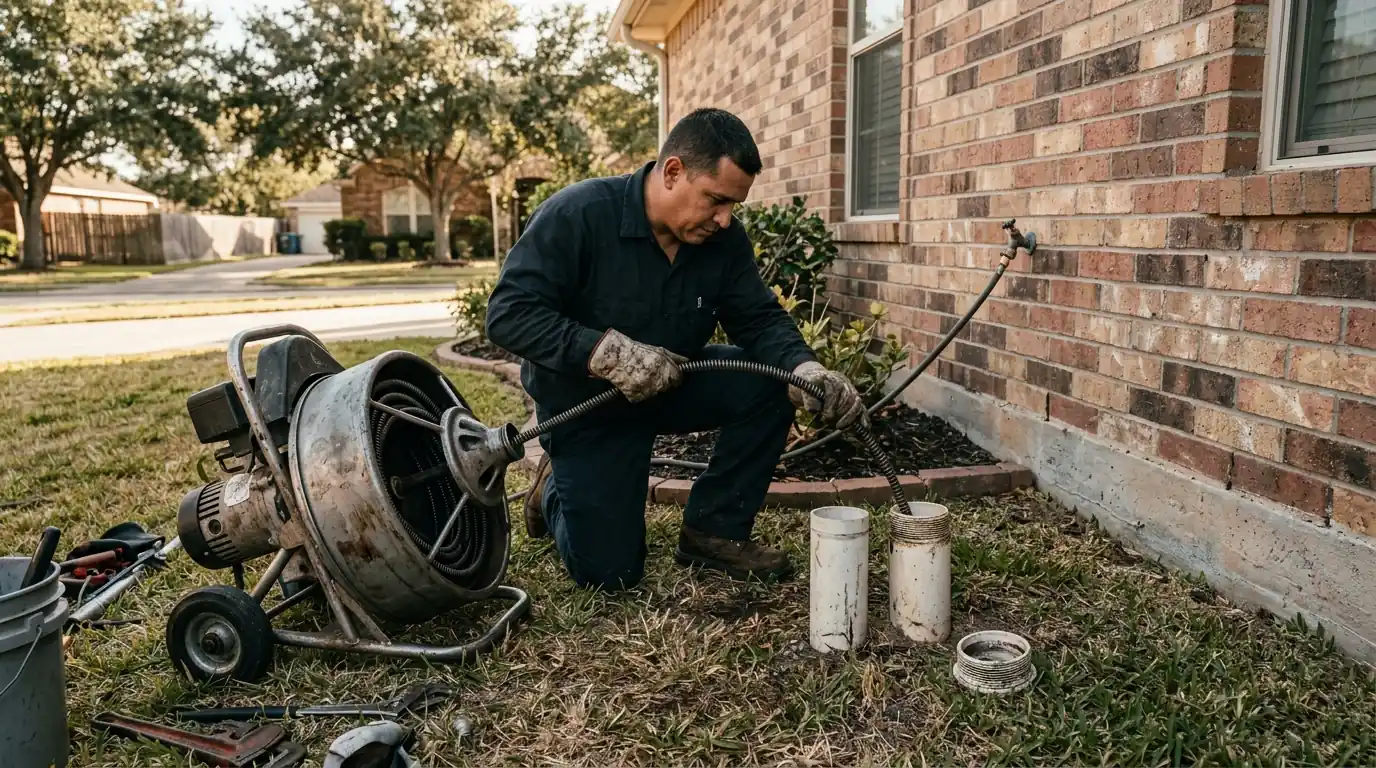
- Dirt or broken pipe pieces on a drain cable
- A camera image showing standing water or an offset
How a sewer section gets repaired
- Camera and markWe confirm the defect on video and mark its spot and depth on the ground.
- Price the optionsYou see the cost of a spot repair against lining or replacing the run.
- Dig and replaceWe expose the pipe, cut back to sound material and set new pipe on a firm bed.
- Test and backfillWater runs through the repair and the camera checks it before the hole is filled.
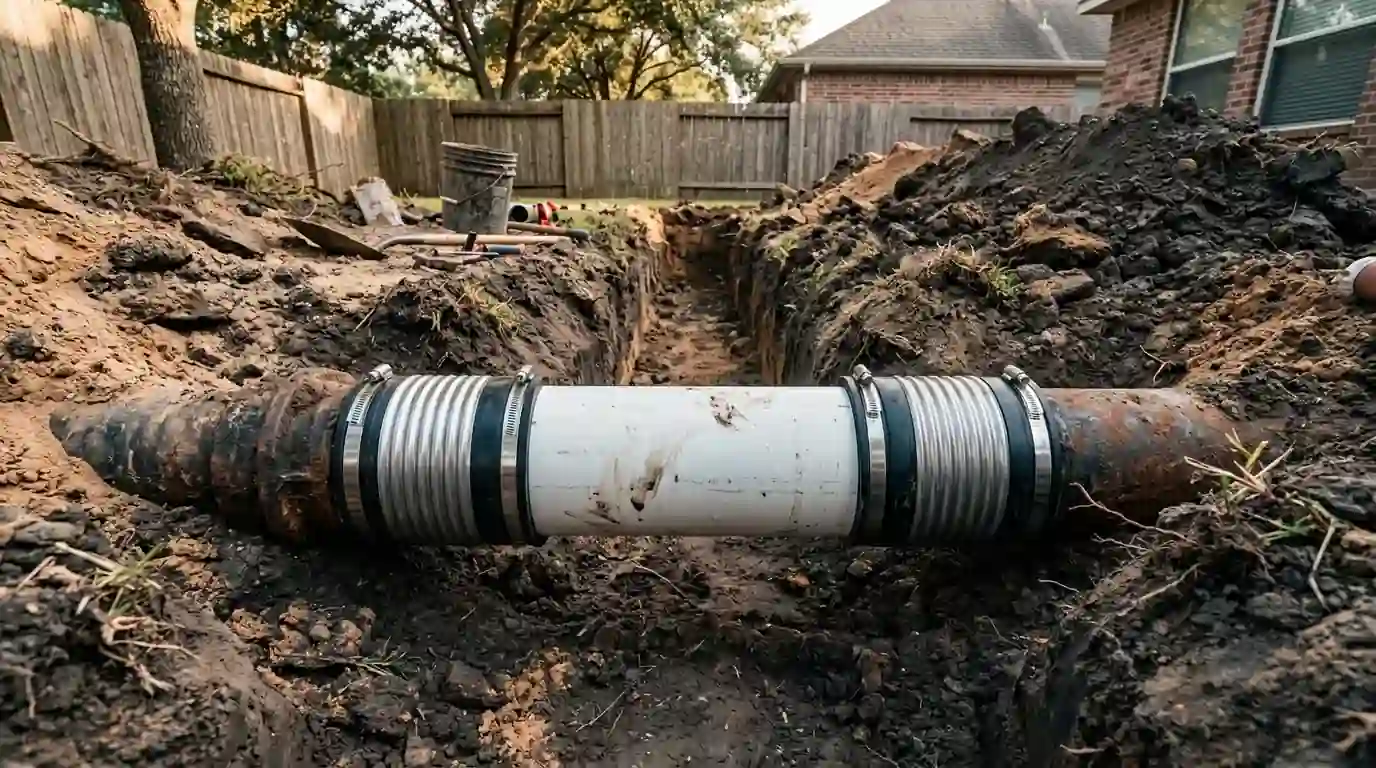
A spot repair makes sense when the rest of the pipe is sound. We cut out the damaged length, set new PVC on a compacted bed with the right slope, and join it to the old pipe with shielded couplings made for the transition. One hole, one fix.
When the camera shows defects every few joints, patching one at a time gets expensive and leaves the weak pipe in service. That's when full replacement or a liner is the better number, and we'll price both.
Bellied or sagging sections
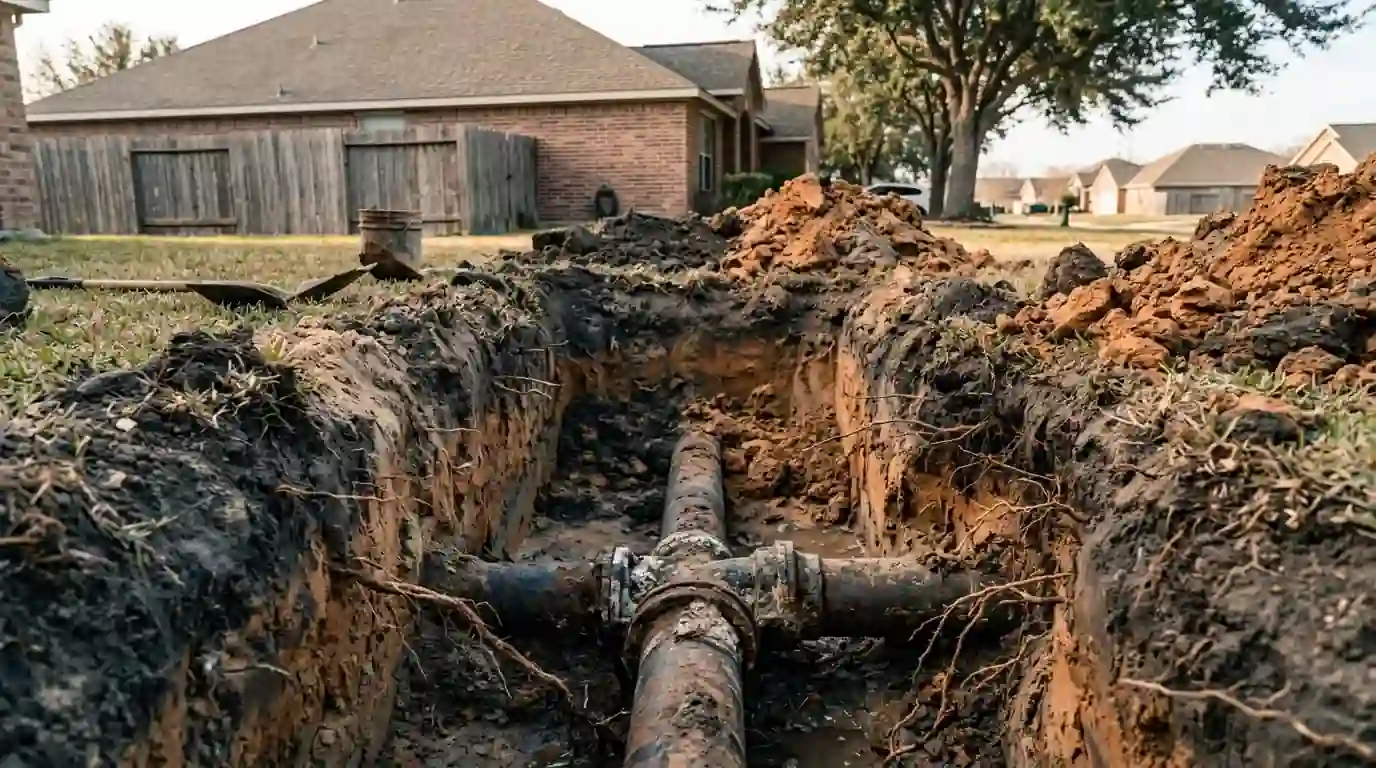
A belly is a low spot where the pipe has settled and water sits instead of draining. Paper and solids collect there, so the line clogs at the same distance from the cleanout again and again, and the camera shows the lens dipping under water. The fix is to dig out that stretch, rebuild a firm bed under it, and reset the pipe at a proper fall. A shallow sag sometimes only needs regular cleaning; a deep one keeps getting worse as soil shifts.
Broken joints
Joints are the weak points in clay and cast iron lines, and they're where shifting soil does its damage. An offset joint leaves a lip that catches debris; a separated one lets sewage out and soil in, sometimes leaving a soft spot in the yard. We expose the joint, cut back to sound pipe on both sides and splice in new pipe with shielded couplings. If several neighboring joints are failing, lining or replacing that run may beat fixing them one at a time.
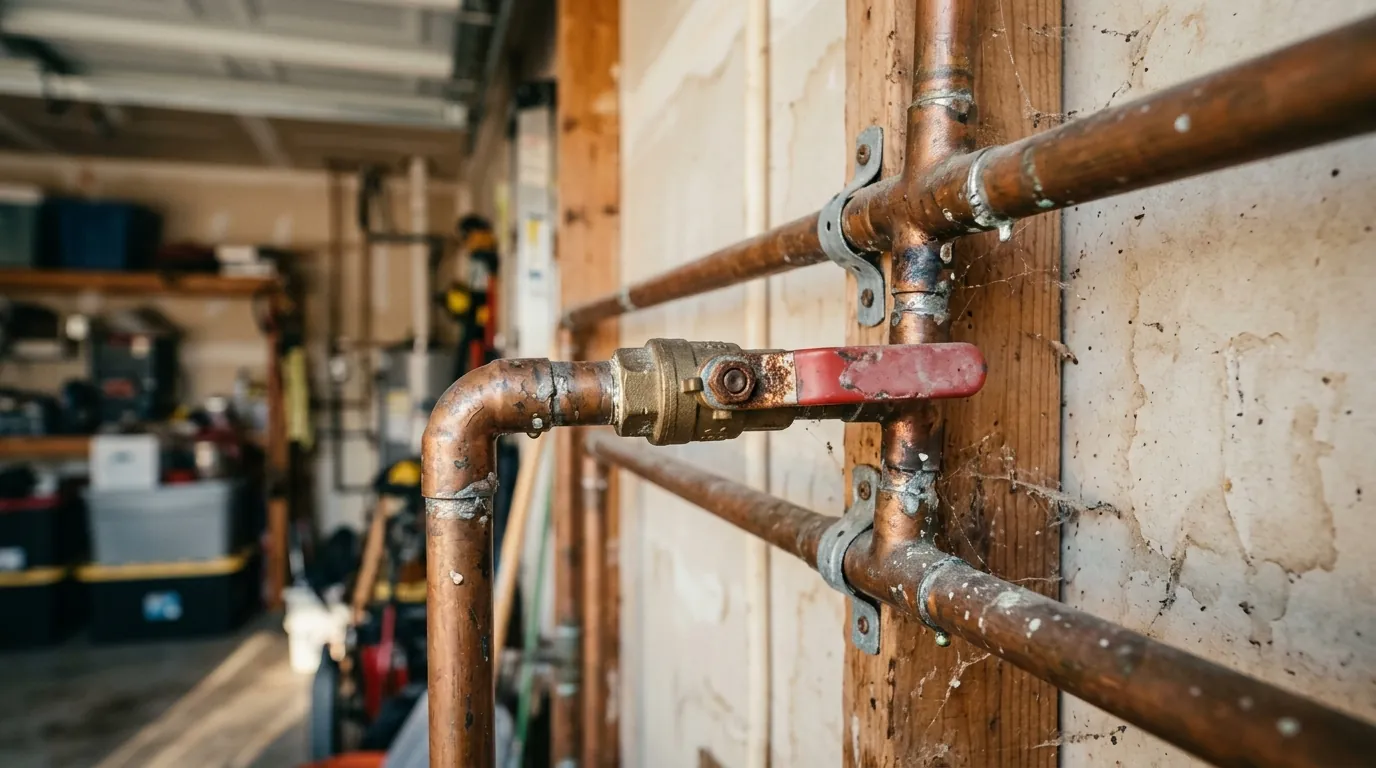
Water still running? Call before it spreads.
Call (281) 845-9645Root-damaged pipe
Roots enter at a crack or joint as fine hairs, then thicken until they crack the pipe further or crush it. Cutting them out restores flow but leaves the opening, so they return on a cycle. When the camera shows roots at one or two joints, replacing those sections with gasketed PVC ends the cycle there. Expect some root cutting during the dig, and talk to an arborist if the tree is valuable before large roots near the line are removed.
Separated cleanouts
A cleanout riser can crack at the surface from a mower or vehicle, or pull apart at the wye below ground as soil moves. The signs are a cap that sits crooked, soggy ground around it, or sewer smell outdoors. Rainwater can also pour in through a broken riser and overload the line in storms. We dig around the fitting, replace the riser or the wye, and bring the new cap to grade so it stays visible and protected.
Local conditions
Ground movement is the main reason sewer lines break here. The USDA's Lake Charles clay, extensive across Southeast Texas with Pearland and Brazoria County included, has very slow permeability and develops cracks 1 to 5 cm wide reaching 30 cm or more when dry, then swells when wet. On a larger scale, the USGS says as much as 10 feet of subsidence had occurred across the wider region by 1979. Rigid clay and cast iron joints don't flex with either kind of movement, which is why offsets and bellies are so common.
Sources: soilseries.sc.egov.usda.gov, webapps.usgs.govDepth, surface and damage: the price drivers for sewer repair
Spot repair ranges by type of damage, from a national cost guide, are listed below. Depth and what sits on top of the pipe usually matter most.
Published planning ranges
- $1,100 to $4,100 depending on the type of damage, per Angi (Jul 9, 2026)
- Depth of the pipe. A line a few feet down is a short dig; a deep line needs more excavation and shoring.
- What's above it. Open lawn restores easily, while driveways, patios and slabs add cutting and replacement.
- Length of damage. One cracked joint is a short splice; several feet of crushed pipe means a longer section.
- Dig or line. A liner can avoid excavation on some defects but has its own limits and price.
Spot repair or full replacement: how they compare
| Question | Spot repair | Full replacement |
|---|---|---|
| Scope | One damaged section | The run from house to city tap |
| Excavation | A single hole over the defect | A trench, or two pits for trenchless |
| Old pipe | Remains in service | Removed or replaced end to end |
| Best fit | One defect on otherwise sound pipe | Defects every few joints, failing material |
Questions about sewer line repair in Pearland
Yes, if the camera shows the rest of the pipe is sound. A spot repair replaces only the damaged length. If defects show up every few joints, we'll tell you replacement is the better value.
Usually one hole over the defect, sized to work safely at that depth. Locating before digging keeps it small. Some defects can be lined from the cleanout without a dig, depending on the damage.
Sewer work on your property generally needs a city plumbing permit and inspection. Both are handled as part of the job, so the repair is on record when you sell.
If sewage is backing into the house or surfacing in the yard, yes. Stop using water and call us at any hour. A slow line that still drains can usually wait for a planned repair.
A repeat clog at one distance from the cleanout points to a fixed defect there: a belly, an offset joint or a root entry. Cleaning clears the symptom; repairing that section removes the cause.