Updated October 2026
Quick answer
In Pearland, the type of backflow preventer depends on the hazard behind it: a reduced pressure zone assembly for lines that could carry chemicals or waste, a double check for lower hazards. Every assembly has to be tested at installation, so a new one isn't finished until it passes on a gauge.
A backflow preventer is a one-way gate between your plumbing and the public main. When street pressure drops during a main break or heavy hydrant use, it stops water in your irrigation lines, boiler or equipment from being pulled back into the drinking supply.
Picking the right device is half the job. Placement is the other half: an assembly needs room around it to be tested and rebuilt, a drain path if it has a relief valve, and protection from freezing. We plan all three before cutting into the line.
RPZ or double check: which fits your line
| Question | RPZ assembly | Double check |
|---|---|---|
| Hazard level | High: chemicals, waste, equipment | Lower: many sprinkler and fire lines |
| Relief valve | Yes, it can discharge water | No |
| Below grade | Never in a pit | Can sit in a box |
| Shows a failure | Water from the relief port | Only on a gauge test |
Price factors for a new backflow assembly
A national cost guide's range for installing a backflow preventer is shown below. Four things move a job up or down within it.
Published planning ranges
- $135 to $1,100, with most jobs $150 to $450, per Angi (Sep 23, 2026)
- Device type and size. An RPZ costs more than a double check or a vacuum breaker, and larger pipe sizes cost more still.
- Location. A riser near the house is quicker than a below-grade box or a mechanical room install.
- Drain and freeze protection. An RPZ may need a drain line, and exposed devices need insulation or an enclosure.
- Permit and first test. The required test at installation, plus any permit, add to the job total.
What a backflow preventer install includes
- A hazard review of the line being protected
- Choosing the device type and size
- Isolation valves and test cocks set for easy access
- A drain path for any relief valve
- Freeze protection on exposed parts
- The test at installation and a report to the utility
RPZ assemblies
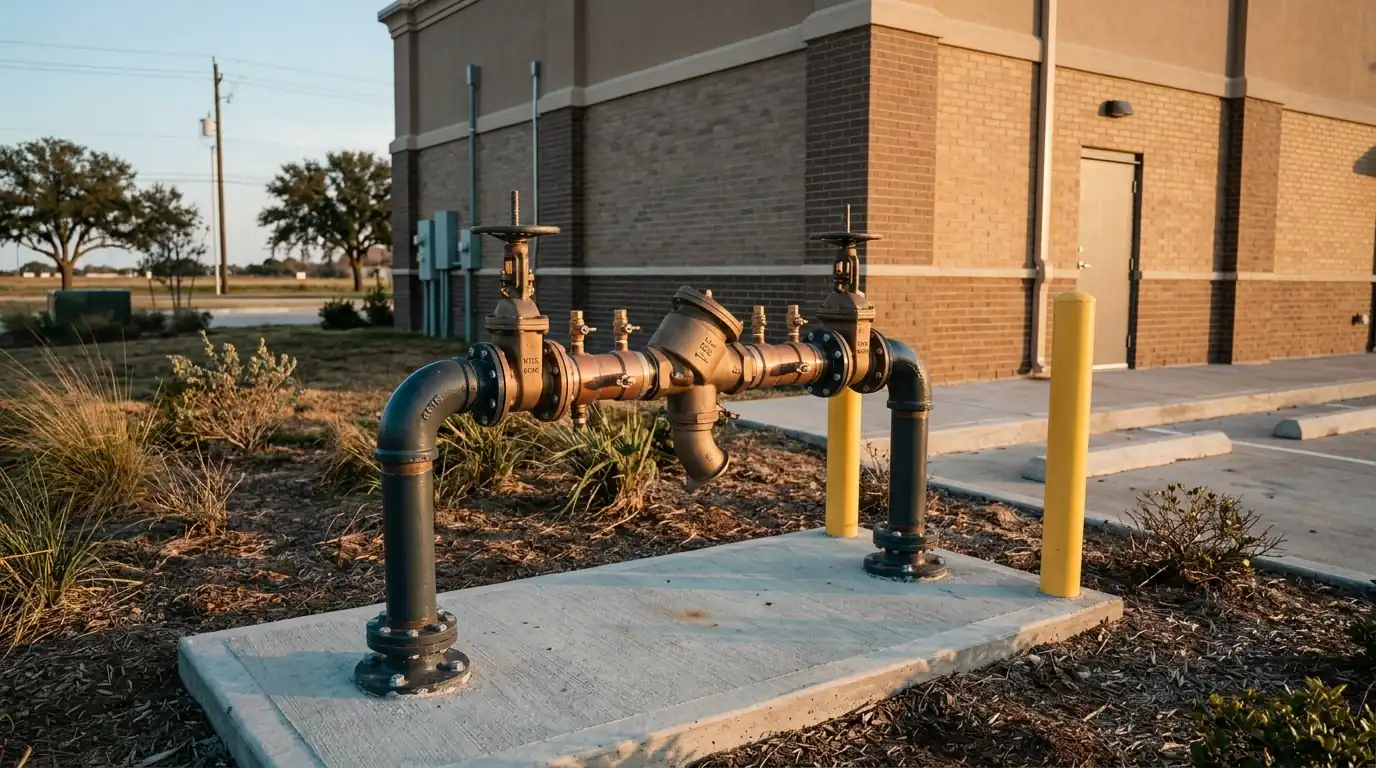
A reduced pressure zone assembly has two check valves with a relief valve between them. If either check leaks, the relief valve opens and dumps water out of the zone, so contaminated water never makes it upstream. That makes the RPZ the choice for high hazards: irrigation with chemical injection, medical and dental equipment, car washes and boilers. The relief port can discharge a lot of water when it opens, so an RPZ needs a drain or open ground below it, and it must never be installed in a pit.
Double check valves
A double check valve assembly is two independent spring-loaded checks in one body with test cocks and shutoffs at each end. It has no relief valve, so it doesn't discharge water and can sit below grade in a meter-style box. That suits lower-hazard lines, such as many fire sprinkler systems and some irrigation setups. The tradeoff is that a leaking check gives no outside sign, which is why the yearly gauge test matters. We set the box so the test cocks are easy to reach.
Irrigation system backflow
Residential sprinkler systems most often use a pressure vacuum breaker on a riser near the house or a double check in a box. A PVB has to sit at least 12 inches above the highest sprinkler head, which matters on a sloped yard. A double check in a box avoids that height rule but needs a box that drains. We tie the device into the irrigation line after the main shutoff, add isolation valves so it can be serviced, and wrap exposed risers against the occasional freeze.
Relocation and replacement
Some assemblies end up in the wrong place: buried behind shrubs, under a deck, in a box that fills with water or up against a wall so the test cocks can't be reached. Others are cracked from a freeze, corroded or discontinued so parts are gone. We move or replace the assembly, set it with room on every side, and test it on the spot. If your line is changing from a lower to a higher hazard, such as adding chemical injection to a sprinkler system, we upgrade the device type too.
Local conditions
Two city documents shape a new install. Pearland Water's backflow prevention page states that TCEQ requires all backflow-prevention assemblies to be tested at installation, and that assemblies protecting against a health hazard must be tested annually. The city's irrigation permit sheet adds that a permit is required before an irrigation system is installed and that separate permits are required for plumbing work. A Pearland homeowner adding sprinklers should sort out permits before the trench is dug and schedule the first test as part of the install. We tell you which permits your job involves before any work starts.
Sources: pearlandtx.gov, pearlandtx.govFrom hazard check to passing test
- Match device to hazardWe look at what the line feeds and choose an RPZ, double check or vacuum breaker.
- Plan the spotWe pick a location with test access, drainage for any relief valve and freeze protection.
- Install and flushWe cut in the assembly with isolation valves, then flush the line to clear debris.
- Test and fileThe new assembly is tested on a gauge and the report goes to the water utility.
Questions about backflow preventer installation in Pearland
Most homes use a pressure vacuum breaker or a double check. If you inject fertilizer through the system, an RPZ is usually required. The water utility's rules for your service decide, and we confirm before installing.
A short burst when pressure changes is normal. Steady dripping or spraying from the relief port means a check valve is leaking or the relief valve is worn. It needs a repair and a retest, not a plug.
A double check or a vacuum breaker sometimes can. An RPZ can discharge a lot of water when its relief opens, so it needs a drain sized for that or should go outside where water can run off safely.
Yes. Every assembly must be tested at installation, and we do that test before leaving. The annual backflow testing schedule starts from there for assemblies protecting against a health hazard.
Drain the irrigation side before a hard freeze, and fit an insulated cover or bag over exposed risers. A cracked brass body is one of the most common reasons assemblies get replaced after a cold snap.