Updated October 2026
Quick answer
In Pearland, every backflow-prevention assembly must be tested when it is installed, and any assembly protecting against a health hazard must be tested every year after that. Irrigation systems and many commercial buildings fall into that annual group, so the test belongs on your calendar like a filter change, not as a one-time event.
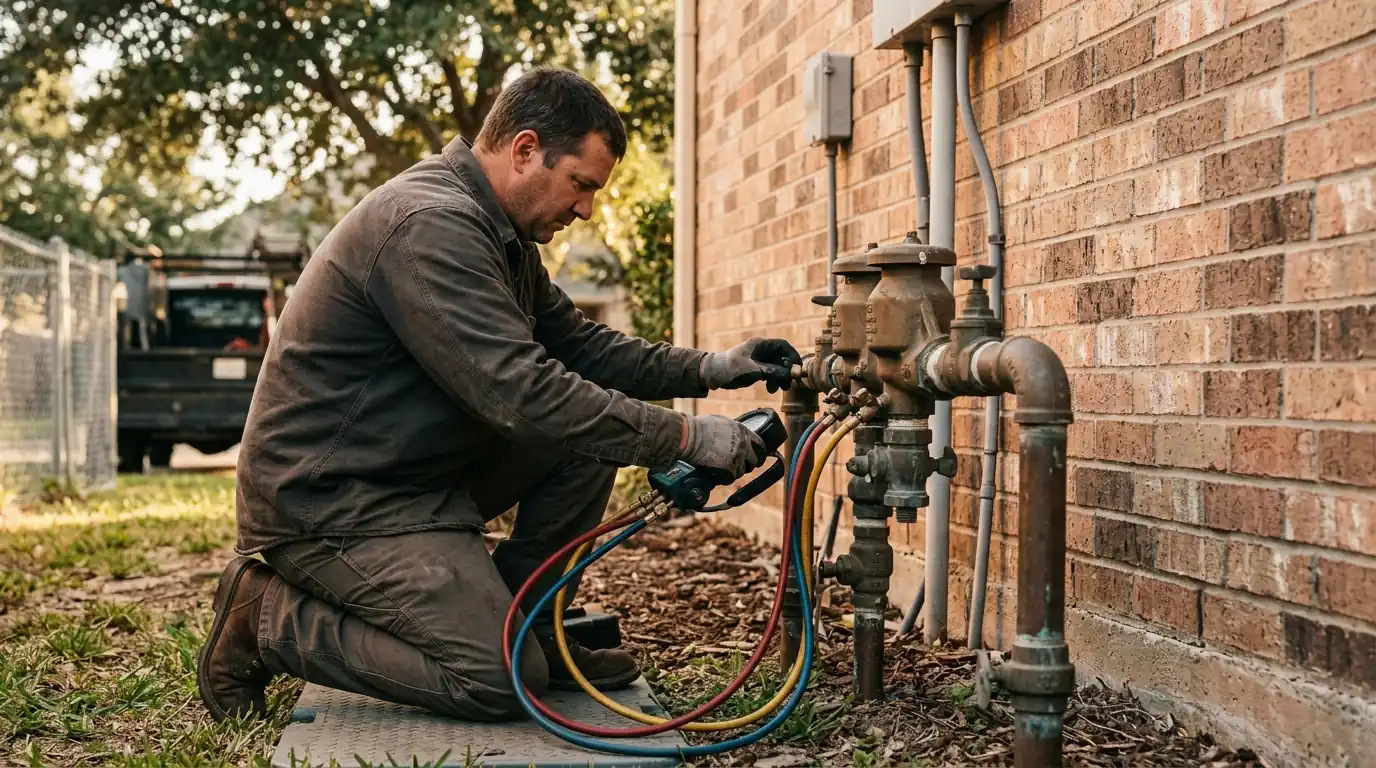
What a backflow test visit includes
- Locating and identifying the assembly
- A check of the box, valves and test cocks
- Gauge readings on each check and relief valve
- Restoring flow and checking the irrigation zones
- A completed test report sent to the utility
- A copy of the report for your records
A backflow assembly is a set of spring-loaded check valves that keeps water from running backward out of your property and into the public main. Without one, a pressure drop on the street could pull fertilizer from sprinkler heads, boiler chemicals or soapy water into the drinking supply.
Springs weaken and rubber seals harden, so an assembly that worked at installation can leak through later without showing any sign. The only way to know is a test with a calibrated gauge across its test cocks. That's what the city's annual requirement is checking.
Local conditions
Pearland Water's backflow prevention page states that TCEQ requires all backflow-prevention assemblies to be tested at installation, and that assemblies protecting against a health hazard must be tested annually. The city's irrigation permit sheet adds that a permit is required before an irrigation system is installed and that separate permits are required for plumbing work. Put together, a new sprinkler system in Pearland means a permit first, then a test at installation, then a yearly test if the city lists the assembly as protecting against a hazard.
Sources: pearlandtx.gov, pearlandtx.govAnnual irrigation backflow tests
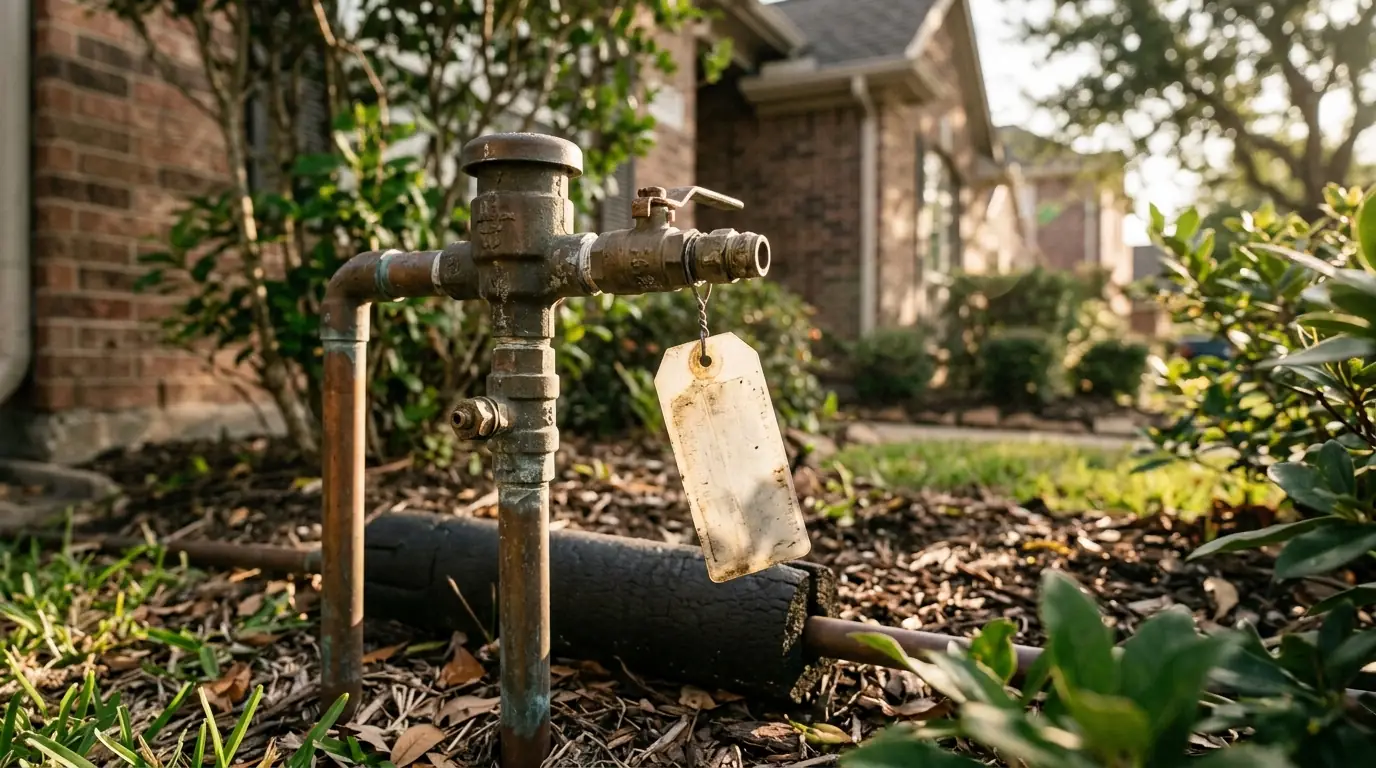
Most homes with an in-ground sprinkler system have a backflow assembly where the irrigation line leaves the main, often a pressure vacuum breaker near the house or a double check valve in a box near the meter. Because sprinklers can carry lawn chemicals and standing water back toward the main, the city may list your assembly for annual testing. After opening the box or reaching the riser, we attach a gauge to the test cocks, run the test and leave the irrigation valves set the way we found them.
Commercial assembly tests
Restaurants, medical and dental offices, car washes and buildings with fire sprinkler lines usually protect the public supply with a reduced pressure zone assembly or a double check. Testing a building's main assembly means a brief water shutdown, so we schedule it before opening or after close. An RPZ test checks that the first check holds a pressure drop, that the relief valve opens when it should and that the second check is tight. We note serial numbers and sizes so next year's test goes quickly.
Test reports for the city
A test only counts once the paperwork reaches the water utility. Each report lists the assembly's make, model, size, serial number and location, the readings at each check and the relief valve, and whether it passed. We fill out the report on site, give you a copy and send it to Pearland Water by its deadline. Keep your copy with the house or building records, since a buyer, an inspector or the city may ask for the history later.
Failed test repairs
A failed test is usually a worn rubber part, not a dead assembly. Debris lodged in a check seat, a tired spring or a hardened relief valve disc are the usual causes, and most assemblies take a repair kit for those parts. We clean and rebuild, then retest and record both results on the report. When an assembly is corroded, cracked by a freeze or no longer made, replacement is the better call, and our backflow preventer installation page covers that.
How a backflow test runs on your property
- Locate and identifyWe find the assembly, record its make, size and serial number, and check its condition.
- Shut down brieflyWe close the shutoff valves, which cuts water to that line only while the readings are taken.
- Gauge each checkA calibrated test kit reads each check valve and relief valve against its required pressure.
- Report and restoreWe reopen the valves, confirm flow and submit the completed report to the utility.
Signs your backflow assembly needs attention
- A test notice from the water utility
- Water dripping or spraying from the relief port
- A cracked or frosted valve body after a freeze
- A box always full of water around the valves
- Low pressure on the sprinkler zones
What a backflow test costs depends on four things
A national cost guide's per-device range for backflow testing is shown below. Where your test lands depends on these factors.
Published planning ranges
- $30 to $300 per device, per HomeGuide (September 30, 2024)
- Assembly type. An RPZ has more checks to run than a pressure vacuum breaker or a double check.
- Size and count. Larger commercial assemblies and buildings with several devices take longer to test and document.
- Access. A buried box full of mud or a valve behind equipment adds time before testing starts.
- Repairs after a failure. A rebuild kit and a retest add parts and labor to the visit.
Questions about backflow testing & certification in Pearland
Sprinkler lines sit in soil and can carry fertilizer, pet waste and standing water. If pressure on the main drops, that water could be pulled back toward the drinking supply. The test confirms the assembly still stops it.
The utility's notice spells out its deadline and next steps, so read it closely. The bigger risk is unseen: an untested assembly can leak backward for years with no sign, and a failed check only shows up on a gauge.
Only while the readings are taken, once the assembly is reachable. A buried box that needs digging out, a building with several devices, or a repair and retest all add time.
Usually, yes. Most failures come from worn seals, springs or debris on a check seat, and rebuild kits cover those parts. Freeze cracks and badly corroded bodies are the main reasons to replace.
Not for most outdoor irrigation assemblies, as long as we can reach the box or riser and know where the irrigation controller is. For a building's main line, someone should know the water will be off briefly.