Updated October 2026
Quick answer
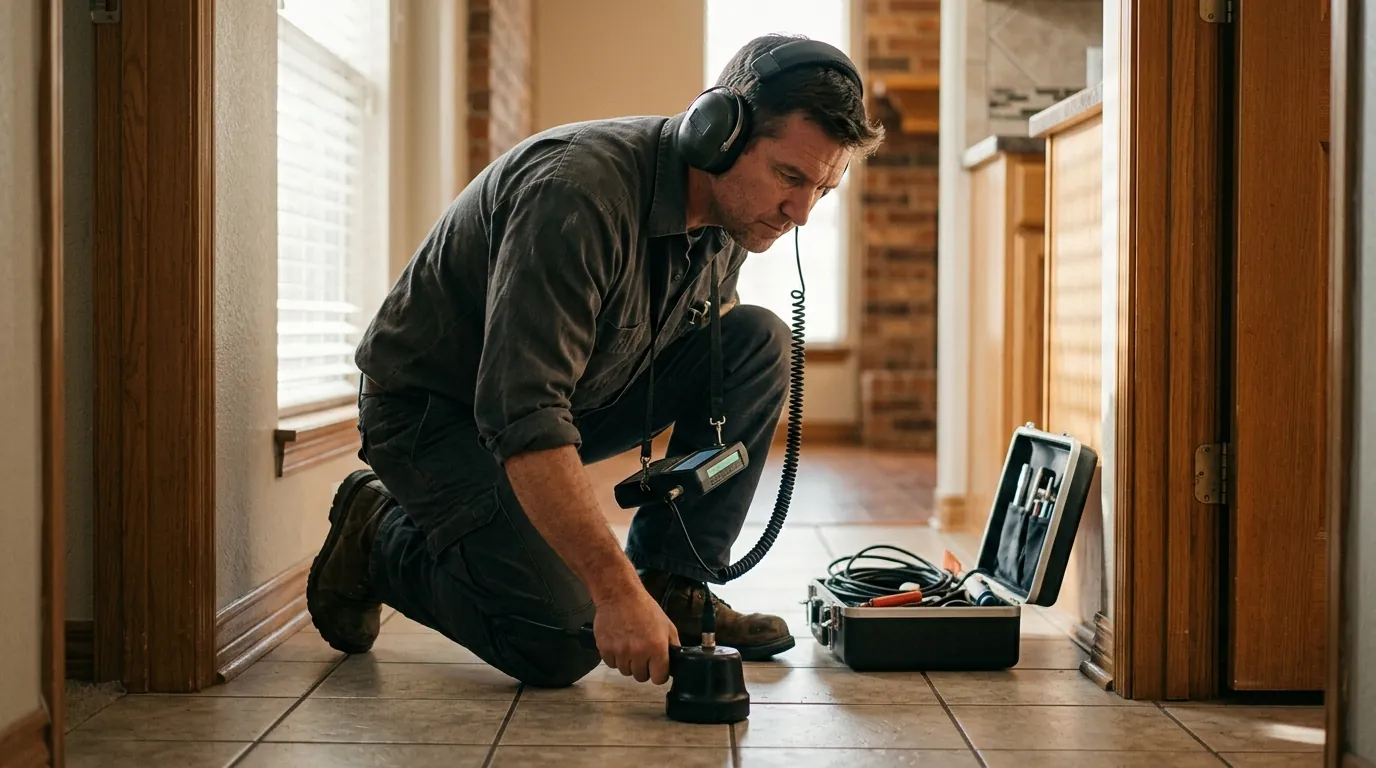
A wall or ceiling leak in Pearland is traced before it is opened: we run each fixture above or behind the stain, read moisture levels and use thermal imaging to tell a supply leak from a drain leak. Supply leaks stay wet all the time; drain leaks only grow when that fixture is used.
Clues of water inside a wall or ceiling
- A yellow or brown ring that grows over time
- Paint bubbling or peeling near a baseboard
- A musty smell in a closet beside a bathroom
- Loose tile or soft drywall around a shower
- A ceiling that sags or sounds hollow
How we find the leak before opening the wall
- Map the moistureMoisture meters and thermal imaging show how far the water has spread and which way.
- Test each fixtureWe run showers, sinks and toilets one at a time to see which one feeds the stain.
- Open at the sourceOne clean opening goes where the leak is, often from a closet or the attic side.
- Repair and leave dryWe fix the failed part, test it and explain how long the cavity needs to dry.
Water rarely shows up directly under its source. It follows pipes, joists and the back of drywall until it finds a low spot, so a stain in the hallway can come from a bathroom two rooms over. Cutting a hole under the stain often misses.
We trace first, open once, and repair the actual failure: a supply joint, a drain fitting, a shower valve, a tub overflow or a toilet seal. Then we leave the opening clean and squared so drywall repair is simple, and tell you how long the cavity should dry before it's closed.

Ceiling stain under a bathroom
A ring on the ceiling below an upstairs bathroom usually comes from one of four places: the toilet's wax seal, the tub's overflow or drain gasket, the shower pan, or a supply line in the floor. Timing tells them apart. A stain that grows after showers points to the drain or pan, one that grows after flushing points to the toilet seal, and one that stays damp overnight points to a supply line. We test each fixture separately before opening the ceiling where the source sits.
Leak behind a shower wall
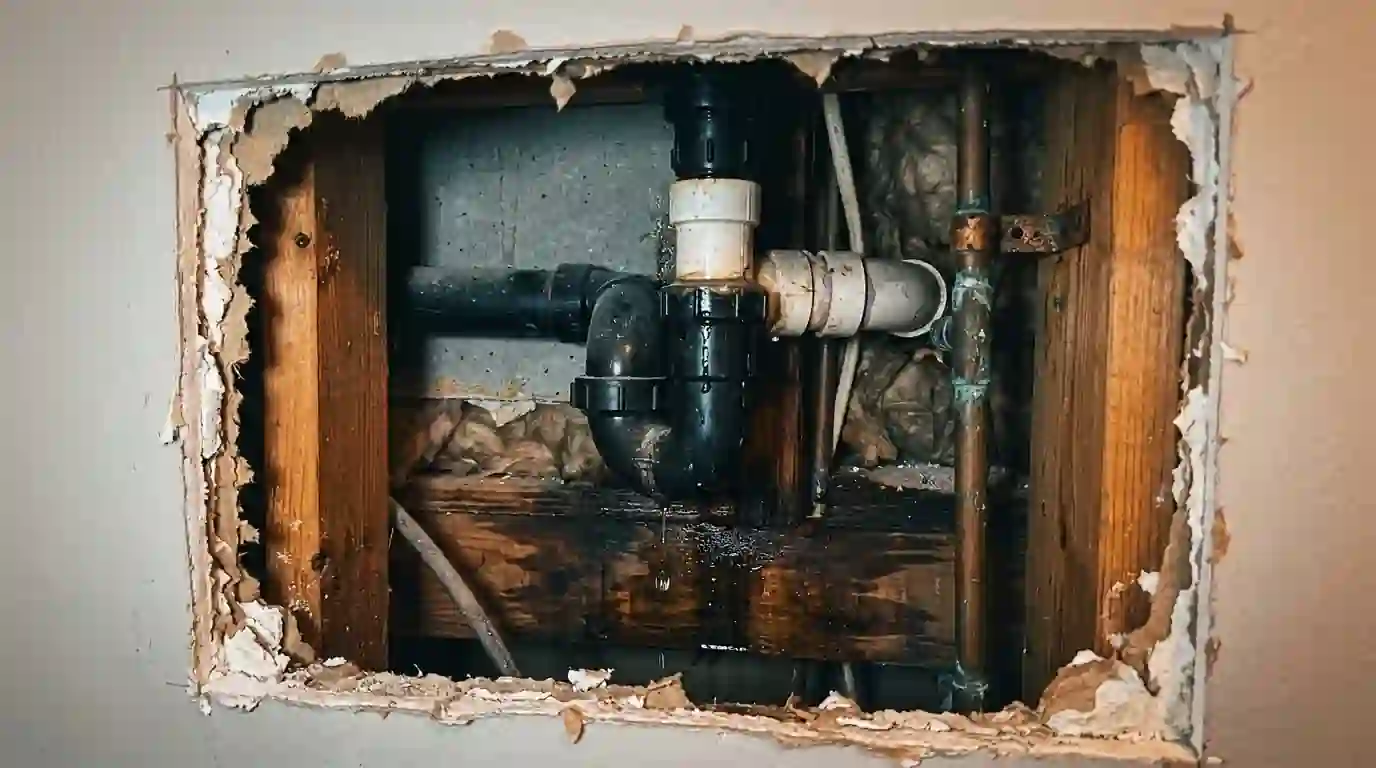
Loose tiles, cracked grout lines, peeling paint on the other side of the wall or a musty closet next to the bathroom all point here. The cause is usually the shower valve body, a threaded arm behind the shower head, or water getting past failed grout and caulk. We check whether it leaks with the valve off, then only when running, to separate a valve problem from a splash problem. Access can often come from the closet side so the tile stays intact.
Water still running? Call before it spreads.
Call (281) 845-9645Attic line dripping into drywall
In many slab homes supply lines run overhead, so a leaking fitting or a condensate drain drips onto the top of the ceiling drywall. Often all you see is a small yellow spot or a ceiling that sounds hollow when tapped. We go up into the attic, find the wet insulation and follow it uphill to the leak. Repairs there are usually straightforward. Saturated insulation should come out, and a ceiling that has sagged should be replaced rather than painted over.
Drain leak inside a wall
A drain leak only shows when water runs down it: a damp baseboard after the washer drains, a smell near a vanity wall or a stain that appears after the kitchen sink empties. Supply pressure isn't involved, so these leaks are slow and can go on for months. We run the suspect fixture while watching with a moisture meter, then open the wall at the joint. Older drain pipe that has cracked often gets replaced back to a solid fitting rather than patched.
Local conditions
Age of the house shapes what fails inside the walls. Census estimates for the Pearland ISD area show 42.6% of housing was built in 2000 and after, 51.5% between 1970 and 1999 and 5.9% before 1970. Homes in the older group tend to have aging copper and drain joints; newer ones lean on PEX fittings and builder-grade shower valves. Hidden leaks also spike after a hard freeze: a University of Houston Hobby School survey found that 38% of Harris County residents suffered water damage from burst pipes during the February 2021 winter storm.
Sources: nces.ed.gov, uh.eduPricing a leak repair behind drywall or tile
A published Houston cost guide gives planning ranges for the pipe repair and for water damage cleanup, shown below. Your plumbing price depends mostly on these factors.
Published planning ranges
- $395 to $1,480 in Houston, plus $990 to $1,970 for water damage cleanup, per Angi (May 13, 2026)
- Supply or drain. Supply leaks are usually a joint or short section; a cracked drain may need more pipe replaced.
- What covers the pipe. Plain drywall opens and patches easily, while tile, cabinets or a tub surround take more care.
- How far the water spread. A long-running leak can soak insulation and framing that need drying or removal.
- Fixture parts involved. A shower valve or tub drain repair adds parts beyond a simple pipe joint.
Safe first steps and the parts we should handle
What you can do safely
- Stop using the fixture you suspect
- Close the main if the stain stays wet
- Put a bucket under drips and protect floors
- Mark the stain's edge in pencil to track growth
When to call a plumber
- Tracing water that travels along framing
- Rebuilding or replacing a shower valve
- Replacing cracked drain fittings inside a wall
- Testing the repair before the wall is closed
Questions about wall & ceiling leak repair in Pearland
Not until the source is fixed and the drywall is fully dry. Paint over a live leak hides the warning sign while the water keeps working on the drywall, insulation and framing above it.
A leak that stays wet without fixture use is almost always on the pressurized supply side, or an attic line dripping onto the drywall. Close the main and watch the meter to confirm it.
Often not. Many shower valves and arms can be reached through a closet, a hallway wall or an access panel behind the fixture. Tile only comes off when the leak is in the pan or the wall waterproofing.
We make a clean, squared opening sized for the repair so a drywall finisher can patch it easily. Finishing, texture and paint are a separate trade, and we'll tell you when the cavity is dry enough to close.
Yes. A clogged condensate line or overflowing drain pan in the attic can stain ceilings too. We check for it while tracing, and if the source is the cooling system rather than plumbing, we'll say so.