Updated October 2026
Quick answer
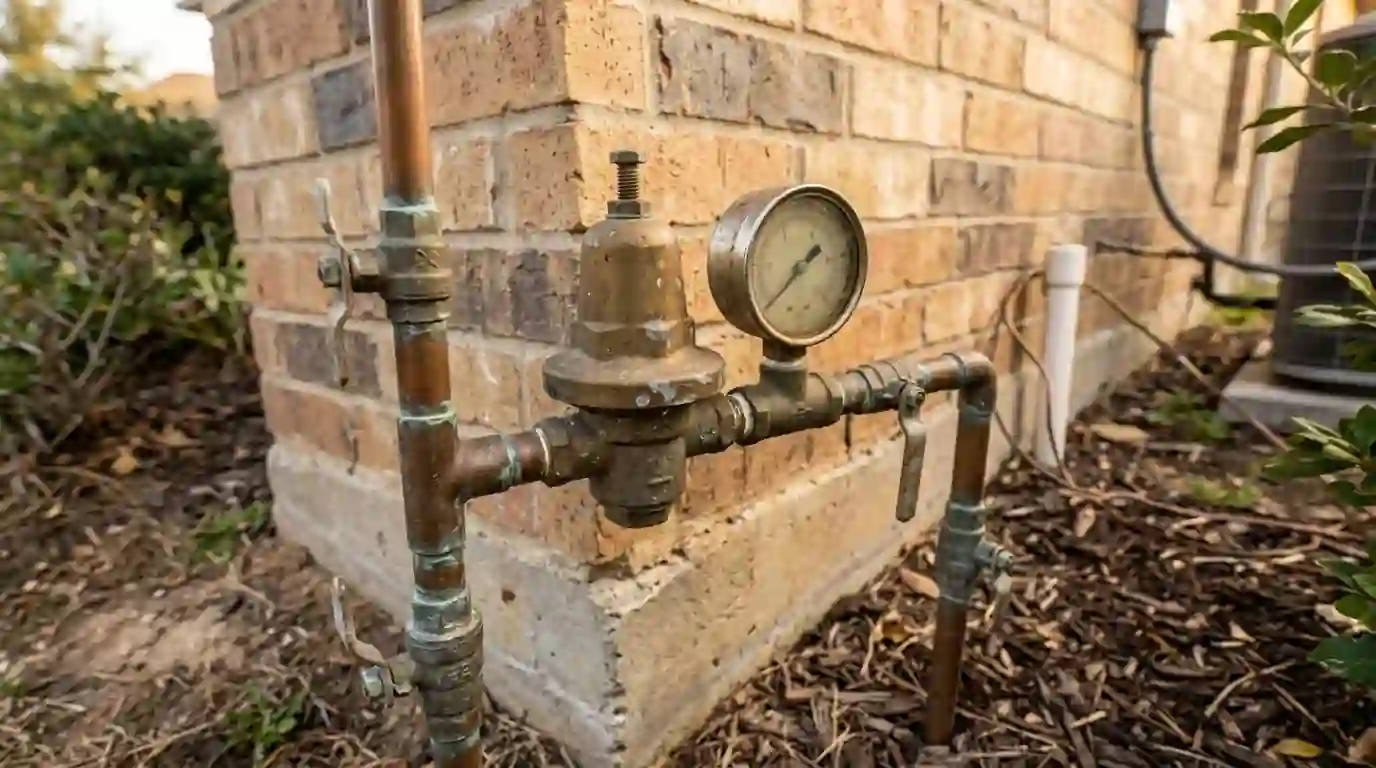
In Pearland, a pressure regulator is the bell-shaped valve on the main line, usually near the shut-off, that lowers street pressure before it reaches your fixtures. Plumbing code caps static pressure at 80 psi. A gauge on a hose bib tells us in a minute whether yours is holding, creeping up or starving the house.
Utility pressure at the street is set to serve the whole system, and it can be higher or lower than a house needs. A pressure-reducing valve, or PRV, uses a spring and diaphragm to drop it to a steady level. Many plumbers set them around 50 to 60 psi.
When the spring weakens, the diaphragm tears or debris lodges in the seat, pressure drifts. High pressure wears out faucet cartridges, toilet fill valves, water heater relief valves and appliance hoses. Low pressure is just as frustrating. We test first, adjust if the valve is healthy and replace it if it isn't.
Regulator replacement cost: the variables
A national cost guide publishes the planning range shown below for replacing a pressure regulator. These four things decide where your job lands.
Published planning ranges
- $300 to $650, per HomeGuide (September 16, 2024)
- Valve size and type. The new regulator has to match your main's size and the flow your household needs.
- Where it's mounted. A valve in an open garage is quicker to swap than one buried in a box or tight closet.
- Condition of nearby fittings. Old unions or a seized shut-off beside the regulator may need replacing at the same time.
- Expansion tank needs. Adding or replacing an expansion tank at the water heater is separate work and parts.
Pressure too high and banging pipes
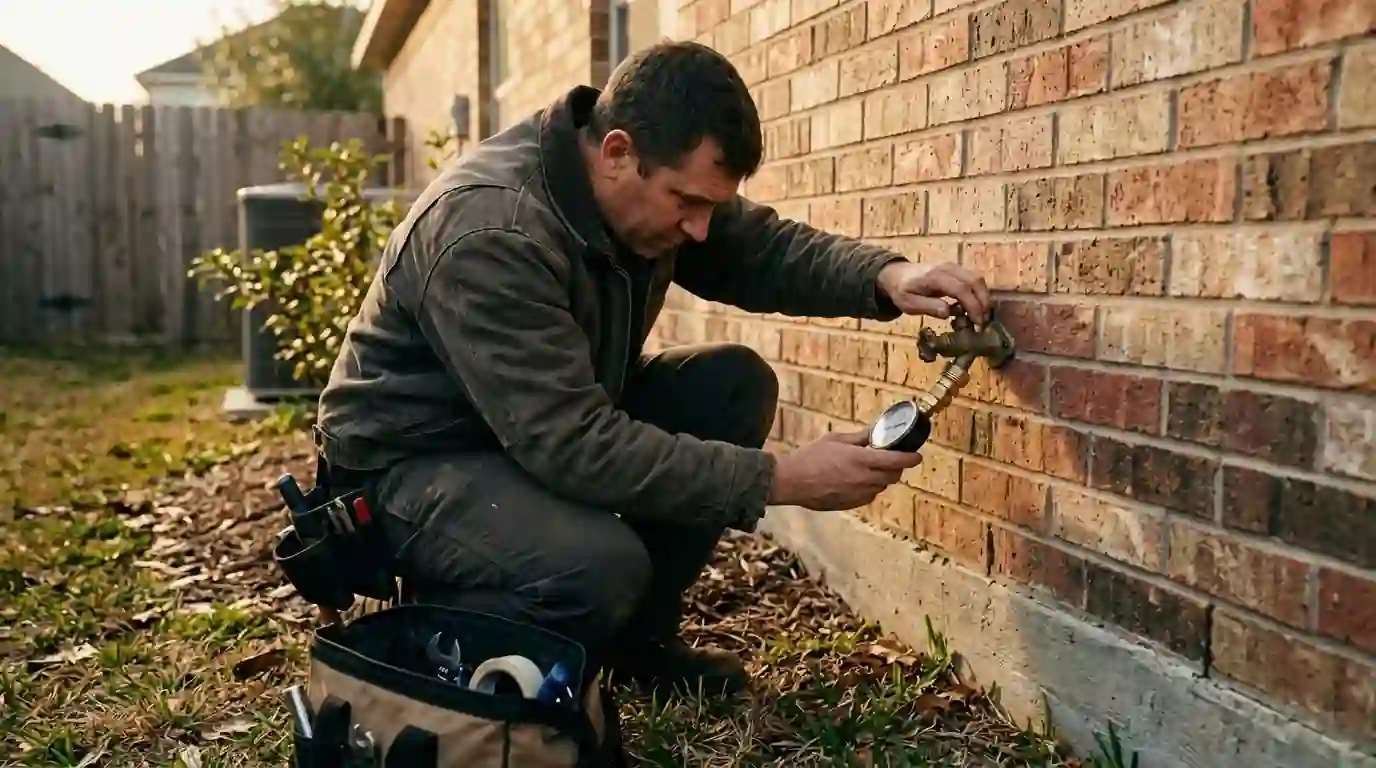
Hammering when the washer or dishwasher shuts off, toilets that run or refill on their own, faucets that spray hard and a relief valve dripping at the water heater all suggest pressure above what the house should see. A gauge on a hose bib shows the number. Above 80 psi static, the regulator is either set too high or failing. We adjust a healthy valve, or replace one that won't hold. Pressure that creeps up overnight with no use points to a valve leaking past its seat.
Pressure too low at every tap
When every fixture is weak at once, the cause sits before the branches: the regulator, a partly closed main valve, a clogged strainer at the PRV inlet or a narrowed service line. A regulator whose spring has failed can stick nearly closed. We read pressure at the hose bib with nothing running, then while fixtures run, to see how far it drops. If the regulator is the cause, a new one usually restores flow right away. If not, we follow the drop to the valve or service line causing it.
Regulator failure after a city repair
When the water main on your street is repaired or flushed, pressure surges and sediment can reach your regulator. Afterward you may notice low flow, sputtering air, discolored water or pressure that swings. Run a cold faucet near the main for a few minutes first, then check aerators for grit. If pressure still doesn't settle, debris may be holding the regulator's seat open or fouling its inlet screen. Sometimes cleaning it is enough; a damaged diaphragm or seat calls for a new valve.
Thermal expansion tanks
A regulator usually acts as a one-way valve, so water heated in your tank can't push back toward the street. As it expands, house pressure spikes and the water heater relief valve may drip. An expansion tank gives that water somewhere to go. It mounts on the cold line at the heater, and its air charge has to match your house pressure to work. We check the charge whenever we replace a regulator, since a new PRV can make a missing or failed tank obvious within days.
Local conditions
City water reaches your house under whatever pressure the public system needs to serve every customer. Pearland's surface water treatment plant was built to deliver 10 million gallons of drinking water a day from Brazos River water carried by the Gulf Coast Water Authority canal, and the regulator on your line is what fits that supply to your fixtures. Main repairs are a regular event in this soil: a University of Houston CIGMAT presentation says the City of Houston normally experiences 12 waterline breaks a day. Each repair can send a surge and sediment toward household regulators.
Sources: communityimpact.com, cigmat.cive.uh.eduHow we test and replace a pressure regulator
- Read the pressureA gauge on a hose bib shows static pressure and overnight creep with nothing running.
- Check the valveWe inspect the regulator, its strainer and the main valve before deciding to adjust or replace.
- Swap and setThe new regulator goes in on unions and is set to the right pressure for your house.
- Protect the systemWe check the expansion tank charge and confirm pressure holds steady before leaving.
Signs your pressure regulator is failing
- Pipes bang when a washer or faucet shuts off
- Toilets refill or run on their own
- Water heater relief valve drips
- Weak flow at every fixture at once
- Pressure swings after nearby main work
What you can check and what needs a plumber
What you can do safely
- Read pressure with a hose bib gauge
- Clean faucet aerators after city main work
- Make small adjustments with a gauge attached
- Note when the relief valve drips
When to call a plumber
- Replacing the regulator on a live main
- Cleaning or replacing the inlet strainer
- Sizing and charging an expansion tank
- Repairing a main valve that won't fully close
Questions about water pressure regulator replacement in Pearland
Plumbing code caps static pressure at 80 psi, and many plumbers set regulators around 50 to 60 psi. That's enough for good showers without straining valves, hoses and the water heater relief valve.
Screw an inexpensive pressure gauge onto a hose bib near the main, with every fixture off, and read it. Check again first thing in the morning. A higher morning number suggests the regulator is leaking through.
Most have an adjusting screw on top, and small turns are possible with a gauge attached. If turning it changes nothing, or pressure creeps back up, the valve is failing and adjusting won't fix it.
Often it's thermal expansion: heated water has nowhere to go once the regulator blocks backflow. A failed expansion tank or high house pressure are the usual causes. A relief valve that drips should still be checked, not plugged.
Not every home has one. Whether yours needs one depends on the pressure your street delivers, so a gauge reading is the only way to know. We test it on any visit where pipes bang or fixtures wear out early.