Updated October 2026
Quick answer
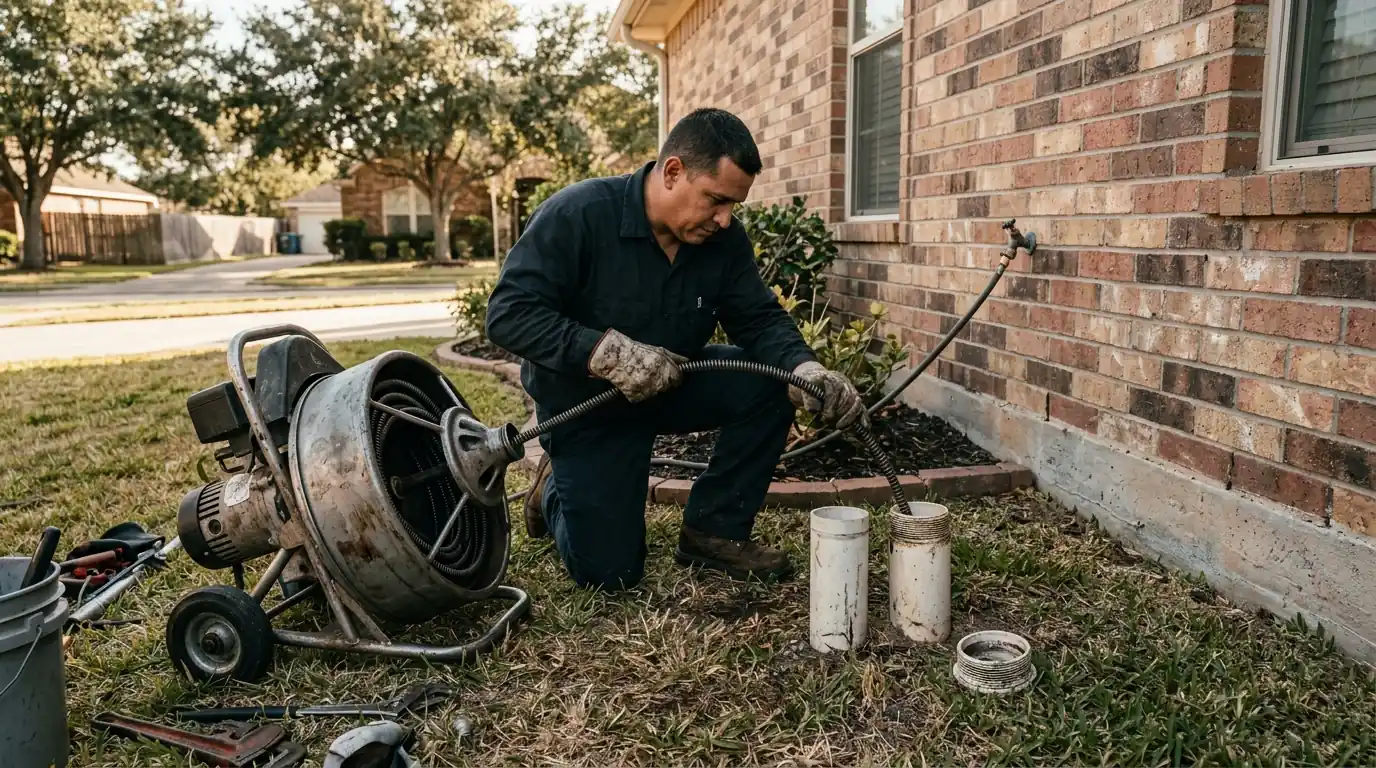
When several Pearland drains back up together, the blockage is usually in the main sewer line between the house and the city tap, not in any single fixture. The direct fix runs a heavy cable or jetter through the outdoor cleanout, and what comes back on the head shows whether roots, grease or a broken section caused it.
Signs the main line is the one clogged
- Water rising in the tub or shower when a toilet flushes
- Toilets gurgling while the washer drains
- Several fixtures slowing down in the same week
- A sewer smell around the yard cleanout
- Standing water inside the cleanout when the cap comes off
How a main line clearing runs
- Open the cleanoutWe check for standing water to learn whether the clog lies toward the street or the house.
- Run the right headA cutting head goes in for roots, a wider blade or jetter for grease and debris.
- Load the lineWe run several fixtures at once to prove the main carries full flow again.
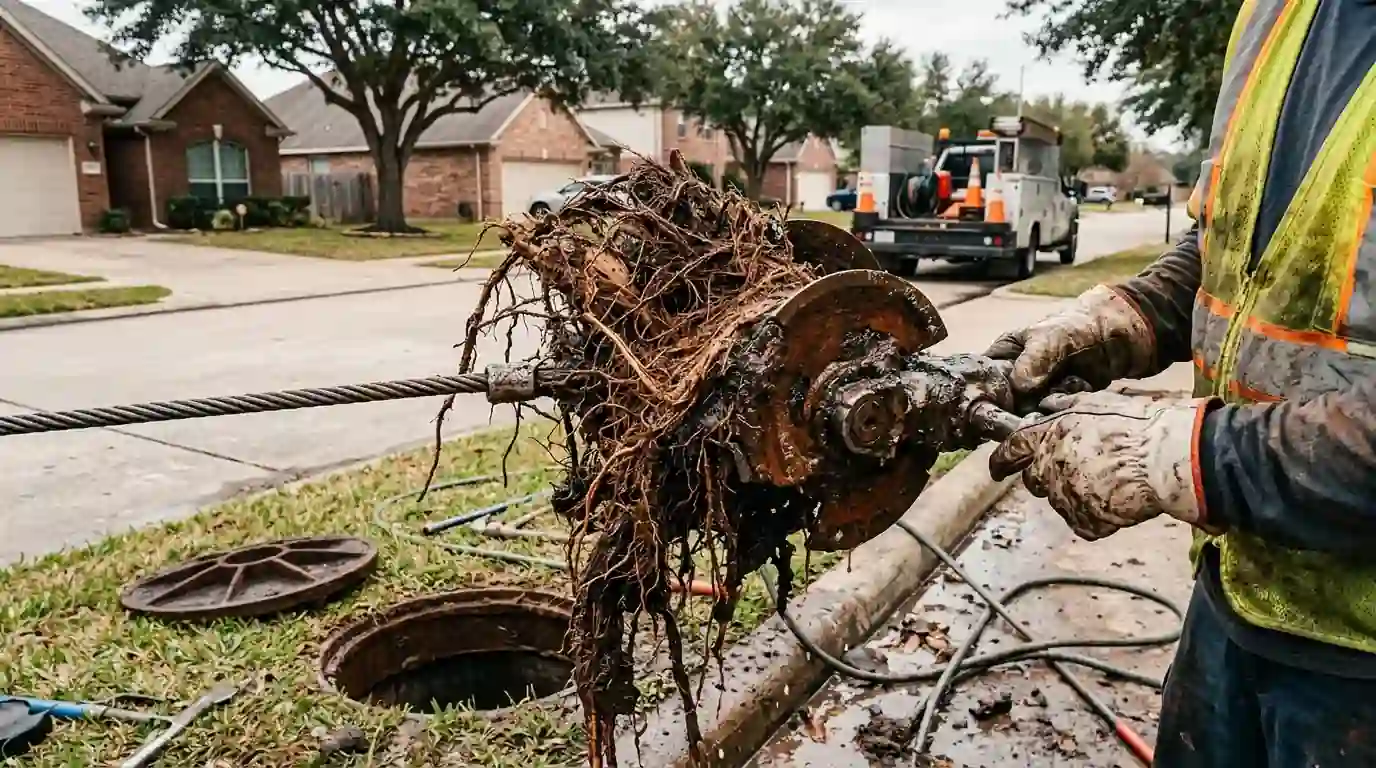
- Read the cableWhat comes back on the head tells you whether this is maintenance or a damaged pipe.
The main line carries every drain in the house to the public sewer, usually as a 4-inch pipe under the yard. When it clogs, water takes the lowest exit, which is why a downstairs tub or shower fills first. Stop running water, the washer and the dishwasher until the line is open.
Opening the line is half the job; knowing why it closed is the other half. Soil or pipe fragments on the cable point to a break, and that's when a camera inspection earns its cost.
Every drain backing up at once
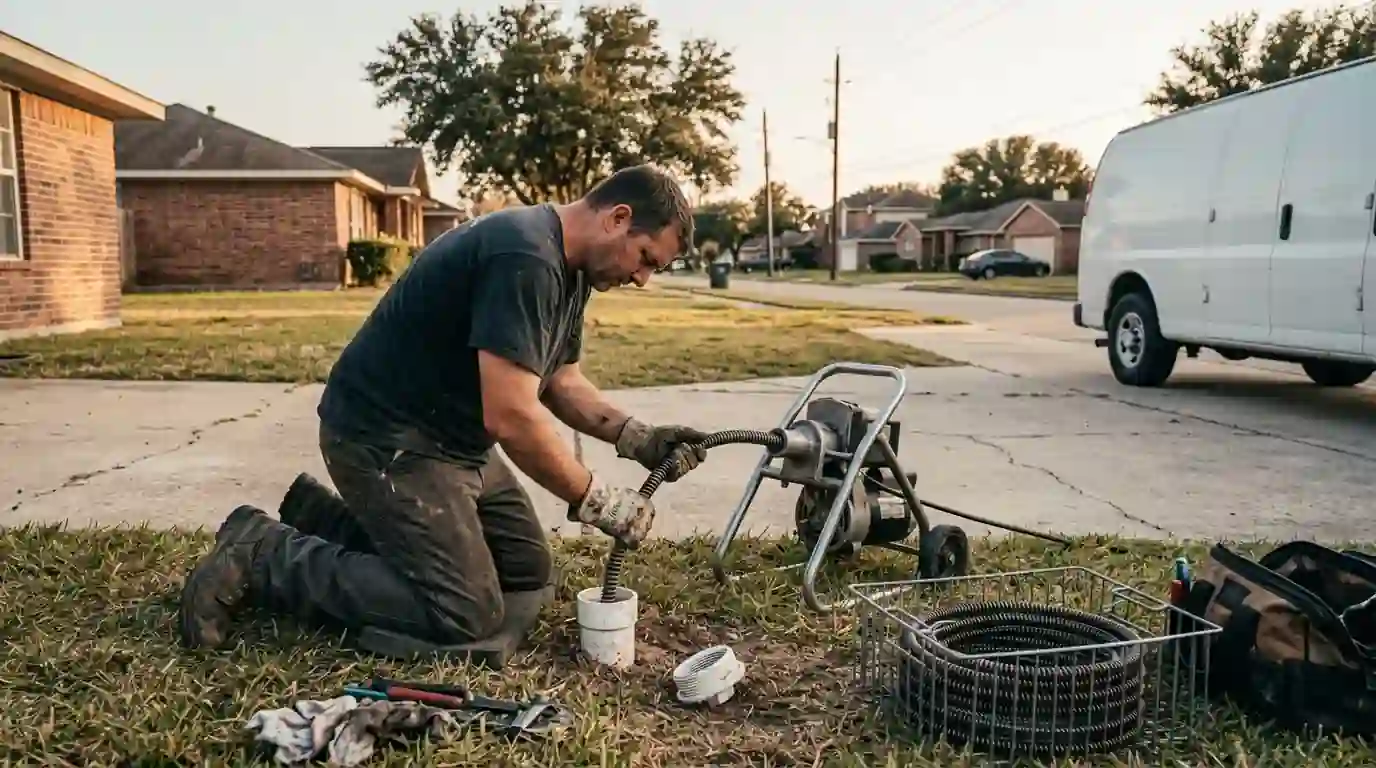
When toilets, tubs and sinks all slow down together, the clog sits downstream of every branch, in the main. The classic tell is water rising in the lowest fixture while another drains, such as the tub filling as the washer pumps out. We open the cleanout first. Standing water inside means the clog is between there and the city tap; a dry cleanout means it's between the cleanout and the house. That one check decides which way the cable goes.
Sewage in the tub or shower
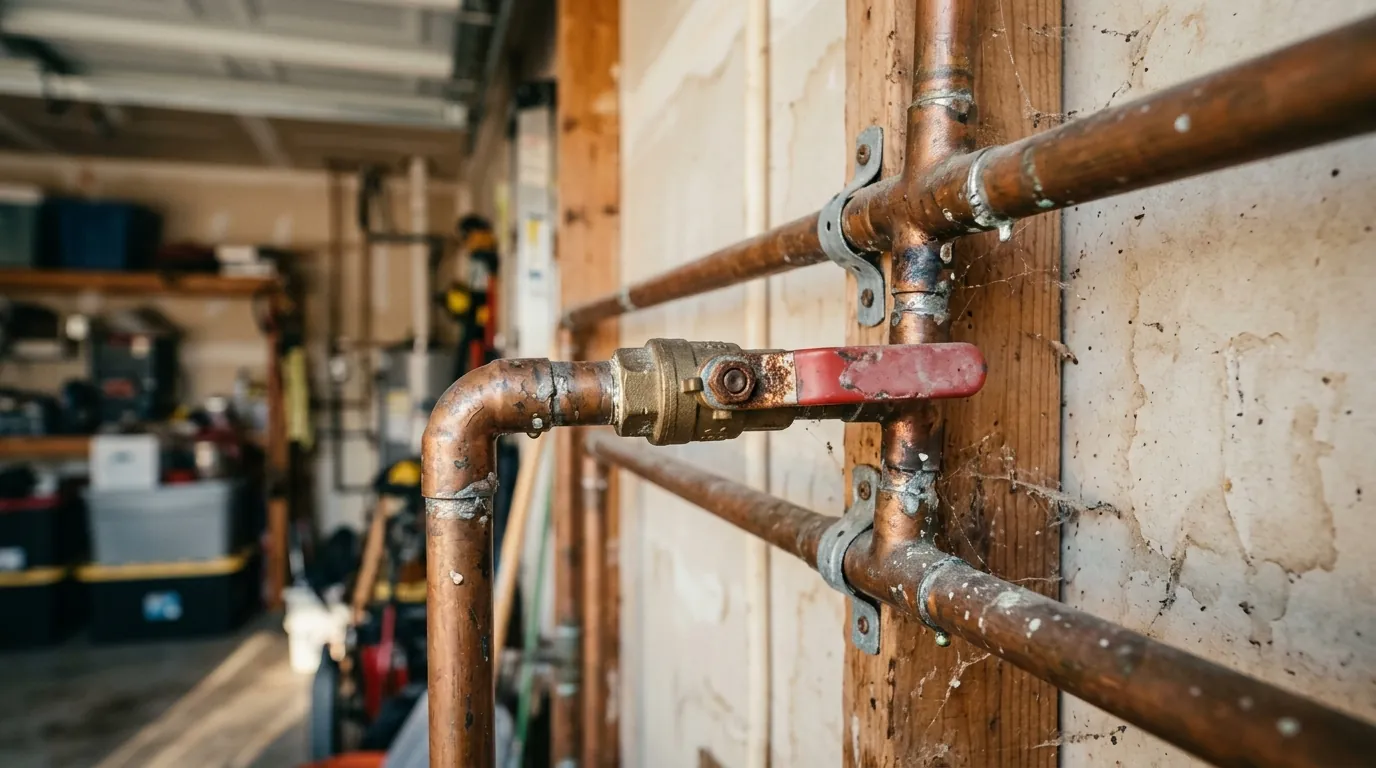
Dirty water in a tub or shower means sewage has nowhere to go and is surfacing at the lowest opening in the house. Every flush or load of laundry adds to it, so stop using water entirely. We clear the main first, then flush the fixture and check whether water reached flooring or a wall. If sewage spread past the tub, cleanup is a separate job from the line work, and photos taken before anything is moved help with an insurance claim.
Water still running? Call before it spreads.
Call (281) 845-9645Roots in the line
Roots find a sewer line by the moisture escaping from its joints, then grow inside and catch paper until flow stops. Clay pipe and older joints let them in most easily. We cut them out with a root head, and the cable usually brings back fine root hair as evidence. Cutting opens the pipe but does not seal the joint, so roots tend to return. If the clog comes back on a regular cycle, repairing the entry point is worth pricing.
Cleanout access and clearing
A cleanout is a capped pipe, usually in the yard near the foundation, that opens straight into the main line. Clearing through it keeps the cable out of your toilets and the mess outdoors. Some cleanouts are buried under mulch or sod, and some older homes have none, which means pulling a toilet to get in. We'll help you find yours, and if there isn't one, we can price adding a cleanout so the next clog is simpler.
Local conditions
Harvey showed how a private main line and the public sewer depend on each other. During that storm one of Pearland's wastewater treatment plants was inundated by several feet of floodwater and lost 60 percent of capacity, and roughly 1,700 homes in Pearland and approximately 2,410 in Friendswood were damaged by Harvey. An overloaded public system can push water back into a clear private line. Drains that slow only in extreme rain point to the city side; drains that stay slow in dry weather point to your own main.
Sources: communityimpact.com, communityimpact.comPricing a main line clearing: the variables
The range below comes from a national cost guide's local figures for main line clogs. Access and what's inside the pipe place your job within it.
Published planning ranges
- $162 to $613 in Houston (typical $388), per Angi (Aug 4, 2026)
- Cleanout or no cleanout. An open outdoor cleanout is the direct route; pulling a toilet adds time and a new wax ring.
- What's in the line. Paper and wipes clear in one pass, while roots or hardened grease need cutting heads or jetting.
- Distance to the clog. A blockage near the city tap takes more cable than one just outside the foundation.
- Camera follow-up. Soil or pipe pieces on the cable mean a camera look is worth adding.
What to do while the main is backed up
What you can do safely
- Stop using water, the washer and the dishwasher
- Find the cleanout and clear mulch or plants around it
- Keep children and pets away from any sewage
- Photograph water damage before cleanup starts
When to call a plumber
- Cabling the main, which takes a heavy machine and root heads
- Pulling a toilet when no cleanout exists
- Judging whether the cable hit a break
- Any main that clogs again within a few months
Questions about main sewer line cleaning in Pearland
One slow sink is a local clog. Suspect the main when several fixtures act up together, the lowest drain backs up first, or flushing a toilet makes water rise somewhere else.
No. Every flush, shower and laundry load sends water into a line with nowhere to go, and it surfaces at the lowest drain. Shut off the washer and dishwasher and avoid flushing until the main is open.
Usually. Cutting removes the roots inside the pipe but leaves the gap they grew through. Some homeowners book clearing on a regular cycle; others repair the joint so roots have no way back in.
Generally the homeowner owns the service line from the house to the public sewer connection, and the city maintains the main beyond it. Once the cable reaches the clog, we can usually tell you which side it's on.
Yes. We answer 24/7, holidays included. Stop running water, keep children and pets away from any sewage, and we'll walk you through what to do until the line is open.