Updated October 2026
Quick answer
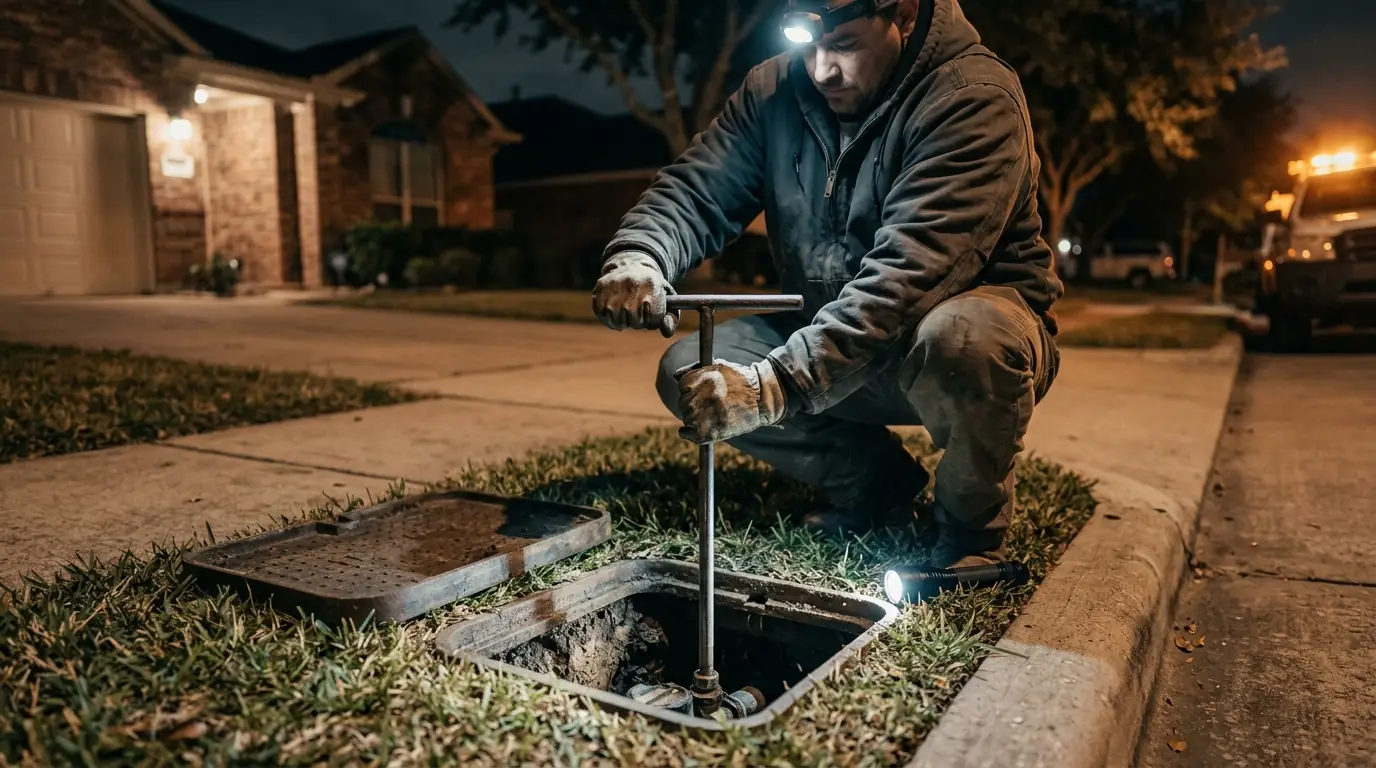
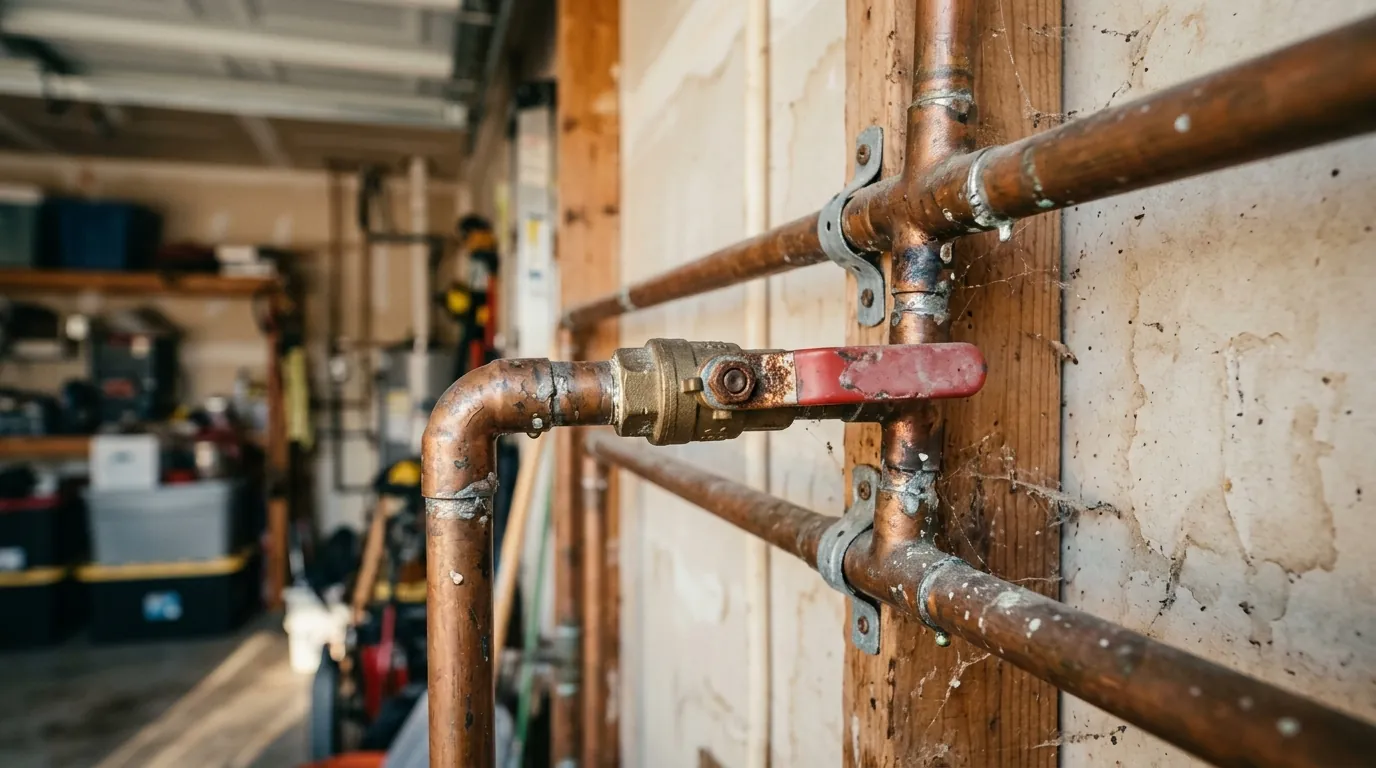
In Pearland, the first move in any plumbing emergency is stopping the water. The main shut-off usually sits in the garage, on an outside wall where the line enters, or in the meter box at the street, and the water heater has its own cold valve. Once the flow stops, the damage stops growing.
Problems that shouldn't wait until morning
- Water spraying or pouring from a pipe or fitting
- Sewage rising in a tub, shower or floor drain
- A ceiling sagging or dripping under a bathroom
- Water spreading from the water heater
- Water near outlets, a panel or light fixtures
What happens after you call us at night
- Call and shut offWe help you find the main or fixture valve so the water stops while we head your way.
- Find the failureWe trace the water back to the pipe, fitting, drain or tank that actually let go.
- Fix or make safeYou approve the price, then we repair it or isolate it safely until parts can be fitted.
- Restore and checkWe turn the water back on slowly, watch for drips and show you exactly what we changed.
Most emergency calls fall into a few patterns: a supply line that split, a toilet or floor drain pushing sewage back up, a water heater leaking from the tank or relief valve, or a meter spinning with no leak in sight. Each one has a different first move.
On the phone we ask what you see, where the water is going and what you've already shut off. That tells us what to bring, and whether tonight's job is a full repair or a safe shutdown with the rest finished in daylight.
After-hours and weekend calls
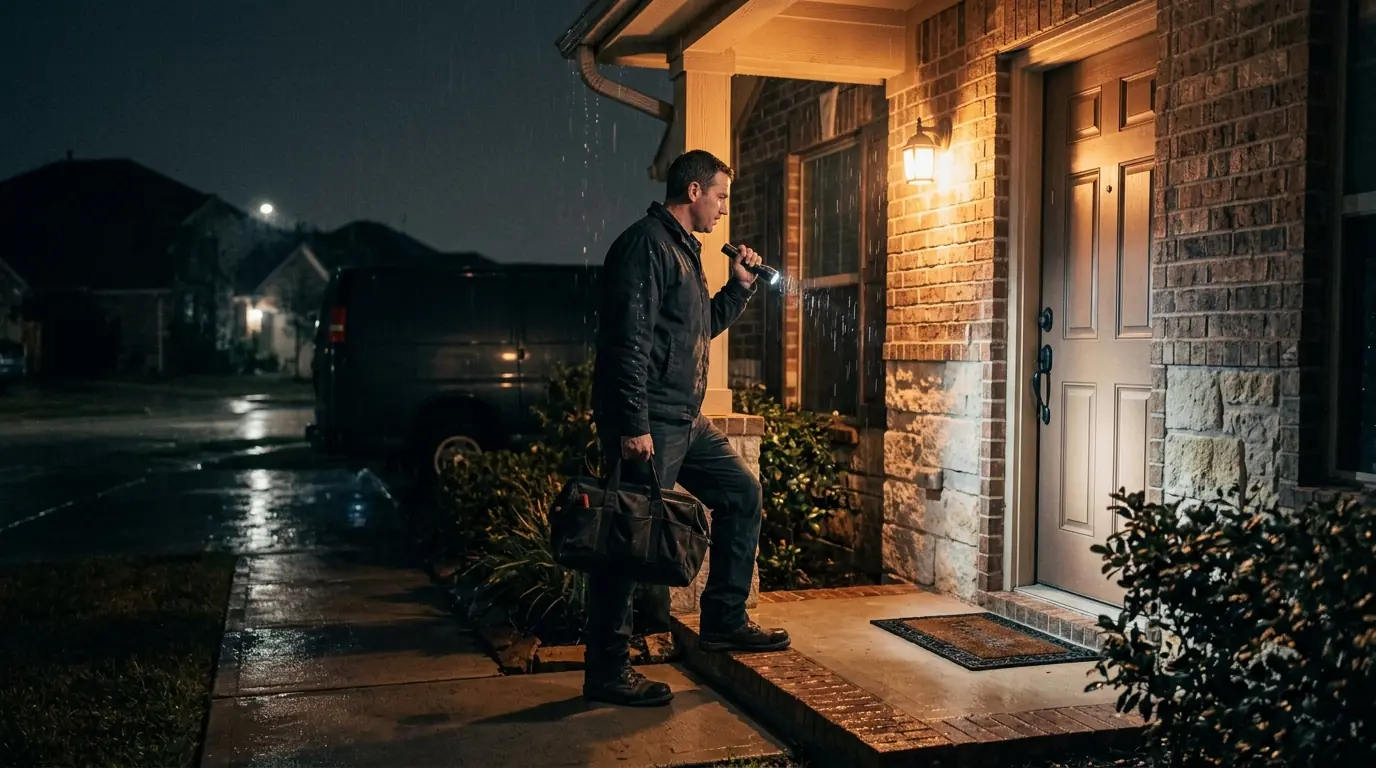
Plumbing doesn't fail on a schedule, and the worst leaks often start when the house is asleep or empty. We answer 24/7, including nights, weekends and holidays, and walk you through closing the water, or the gas to an appliance, while we talk. Some problems can safely wait for daylight once the water is off, and we'll tell you so. Others, like sewage inside the house or a line you can't isolate, need hands on them now.
Burst or split supply line
A split supply line sprays or pours, and it won't slow down on its own because supply pipes sit at full street pressure. Close the main valve, then open a low faucet or an outside hose bib to drain what's left in the pipes. We cut out the damaged section, join new pipe with fittings made for that material, and hold the line under pressure before turning the house back on. Plan for wet drywall and insulation: they need drying or removal so mold doesn't follow.
Water still running? Call before it spreads.
Call (281) 845-9645Overflowing toilet or sewage backup
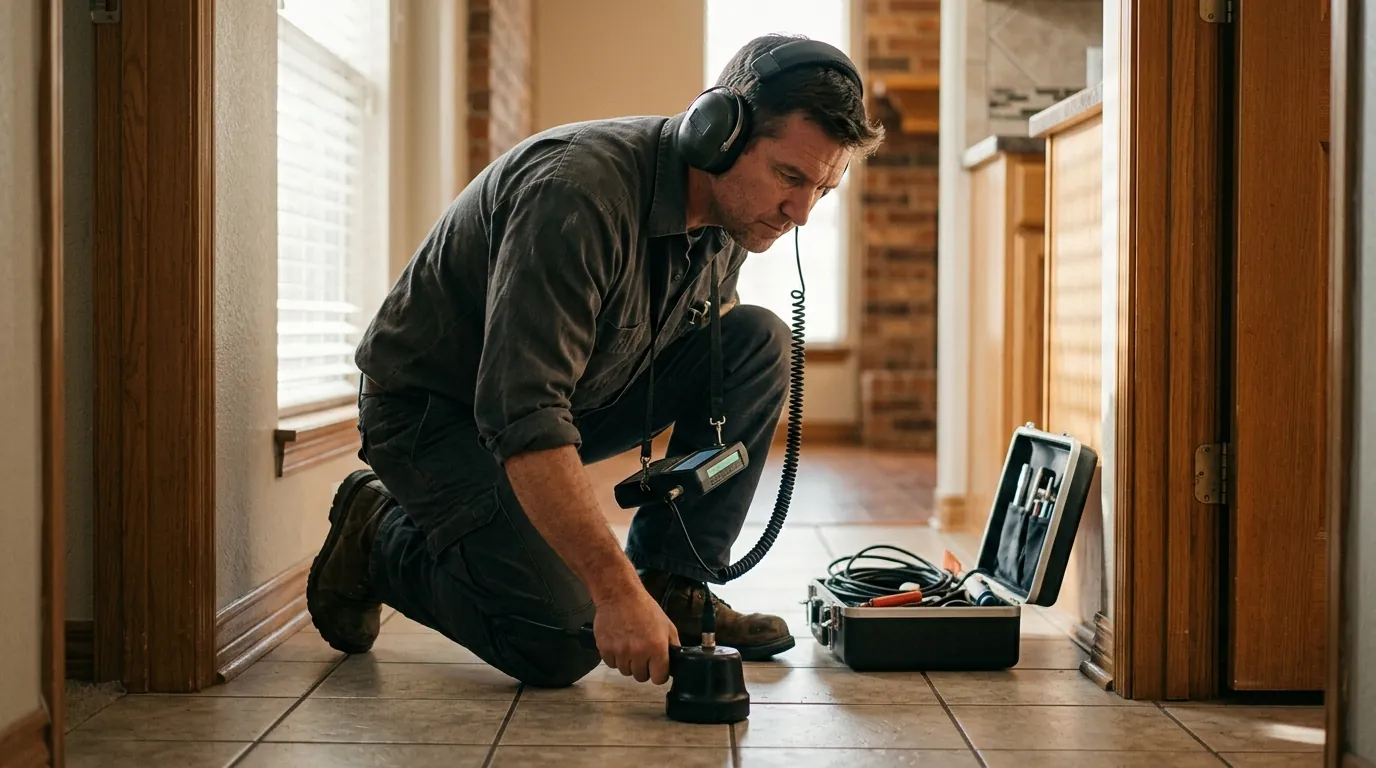
A toilet that rises when the washer drains, or water coming up in a tub or floor drain, points to a blockage in the main drain rather than one fixture. Stop using water everywhere, since every flush adds to the backup. We open the cleanout, clear the line and, if it keeps happening, run a camera to look for roots, a sag or a break. Flooring soaked with sewage usually needs removal, not drying. See main line cleaning.
Water heater dumping water
Water spreading from the heater closet or garage usually means the tank has rusted through, a fitting on top has let go, or the temperature and pressure relief valve is discharging. Close the cold valve above the heater, then turn a gas unit's control to off or switch off the breaker for an electric one. A leaking tank body can't be repaired, so plan on replacement. A failed fitting or relief valve often can be fixed, and we confirm which it is before pricing either.
Local conditions
February 2021 showed what a regional plumbing emergency looks like. NWS Houston's summary records a Hobby low of 17 degrees on Feb 15 and 15 degrees on Feb 16, both breaking 1951 records, and says the event brought broken pipes to the region. Afterward, a University of Houston Hobby School survey found that 38% of Harris County residents suffered water damage from burst pipes during that storm. Freezes that hard are rare, but they're why every Pearland household should know where its main shut-off is.
Sources: weather.gov, uh.eduWhy one emergency visit costs more than another
Houston-area planning figures for emergency visits from a published cost guide appear below. The final number turns on what we find, and you hear it before work starts.
Published planning ranges
- $99 to $493 per visit in Houston; $90 to $600 per hour, per Angi (Aug 4, 2026)
- Time of the call. Late-night, weekend and holiday visits usually carry a higher rate than weekday daytime work.
- Repair now or make safe. Sometimes the right call is stopping the water tonight and finishing the repair when parts and access are easier.
- What failed. A split fitting is a short repair, while a ruptured tank or a blocked main drain takes more time and material.
- How hard it is to reach. Pipe in an open attic or garage is quicker to work on than a line behind tile or above a finished ceiling.
What you can do before we arrive
What you can do safely
- Close the main valve or the fixture stop
- Open a low faucet to drain the lines
- Switch off power to wet rooms and the water heater
- Photograph the damage before moving anything
When to call a plumber
- Cutting and rejoining pressurized supply pipe
- Clearing a main drain backup from the cleanout
- Diagnosing a leaking gas or electric water heater
- Replacing a main valve that won't fully close
Questions about emergency plumber in Pearland
In most slab homes around Pearland it's near the water heater in the garage, on an outside wall where the line enters, or in the meter box at the street. That last one often needs a meter key.
If the leak is at the heater or you've closed the main, yes. Set a gas unit's control to off or switch off the breaker for an electric one, so nothing heats a draining tank.
A slow drip into a bucket can usually wait for a daytime visit if you can close the valve feeding it. Anything spraying, soaking a ceiling, running near electrical or backing up sewage should be handled now.
Yes. We answer 24/7, including nights, weekends and holidays, and we'll tell you honestly whether the problem needs a visit right now or can safely wait until morning once the water is off.
Move valuables, soak up standing water and keep the power off in any room where water is near outlets. Photograph everything before cleanup for your insurer. Our first-steps guide covers the rest.