Updated October 2026
Quick answer
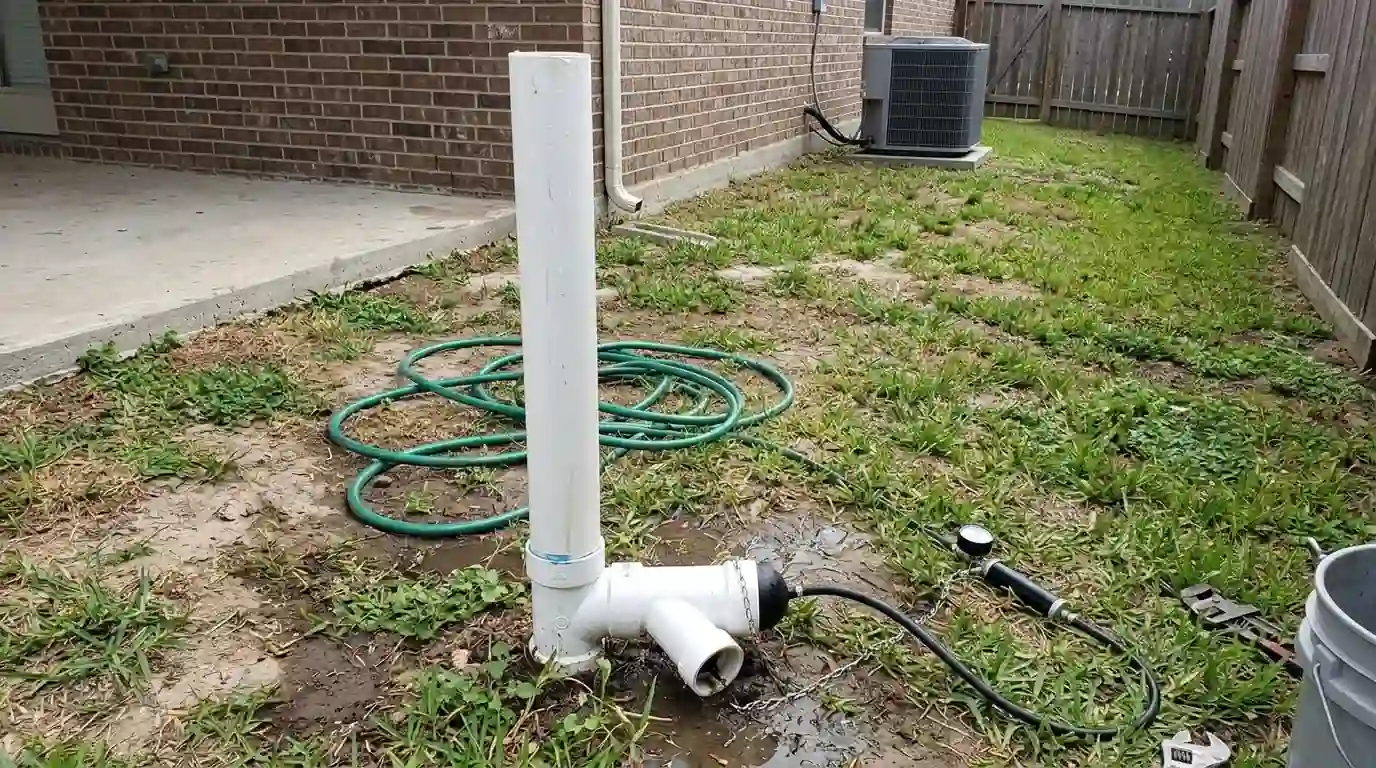
A Pearland hydrostatic plumbing test checks whether the drain lines under a slab hold water. We plug the sewer at the cleanout, fill the drain system to floor level and watch the water for a set period. A steady level means the drains hold; a falling level means a leak somewhere below the floor.
What your hydrostatic test includes
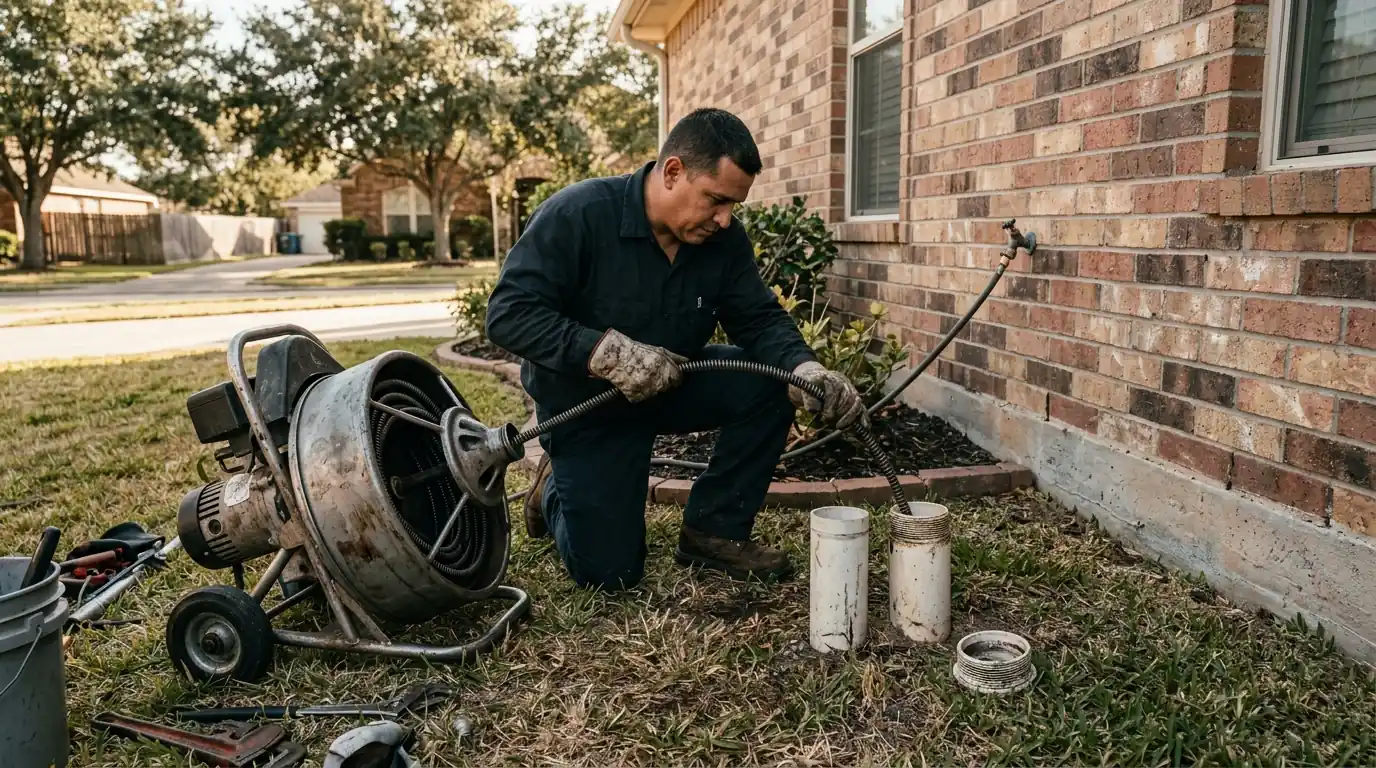
- Locating and opening the sewer cleanout
- Test plug set at the house side of the line
- Fill of the drain system to floor level
- Water-level readings over the test period
- Branch isolation if the level drops
- Written result you can share
The test covers drains, not the pressurized supply lines. Under a slab, a cracked drain leaks only when water runs through it, so it can go unnoticed for years while wetting the soil under the foundation. Filling the system and holding it there makes that leak show up as a measurable drop.
A pass gives you a documented baseline. A fail starts the next step: plugging branches one at a time to find which run leaks, then a camera to find the spot.
Local conditions
Soil is the reason this test matters across the region. Writing in its Bulletin, the Houston Geological Society says Houston sits largely on the Beaumont Formation and that structures on its expansive soils have built-in construction and maintenance problems. Next door, USDA's Bernard soil series has its type location in Fort Bend County and is somewhat poorly drained with very slow permeability. A leaking drain under a slab on either soil adds water to ground that already moves with moisture, which is why a drain test before foundation work makes sense on slab homes in Sugar Land or Houston.
Sources: archives.datapages.com, soilseries.sc.egov.usda.govBefore foundation repair
Foundation companies often ask for a drain test before they lift a slab, for two reasons. A leaking drain can be part of why the foundation moved, and fixing the slab without fixing the leak invites more movement. A test result also records the plumbing's condition before lifting, which matters if something breaks afterward. If the test fails, we isolate the leaking branch and you decide with both trades whether to repair the plumbing before, during or after the foundation work.
After foundation lifting
Raising a slab with piers bends the pipes that run through it, and rigid cast iron or old joints don't always survive the move. Testing again after lifting shows whether the drains held. Watch for drains that suddenly slow down, a sewer smell indoors, or new damp spots near tubs and toilets. A post-lift test compared with the pre-lift result gives both you and the foundation contractor a clear record of what changed and when.
Home sale and inspection
Buyers' inspectors sometimes recommend a hydrostatic test when they see foundation cracks, uneven floors or an older home with drains under the slab. As a seller, testing before listing lets you deal with any leak on your timeline instead of during a tight option period. As a buyer, a test result tells you whether the drains are a negotiating point. Either way, you get a written result with the water-level readings, which both sides can review.
Isolating the failing branch
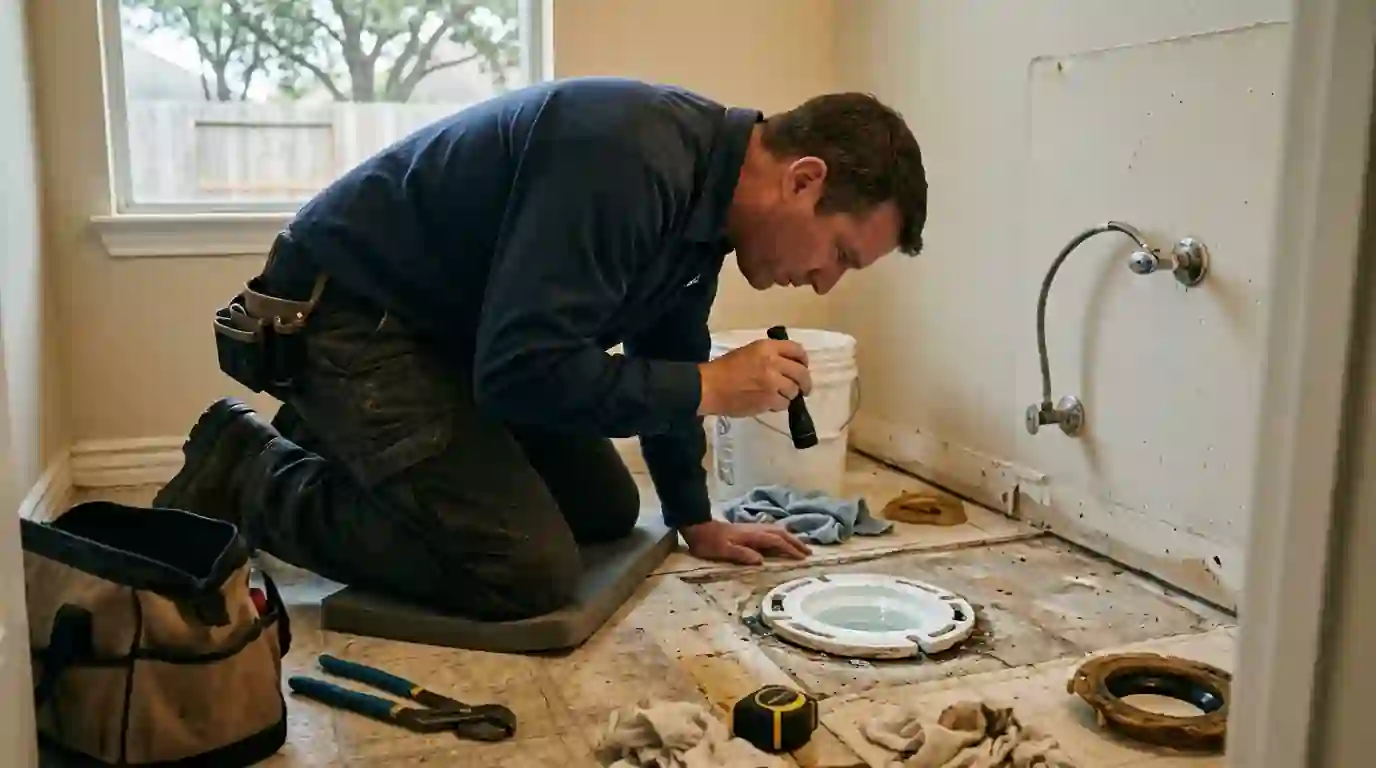
A failed whole-house test tells you there's a leak, not where. We narrow it by plugging the system at different points, often through cleanouts or a pulled toilet, and testing each section separately. The branch that loses water is the one leaking, whether it's the kitchen run, a bathroom group or the line to the laundry. A camera run then finds the exact spot. That way repair is limited to the failing branch instead of the whole system.
How a hydrostatic test runs in your home
- Plug the sewerAn inflatable test plug goes in at the cleanout to seal the house side of the line.
- Fill to floor levelWater goes into the drains until it stands at the lowest fixture opening.
- Watch the levelWe hold the water for a set period and record any drop.
- Isolate if it dropsBranches are tested separately, and the leaking one gets a camera inspection.
Factors behind the price of a drain test
No published range fits this test well, because homes differ so much in layout. Your price comes from these factors, and you hear it before we start.
- Cleanout access. An accessible outdoor cleanout makes plugging the system simple; no cleanout means pulling a toilet.
- Size of the house. More bathrooms and longer runs mean more water and more points to watch.
- Whole-house or isolated. A pass on the first fill is one test; a fail adds branch-by-branch isolation.
- Camera follow-up. Finding the exact leak spot after isolation adds a camera inspection.
Drain test or supply pressure test: which one you need
| Question | Hydrostatic drain test | Supply pressure test |
|---|---|---|
| Pipes checked | Drains and sewer under the slab | Pressurized hot and cold lines |
| How it works | Drains filled with standing water | Lines held at pressure on a gauge |
| Typical trigger | Foundation work or slab cracks | Meter moving with fixtures off |
| If it fails | Isolate branches, then camera | Electronic leak location |
Questions about hydrostatic plumbing test in Pearland
No. It tests the drain and sewer lines under the slab. Supply lines are pressurized and checked separately, with a gauge test or meter reading, if a supply leak is suspected.
The test adds water only to the drain system, at floor level, for a limited time. If a drain is leaking, some of that water reaches the soil, which is why we stop the fill once a drop shows.
Someone should be there to let us in and keep everyone from using water, since running a faucet or flushing during the test affects the reading. You'll hear from us the moment water use can resume.
We isolate the branches to find the leaking run, then use a camera to find the spot. You get a written result and repair options, which you can share with a foundation company or buyer.
Ideally both. A test before shows whether a leak contributed to the movement; a test after shows whether lifting broke anything. Comparing the two gives a clear record for every party involved.