Updated October 2026
Quick answer
For most Pearland homes on a public water system, the utility's side ends at the meter and the buried line from the meter box to the house is the owner's. We confirm a leak on that line by closing the house valve and watching the meter, then repair the failed section or replace the run.
Signs the line from the meter is leaking
- Meter turning with the house valve closed
- A green or soggy strip across the yard
- Water standing in the meter box
- A sinkhole or low spot between street and house
- Pressure that has dropped at every tap
How a water line job runs from meter to house
- Confirm the sideWith the house valve closed, the meter shows whether the loss is on the service line.
- Mark utilities and locateBuried utilities get marked before digging, then listening gear narrows down the leak.
- Repair or replaceWe fix the failed section or pull a new line, trenched or trenchless.
- Test and restoreThe line holds pressure, the trench or pits are backfilled and the yard is graded.
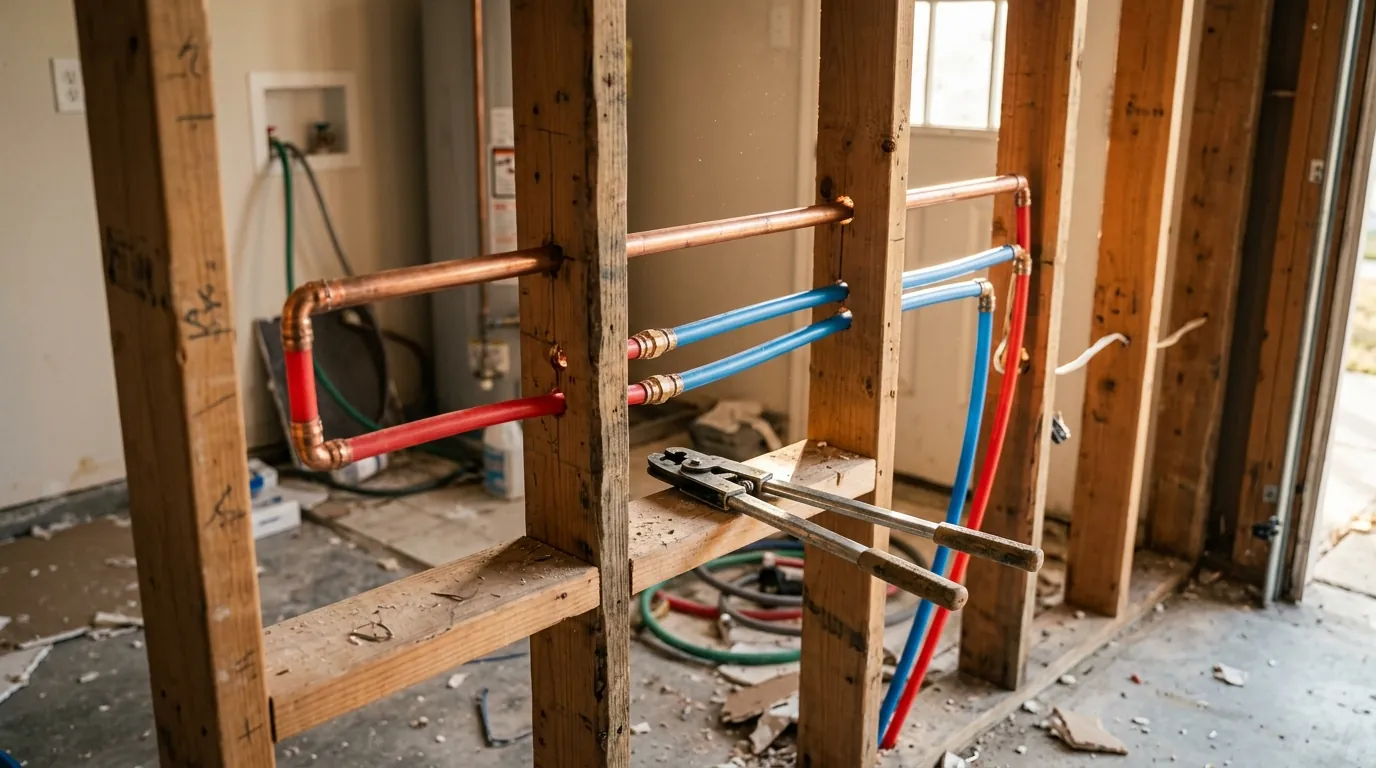
The service line is the buried pipe that carries water from the meter to the house, under the lawn, a sidewalk or the driveway. Older homes may have galvanized steel or early plastic here; newer ones usually have PEX or copper.
A single break on sound pipe gets a section repair. A line that has leaked before, corroded from the inside or been crushed by settling ground is a candidate for full replacement. We dig a test hole or two, look at the pipe itself and price both options before you decide.
Leak between the meter and the house
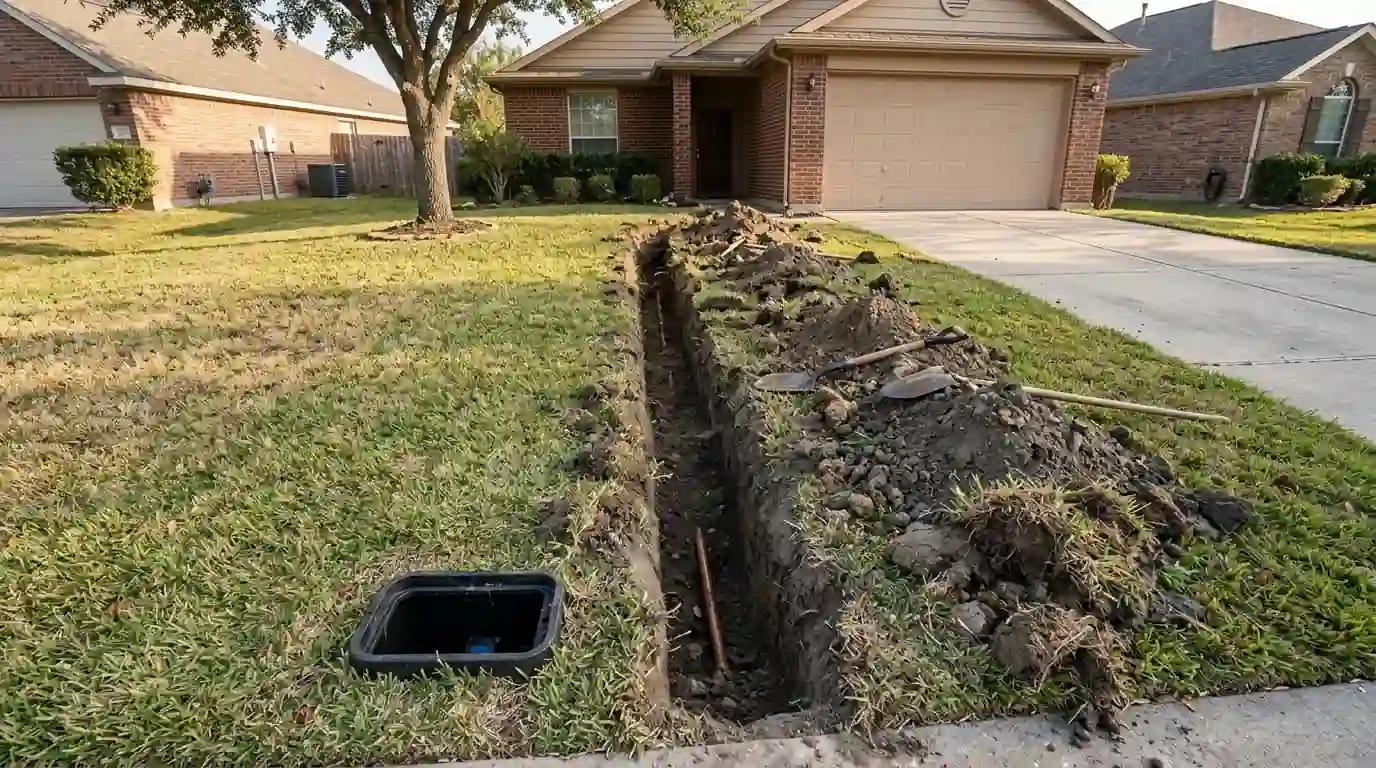
Close the main valve at the house and watch the meter. If its leak indicator still turns, the loss is on the service line or an irrigation tee before your valve. The clues are a strip of grass that stays green or soft in dry weather, a low spot or sinkhole, or water standing in the meter box. We trace the line with listening gear, dig at the loudest point, and replace the failed section. Sprinkler heads and landscaping over the line may need to be lifted and reset.
Low pressure from an old service line
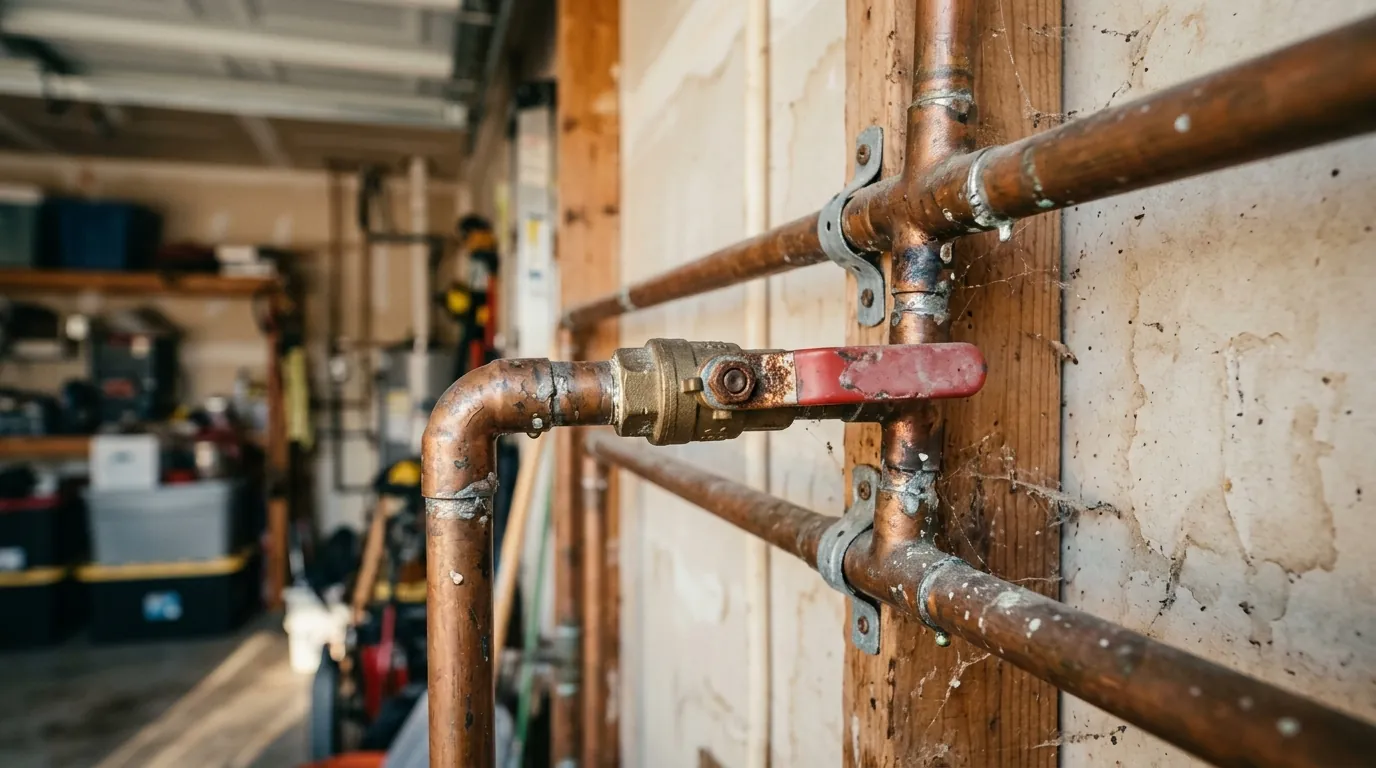
Pressure that has dropped slowly at every fixture, not just one, often points to the service line. Galvanized pipe narrows as rust builds inside, and an undersized line from an older build can't keep up once a house adds bathrooms or irrigation. We measure pressure and flow at the house, then at the meter, to see where it's being lost. A failed pressure regulator causes similar symptoms, so we rule it out first. If the line is the cause, replacing it is the fix.
Water still running? Call before it spreads.
Call (281) 845-9645Trenchless water line replacement
A trenchless replacement pulls new pipe along the path of the old one, or bores a new path, with a pit at each end instead of a trench across the yard. It saves driveways, walks, trees and established beds. It doesn't suit every line: sharp bends, crossings with other utilities and very short runs can make trenching simpler. We locate other buried utilities before digging, then pick the method that disturbs the least for your layout and explain why.
Meter box and curb stop leaks
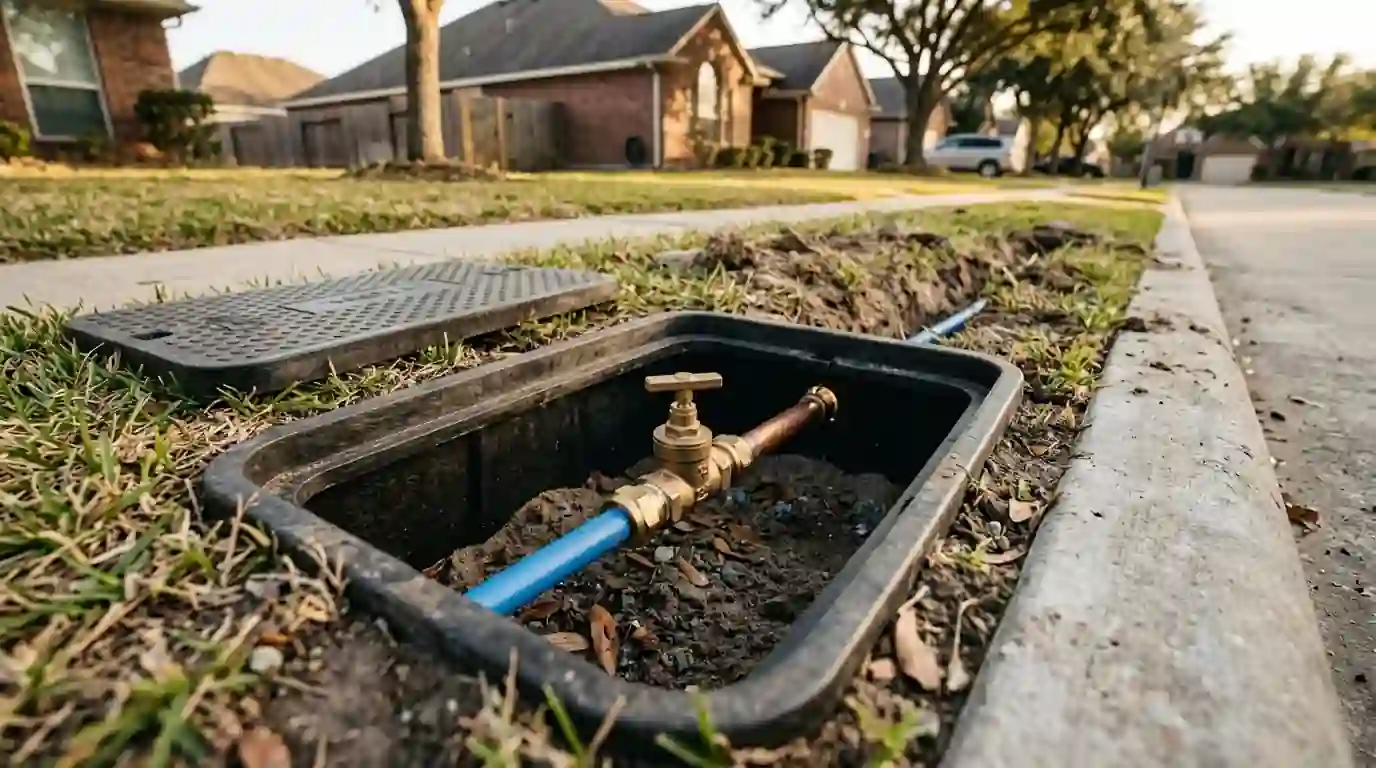
Water standing in the meter box, or a box that refills after you bail it, means a leak at or near the meter. Where the leak sits matters, because the utility usually owns the meter and the valve on its side, while the connection on your side is yours. We look before touching anything, and if the leak is on the utility's equipment, we'll tell you to call the city. If it's at your connection or the first few feet of your line, we repair it.
Local conditions
The ground around here is hard on buried pipe. A University of Houston CIGMAT presentation notes that Gulf Coast expansive clays shrink with moisture loss and swell with moisture gain, and that the City of Houston normally experiences 12 waterline breaks a day. The USGS says as much as 10 feet of subsidence had occurred in the Houston-Galveston region by 1979. Service lines across Harris County ride that same moving soil, so joints near the house and at the meter often fail first.
Sources: cigmat.cive.uh.edu, webapps.usgs.govLength, depth and concrete: what drives line replacement cost
A national cost guide publishes the planning ranges shown below for water line replacement. Most of the difference comes from the length of the line and what sits on top of it.
Published planning ranges
- $2,000 to $5,000 on average; trenched $50 to $200 per linear foot, per HomeGuide (December 22, 2025)
- Length of the run. A house set far back from the meter needs more pipe and more digging or boring.
- What's over the line. Lawn is easy to dig; concrete drives, walks and mature trees push toward trenchless.
- Repair or replace. One break on sound pipe is a section repair; an aging line is usually replaced end to end.
- Depth and other utilities. Deeper lines and crossings with gas, cable or sewer take more care to expose.
Open trench or trenchless line replacement
| Question | Open trench | Trenchless |
|---|---|---|
| Ground disturbed | A trench along the full line | A pit at each end |
| Under drives and walks | Concrete must be cut | Passes underneath |
| Bends and obstacles | Handles any layout | Best on fairly straight runs |
| Yard restoration | Full trench to backfill and reseed | Two small areas to restore |
| Best fit | Open lawn, short runs, complex routes | Mature landscaping and concrete over the line |
Questions about water line repair & replacement in Pearland
Usually it depends on which side of the meter the leak is on. The utility typically owns the meter and its side, and you own the line from the meter to the house. We'll show you where the leak is.
Gulf Coast service lines are usually shallow, since deep frost isn't a concern here, but grading, landscaping and later concrete change that. We locate the line first and hand-dig near it so the pipe isn't nicked.
Not if we can avoid it. Trenchless methods can pass under drives and walks with a pit at each end. When a line has to be reached under concrete, we cut the smallest section possible.
Yes. Clay soil can absorb a slow leak for a long time before anything shows on the surface. A meter test with the house valve closed is the quickest way to know. See our leak detection page.
If it's galvanized, polybutylene or has leaked more than once, planning the replacement avoids an emergency dig later. A sound copper or PEX line with one leak usually just needs that section repaired.