Updated October 2026
Quick answer
In Pearland, most single-fixture clogs sit within a few feet of the drain: grease in a kitchen trap arm, hair at a tub stopper, wipes in a toilet's built-in trap. When two or more fixtures back up together, the blockage is in a shared branch or the main line.
Signs a clog is building in your drains
- One sink or tub draining a little slower each week
- Gurgling from one drain when another fixture empties
- A sour or sewer smell rising from the drain opening
- Water coming up in the tub when the toilet flushes
- The toilet bowl filling high before it slowly drops
How we clear a clogged drain
- Check the neighborsWe run water at nearby fixtures to tell a local clog from a shared-line clog.
- Pick the access pointThe trap, the overflow, the toilet or a cleanout, whichever reaches the blockage most directly.
- Clear and flushThe cable or auger opens the line, then we run water hard to confirm full flow.
- Show you the causeYou see what came out and hear whether it points to a habit, a pipe defect or something bigger.
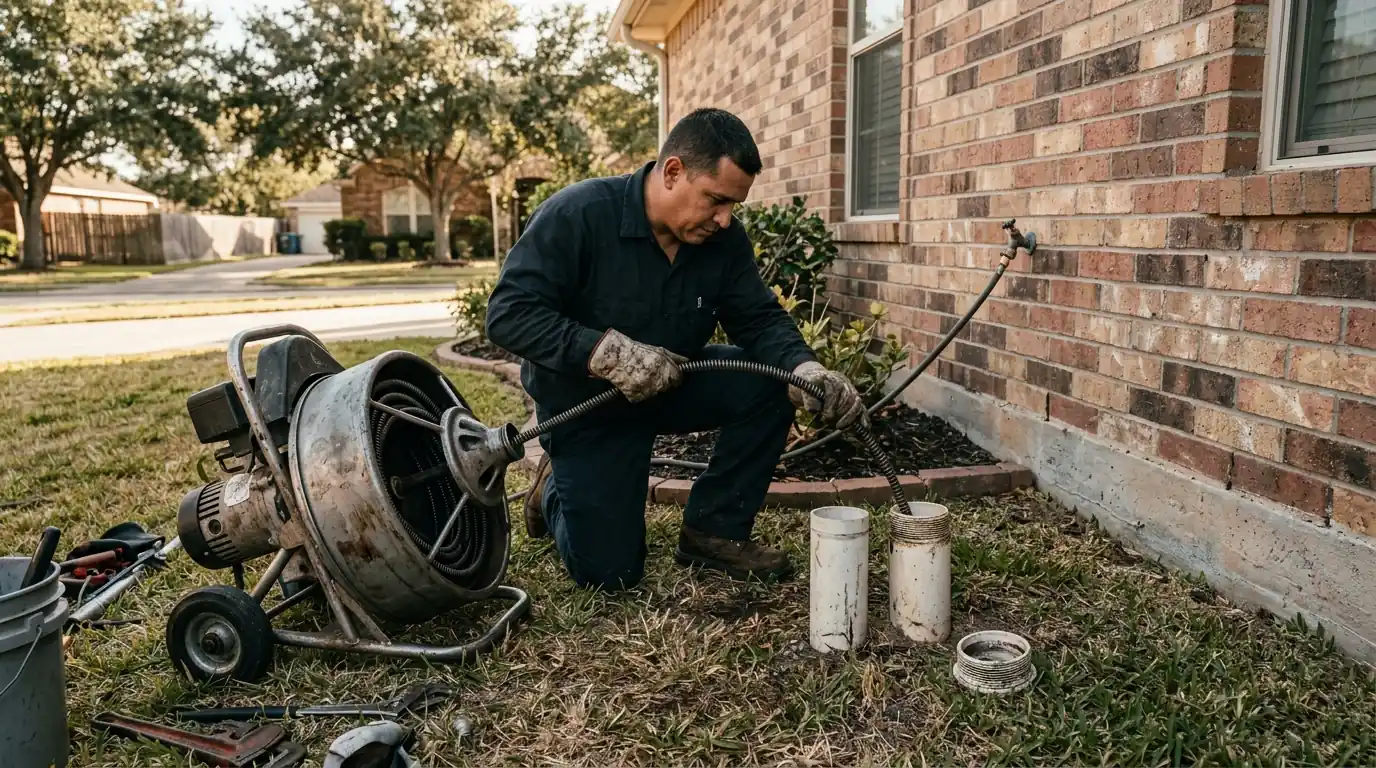
A clog is a location problem first. Water that drains slowly from one fixture points to its trap or the pipe right behind it; water rising in a different fixture points to a shared line. We work that out before choosing a hand auger, a drum machine or the outside cleanout.
Caustic drain openers rarely reach a deep clog, sit in the standing water, and burn whoever opens the trap next. If a line clogs again within months, a camera inspection usually costs less than repeat cabling.
Kitchen sink clogs
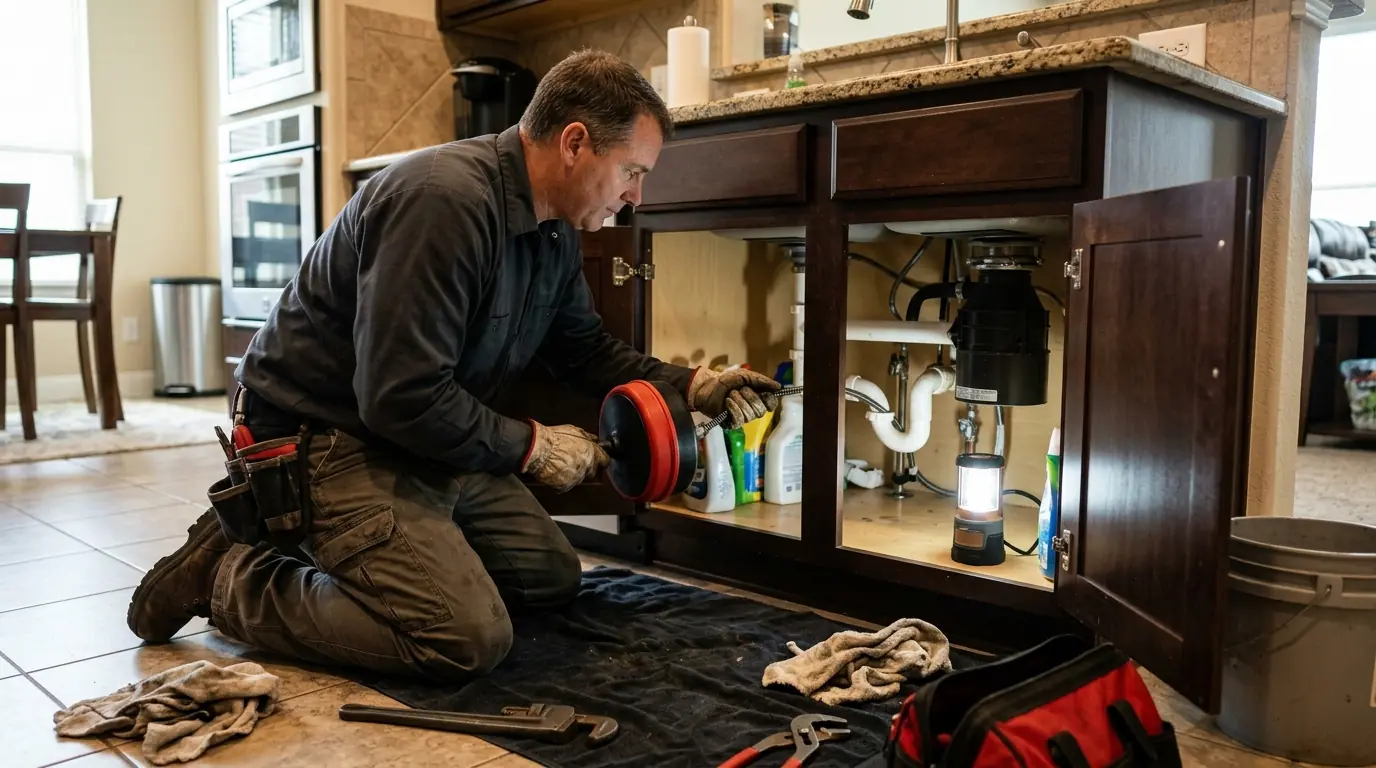
Kitchen lines clog slowly and then all at once. Grease leaves the sink warm, cools inside the trap arm and wall pipe, and catches rice, coffee grounds and disposal scraps until water stands in both bowls. We clear it from the trap arm or a cleanout with a cable sized for the pipe, and check the dishwasher hose if it shares the line. A line that keeps packing with grease is a candidate for hydro jetting rather than another round of cabling.
Bathtub and shower drains
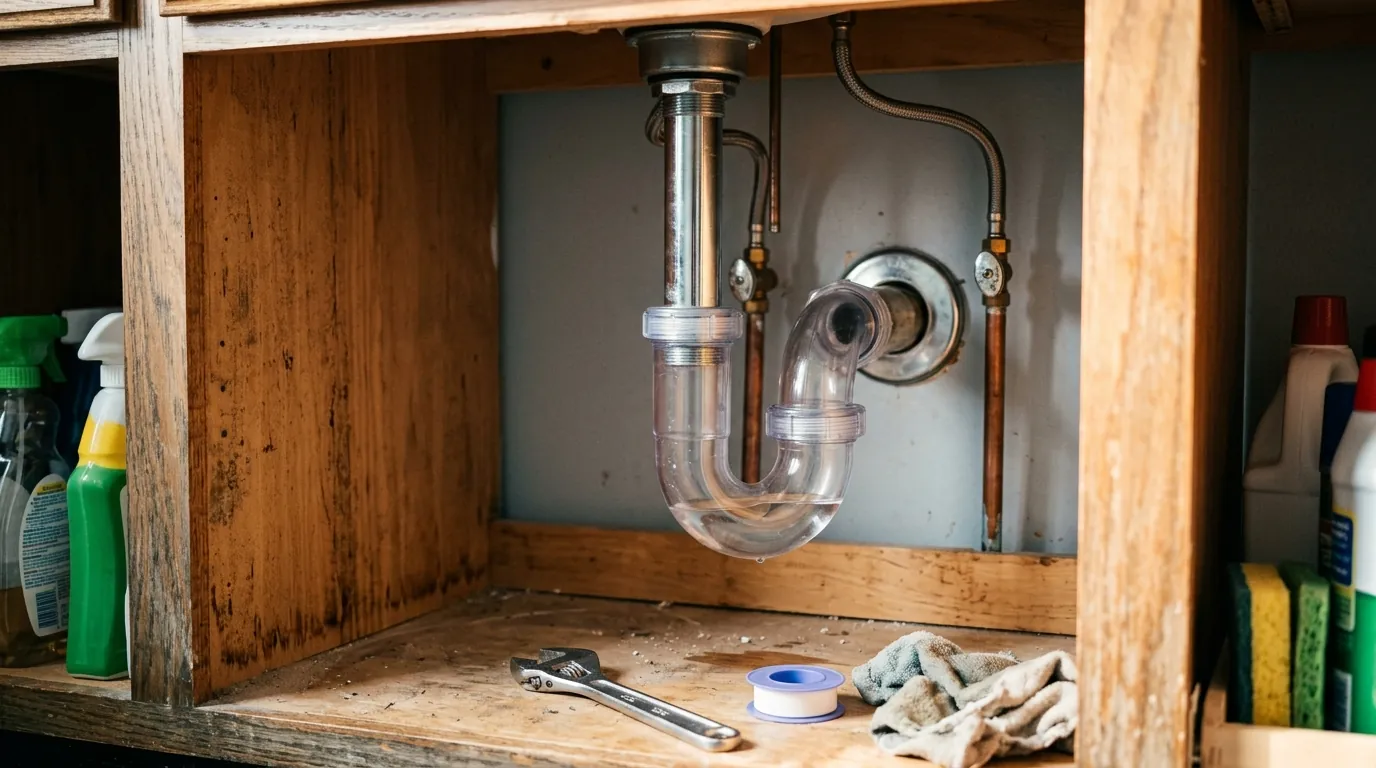
Tub and shower clogs are almost always hair bound up with soap film, starting at the stopper or the crossbar under the strainer. Draining that slows over a few weeks is the usual pattern. We pull the stopper or strainer, clear the trap with a small cable and check the overflow gasket while the plate is off. Some older homes have a drum trap that needs its own access. If the tub gurgles when you flush, the trouble is in a shared line.
Water still running? Call before it spreads.
Call (281) 845-9645Toilet clogs
A toilet clog usually lodges in the curved trap cast into the porcelain, not in the pipe below the floor. Wipes sold as flushable, paper towels and small toys are the common culprits. We start with a closet auger, built to pass the trap without scratching the bowl. If the object won't come out from above, the toilet comes off the flange, we push it out from below and reset the bowl on a new wax ring.
Laundry standpipe overflows
A washer pumps water out faster than a sink drains, so a laundry line with modest lint buildup can still overflow the standpipe during the drain cycle. Water on the floor behind the machine, with dry hose connections, is the giveaway. We cable the standpipe and its branch, and check that the pipe is tall enough and the trap correctly sized. A lint catcher on the discharge hose slows the next buildup. Overflow only while other drains run points to the main line.
Local conditions
Rain is part of the drain picture here. National Weather Service 1991-2020 normals for a Houston station show an annual precipitation normal of 55.62 inches, and during Harvey a Pearland wastewater treatment plant was inundated by several feet of floodwater and lost 60 percent of capacity. The lesson for a slow drain is timing: fixtures that slow only during a downpour and recover afterward point to an overloaded public sewer, while fixtures that stay slow point to your own lines.
Sources: weather.gov, communityimpact.comWhy one clog costs more to clear than another
Houston planning figures from a national cost guide appear below. Where the clog sits and how we reach it matter more than which room it's in.
Published planning ranges
- $151 to $307 in Houston (overall $125 to $900), per Angi (Feb 26, 2026)
- How far down the clog sits. A trap-level clog clears with a hand tool; one deep in a branch line needs a powered machine.
- Access to the line. A reachable cleanout is quicker than pulling a toilet or working inside a cramped vanity.
- What the clog is made of. Hair and paper clear quickly; packed grease or roots take more passes or a different tool.
- Chemicals already in the pipe. If a caustic opener was poured in, the trap has to be opened with extra care and protection.
What you can try first, and what to leave to us
What you can do safely
- Plunge toilets with a flange plunger and sinks with a cup plunger
- Pull and clean a pop-up stopper or tub strainer
- Remove a sink P-trap over a bucket and clear it by hand
- Fit hair catchers in showers and a lint trap on the washer hose
When to call a plumber
- Clogs past the trap that need a powered cable
- Two or more fixtures backing up together
- Sewage coming up in a tub or shower
- Lines already dosed with a chemical opener
Questions about drain cleaning in Pearland
We'd skip it. Caustic and acid openers rarely clear a deep clog, can damage old metal pipe and rubber seals, and stay in the standing water. If you already used one, tell us before we open the trap.
Repeat clogs usually mean something in the pipe is catching debris: grease buildup, a sag, roots or a rough joint. A camera look shows which one, so the fix matches the cause instead of clearing the same spot again.
Yes. We answer 24/7, including nights, weekends and holidays. If water is rising, stop using fixtures on that line, and we'll talk you through what to shut off while you wait.
Often. Gurgling means air is being pulled through the trap because water can't flow freely downstream, from a partial clog or a blocked vent. Several fixtures gurgling together points to a shared line.
Not when the tool fits the pipe. We size the cable head to the line and go gently in old cast iron or galvanized pipe. If a pipe is badly corroded, we'll say so rather than force a cable through.