Updated October 2026
Quick answer
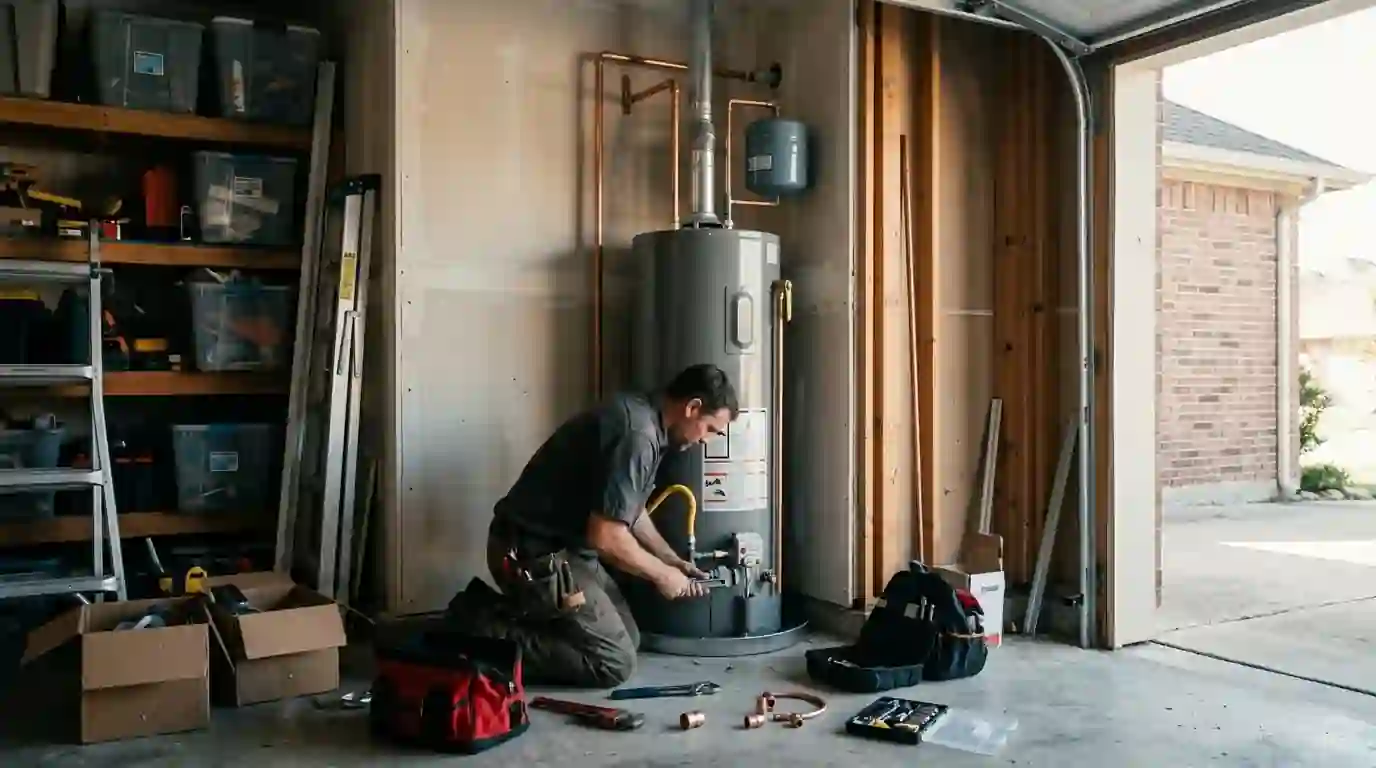
A Pearland water heater replacement is permitted work, so the new heater goes in to current code, not just where the old one sat. That usually means a new relief valve line, a drain pan, gas or electrical connections checked, and an expansion tank where the plumbing needs one.
Most replacements are like for like: same fuel, similar size, same spot. Even then, the code has moved since many older heaters went in, so the swap often includes parts the old install never had. You see that list before work starts.
Replacement is also the one moment to rethink size, fuel or type. If the household has grown, a 50 gallon tank or a heat pump water heater may fit better. If the current heater sits in the attic, ask whether a garage spot would make the next leak easier to catch.
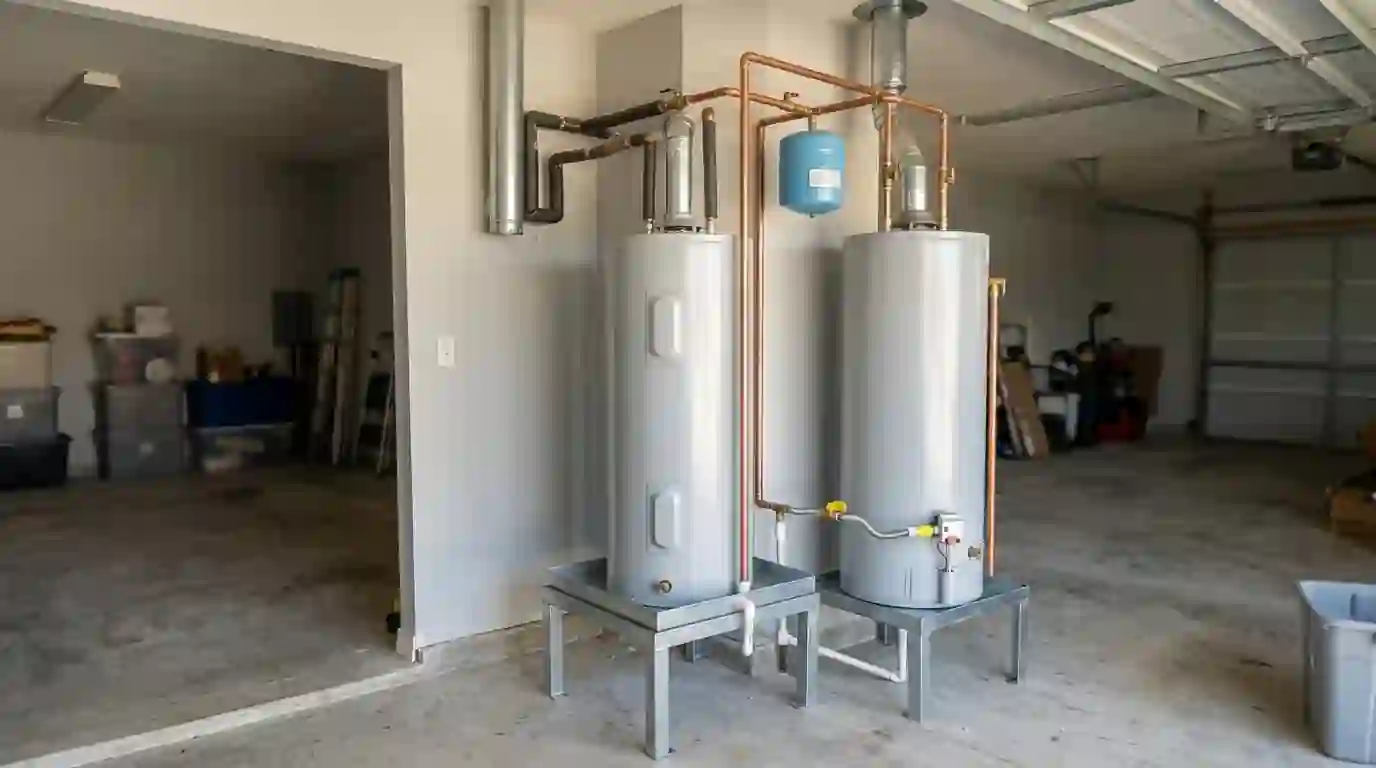
Gas or electric tank for your replacement
| Question | Gas tank | Electric tank |
|---|---|---|
| Recovery | Faster | Slower |
| Venting | Needs a flue or power vent | None |
| Supply | Gas line and shutoff | Dedicated 240-volt circuit |
| Works in an outage | Many standing pilot models do | No |
Why two water heater swaps rarely cost the same
A national planning range for standard tanks is shown below, and our replacement cost guide covers it in depth.
Published planning ranges
- $600 to $3,100 for standard tank models, per HomeGuide (January 2, 2026)
- Size and fuel. Gas tanks cost more to install than electric, and larger tanks cost more than smaller ones.
- Location. Attic and tight closet installs take more labor than an open garage.
- Code updates. An expansion tank, pan, new relief line or venting changes add parts and time.
- Conversions. Changing fuel or moving the heater adds gas, electrical or venting work.
What comes with every replacement
- Removal and haul-away of the old heater
- New supply connectors and shutoff check
- Relief valve and discharge line to code
- Drain pan where the location calls for it
- Leak check, temperature setting and first firing
- Permit and inspection
40 and 50 gallon tank swaps
These are the standard sizes in most homes, and the swap is usually straightforward when the new heater fits the same space. Check the label before choosing: many newer heaters are taller or wider than the one they replace because of added insulation, and a tight closet can force a different model. We match fuel and venting, confirm the gas line or circuit can carry the new unit, and set the temperature at a safe level. A 40 to 50 gallon upsize suits a household that now runs out mid-shower.

Attic water heater replacement
Attic heaters are common in slab homes, and they make replacement harder. The new unit has to come through the attic opening and over the joists, and a leak there drips straight into a ceiling. An attic install needs a drain pan piped to the outside, a clear walkway and a light and service platform beside the heater. Before the job day, we look over the pull-down stairs and the platform. Some owners move the heater to the garage instead, which takes new piping and venting but makes future service easier.
Gas to electric conversion
Going from gas to electric means capping the gas line properly and running a dedicated circuit sized for the heater, which is often a 240-volt, 30-amp circuit for a standard tank. Check that your panel has room before you commit. An electric tank needs no flue, so the old vent is removed and the roof or wall opening is sealed. Recovery is slower than with gas, so a family that used a 40 gallon gas tank may want a 50 gallon electric unit or a heat pump model.
Expansion tank and pan upgrades
When a home has a pressure regulator or a check valve at the meter, heated water has nowhere to expand. Pressure climbs every time the heater runs, the relief valve drips and fixtures wear faster. A small thermal expansion tank on the cold inlet absorbs that rise, and we set its air charge to match house pressure. A drain pan with a line to a safe outlet catches leaks before they reach flooring or a ceiling. Both are small parts next to the damage they prevent.
Local conditions
Housing age tells part of the story here: Pearland's median year built is 2001 for ACS 2020-24 (up from 1996 in 2006-10), with renters at 24.8% of occupied homes. A house built around then is likely on its second or third water heater, and an older install may sit in the attic or lack an expansion tank. Pearland also requires construction permits for work on the mechanical, electrical and plumbing systems of a structure, with inspections scheduled through eTRAKiT. We pull that permit with the replacement, so the new install is inspected.
Sources: bestneighborhood.org, pearlandtx.govHow a water heater swap runs
- Size and quoteWe check household use, space, fuel and venting, then price the heater and needed upgrades.
- Remove the old tankGas or power is shut off, the tank drained and disconnected, then carried out.
- Set the new heaterThe new unit goes in with pan, relief line, connections and expansion tank as needed.
- Fill, fire and inspectWe fill the tank, check for leaks, set the temperature and book the inspection.
Signs the tank has reached its end
- Water seeping from the tank body or jacket
- Rust-colored hot water from several taps
- Rust or scale at the base of the tank
- Hot water runs out far sooner than before
- A repair is needed again soon after the last one
Questions about water heater replacement in Pearland
When water leaks from the tank body, rust shows in the hot water near the tank, or parts keep failing on an older heater. So is a heater too small for the household you have now.
If hot water runs out during back-to-back showers or while the dishwasher runs, a 50 gallon tank or a faster-recovery model usually solves it. Confirm the space first, since newer tanks are often larger outside.
If your home has a pressure regulator or a check valve at the meter, the system is closed and thermal expansion has nowhere to go. An expansion tank protects the heater, the relief valve and your fixtures.
Often, yes. It means new water lines, a new vent or gas route, and patching where the old ones ran. It costs more up front but makes leaks visible and future service easier.
We drain it, disconnect it and haul it away as part of the job. Attic tanks come down through the same opening they went up, with care taken around the ceiling and stairs.