Updated October 2026
Quick answer
Most Pearland faucet drips come from a worn cartridge, O-ring or seat, not the faucet body, so a rebuild with the right part usually stops it. Replacement makes sense when the body is cracked or corroded, parts are no longer made, or you want a different style, a pull-down spray or a touchless sensor.
A faucet is a valve with a spout. Inside, a cartridge, ball or pair of stems controls flow and mixes hot with cold, sealed by small rubber parts that wear with use and water chemistry. When those seals fail, water leaks out of the spout, around the handle or below the deck.
We identify the brand and model before choosing a fix, because cartridges are rarely interchangeable. If parts are available and the body is sound, a rebuild is usually the better value. If not, we help you pick a replacement that fits the holes in your sink or counter.
What changes the price of faucet work
The range below comes from a national guide to faucet installation costs. Where your job lands depends on the points here.
Published planning ranges
- $120 to $300, per HomeGuide (July 14, 2025)
- Rebuild or replace. A cartridge or O-ring swap takes less time and fewer parts than mounting a new faucet.
- Faucet style. Pull-down, touchless and widespread faucets take longer to set up than a basic single-hole model.
- Shutoff valves and supplies. Corroded valves or old rigid supply tubes are replaced while the water is off.
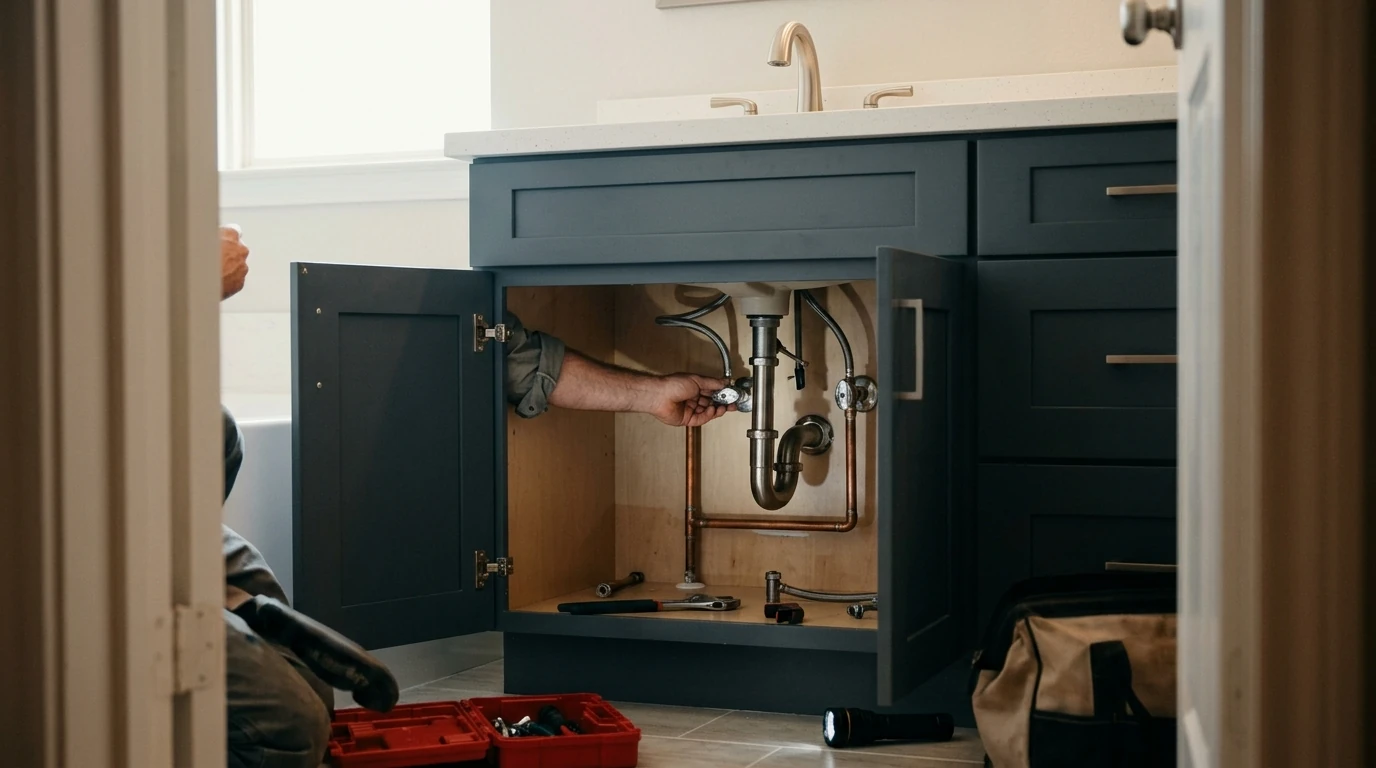
- Access under the sink. A tight cabinet, a disposal in the way or a stuck mounting nut adds labor.
Dripping kitchen faucet
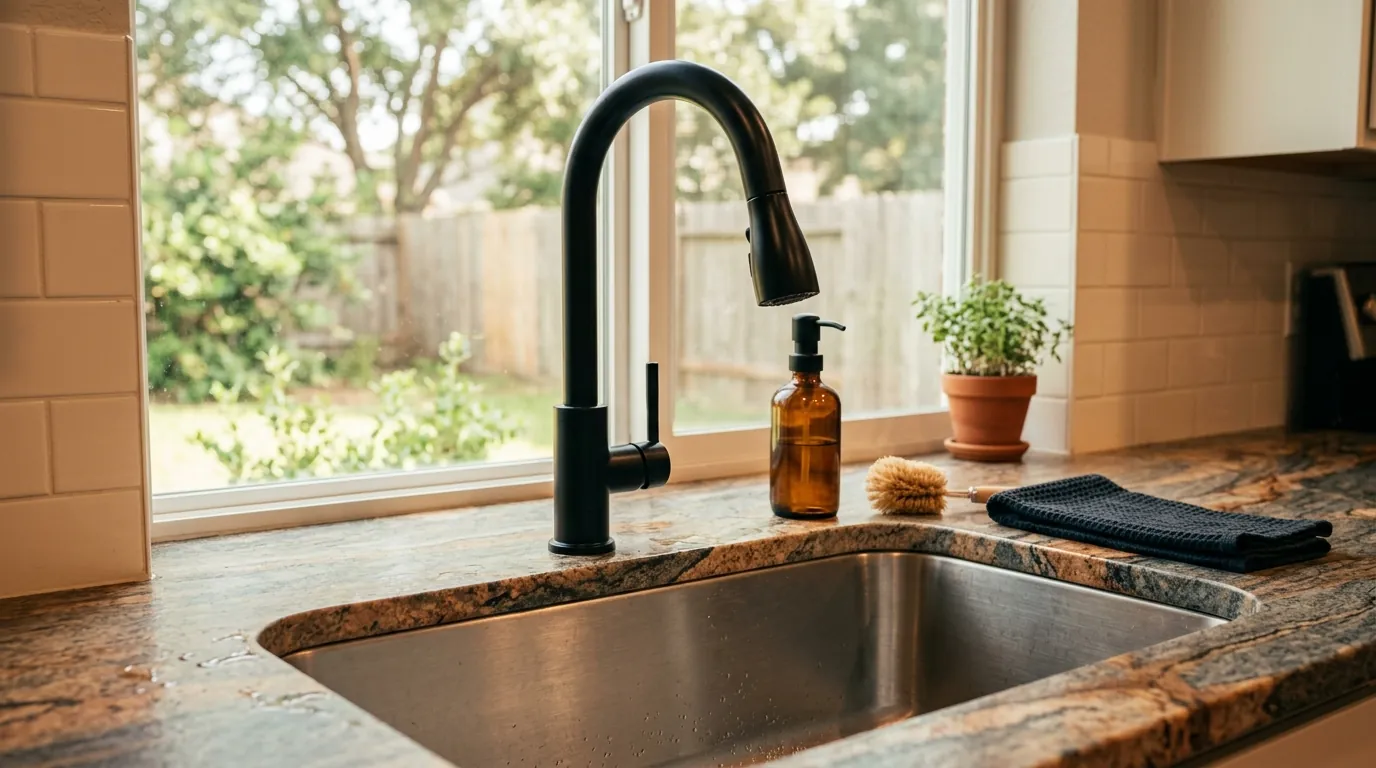
A kitchen faucet that drips from the spout with the handle off usually has a worn cartridge or seat. One that leaks around the base of the spout when running points to failed O-rings on a swivel spout. Water under the sink is a separate problem: a loose supply connection, a cracked hose on a pull-down sprayer, or a leaking supply valve. We trace which it is before replacing anything, then rebuild with matching parts and check for drips with the water on and off.
Bathroom faucet replacement
Bathroom faucets come in three main hole patterns: single-hole, 4 inch centerset and widespread, usually 8 inches between handles. A new faucet has to match the holes in your sink or vanity top, unless a deck plate covers the extras. We remove the old faucet, clean the deck, install the new one with its drain assembly, and replace the supply lines. If the shutoff valves under the sink are stiff or weeping, plan to change them while the water is already off.
Cartridge and valve repairs
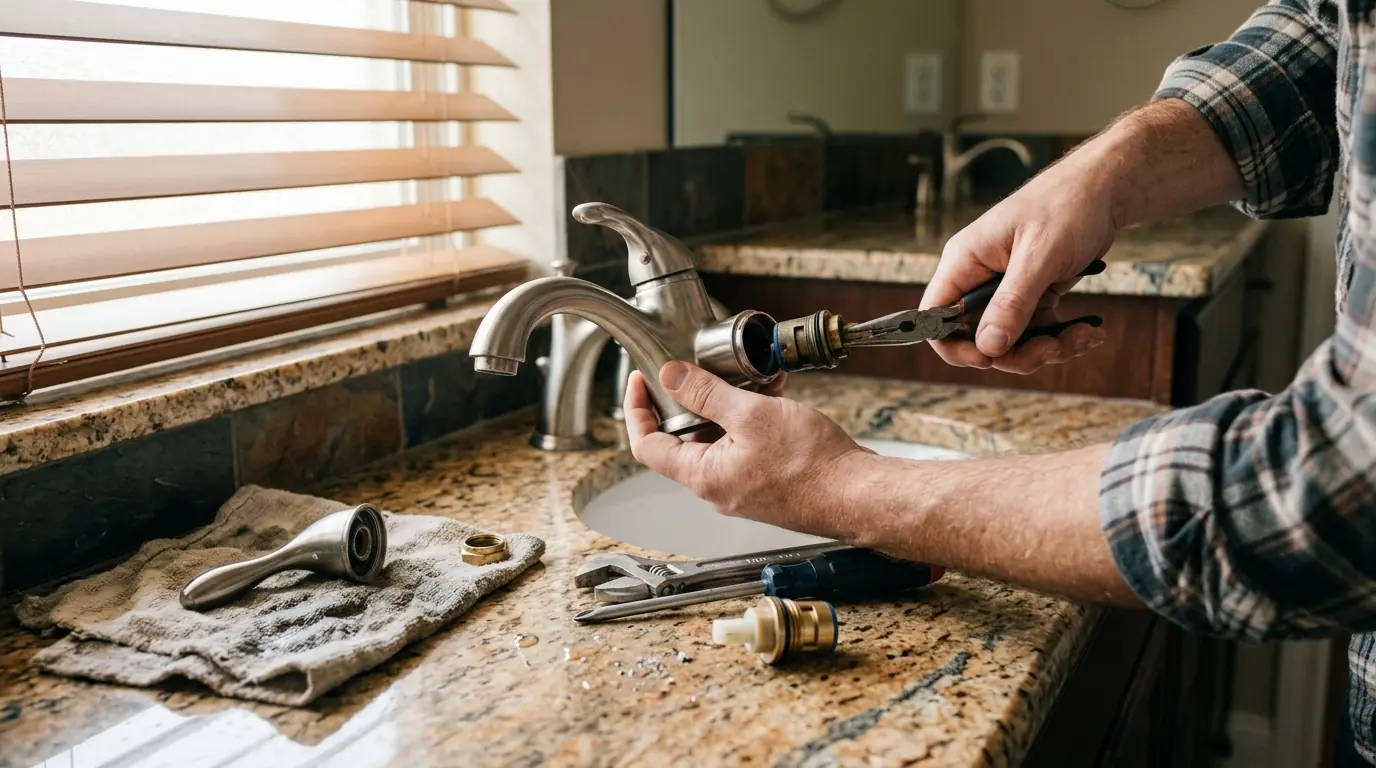
Single-handle faucets use a cartridge or ball valve; two-handle faucets use stems with washers or ceramic discs. Symptoms point to the part: a handle that is hard to turn or will not hold temperature usually means a worn cartridge, while a drip that returns soon after a washer swap can mean a pitted seat. Once the old part is out, we match it by brand and model and grease new O-rings with plumber's silicone. Older or unbranded faucets may not have parts at all.
Pull-down and touchless faucets
Pull-down faucets add a hose, a weight and a quick-connect fitting under the sink, and that hose can kink, wear through or leak at the connector. Touchless models add a sensor, a solenoid valve and a battery pack or plug-in power. When a touchless faucet runs on its own, will not start, or flows weakly, the battery, sensor or solenoid is usually to blame. We troubleshoot the electronics and the plumbing separately, and install new units with the control box mounted clear of the cabinet floor.
Local conditions
Pearland's water quality report lists chloramines as the primary disinfectant (average 3.143 ppm) and total dissolved solids averaging 321 ppm (range 321-522 ppm). Both matter inside a faucet. Chloramine is harder on some rubber compounds than plain chlorine, so O-rings and washers can harden and crack sooner. Dissolved minerals leave scale on aerators and cartridges, which shows up as a sputtering stream or a stiff handle. When we rebuild a faucet in Pearland, we clean the aerator and seats along with replacing the seals.
Sources: pearlandtx.govHow a faucet visit runs
- Find the leak pathWe check the spout, handle base, sprayer hose, supplies and valves to see where water escapes.
- Identify the modelWe match brand and cartridge type so repair parts fit, or confirm the hole pattern for a new faucet.
- Rebuild or installWorn parts get replaced, or the new faucet, supplies and drain assembly get mounted.
- Run and inspectWe run hot and cold, check temperature, flush the aerator and look for drips underneath.
Signs your faucet needs attention
- A drip from the spout with the handle fully off
- Water seeping around the handle or spout base
- A handle that sticks or will not hold temperature
- A weak or sputtering stream from scale
- Damp cabinet floor or swollen particleboard under the sink
Faucet jobs you can do and when to call
What you can do safely
- Unscrew and rinse a clogged aerator
- Replace batteries in a touchless faucet
- Tighten a loose handle set screw
- Shut the valves under the sink during a leak
When to call a plumber
- Matching and replacing a hidden cartridge
- Replacing shutoff valves that weep or will not turn
- Removing a seized faucet in a tight cabinet
- Leaks inside the wall behind a wall-mount faucet
Questions about faucet repair & replacement in Pearland
Yes. A steady drip wastes water around the clock, and a hot-side drip also wastes the energy used to heat it. Most drips are a cartridge or washer, which is a short repair.
Usually the replacement is not an exact match, the O-rings were not lubricated, or the seat underneath is worn. A cartridge also has to seat fully before the retaining clip or nut goes back on.
A clogged aerator or a cartridge partly blocked by scale is the usual cause. Unscrew the aerator and rinse it. If the whole house is weak, read our page on pressure regulators.
Yes. Check that it matches your sink's hole pattern and that it comes with supply lines, or tell us so we bring them. Keep the box and instructions until it is installed.
Low batteries, a dirty sensor window or a reflective object in front of the sensor can all trigger it. If fresh batteries and a clean sensor do not fix it, the solenoid valve may be failing.