Updated October 2026
Quick answer
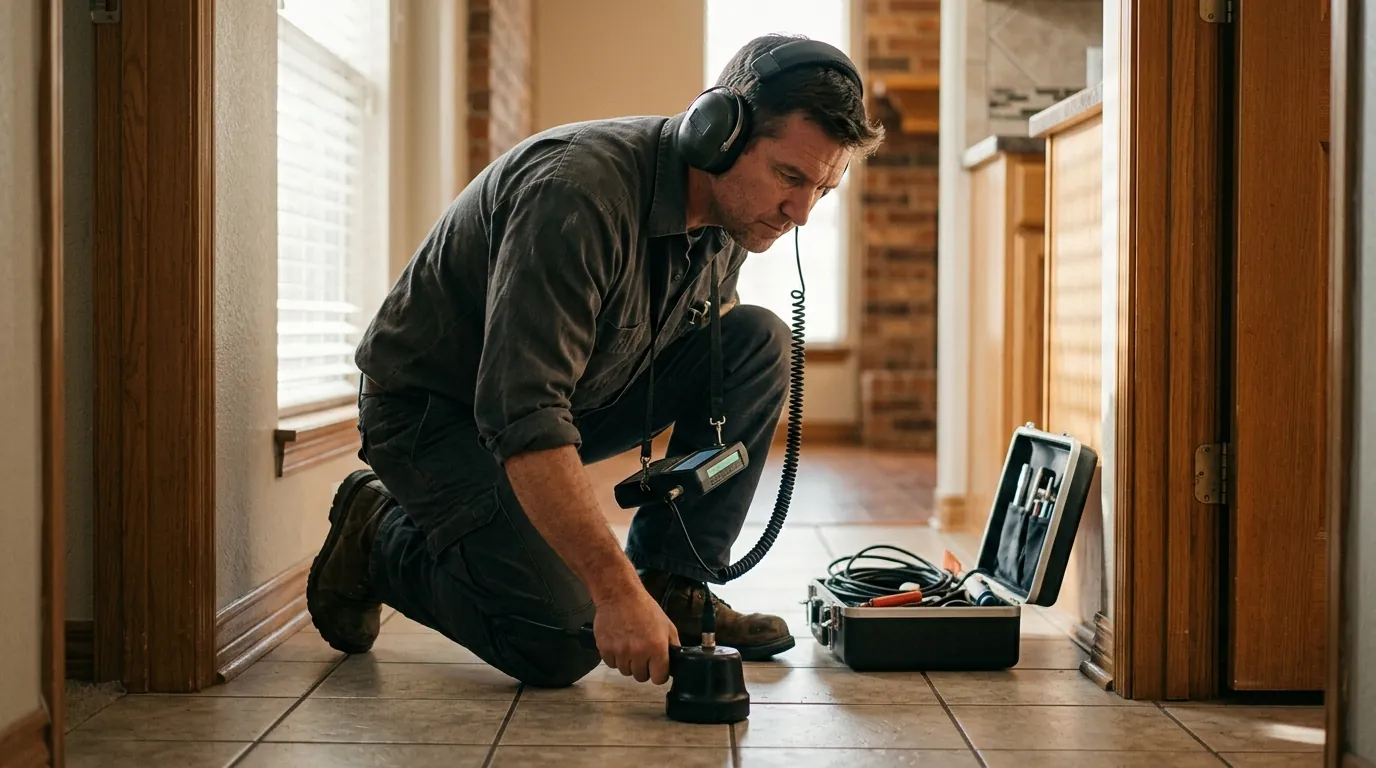
A Pearland slab leak is usually confirmed in three steps: a meter test shows water moving with every fixture off, the hot and cold sides are isolated to see which one is losing pressure, and electronic listening narrows the spot to a small patch of floor. Only then is the slab opened, and only there.
Signs the leak is under your slab
- A warm spot on tile or concrete, often near the kitchen or a bathroom
- Running water you can hear with every fixture off
- A water meter that keeps turning while the house is quiet
- A water bill that jumps with no change in use
- Damp carpet, a musty smell or swelling baseboards
How a slab leak job runs, start to finish
- Confirm and isolateWe run the meter test with you, then shut the hot and cold sides separately.
- Locate the spotListening and thermal imaging narrow the leak to a small area before anything is opened.
- Repair or rerouteYou pick the fix with both prices in hand; we open the floor at the mark or run a new line overhead.
- Test and close upThe line holds pressure before the hole is patched, and we check the meter again before leaving.
In a slab home the hot and cold lines run through the soil under the concrete, looped from the water heater to each fixture. When one wears through, water goes up through cracks, under baseboards or down into the dirt. The first sign is often a warm floor, a hiss at night or a bill that jumps.
Two decisions matter more than the patch: finding the leak without guesswork, and fixing that spot or retiring the whole run. We locate first, show you the readings, and price both options before anything gets cut.
Spot repair through the slab
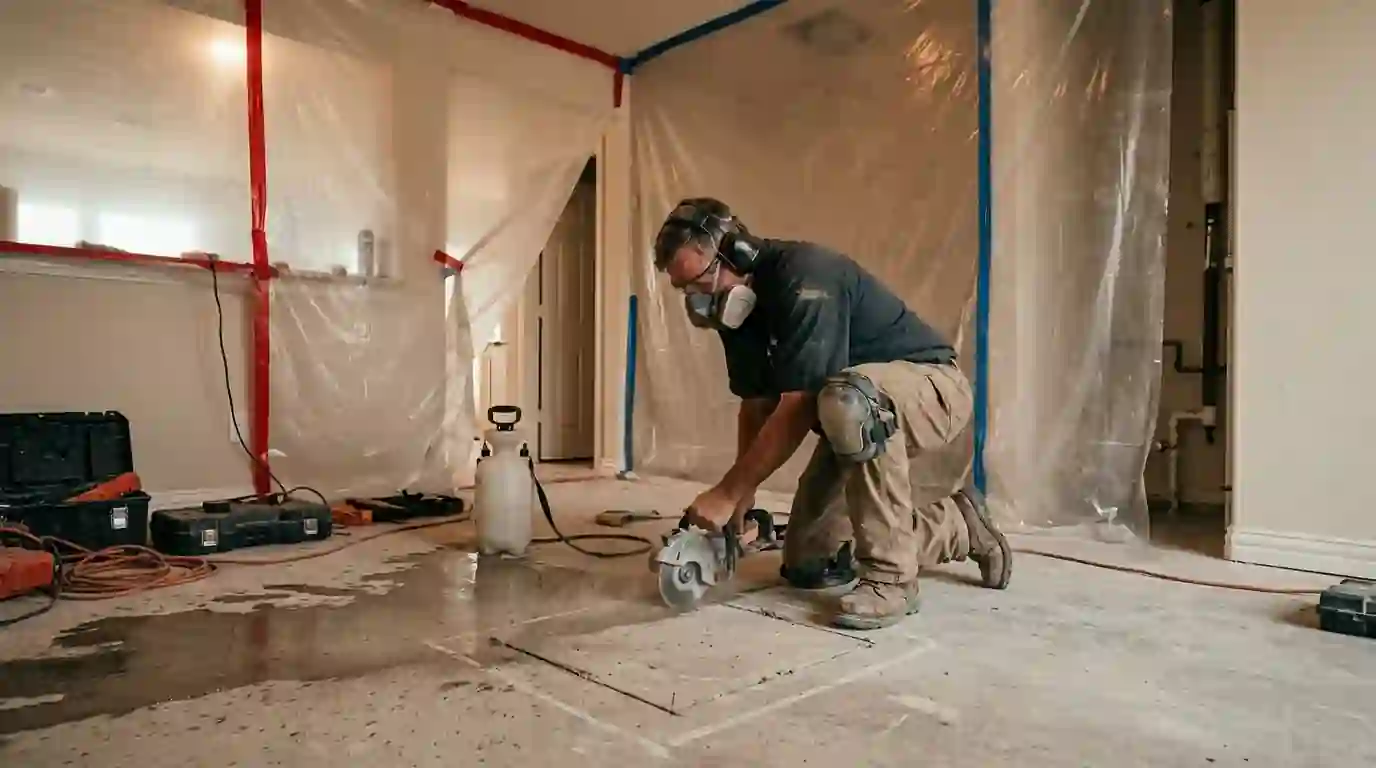
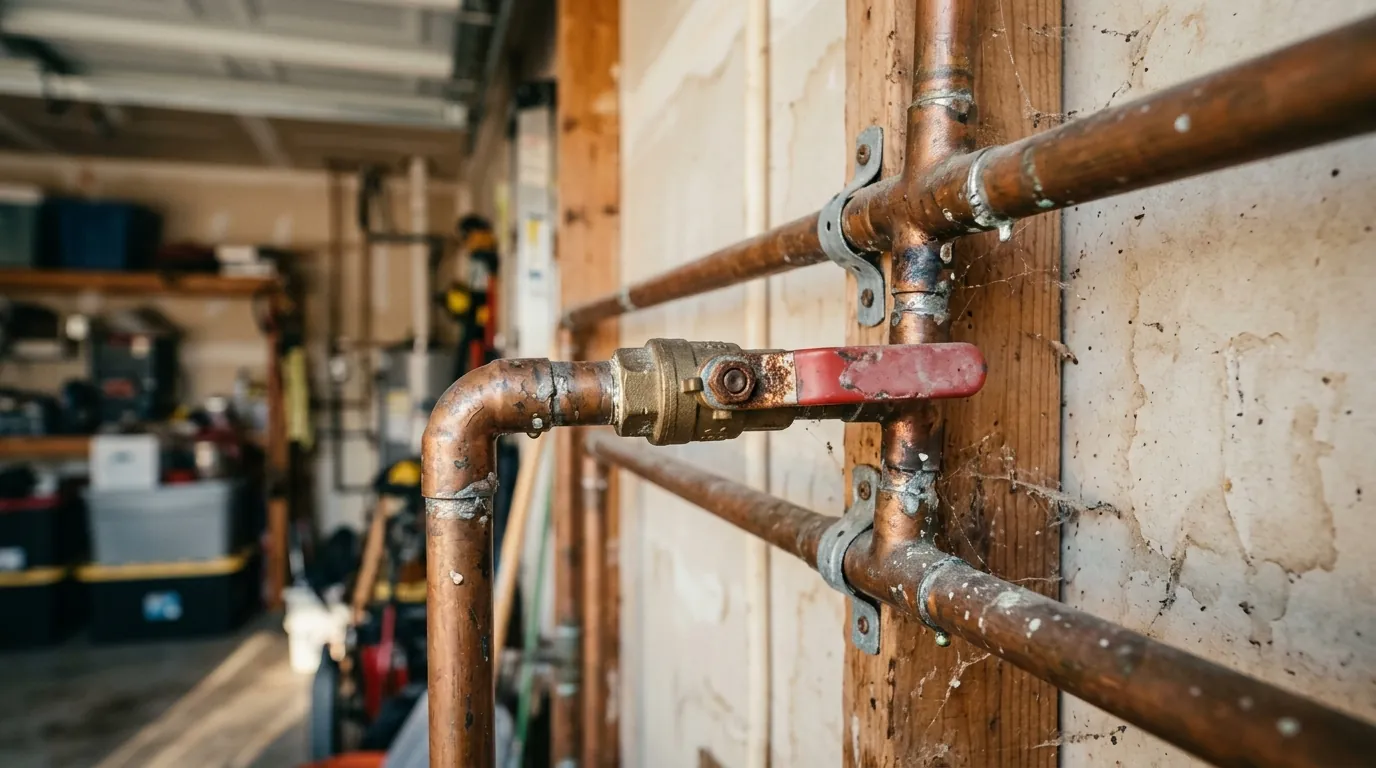
We open a small section of floor over the marked spot, dig to the line, cut out the failed piece and join new pipe with couplings made for burial. The line has to hold pressure before the hole is backfilled and patched. Plan for the flooring over the spot: tile can be matched if you kept spares, while wood or laminate may need a few boards. A spot repair keeps the original routing but does nothing for the rest of the line if it is thinning too.
Rerouting through the attic or walls
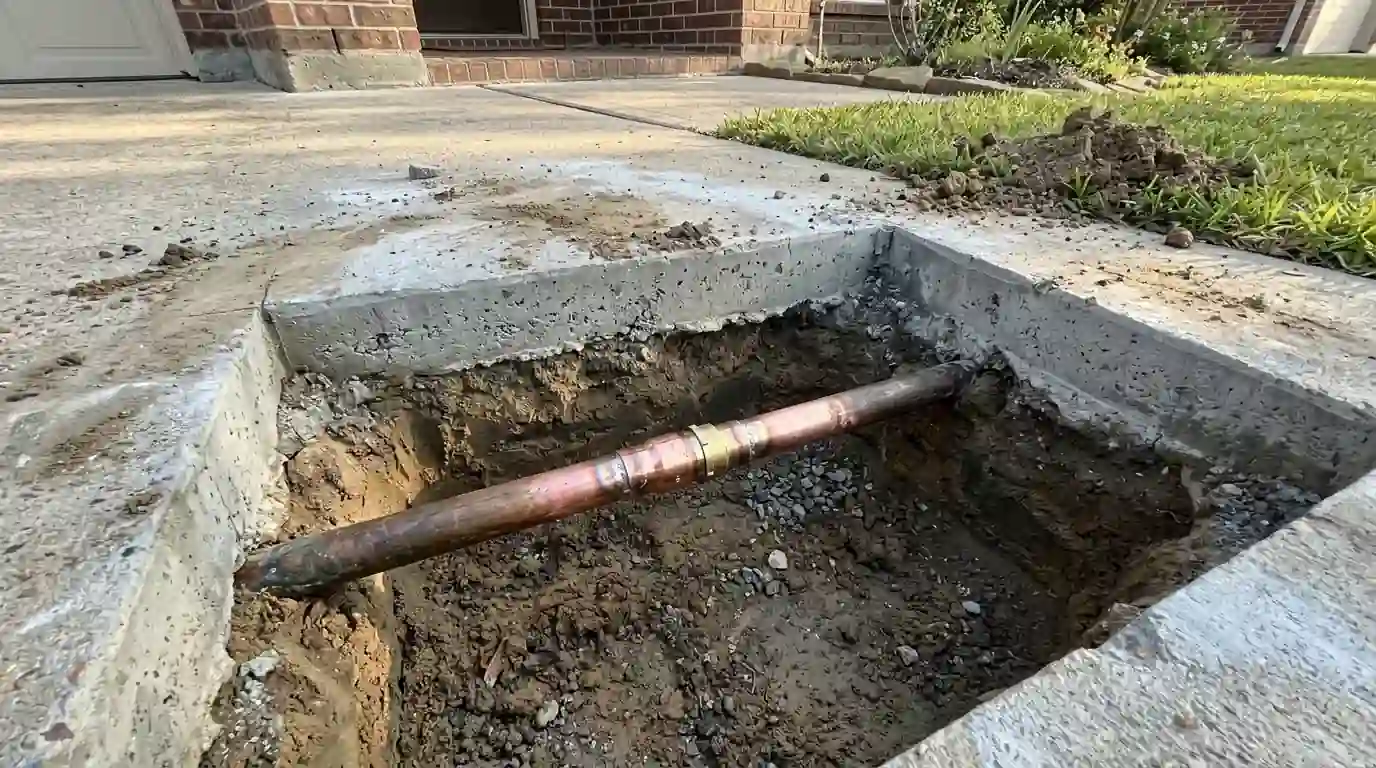
A reroute caps the leaking line in the slab and runs a new one to the same fixtures through the attic and down inside the walls. The floor stays closed; a few small drywall openings where the pipe drops to a sink or tub get patched instead. PEX is the usual choice because it bends around framing with fewer joints, and we insulate it across open attic. It is the stronger choice when a line has leaked more than once.
Water still running? Call before it spreads.
Call (281) 845-9645Hot-side vs cold-side leaks
Which side is leaking changes the urgency and the clues. A hot-side leak keeps the water heater cycling, so you may hear it fire more often and feel a warm strip on the floor that follows the pipe, and you pay to heat water nobody uses. A cold-side leak is quieter and often shows first as a meter that will not stop or damp flooring with no warmth. We isolate each side before locating starts.
Leaks under the garage slab
In many homes the main line or the water heater supply runs under the garage first. A leak there can go unnoticed for months because nobody walks barefoot on garage concrete. Look for a dark patch that never dries, water seeping where the slab meets the driveway, or a white crust as water evaporates through the concrete. With no finished flooring to restore, garage leaks are often the easiest to reach, so a spot repair usually makes sense.
Local conditions
Pearland sits on the Lake Charles clay the USDA maps across this part of Southeast Texas, a soil that opens cracks 1 to 5 cm wide as it dries and swells again when rain returns. A Houston Geological Society article calls building on that clay a built-in maintenance problem, and slabs across Brazoria County ride the same cycle. Copper under those slabs flexes with it, so leaks often surface when a dry spell ends in heavy rain.
Sources: soilseries.sc.egov.usda.gov, archives.datapages.comWhat moves the price of a slab leak repair
Two national cost guides publish planning ranges for this work, shown below. Your own price depends on these factors, and you hear it before any concrete is cut.
Published planning ranges
These are third-party planning ranges, not our prices and not a quote. You get a price for your job before work starts.- Where the leak sits. A leak under open garage concrete is quicker to reach than one under kitchen cabinets or a tiled bathroom.
- Repair or reroute. A spot repair means one floor opening; a reroute adds new pipe overhead but leaves the floor closed.
- Flooring over the spot. Tile, wood and laminate each need different work once the concrete is patched.
- How hard the leak is to find. A quiet leak on a long run takes more listening and thermal work to pin down.
Spot repair or reroute: how they compare
| Question | Spot repair | Reroute |
|---|---|---|
| How it reaches the problem | A small floor opening over the leak | A new line through the attic and walls |
| Floor work | Concrete patch plus flooring | None; a few drywall patches |
| The old line | Stays in service | Capped in the slab |
| Best fit | One leak on sound pipe | Repeat leaks or thin pipe |
Questions about slab leak repair in Pearland
A wall leak usually shows as a stain, bubbling paint or a damp baseboard. A slab leak shows as a warm or damp floor, water you hear near the floor, or a meter moving while nothing is on. Isolating the hot and cold lines tells us which side is leaking.
Not always. A reroute through the attic and walls leaves the floor closed. When a spot repair makes more sense, the opening stays over the leak itself, because we locate it before cutting.
It can be. A hot-side leak keeps the water heater running and pushes hot water into the slab around the clock. Close the cold supply valve at the heater and call us at any hour; we can talk you through it.
That depends on your policy, so ask your agent about access to the leak, the pipe repair and any water damage separately. We document the readings and the repair with photos you can share with an adjuster.
Water running under a slab can wash out the soil the concrete rests on and make clay swell unevenly, so fix a confirmed leak promptly. If a foundation company is involved, ask about a hydrostatic plumbing test.