Updated October 2026
Quick answer
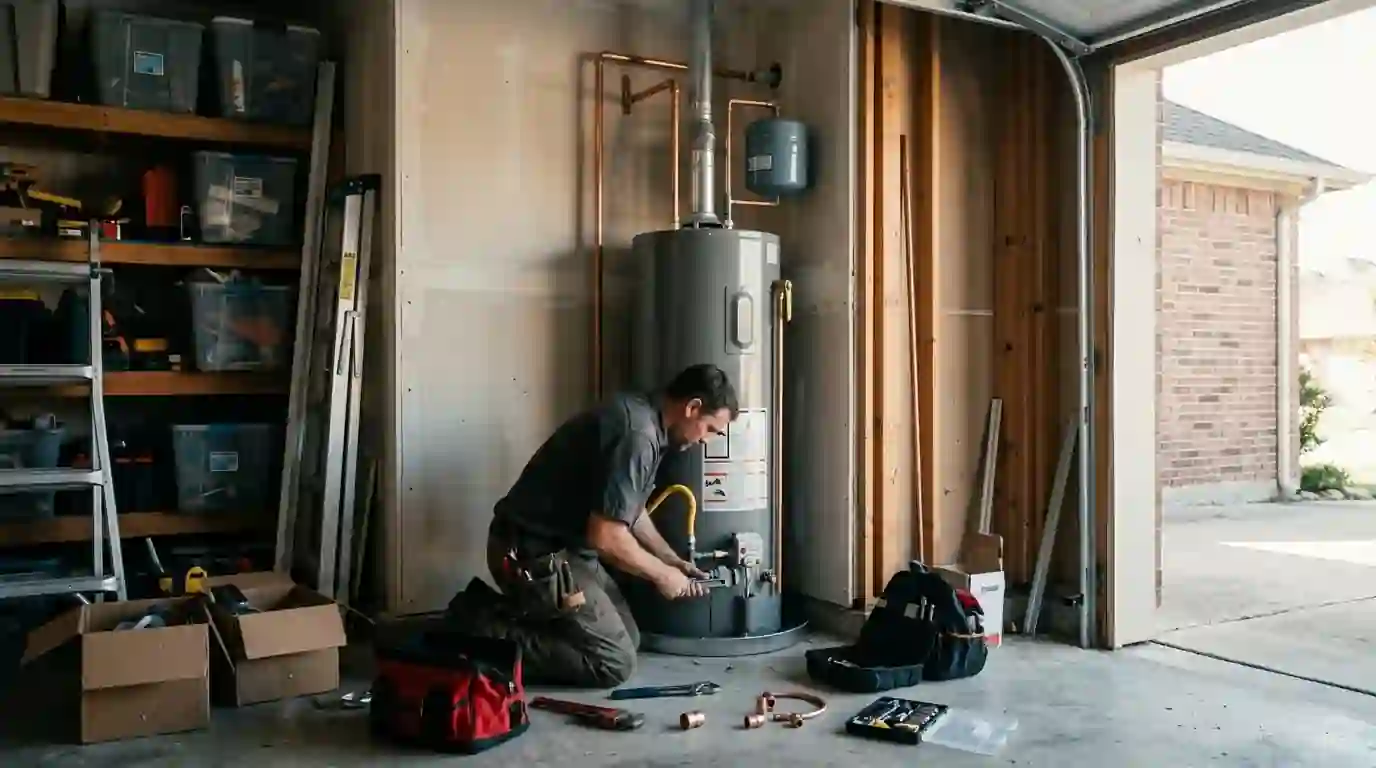
Most Pearland tankless problems start with scale. Minerals in the water coat the heat exchanger, the unit overheats or loses flow, and it throws a code or shuts down. A yearly descaling flush, plus cleaning the inlet filter and checking the burner and venting, heads off most of those shutdowns before they happen.
What a tankless service visit includes
- Heat exchanger descaling flush and rinse
- Inlet water filter cleaning
- Flame rod and burner inspection
- Gas pressure check at full fire
- Vent, intake and condensate drain check
- Error code history review
Short bursts are hard work for a tankless heater. Every time a tap opens, it ramps the burner from off to full fire and pushes water through narrow passages in the heat exchanger. Scale narrows those passages further, which raises the exchanger temperature and trips the safety sensors that protect it.
Service covers two jobs: routine descaling to keep the unit healthy, and repair when it has already stopped. We read the error history, check gas pressure and airflow, and clean before replacing parts. A part swapped without clearing the scale behind it rarely stays fixed.
Local conditions
Scale builds at different rates depending on the supply. On the city system, Pearland's report lists total dissolved solids averaging 321 ppm (range 321-522 ppm). Next door, Houston's 2025 Water Quality Report says the main system is 90.3% surface water, with total hardness averaging 135.5 ppm (range 43.5-229) and TDS averaging 260 ppm. Those minerals are what plate out inside a heat exchanger, so a unit on either supply benefits from a regular flush, and a softener can stretch the interval.
Sources: houstonpublicworks.org, pearlandtx.govAnnual descaling flush
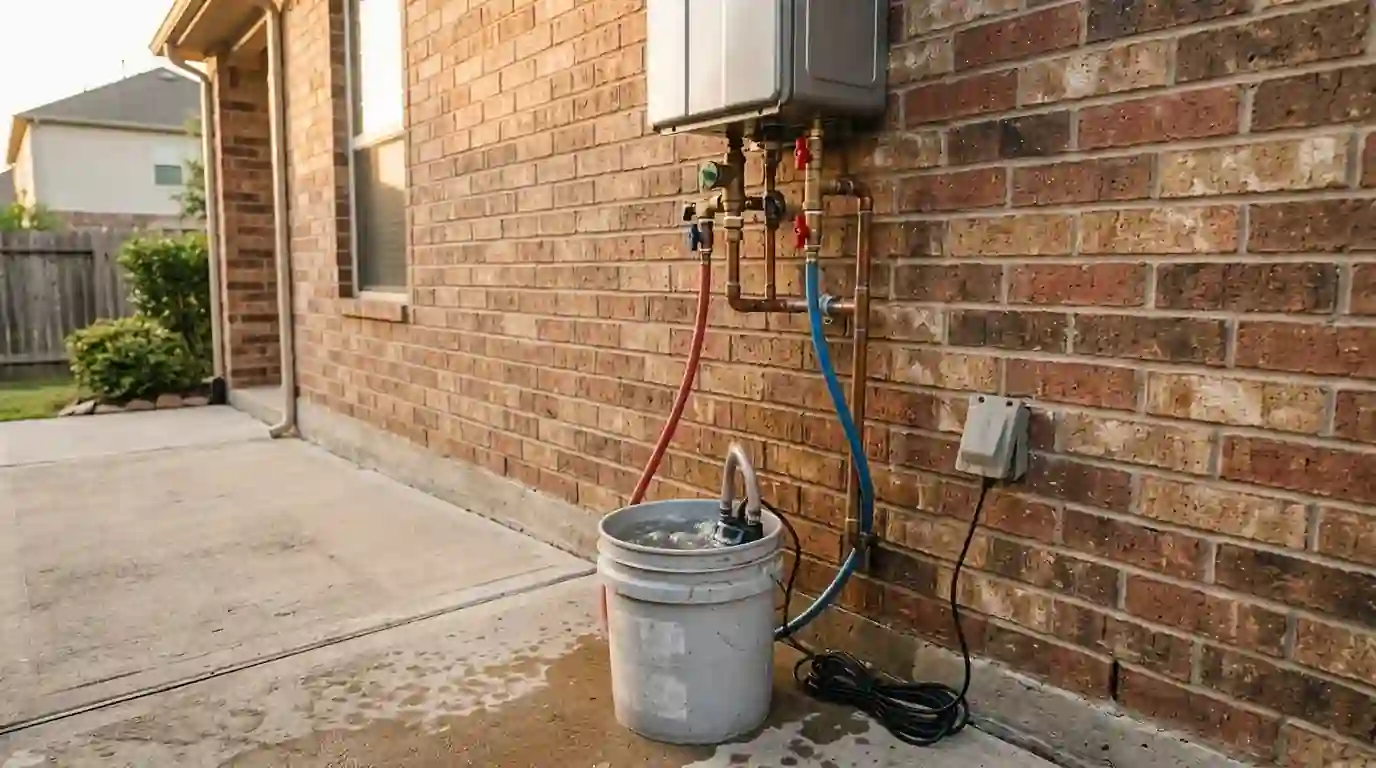
Descaling circulates a mild acid solution, often food-grade vinegar or a maker-approved descaler, through the heat exchanger for about an hour using a small pump and the unit's isolation valves. The solution dissolves scale the water left behind, then the unit is rinsed with clean water. Plan to be without hot water during the flush. If your unit has no isolation valves, we add them first, since every later flush depends on them. A once-a-year schedule suits most homes here.
Error codes and ignition faults
Codes differ by brand, but most point to the same handful of causes: no ignition, flame loss, overheating, blocked venting or low gas pressure. An ignition fault right after a gas appliance was added often means the line is undersized for both. A flame-loss code can mean a dirty flame rod or a weak igniter. We read the stored code history, test gas pressure while the unit fires at full rate, check the vent and air intake, and clean or replace the faulty part.
Cold water sandwich complaints
A cold water sandwich is the burst of cool water you feel when you turn the shower off and back on. Hot water left in the pipe comes out first, then cold water that passed through while the burner was firing up, then hot again. Some of it is normal for tankless units. It gets worse with a short pause between uses or a unit that is slow to ignite. A small buffer tank, a recirculation setup or correcting a slow ignition can reduce it.
Inlet filter and sensor cleaning
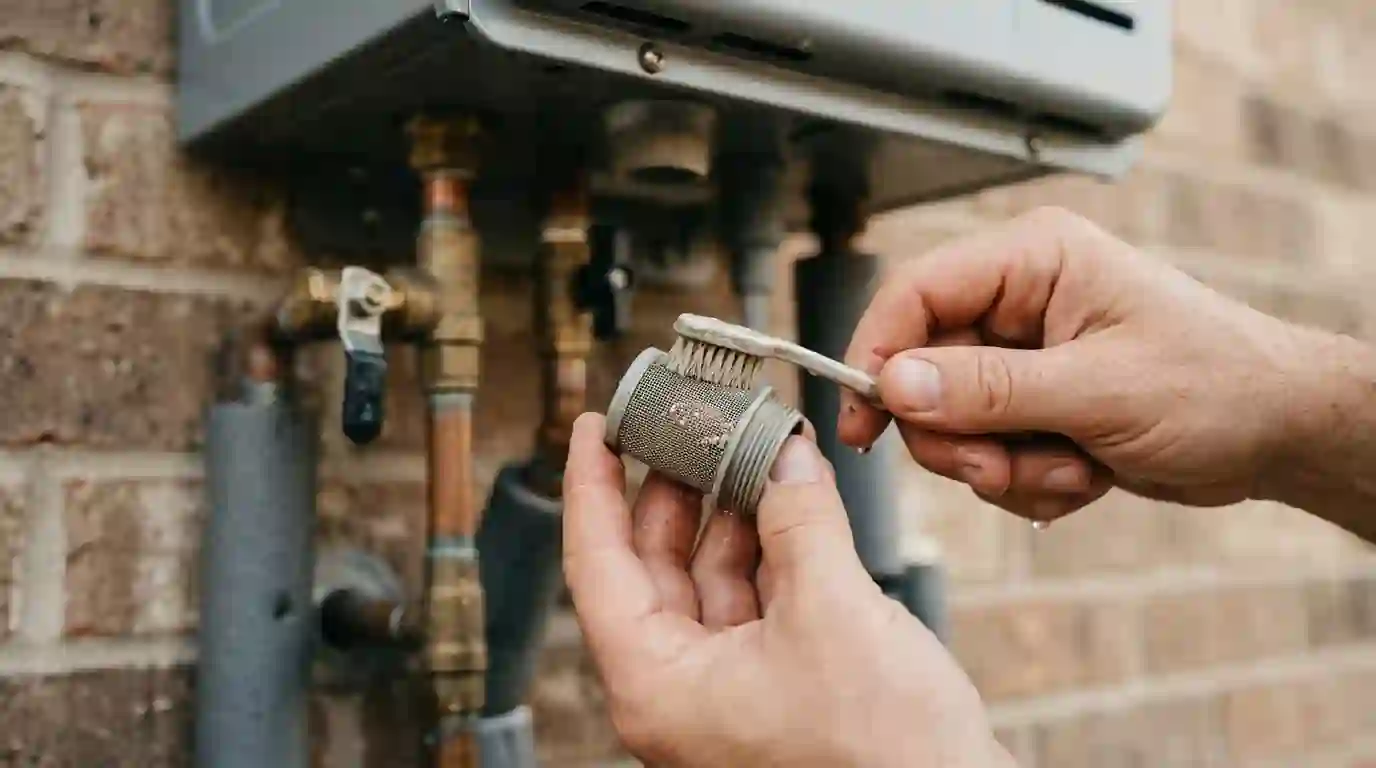
Every tankless unit has a small screen on the cold inlet that catches grit before it reaches the heat exchanger. When it clogs, flow drops, and the unit may not fire at low flow at all, such as a single bathroom faucet. The flow sensor, flame rod and air intake can also collect debris and lint, especially in a garage. The screen, flame rod and intake all get cleaned, then we check the flow sensor reading and confirm the unit ignites at low flow.
Inside a tankless service visit, step by step
- Read the historyWe pull any stored error codes and ask what you have noticed with the hot water.
- Check the basicsGas pressure at full fire, the vent and intake, and the inlet filter are tested first.
- Descale and cleanThe heat exchanger is flushed, then the filter, flame rod and intake are cleaned.
- Fire and verifyWe run hot water at low and high flow and confirm steady temperature with no codes.
Signs your tankless heater needs service
- An error code on the display
- Water temperature swings during a shower
- The unit will not fire at one faucet
- Hot water flow is weaker than it used to be
- Loud fan noise or a burning smell at start-up
What affects the cost of tankless service
Routine flushes and repairs are priced differently, and you hear the price for either before we start.
- Flush or repair. A routine descale takes less time and fewer parts than tracing an ignition or sensor fault.
- Isolation valves. Units installed without service valves need them added before the first flush.
- Scale buildup. A unit that has gone years without flushing may need a longer descale or two cycles.
- Part availability. Some brands' boards, sensors and fans are stocked locally, while others have to be ordered.
Questions about tankless water heater repair & service in Pearland
Most homes on city water here do well with a yearly descale. Harder water or heavy use can call for more often, and a softener can stretch it longer. Your unit's manual gives the maker's interval as well.
If the unit has isolation valves and you follow the maker's steps, a careful homeowner can. You need a small pump, hoses, a bucket and descaler. Gas pressure, venting and part repairs should be left to a plumber.
Usually the flow is too low to trigger ignition. A clogged inlet filter, a low-flow aerator or a sticky flow sensor can keep it below the unit's minimum. Cleaning the filter and sensor usually brings it back.
One reset is fine. If the code comes back, write it down and call. Repeated resets on an overheating or flame-loss code can hide a real problem with gas supply, venting or scale.
When the heat exchanger leaks or is badly scaled on an older unit. Short of that, fans, sensors, igniters and boards are replaceable, and repair usually makes sense.