Updated October 2026
Quick answer
A Pearland reverse osmosis system pushes water through a membrane fine enough to hold back most dissolved salts and minerals, then stores the filtered water in a small tank under the sink. It sends some water to drain while it works, so it needs a drain connection as well as a cold supply.
A typical under-sink system runs water through a sediment filter, a carbon filter, the membrane and a final carbon polishing stage before it reaches a dedicated faucet on the sink or countertop. Each stage protects the next: the carbon keeps chlorine from damaging the membrane.
The system is small, but the install details decide how well it works. Membrane output depends on water pressure, the drain saddle has to sit above the trap to stay odor-free, and the faucet needs a clean hole through your countertop or an existing sprayer hole.
Tank or tankless reverse osmosis
| Question | Tank system | Tankless system |
|---|---|---|
| Cabinet space | Housings plus a storage tank | One compact unit |
| Flow at the faucet | Strong until the tank runs low | Steady, made on demand |
| Power | None needed | Needs an outlet under the sink |
| Water sent to drain | Higher on most models | Lower on most models |
Pricing an under-sink reverse osmosis system
We quote RO systems after we see the sink, because cabinet space, pressure and the line to the fridge change the work. These factors matter most.
- System type. A tank system costs less than a tankless unit with its own pump and controls.
- Countertop hole. Using a spare sprayer hole is quick; drilling stone or quartz takes more time and care.
- Fridge and ice maker line. A long run across the kitchen adds tubing, fittings and routing work.
- Booster pump. Low house pressure may need a pump to keep output and efficiency up.
What a reverse osmosis install includes
- A pressure test at the kitchen sink
- Mounting the filter housings and tank
- A cold supply tap and a drain saddle above the trap
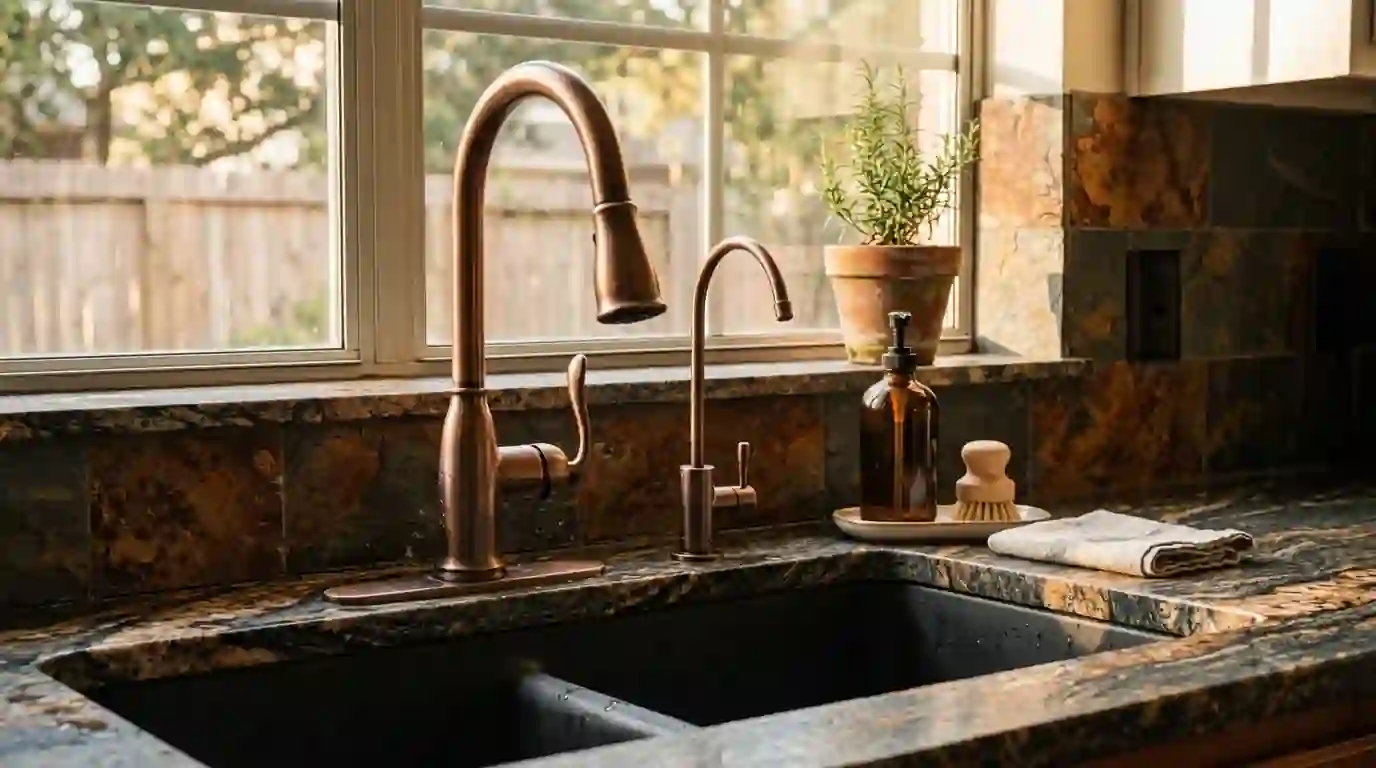
- A dedicated faucet in a spare or new hole
- An optional line to the fridge or ice maker
- A first flush and before-and-after TDS readings
Under-sink reverse osmosis
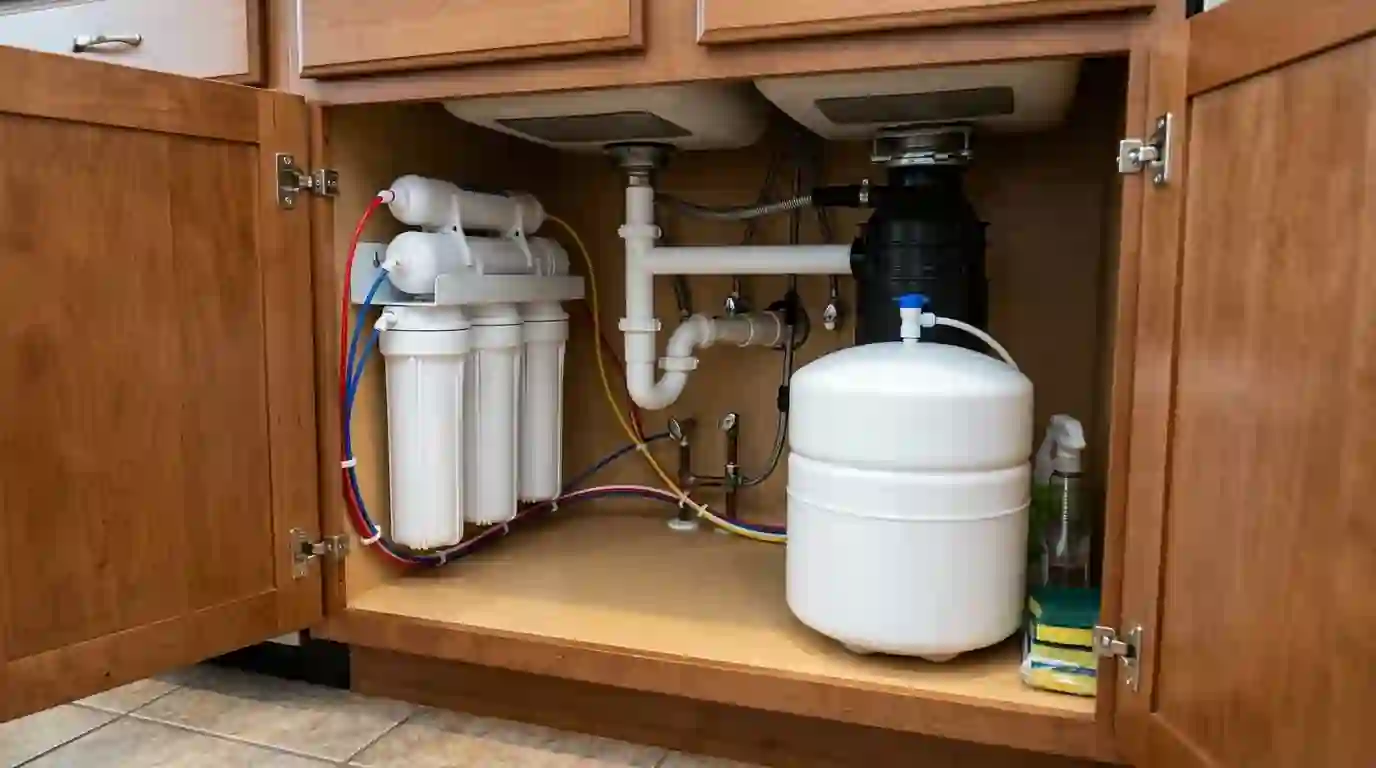
The filter housings hang on the cabinet wall, the storage tank sits beside them and a drain line taps into the sink drain above the trap. If the cabinet is crowded with a disposal and a water heater line, we look at tankless RO units that make water on demand and take up less space. Low house pressure slows output and wastes more water, so we check pressure at the sink and add a booster pump if needed. We also confirm the cold line valve under the sink closes fully.
Refrigerator and ice maker tie-ins
A line from the RO tank to the refrigerator gives you filtered water and ice at the door. The fridge's own filter then adds pressure drop, so most homeowners bypass or remove it once RO is feeding the line. Long runs to an island or across the kitchen reduce flow, so we keep the tubing short where possible and use a shutoff at each end. If the fridge sits far from the sink, we route the line through the cabinets or the attic rather than leave tubing exposed.
Membrane and filter changes
Pre-filters protect the membrane and need changing most often, usually several times as often as the membrane itself. When the sediment or carbon stage is overdue, chlorine and grit reach the membrane and shorten its life. Signs it's time: slower flow from the RO faucet, a tank that takes much longer to refill, or water that tastes different. A TDS meter reading on tap water and RO water shows how well the membrane is still working. We change the stages and sanitize the housings.
Remineralizing stages
Reverse osmosis removes most minerals along with everything else, so RO water can taste flat and is slightly acidic. A remineralizing stage after the membrane adds back a small amount of calcium and magnesium, which brings the taste closer to spring water. Some people like the clean, flat taste; others notice it in coffee and tea. It's an inexpensive stage that fits in line before the faucet, and it can be added to an existing system later if you change your mind.
Local conditions
The 2023 reporting year water quality report for Pearland lists 12 sources: 10 groundwater wells in the Evangeline and Chicot aquifers plus surface water through two connection points. Groundwater and treated river water rarely carry the same dissolved minerals, so the taste at your tap can change as the blend shifts. Reverse osmosis smooths that out at one faucet. We take a TDS reading before and after install so you can see the difference in numbers.
Sources: pearlandtx.govHow we set up reverse osmosis at your sink
- Check pressure and spaceWe test pressure at the sink and measure the cabinet before choosing a system.
- Mount and connectHousings go on the cabinet wall, with a cold supply tap and a drain saddle above the trap.
- Install the faucetWe mount the RO faucet in a spare hole or drill the countertop, then run any fridge line.
- Flush and measureWe flush the first tanks to drain and compare TDS readings before and after.
Questions about reverse osmosis system installation in Pearland
Older systems sent several gallons to drain for each gallon of filtered water. Newer, more efficient designs and pumps waste far less. Low house pressure makes the ratio worse, which is why we check pressure first.
Not for the RO itself, but hard water does shorten membrane life. If you already have scale problems, a water softener protects the whole house and helps the RO membrane last longer.
It's possible, but it's a large, expensive system with storage tanks and a pump, and most homes don't need it. Whole-house carbon or a softener handles bathing and laundry; RO is best for drinking and cooking water.
An RO faucet is meant to run slower than your main tap. If it's slower than usual, the tank pressure may be low, the pre-filters may be clogged or the membrane may be worn. We check all three.
Yes. Most of the minerals in your diet come from food rather than water. If you prefer the taste of mineral water, a remineralizing stage adds a small amount back.