Updated October 2026
Quick answer
A Pearland sewage ejector pump lifts waste from fixtures that sit lower than the sewer line, collecting it in a sealed basin and pumping it up once a float switch trips. Most failures come from the float, the check valve or the pump motor, and a high-water alarm is the warning before sewage overflows.
Signs the pump or float is failing
- High-water alarm light or buzzer on the panel
- Pump running nonstop or starting every few seconds
- Humming from the basin with no water moving
- Slow or backed-up drains in the low bathroom or laundry
- Sewer smell around the basin lid
How an ejector pump call runs
- Check power and alarmWe check the circuit and alarm float, then see whether the pump tries to start.
- Open and inspect the basinWe pump down the pit, then check the float, pump, check valve, discharge and vent.
- Repair or replaceYou approve the fix with the price in hand, and we swap the failed part or the pump.
- Cycle test and sealSeveral full cycles prove the float and check valve before we test the alarm and reseal.
Slab homes here rarely have basements, so an ejector pump usually serves a garage bathroom, a pool house, a converted room or a detached building set lower than the main sewer. Gravity cannot carry that waste out, so a pump in a buried basin does it. When the pump stops, those fixtures stop with it.
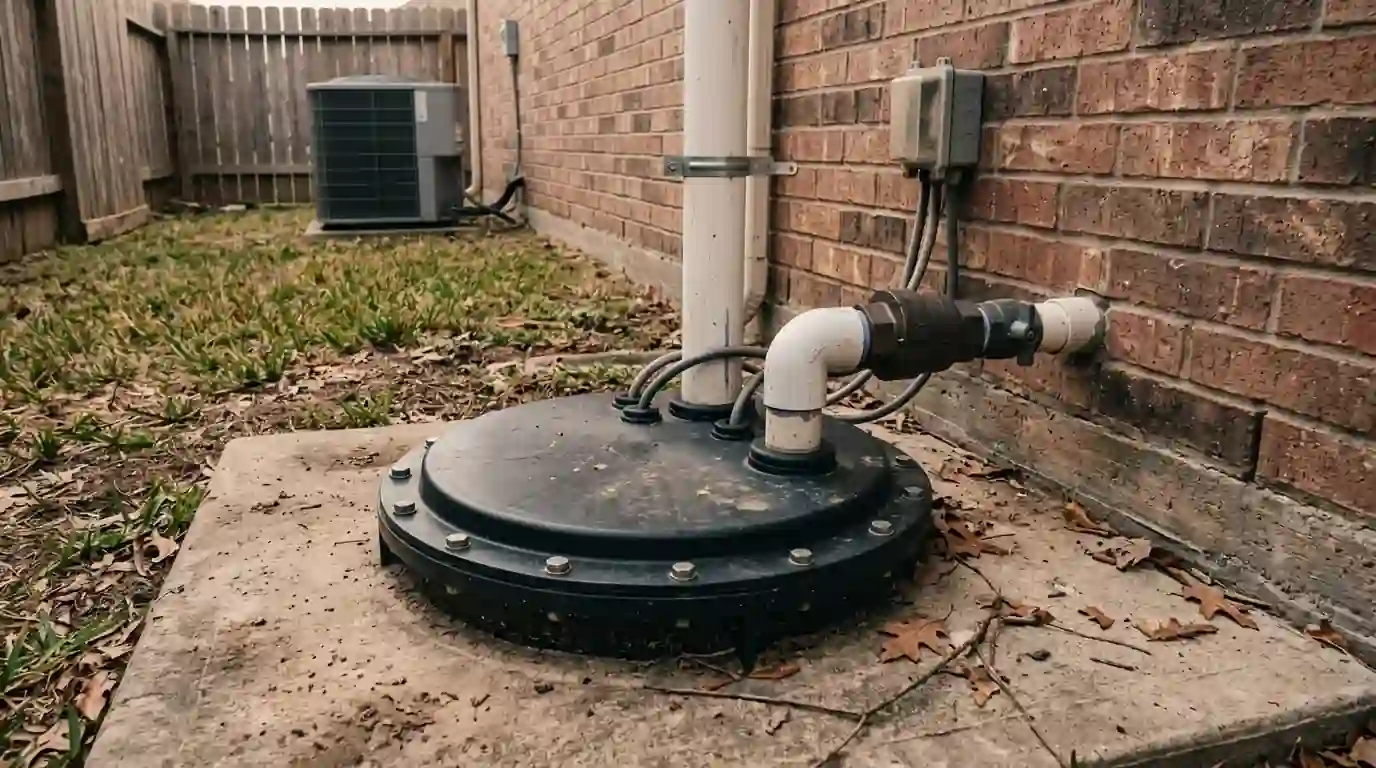
The parts are simple: a sealed basin, a pump, a float switch, a check valve on the discharge and a vent. We find which one failed before replacing anything. A float tangled in debris is a quick fix. A burned-out motor or a cracked basin is not, and you hear both options.
Ejector pumps for low fixtures
Adding a bathroom or laundry somewhere below the sewer line means either cutting the slab to reach gravity fall or installing an ejector system. We size the pump to the fixtures and to the height it has to push, set the basin with a sealed lid, run the discharge with a check valve and a shutoff, and tie the basin vent into the vent system. Plan for an outlet on its own circuit and a spot where the lid stays reachable for service.
Lift station alarms
The alarm is a second float set above the pump's normal range. When it sounds, the basin is filling faster than it empties, or not emptying at all. Silence the buzzer, stop all water use in the house, and check whether the pump's breaker or GFCI has tripped. If the alarm returns after a reset, the pump, float or check valve has failed. Do not keep flushing to test it, because the next stop for that water is the floor.
Water still running? Call before it spreads.
Call (281) 845-9645Float and check valve failures
Floats catch on the basin wall, the pump cord or wipes, so the pump either never starts or never shuts off. A pump that runs constantly or starts and stops every few seconds often points to a stuck float or a failed check valve letting water fall back into the basin. You may hear the thud of that backflow each cycle. We clear or replace the float, swap the check valve, and watch several full cycles before closing the lid.
Pump replacement
A pump that hums without moving water, trips its breaker, or runs hot and loud is usually near the end. Once the old unit is out, we check the basin, discharge pipe and vent while it is open, and set a replacement sized for the same lift. Grinder pumps cost more but shred solids so they can push through smaller pipe over longer runs. Expect sewer odor while the basin is open; we seal the lid gasket and test before leaving.
Local conditions
During Harvey, Pearland's Longwood wastewater treatment plant was inundated by several feet of floodwater and lost 60 percent of capacity. A lift pump can only push waste into a sewer that has room to take it. When mains run full in a long storm, the discharge meets resistance, the check valve works harder and the basin stays high. Power cuts in the same storms stop the pump outright. If your system has a high-water alarm, test it before storm season so you hear it in time.
Sources: communityimpact.comEjector pump repair or replacement: what drives the bill
Published national ranges for a pump replacement and a complete new system appear below. A float or check valve repair costs less than either.
Published planning ranges
- $850 to $3,000 to replace; $2,000 to $5,500 for a new system, per HomeGuide (December 19, 2025)
- Repair or full replacement. A float or check valve swap is a short job; a failed pump means pulling and resetting the unit.
- Pump type and lift. A grinder pump or a long, high discharge run needs a stronger, pricier unit.
- Basin condition. A cracked basin or failing lid seal adds parts and digging around the pit.
- New system or existing. A new install adds slab work, discharge piping, venting and a dedicated outlet.
What you can check before we arrive
What you can do safely
- Stop all water use the moment the alarm sounds
- Reset a tripped breaker or GFCI once, no more
- Test the alarm button on the panel before storm season
- Keep wipes, grease and paper towels out of every drain
When to call a plumber
- Opening the sealed basin, which holds sewage and sewer gas
- Replacing a check valve on a pressurized discharge line
- Pulling and resetting a pump, float and wiring
- Fixing basin vents and lid seals that leak sewer gas
Questions about sewage ejector & lift pump service in Pearland
Stop all water use, silence the alarm and check the pump's breaker or GFCI. If it resets and runs, the basin will draw down. If the alarm returns, call us at any hour and keep fixtures off.
It depends on how hard it works and what goes down the drains. Pumps that see wipes, grease or frequent short cycling wear out sooner. Running hot, humming or tripping breakers are signs it is near the end.
No. Wipes, even ones sold as flushable, wrap around floats and jam impellers. Send only toilet paper and waste. A grinder pump handles solids better but still clogs on wipes and grease.
Usually a failed lid gasket, a loose cord grommet or a blocked basin vent. The basin should be sealed and vented to the roof, so a strong smell nearby is worth a look.
Not without backup power. During an outage, use the fixtures that drain to the pump as little as possible. Some owners add a battery backup alarm or a generator outlet for long storms.