Updated October 2026
Quick answer
In Pearland, a gas line repair starts with a shutoff and ends with a pressure test. The leak is traced with a gauge, a detector and soap solution, the failed fitting or pipe is replaced, and nothing is relit until the system holds pressure. If you smell gas strongly, leave and call your gas utility from outside.
Signs of a gas leak, inside or out
- A rotten-egg or sulfur smell near an appliance or the meter
- A hiss or whistle near a gas line or connector
- Bubbles rising through a puddle over the yard line
- A strip of dead grass along the path from the meter
- A gas bill that climbs while your use stays flat
From shutoff to relight: how a gas repair runs
- Make it safeWe shut the gas at the meter or the appliance valve and confirm the area is safe to work in.
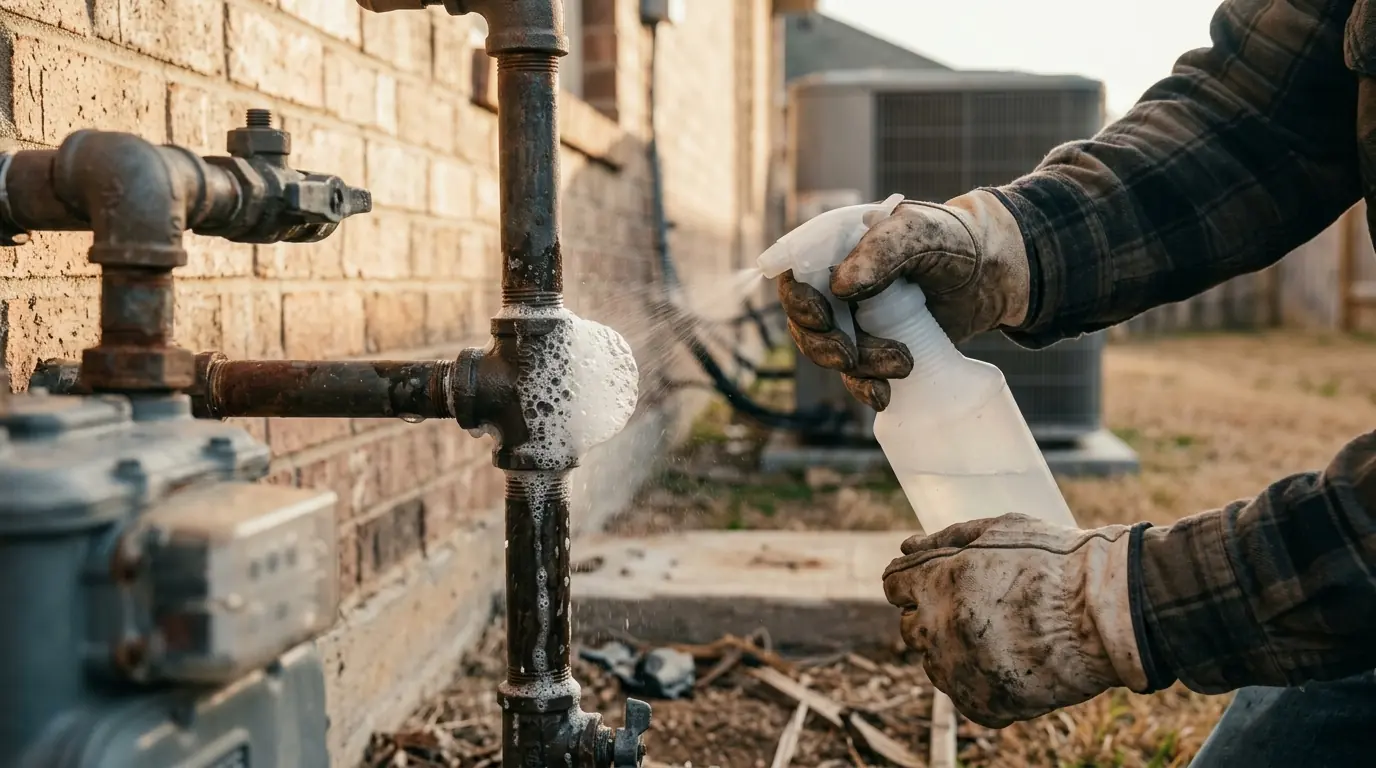
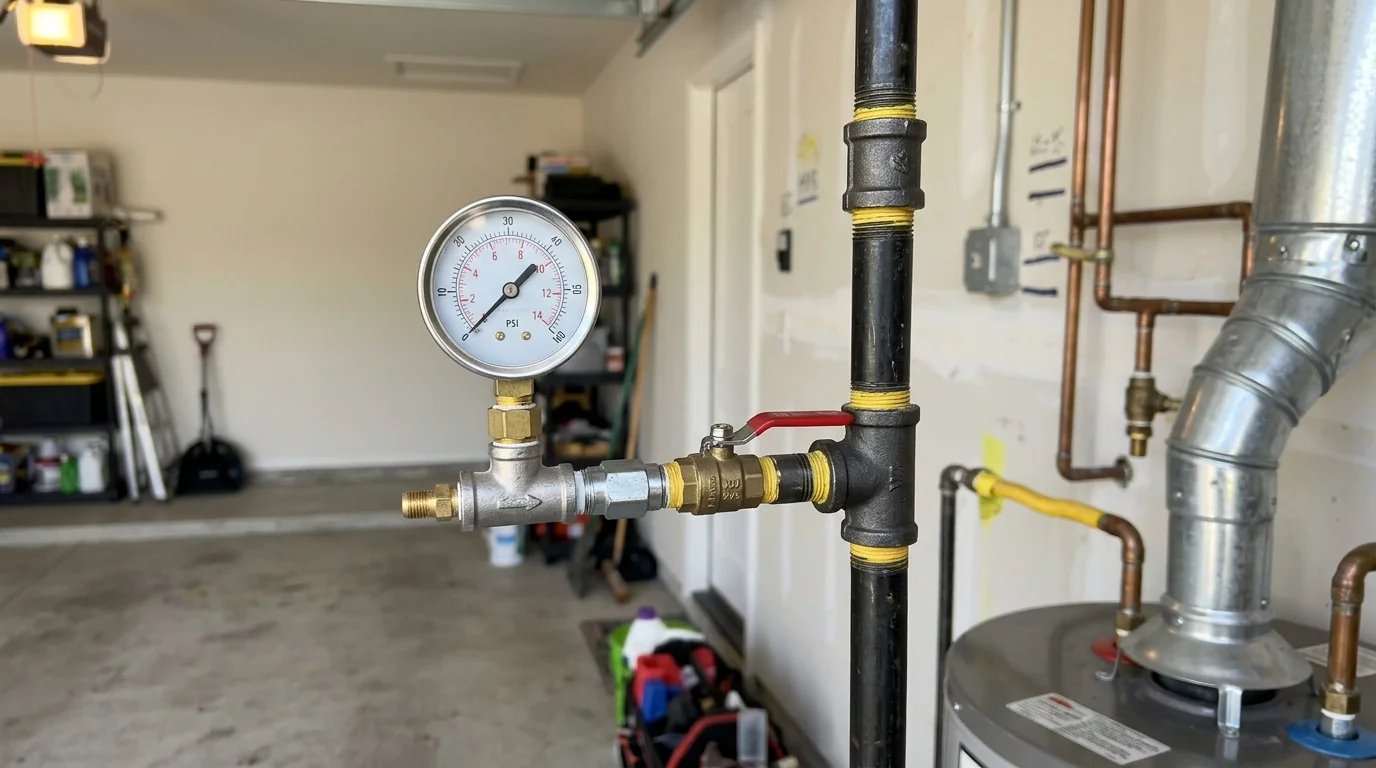
- Find the leakA gauge shows whether pressure drops, then a detector and soap solution pin down the joint.
- Replace the failed partThe leaking fitting, connector or pipe section comes out and new parts go in to code.
- Test and relightThe system holds test pressure, then we purge the lines, relight pilots and check every burner.
Natural gas has no smell of its own, so the utility adds a sulfur odorant to make leaks noticeable. Most household leaks sit at joints: a loose union behind the dryer, a corroded fitting at the water heater, a connector cracked when the range was pulled out. Others are buried on the yard line.
Gas work is not a homeowner repair. A joint that looks tight can still seep, and the only honest check is a gauge that holds steady. We replace what failed instead of smearing sealant over it, and leave every appliance lit and checked.
Gas smell inside the house
A strong smell or a hiss means leave now. Do not flip switches, use a phone indoors or start a car in an attached garage. Call the gas utility from outside, then call us. A faint smell near one appliance is different: close that appliance's shutoff valve if you can reach it, open a window and call. Each joint on that branch gets a gas detector and soap solution; the leaking fitting is re-made or replaced and the branch retested.
Failed pressure test
A failed test often turns up during a remodel, an appliance hookup or a home sale, or after the utility has shut off service. The gauge drops, but nobody smells anything. We split the system into sections and test each one until the loss follows a single run. Then the joint or pipe is replaced and the whole system goes back under test. If the repair needs a permit, the inspection has to pass before service is restored.
Water still running? Call before it spreads.
Call (281) 845-9645Corroded yard gas lines
Older yard lines were often coated steel, and once the coating breaks down, damp clay works on the pipe from outside. You might notice a smell near the meter, bubbles rising in standing water, or a strip of grass that dies for no clear reason. Patching rusted steel rarely holds, because the next thin spot is usually close by. We normally replace the run with polyethylene pipe made for burial, with a tracer wire so it can be found later.
Flex connector replacement
The flexible connector behind a range, dryer or water heater is a common leak point. Connectors get kinked when appliances are pulled out for cleaning, and older uncoated brass ones are known to crack at the flare nut. A connector should never be reused or stretched to reach. We fit a new coated connector of the right length and diameter, add an accessible shutoff valve if one is missing, and leak-test both ends. Buying a new appliance? Replace the connector with it.
Local conditions
Every gas repair here answers to a written standard: Pearland's adopted codes include the 2021 International Fuel Gas Code, with local amendments to the plumbing and fuel gas codes. That code sets how a repaired system is supported, sized and tested. The city also requires construction permits for work on the mechanical, electrical and plumbing systems of a structure, with inspections scheduled through eTRAKiT. When a repair needs a permit, we pull it and book the inspection.
Sources: pearlandtx.gov, pearlandtx.govHow a gas leak repair gets priced
A national cost guide's planning range is shown below. You hear your own price before work starts.
Published planning ranges
- $350 to $2,000 on average; repair labor $75 to $150 or more per hour, per HomeGuide (January 6, 2026)
- Time to find the leak. One bad connector is quick to confirm; a slow pressure drop on a long system takes sectioning and retesting.
- Indoor joint or buried line. A fitting behind an appliance is a small repair, while a corroded yard line means trenching.
- Pipe material. Black steel, CSST and polyethylene take different fittings, and CSST also needs correct bonding.
- Permit and inspection. Permitted repairs add an inspection visit before the system goes back in service.
What you can safely do, and what waits for us
What you can do safely
- Leave and call the gas utility from outside if the smell is strong
- Close one appliance's shutoff valve if the smell is faint and local
- Learn where each appliance shutoff is before you need it
- Keep CO alarms and a gas detector working
When to call a plumber
- Any gas joint, because it must be pressure tested afterward
- Flex connector swaps, which need the right size and a leak test
- Buried yard lines, which need pipe rated for burial
- Restoring service after a utility shutoff
Questions about gas line repair in Pearland
Leave first. Do not switch lights on or off, use the phone inside or start a car in an attached garage. Once you are away from the house, call your gas utility, then call us for the repair.
No. A cracked or cross-threaded fitting can get worse when tightened, and any disturbed gas joint has to be pressure tested. Close the appliance valve, open windows and leave the repair to a plumber.
The leak has to be repaired and the system has to pass a pressure test first, plus an inspection if the repair needs a permit. We handle the repair and the test, then you schedule the turn-on.
No. A CO alarm reacts to carbon monoxide from poor combustion, not to natural gas. A separate natural gas detector near gas appliances is worth adding, but the odorant is still your first warning.
A brief whiff as the burner lights can happen; a smell that lingers is not normal. Close the heater's gas valve, open the garage door and call. See water heater repair for other burner faults.