Updated October 2026
Quick answer
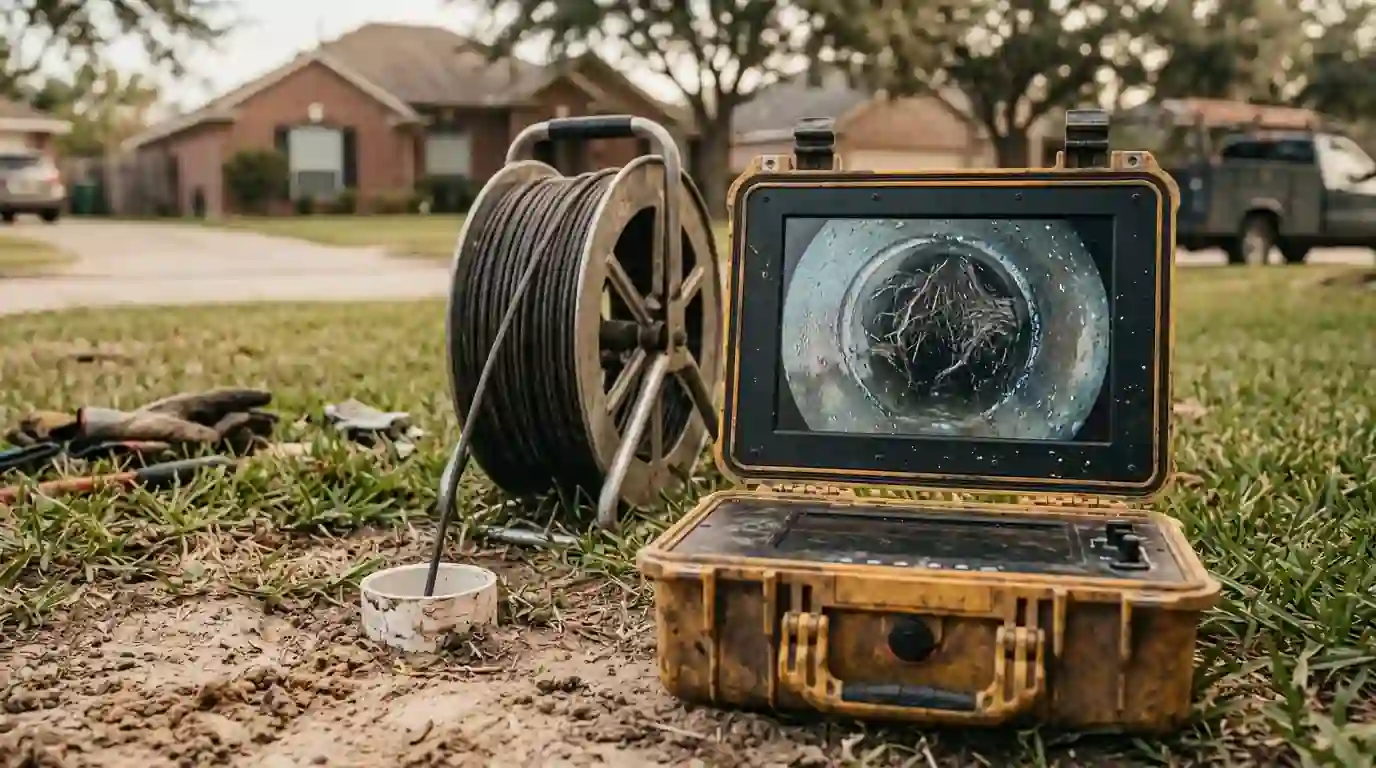
A Pearland sewer camera inspection sends a waterproof camera on a push cable from a cleanout through the main line, recording roots, cracks, sags and offset joints on video. A locator then reads a signal from the camera head, so any defect can be marked on the ground with its approximate depth before anyone digs.
What your camera inspection includes
- Camera run from the access point toward the city connection
- Narrated footage with distance readings at each defect
- Surface marking of problem spots with estimated depth
- Pipe material and joint condition noted along the run
- Recorded video you keep
- Plain summary of findings and repair options, if any
A sewer line is the most expensive pipe on most properties and the one nobody sees. A camera run takes the guessing out: you watch the pipe on screen as it goes, and we point out each joint, transition and defect with the distance from the access point.
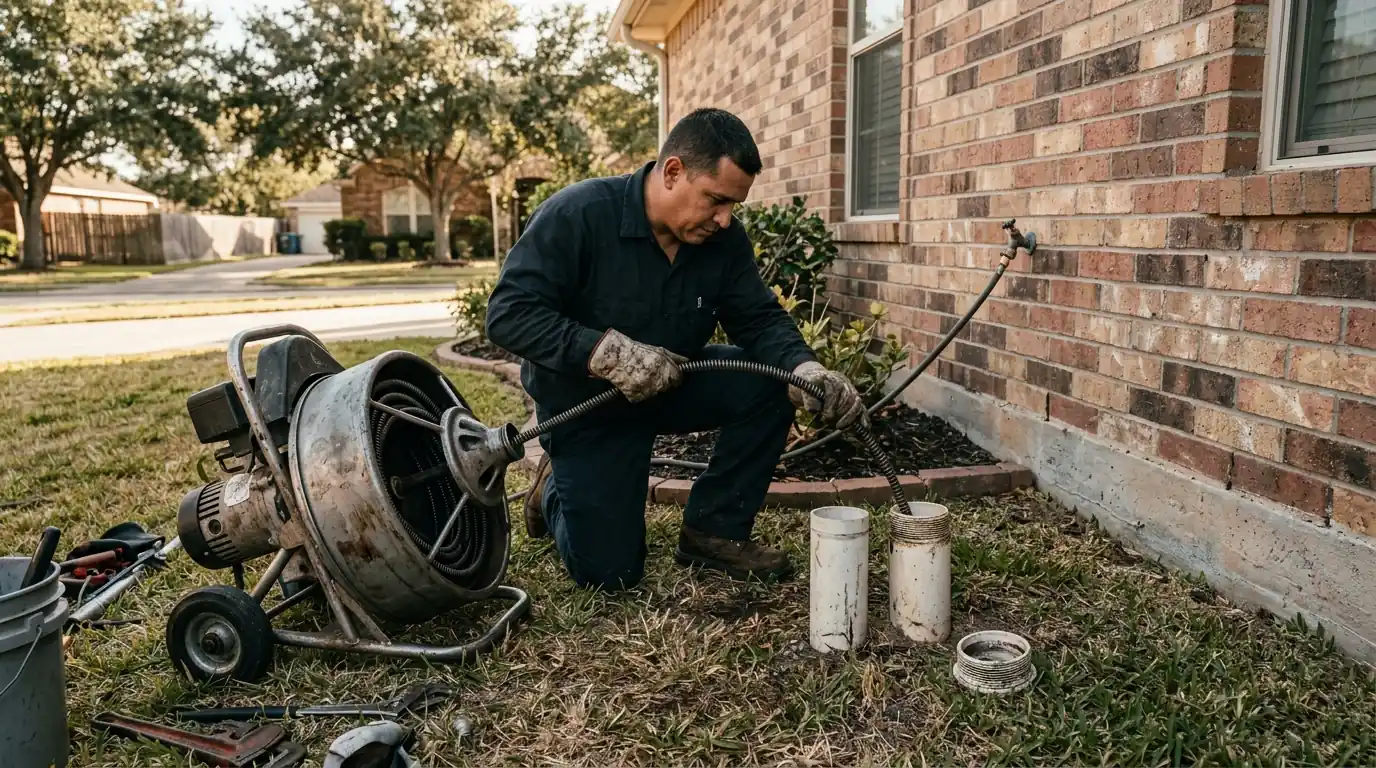
The camera needs a way in and a reasonably clear path. If the line is backed up, we clear it first so the lens isn't under sewage. If there's no cleanout, a toilet may have to come off the flange for access.
Local conditions
Pearland's housing spans several decades, and the sewer under each yard reflects its era. HAR's subdivision tables show several older east-side subdivisions with average build years of 1964 and 1965, and others averaging 1973 and 1974. Shadow Creek Ranch, by contrast, averages 2005 in one section and 2013 in the other. A line from the 1960s may be cast iron or clay with joints roots can enter; a newer PVC line is more likely to show a sag or a construction defect than corrosion.
Sources: har.com, har.comPre-purchase sewer scope
A general home inspection usually stops at running the faucets, so the line under the yard goes unchecked. A pre-purchase scope runs the camera from the cleanout to the city connection and records what's there: pipe material, root entry, sags that hold water, cracked or separated joints. It's most useful on older homes and on any house that sat empty for a while. You get the video and a plain summary to use in negotiations, and we keep findings factual so they hold up with the seller's side.
Repeat clog diagnosis
A line that clogs every few months has a reason, and cabling it again won't show you what it is. The camera finds it: a belly where water and paper sit, a root mat at a joint, a broken section catching debris, or heavy scale in old cast iron. Knowing the cause changes the fix. A grease problem may only need hydro jetting, while a sag or break calls for repair. We usually run the camera right after clearing, while the line is open.
Locating and depth
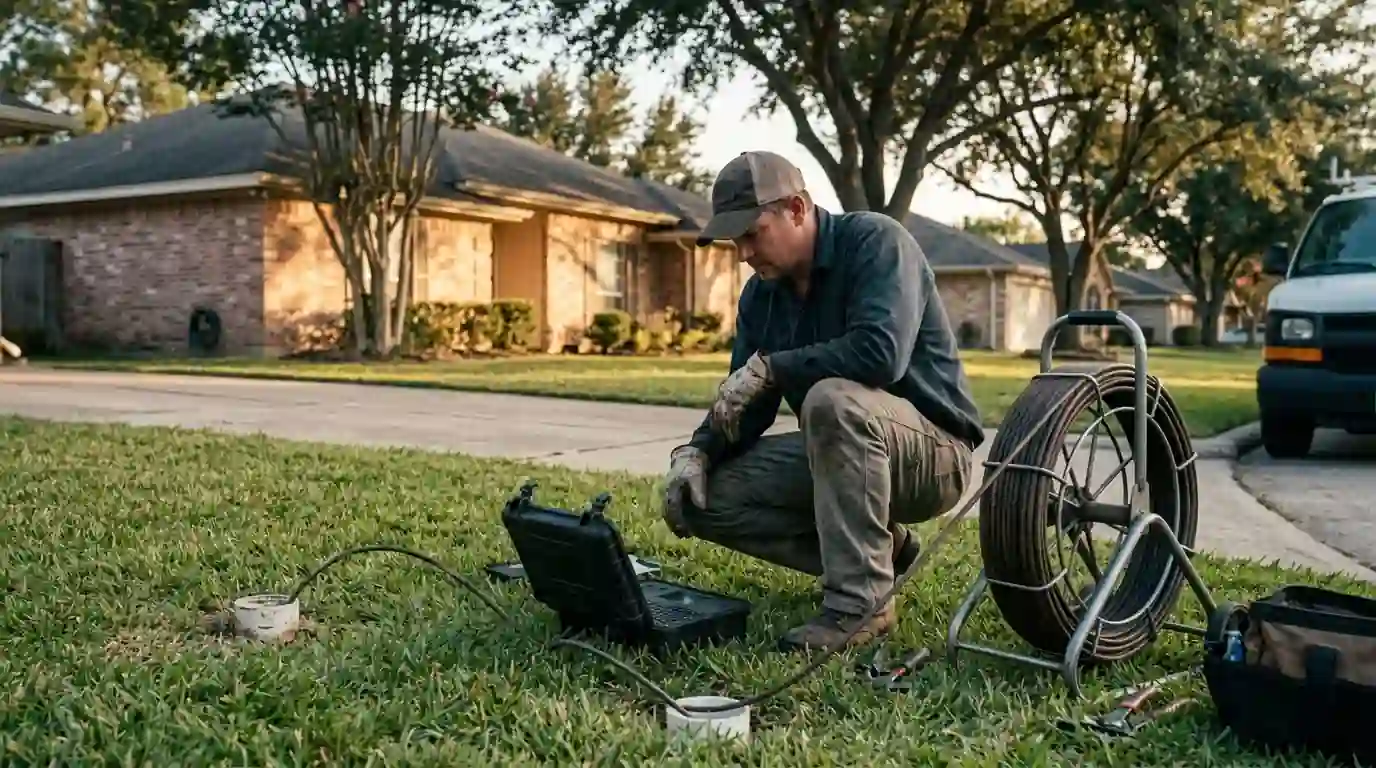
Footage tells you what's wrong; locating tells you where. The camera head carries a small transmitter, and a handheld receiver above ground picks up its signal, so we can mark the exact spot on the lawn or driveway and estimate how deep the pipe runs. That matters when a repair is coming, because it shows whether the problem sits under a flowerbed, the driveway or the slab. It also keeps a repair excavation to one small hole instead of a long trench.
Recorded video for insurance
If a sewer problem leads to a claim, the adjuster will want to know what failed and where. A recorded inspection shows the pipe condition with distance markers, and photos of the marked spot outside tie the footage to the ground. Coverage for sewer lines varies widely by policy, and many exclude wear or roots, so ask your agent what yours covers. We document what the camera sees and leave the coverage question to you and the insurer.
How a sewer camera inspection runs
- Open accessWe open the cleanout, or pull a toilet if no cleanout exists, and run water to wet the line.
- Push and recordThe camera travels the full line while we narrate each joint and defect with its distance.
- Locate and markA receiver above ground finds the camera head, and we mark problem spots and depth.
- Walk you through itYou get the video and a plain summary, with repair options only if something needs one.
Signs it's time to look inside the sewer line
- Repeat clogs in one drain within a few months
- Root pieces or soil came back on a drain cable
- A soggy or sunken strip in the yard over the line
- Sewer smell outdoors near the cleanout
- You're buying an older home or one that sat empty
What a camera inspection costs and why
Published averages for sewer camera work appear below. Access, clearing and marking are what move a given job.
Published planning ranges
- $125 to $500 on average, per HomeGuide (December 19, 2025)
- Access to the line. An outdoor cleanout is quick; pulling a toilet or working through a roof vent takes longer.
- Clearing needed first. A backed-up line has to be opened before the camera can see anything.
- Length and turns. A long run with several bends takes more time to push and record.
- Locating and marking. Marking defects and depth on the surface adds time but saves digging later.
Questions about sewer camera inspection in Pearland
It's worth it on any home old enough to have cast iron or clay, any home with mature trees near the line, and any house that sat empty. It's the one major system a standard inspection rarely looks at.
Not well. Under standing water or sewage the lens sees almost nothing. We clear the line first, then run the camera while it's open, which is also when defects are easiest to spot.
Yes. You get the recording with distance markers, plus a short written summary of what we saw and where. Keep it with your house records, since it's useful if problems come up later.
We can usually go in through a toilet flange after pulling the toilet, and reset it on a new wax ring afterward. If the line will need regular attention, adding a cleanout is worth pricing.
No. The camera head rides on a flexible push cable and does no cutting. It's a look, not a repair, which is why we use it before jetting or cabling a line we're not sure about.