Updated October 2026
Quick answer
A Pearland plumbing inspection checks the parts that fail quietly: static pressure against the 80 psi code limit, every shutoff valve, the water heater's age and safety devices, drain flow, and a meter test for hidden leaks. You get a written list ranked by urgency, so repairs can be planned instead of discovered.
Most plumbing problems give warnings long before they flood a room: a valve that won't close, a relief valve that weeps, pressure creeping high enough to strain every fitting. An inspection looks for those warnings while they're still small fixes.
We test and look; we don't open walls or floors. Where something needs a closer look, such as a slow main drain or a meter that won't stop, we say so in the report and explain which follow-up test would answer the question.
Local conditions
In the Pearland ISD area, 42.6% of housing was built in 2000 and after, 51.5% between 1970 and 1999 and 5.9% before 1970. For an inspection, that split matters: older houses get a closer look at supply pipe material and drains, while newer ones get attention on water heaters, PEX fittings and builder-grade valves. Shadow Creek Ranch shows the newer side well. Its first model homes broke ground in October 2001, so in the earliest sections any original water heater would be well past its typical service life.
Sources: nces.ed.gov, shadowcreekranch.netBuyer and seller inspections
A buyer's general inspection often flags plumbing with a line like "recommend evaluation by a plumber." That's where we come in, with enough detail to price a repair or ask for a credit. For sellers, a pre-listing inspection shows what a buyer's inspector will likely find, so you can fix it on your schedule. We check supply pipe material, water heater age and venting, pressure, drains and visible leaks, and we can add a sewer camera inspection for the main line.
Annual checkups
A yearly checkup works like an oil change for the house. We read static pressure, exercise the main shutoff and fixture stops so they don't seize, check toilet flappers and fill valves, look under every sink for slow drips and check the water heater's relief valve and anode schedule. Small things get handled on the spot. Anything bigger goes on a list with a rough priority, so you can budget for it over the coming year instead of facing it all at once.
Water heater and valve check
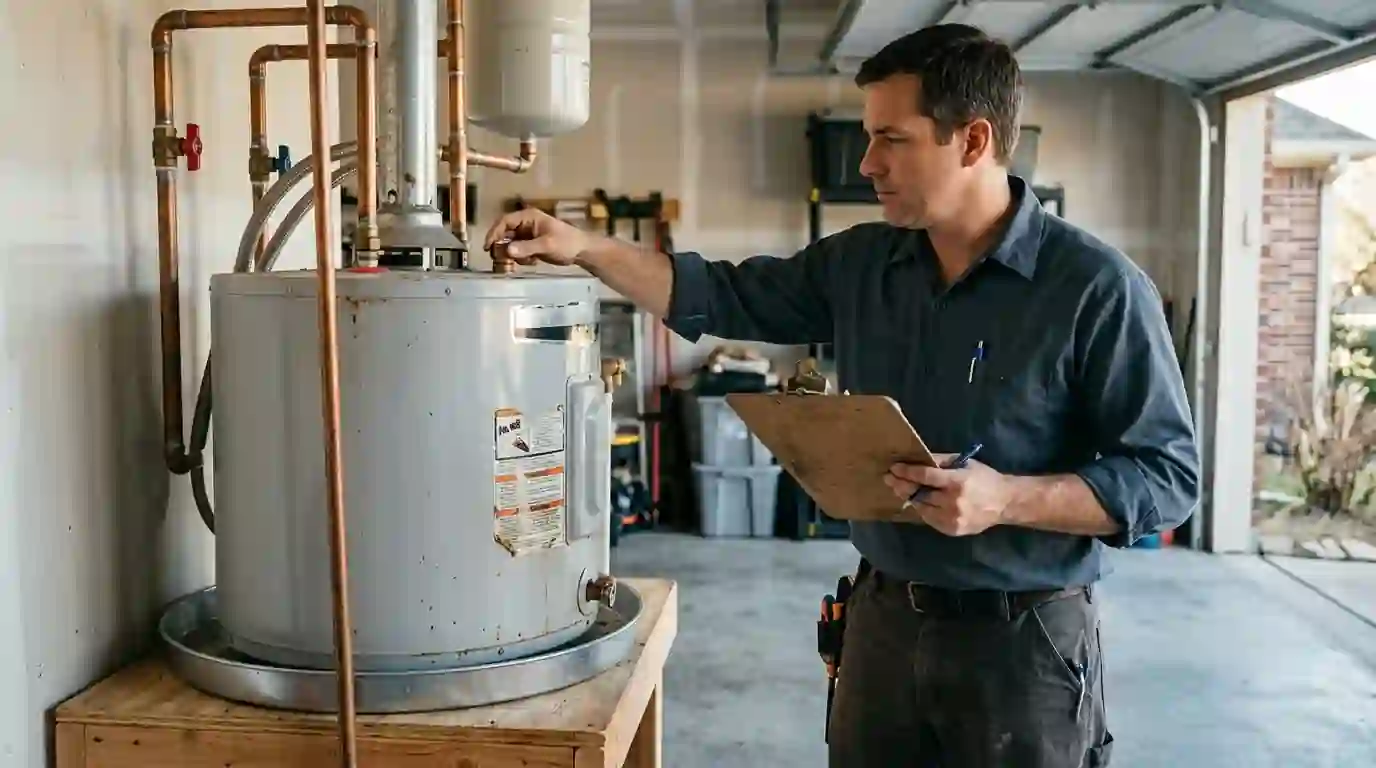
The water heater gets the closest look because it holds the most water and heat in the house. We read the serial plate for age, check the temperature and pressure relief valve and its drain line, look for rust at the base and fittings, and on gas units check the venting and the burner flame. Then we work through the valves: the main shutoff, each fixture stop and the heater's supply valve. A valve that won't close is a problem you only discover during an emergency.
Leak and pressure test
With every fixture off, we watch the water meter's leak indicator for movement. If it moves, water is going somewhere: a running toilet, a dripping hose bib or a line under the slab. We narrow it down by shutting branches off one at a time. We also put a gauge on an outdoor faucet to read static pressure. Anything above the 80 psi code limit wears out valves, hoses and water heaters early, and usually points to a failed or missing pressure regulator.
How a plumbing inspection runs, room by room
- Meter and pressureWe start at the meter with a leak check and read static pressure at an outdoor faucet.
- Water heater and valvesWe inspect the heater, its relief valve and venting, then test every shutoff valve.
- Fixtures and drainsWe run each fixture, check under sinks and watch how every drain empties.
- Written reportYou get findings ranked by urgency, with photos and the follow-up each item needs.
Signs it's time for a plumbing inspection
- A water bill rising with no change in use
- A water heater more than ten years old
- Pipes that bang when a valve closes
- Shutoff valves you've never tested
- A general inspection that flagged plumbing
What affects the price of a plumbing inspection
We quote inspections by the house rather than publishing a range, because size and add-ons change the visit. Four factors matter most.
- Size of the house. More bathrooms, fixtures and water heaters mean more to test and write up.
- Number of water heaters. Two heaters or a tankless unit with its own service checks add time.
- Sewer camera add-on. Running a camera down the main line is a separate step with its own equipment.
- Access. An attic water heater or a buried meter box takes longer to reach and inspect.
Checks you can do yourself, and what to leave to us
What you can do safely
- Watch the meter's leak indicator with everything off
- Find and label the main shutoff valve
- Look under sinks for drips or stains
- Read the water heater's serial plate for its age
When to call a plumber
- Pressure testing: needs a gauge and a fix if it's high
- Relief valve and gas venting checks on the water heater
- Tracing a hidden leak the meter shows
- Sewer camera work on the main line
Questions about whole-home plumbing inspection in Pearland
Yes. A general home inspector covers the whole house and usually checks plumbing visually. We spend the visit on plumbing alone, testing pressure, valves, the water heater and drains with gauges and a meter check.
House size, fixture count and the number of water heaters set the length. A sewer camera add-on extends the visit. We give you a time estimate when you book.
Small items like a loose packing nut or a running flapper can often be handled on the spot with your OK. Larger repairs go in the report with options, so you can decide without pressure.
If the general inspection flags plumbing, the house has an older water heater, or you plan to stay long-term, a plumbing inspection gives you a clearer picture for negotiating. It's most useful before the option period ends.
Pressure above the 80 psi code limit strains every valve, supply hose and water heater in the home. It often shows up as banging pipes, running toilets or a weeping relief valve. A pressure regulator brings it down.