Quick answer
Close the main water shut-off first, before you mop, call or move anything. That stops new water from entering the house. Then turn off the water heater's fuel or power, open the lowest faucet to drain the lines, cut power to any wet outlets from the breaker panel and call a plumber. Every minute the main stays open adds water to the floor.
Find and close the main shut-off valve
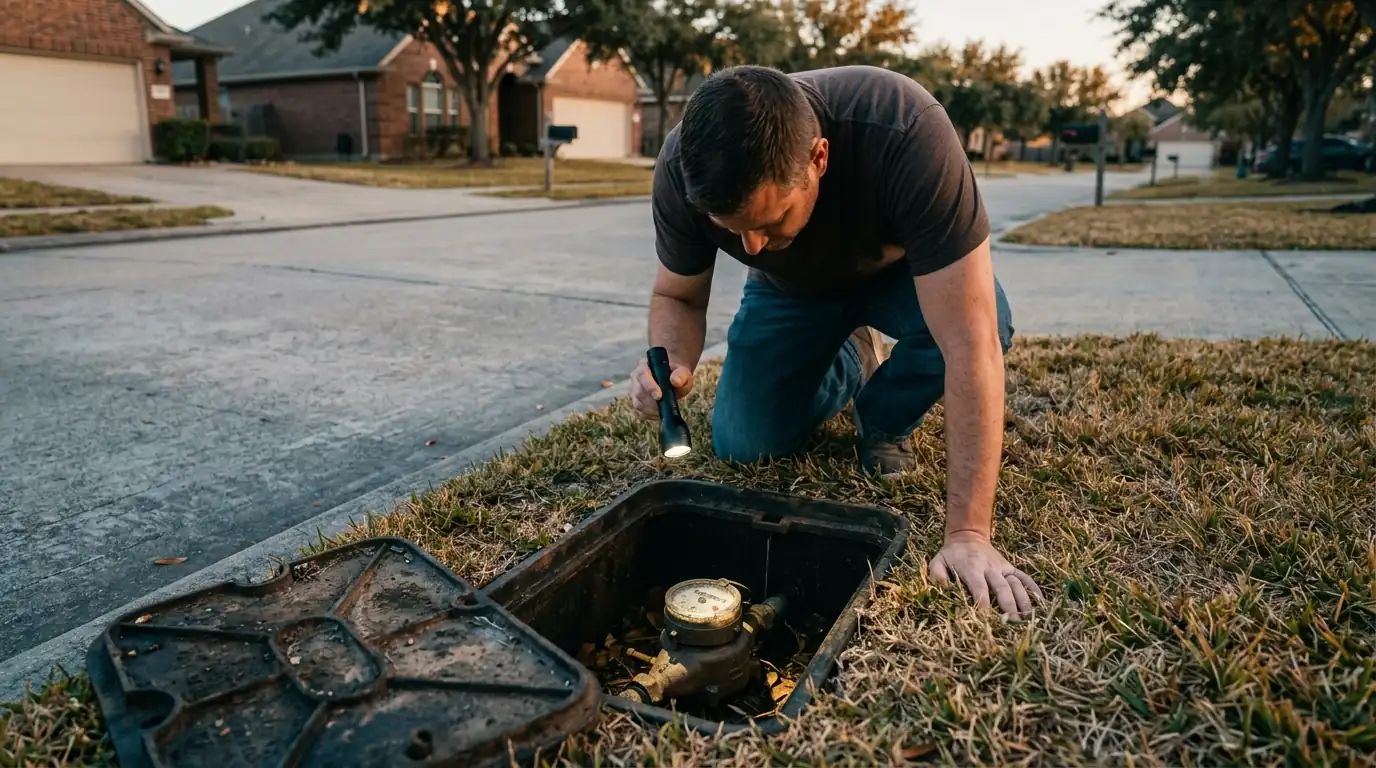
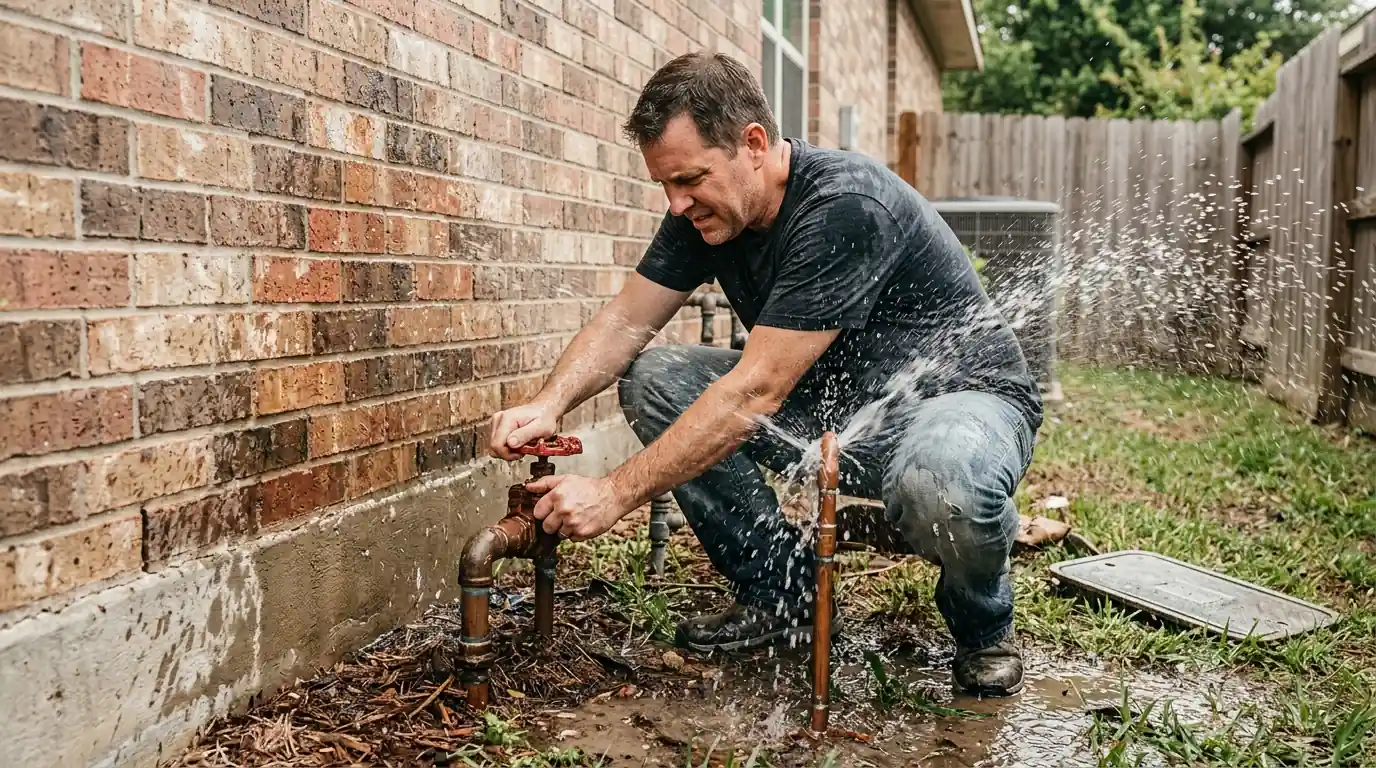
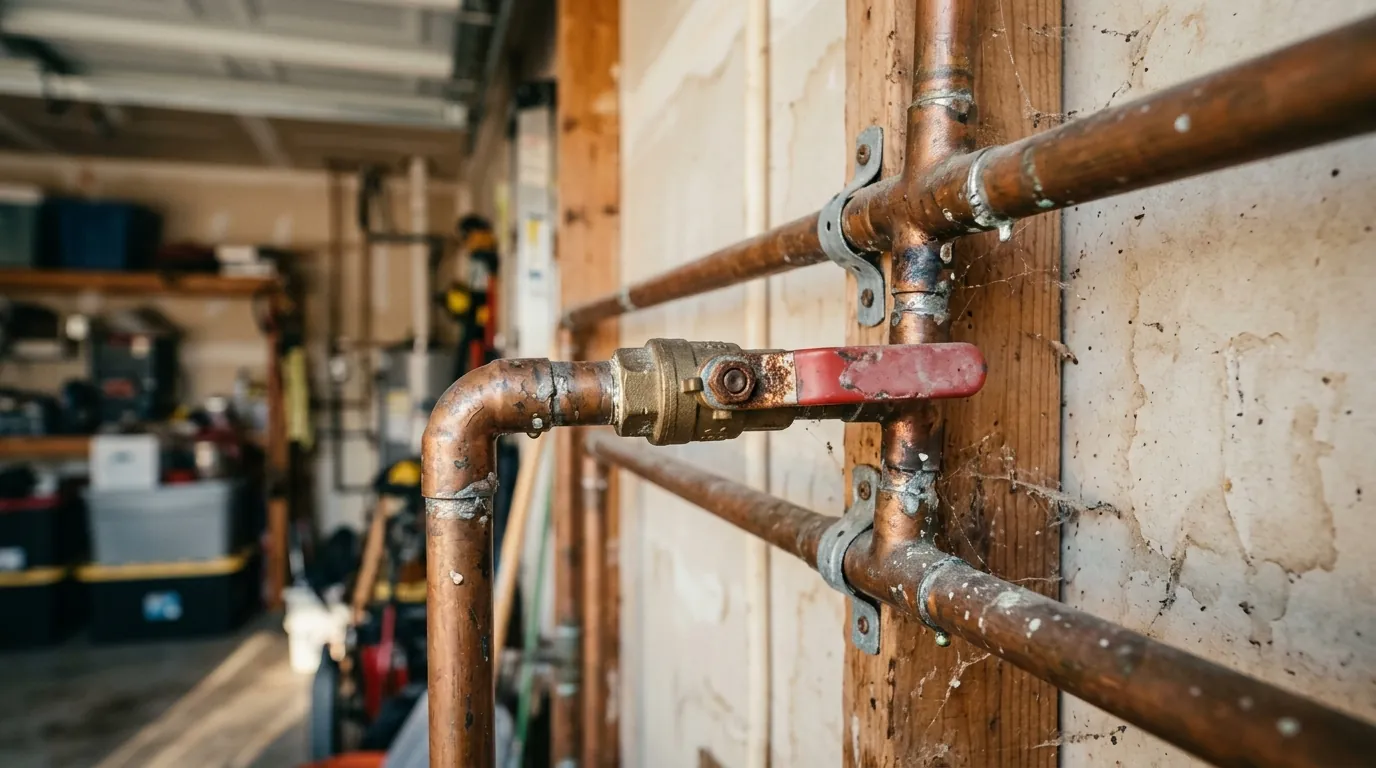
The main shut-off is the one move that changes everything, so learn where yours is before you need it. In most slab homes it sits where the supply line enters the house: in the garage near the water heater, on an exterior wall close to a hose bib, or inside a small box in the ground between the house and the street. Older homes sometimes have a gate valve with a round handle; newer ones use a quarter-turn ball valve with a lever.
Turn a round handle clockwise until it stops. Swing a lever so it sits across the pipe. If the house valve won't move or won't fully close, go to the meter box at the curb, where a curb stop can shut the whole property. A meter key or a long pair of channel locks does the job; don't force a valve so hard that the stem snaps.
Protect the water heater and the electrical
With the main closed, the water heater stops getting new water but keeps firing. Turn a gas unit's control to off or pilot, or switch off the breaker for an electric one, so the burner or elements don't run on a tank that may start to drain.
If water has reached outlets, a ceiling light, the panel itself or anything plugged in, stay out of the wet area and shut the power at the breaker panel only if you can reach it standing on a dry floor. When the panel is in the wet zone, leave it alone and call the electric utility.
Drain the lines and limit the spread
Pressure stays trapped in the pipes after the main is closed, and that leftover water will keep finding the break. Draining it takes a few minutes and keeps the damage from growing.
- Open the lowest faucet in the house, usually a tub or a hose bib, to let the system drain.
- Open a high faucet as well, so air can enter and the lines empty faster.
- Flush toilets once to empty their tanks.
- Move rugs, furniture, electronics and boxes out of the wet area and lift what you can onto blocks.
- Pull standing water with towels, a mop or a wet vacuum, and open the room to air once it's safe.
Rather have a plumber look at it?
Call (281) 845-9645Photograph everything before cleanup goes too far
Insurance claims go better with evidence. Before the floor is dry, take photos and short videos of the break, the wet areas, the ceiling and any damaged belongings. Snap the water meter reading too, and keep any piece of failed pipe or fitting the plumber removes.
Call your insurance agent once the water is stopped, not before. Ask what the policy covers for the pipe repair, water removal and drying, and whether they want their own adjuster to see the damage before anything is torn out.
What the February 2021 freeze taught the region
Burst pipes are rare here in most years, which is exactly why so many households weren't ready in 2021. NWS Houston's February 2021 summary records a Hobby low of 17 degrees on Feb 15 and 15 degrees on Feb 16, both breaking 1951 records, and says the event brought broken pipes to the region. Afterward, a University of Houston Hobby School survey found that 38% of Harris County residents suffered water damage from burst pipes during that storm and 65% were without running water at some point.
Pearland felt the aftermath in its water supply as well. TCEQ required Pearland's public water system to issue a boil water notice on February 16, 2021; it was rescinded February 21, 2021, and residents were told to flush water heaters and lines that had not been used recently. If a freeze ever brings a boil notice again, follow the city's flushing instructions before you drink from the tap.
What we do when we arrive
Our burst pipe repair starts with finding every break, not just the obvious one. A freeze often splits a pipe in more than one place, and a second crack can sit behind drywall until the water comes back on. We cut out the damaged section, join new pipe, then restore pressure slowly and walk the house checking for drips before we leave.
If your main valve wouldn't close or barely turned, that's worth fixing while we're there. A stuck or leaking main is the reason many small breaks turn into big ones, and shut-off valve replacement swaps it for a quarter-turn ball valve you can close with one hand.
When to call, and what to tell us
Call right away if water is still running after you've closed the valves, if the break is in a ceiling or wall you can't see, or if you can't find or close the main at all. Our emergency plumber line is answered 24/7, nights, weekends and holidays.
It helps to tell us where the break is, whether the main is closed, what the pipe looks like (copper, PEX or older galvanized) and whether the water heater is involved. With that, we can talk you through anything still leaking while we head your way.
Repairs this guide points to
- Burst Pipe RepairFreeze-split pipes, Attic supply line breaks
- Emergency PlumberAfter-hours and weekend calls, Burst or split supply line
- Shut-Off Valve ReplacementMain house shut-off, Fixture stops under sinks and toilets
Reader questions
Not until the broken section is repaired. Turning the main back on sends full pressure to the break, and a pipe that froze may have more than one crack. Leave it off and let the repair and a slow repressurize show what else needs attention.
A rubber patch and hose clamp or a push-fit repair coupling can hold a small split on an accessible pipe for a short time. Treat it as temporary, keep the main closed overnight if you can, and have the section properly replaced.
Often you can't. Ice can plug the split until it melts, so a frozen pipe may look fine. Find the main ahead of time, watch exposed lines as they warm, and be ready to close the valve the moment you see water.
Many policies cover sudden water damage from a burst pipe but treat gradual leaks differently, and some limit freeze damage if the home was left unheated. Your agent can confirm, and photos plus the plumber's invoice support the claim.
Yes. Once the main is closed, the tank stops refilling but the burner or elements keep heating. Turning the fuel or power off protects the heater if the tank drains through the break and avoids running it on low water.
Go to the meter box at the street and use the curb stop on the house side of the meter. If that won't turn either, call us at any hour and we'll walk you through other options while we're on the way.
Keep reading
- Freeze-Proofing Pipes After the 2021 StormWhat the February 2021 freeze taught Houston-area homes about attic lines.
- What a Water Heater Replacement Costs in Pearland, TXSourced price ranges, what pushes a quote up, and when repair still makes sense.
- Do You Need a Water Softener in Pearland?What Pearland and Houston water reports say, and softener versus carbon filter.