Quick answer
To check for a leak with your water meter, shut off every fixture and appliance that uses water, write down the full meter reading, wait two hours without using any water, then read it again. If the number has changed, water is escaping somewhere between the meter and your fixtures, and the next step is to narrow down where.
Why the meter is the first tool to reach for
The meter counts every drop that passes into your property, whether you use it or not. That makes it the cheapest leak detector you own. A running toilet, a dripping hose bib, a cracked line in the yard and a leak under the slab all show up the same way: the meter keeps counting when the house is quiet.
It matters more on the Gulf Coast than in many places. According to a University of Houston CIGMAT presentation, Gulf Coast expansive clays shrink with moisture loss and swell with moisture gain, and that the City of Houston normally experiences 12 waterline breaks a day. The same soil movement works on the private lines under your yard and slab, and those leaks often stay out of sight.
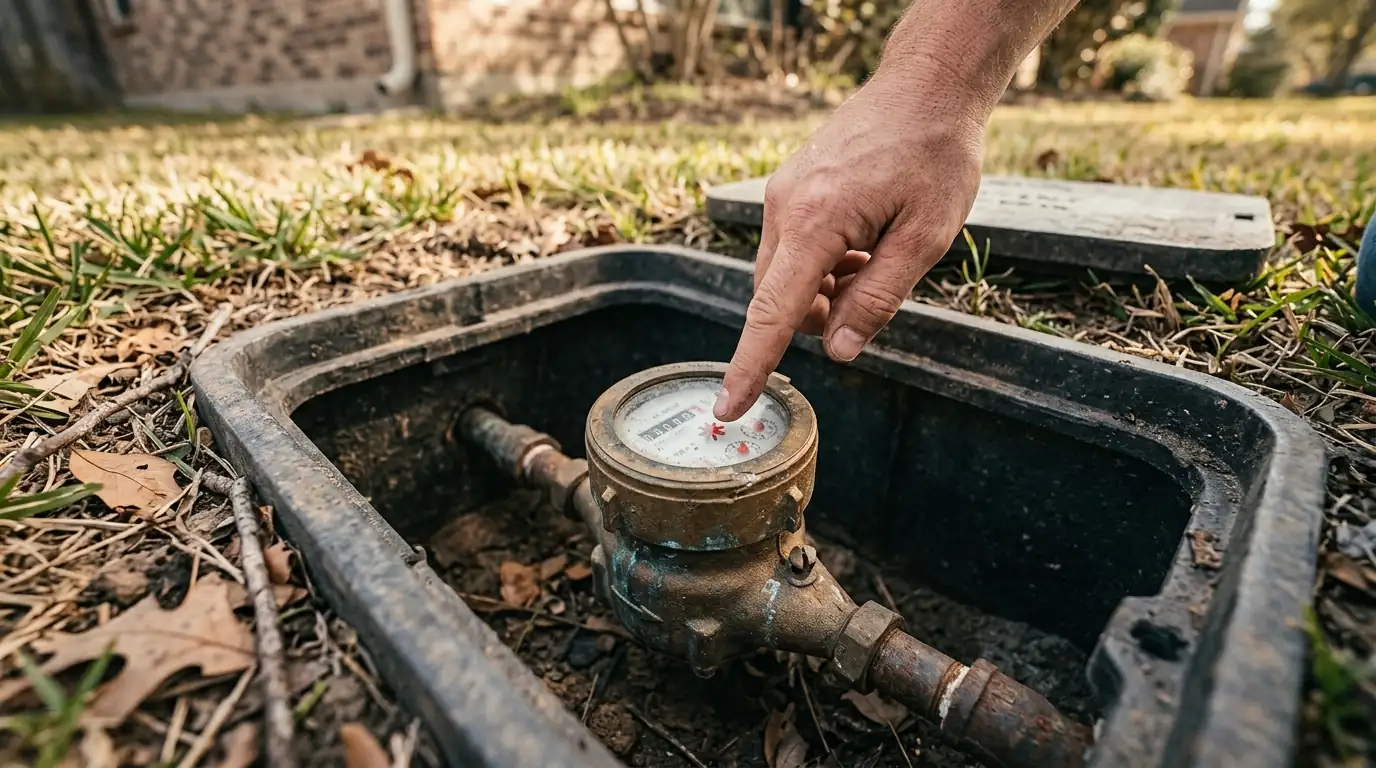
Finding the meter box at a Pearland home
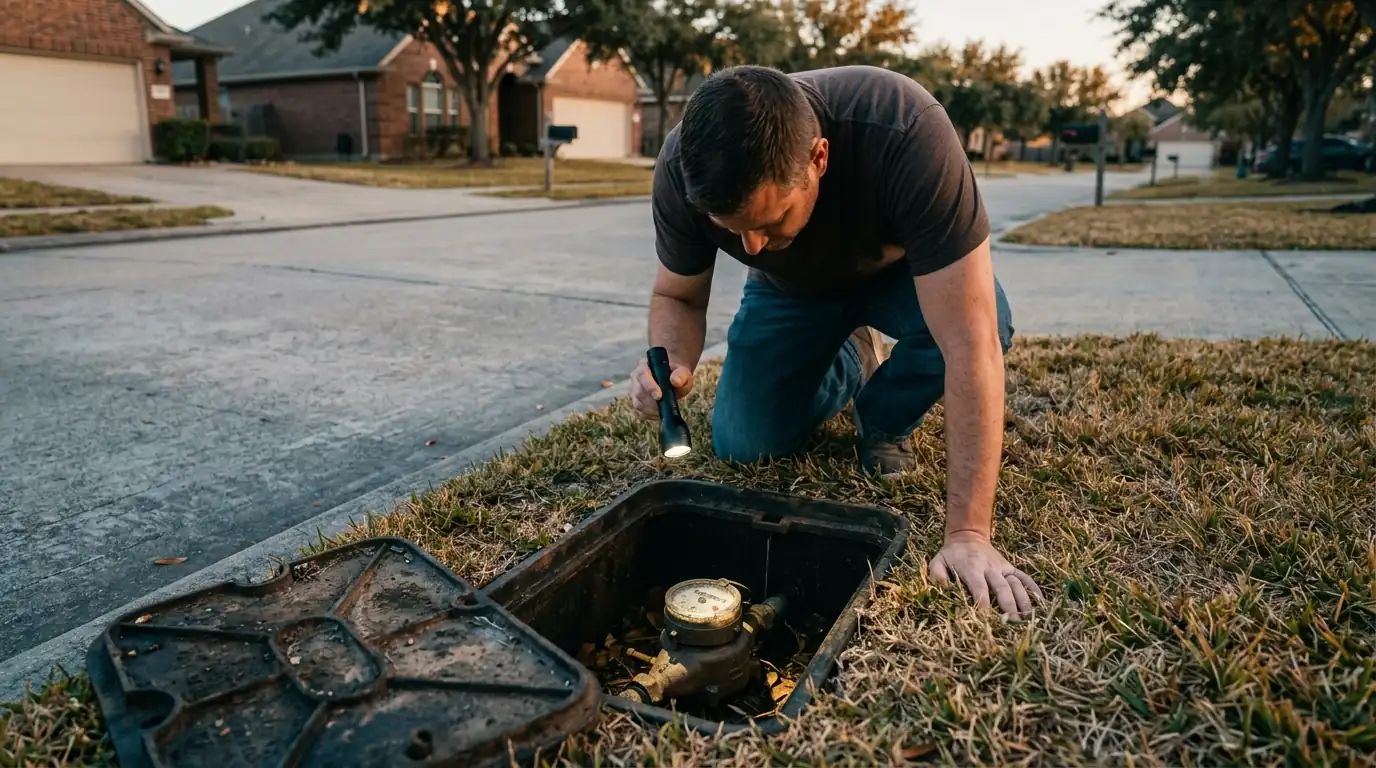
At most single-family homes the meter sits in a rectangular box at ground level near the street, usually close to the property line in the front yard or by the sidewalk. The lid may be plastic or metal, and grass or mulch often hides it. Lift it carefully with a screwdriver or meter key, and check for wasps, fire ants or standing water before reaching in.
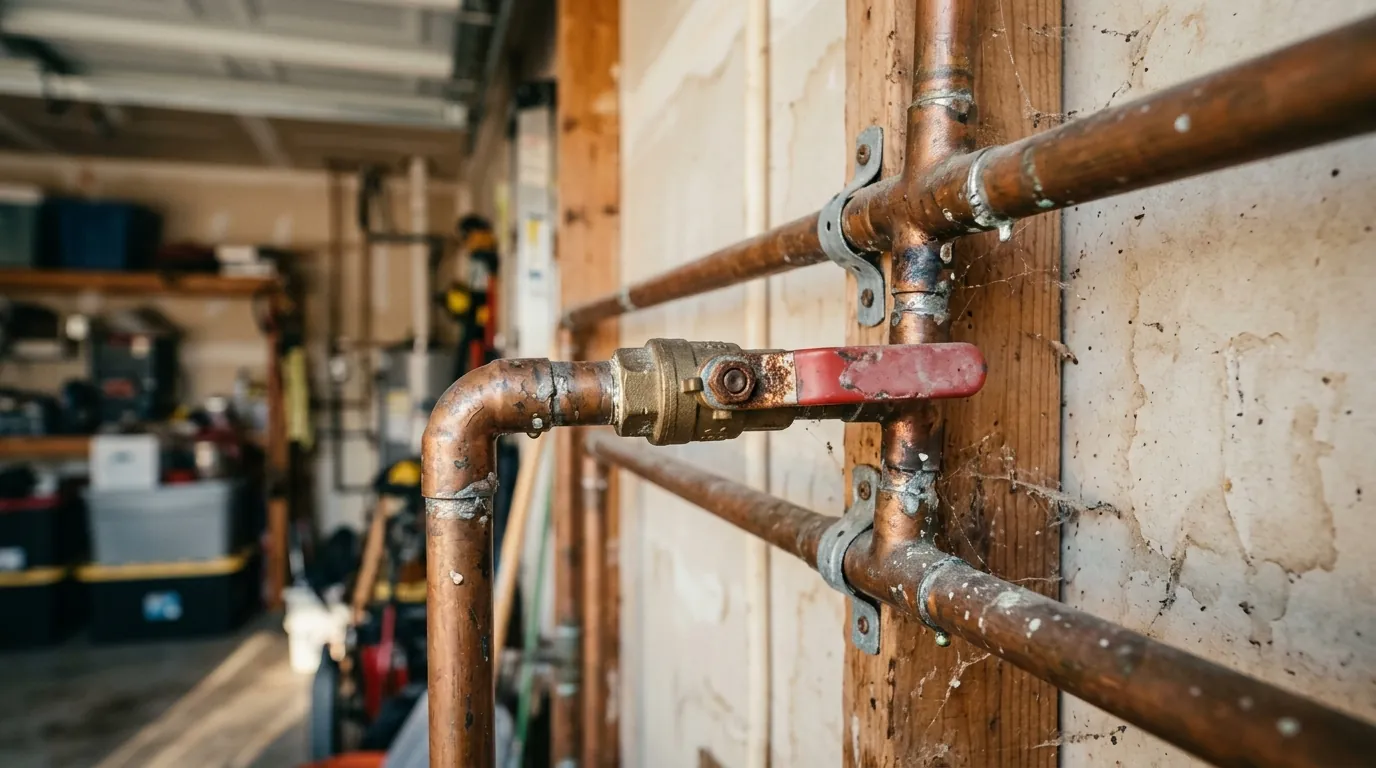
Inside you'll find the meter body and, often, a curb valve on the city side. Leave that valve alone; it belongs to the water utility. Your own main shutoff is usually where the line enters the house, often in the garage or near an outside wall.
Reading the dial and the leak indicator
Wipe the lens clean. Most residential meters show a row of numbers like a car odometer, plus a sweep hand or a digital display that tracks small amounts. Many also carry a leak indicator: a small triangle, star or gear that spins with even a tiny flow. Some digital meters show a flashing faucet icon instead.
Check the face for the unit of measure. Meters read in gallons or in cubic feet; one cubic foot equals 7.48 gallons. Write down every number on the register, including the fixed zeros, so your before and after readings line up.
Rather have a plumber look at it?
Call (281) 845-9645Running a two-hour leak test, step by step
Pick a time when nobody needs water, such as during a workday or late in the evening. Then work through these steps in order:
- Shut every faucet, shower and appliance, and make sure the dishwasher, washer and ice maker aren't mid-cycle
- If you have a water softener or irrigation controller, confirm neither is scheduled to run during the test
- Watch the leak indicator for a full minute and note whether it moves at all
- Write down the full meter reading and the time
- Wait two hours without running any water inside or outside
- Read the meter again; any change means water went somewhere
Narrowing the leak down: inside, outside or under the slab
If the meter moved, split the system in half. Close your main shutoff at the house and watch the meter. If it still moves with the main closed, the leak is on the line between the meter and the house, buried in the yard. That's a job for water line repair, and it often shows up as a soggy patch of lawn or a sunken spot.
If the meter stops when the main is closed, the leak is inside. Toilets are the most common source: put a few drops of food coloring in the tank, wait 15 minutes without flushing, and look for color in the bowl. Check the water heater relief line, the softener drain and every hose bib. If all of those are dry and the meter still moves with the main open, the leak may be in a wall or under the slab. A warm spot on the floor points to the hot side; our slab leak repair page covers the other signs.
Reading your bill alongside the meter
Your water bill lists the reading and the amount used for each billing period. Compare the same month across two or three years, since summer irrigation pushes usage up every year. A jump that doesn't follow the season, the number of people in the house or a new appliance is worth a meter test.
For the 2023 reporting year, the city's water quality report lists 12 sources, made up of 10 groundwater wells in the Evangeline and Chicot aquifers plus surface water from the City of Houston and the Gulf Coast Water Authority through two connection points. All of it reaches your house through that one meter, so if a reading looks wrong, call the utility first; they can re-read the meter or check it for errors.
When to stop testing and call a plumber
A homeowner can find a running toilet or a dripping outdoor faucet in an afternoon. Leaks inside walls, under the slab or deep in the yard are a different matter. Guessing at those means opening the wrong section of floor or lawn.
Call when the meter moves with every fixture off and you can't find the source, when the leak indicator spins fast, or when you hear running water with nothing on. Our leak detection work uses listening equipment, pressure isolation and thermal imaging to mark the spot before anything is cut. We answer 24/7.
Repairs this guide points to
- Leak DetectionHigh water bill with no visible leak, Electronic slab leak location
- Slab Leak RepairSpot repair through the slab, Rerouting through the attic or walls
- Water Line Repair & ReplacementLeak between the meter and the house, Low pressure from an old service line
Reader questions
Two hours is a good balance. It's long enough to catch a slow leak and short enough to keep everyone off the water. For a fast check, watch the leak indicator for a full minute; any steady movement with everything off means water is escaping.
Yes, most likely a small one. The indicator responds to flow too small to move the main register quickly. Run the two-hour test to see the numbers change, then start with toilets and outdoor faucets, which are the usual sources.
Yes, during regeneration a softener sends water to the drain for a while. If your test overlaps a regeneration cycle, the meter will move. Check the softener's schedule, or put it in bypass, before you start the test.
Generally yes, but be careful. Lift the lid slowly and watch for wasps, fire ants, spiders and snakes. Don't touch the curb valve or the meter fittings, which belong to the utility, and close the lid fully when you're done.
In most cities the line on the house side of the meter belongs to the homeowner, and the utility owns the meter and the street side. Confirm with your water provider, since local rules decide who handles which part of the line.
Digital meters show the reading on a screen that may need light to wake up. Many show a flow rate and a leak icon. A flow rate above zero with everything off means water is moving. Follow the same two-hour test using the displayed total.
Keep reading
- Burst Pipe in Pearland: What to Do FirstThe first ten minutes: the valve, the heater, the lowest faucet, then the call.
- What a Water Heater Replacement Costs in Pearland, TXSourced price ranges, what pushes a quote up, and when repair still makes sense.
- Backflow Testing Rules in Pearland, ExplainedWho needs an annual test, what the city expects, and what a failed test means.