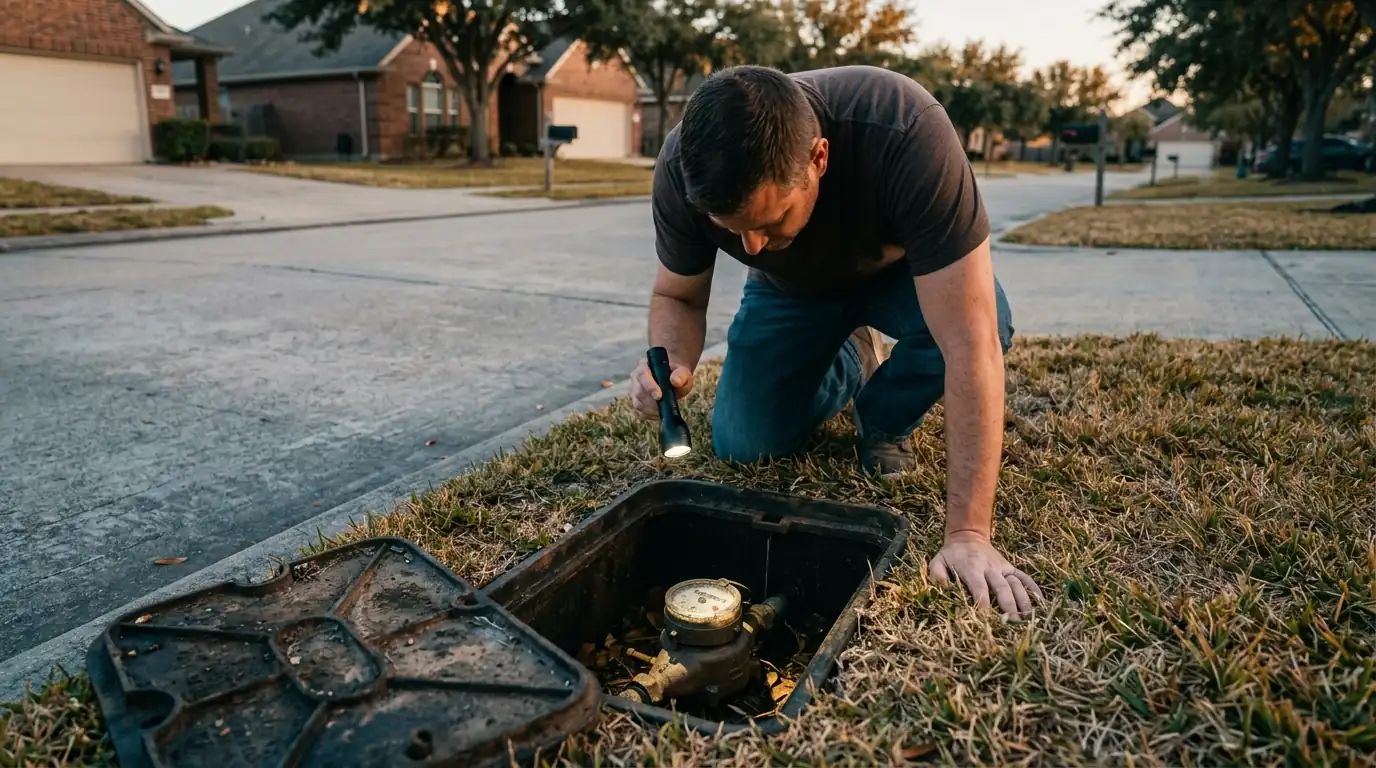
Quick answer
Many Pearland homes benefit from a softener, but the city's water report alone won't settle it for you. It lists total dissolved solids averaging 321 ppm, chloramines as the primary disinfectant, and a supply that includes 10 groundwater wells plus Houston surface water. A hardness test at your own tap tells you whether scale is the problem, and a softener does nothing for chloramine taste.
What Pearland's water report actually measures
Start with where the water comes from. The city's report for the 2023 reporting year lists 12 sources, made up of 10 groundwater wells in the Evangeline and Chicot aquifers plus surface water from the City of Houston and the Gulf Coast Water Authority through two connection points. Your tap water is a blend of well water and treated surface water, not one single source.
The same report lists total dissolved solids averaging 321 ppm (range 321-522 ppm) for the city system, versus 271 ppm in the City of Houston supply. TDS counts everything dissolved in the water. That includes calcium and magnesium, the minerals that form scale, plus sodium, chloride and others that don't. A higher TDS number hints at hardness, but it isn't a hardness reading.
Hardness figures from the Houston side of the supply
Houston's 2025 Water Quality Report says its main system is 90.3% surface water, with total hardness averaging 135.5 ppm (range 43.5-229) and TDS averaging 260 ppm. Since part of Pearland's supply comes from Houston, those numbers make a useful reference point. They still describe Houston's system, not your kitchen faucet.
Softener sizing charts usually work in grains per gallon. To convert, divide a ppm hardness reading by 17.1. Then test your own water: hardware-store strips are fine for a first look, and a drop-count kit or a lab test gives a number solid enough to size equipment from.
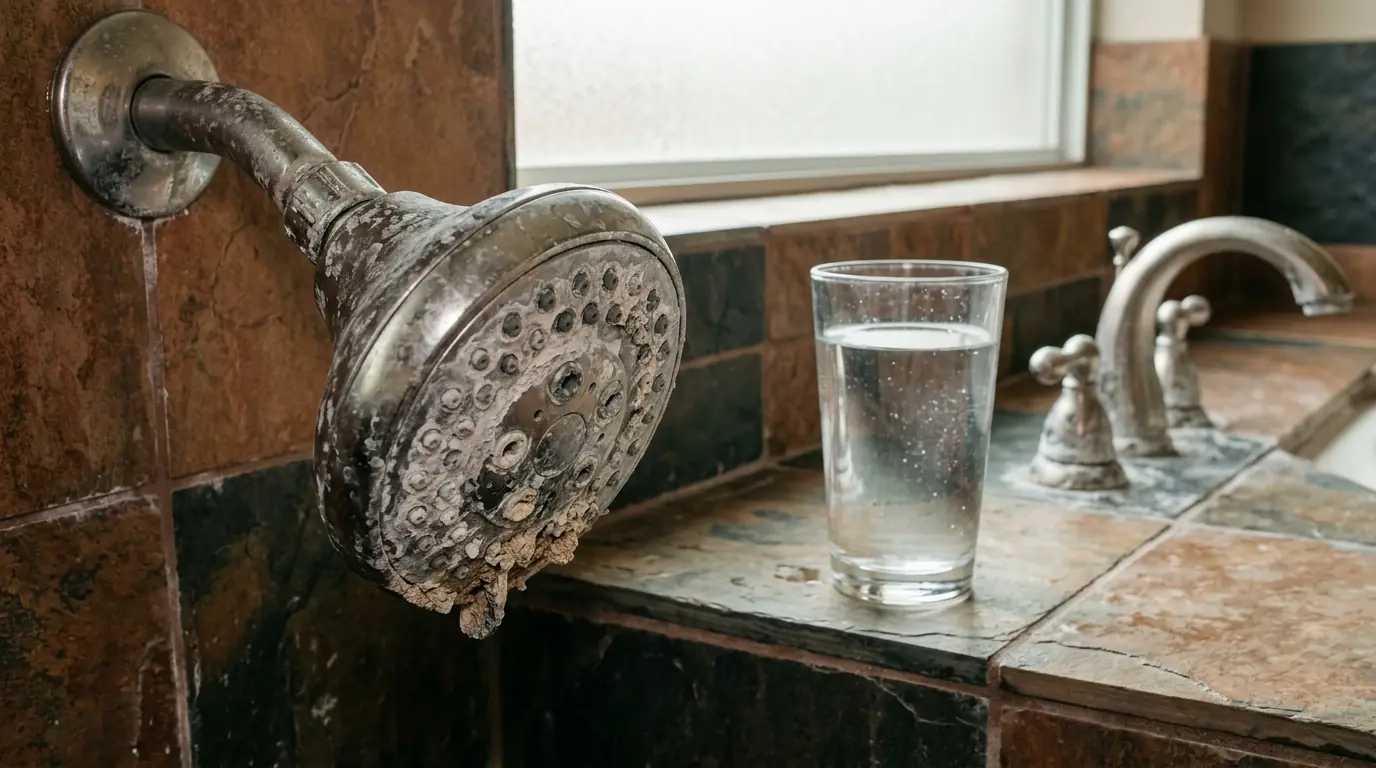
Five signs scale is already building in your house
Hard water works slowly, so the evidence piles up in places you don't check every day. If two or three of these show up and a test confirms hardness, a softener is worth pricing. If your main complaint is a chemical taste, look at filtration instead. Start with these spots:
- White crust on faucet aerators and showerheads
- Spots on glasses and shower doors that return right after cleaning
- A tank water heater that pops or rumbles while it heats
- Soap that lathers poorly and leaves a film on skin and tubs
- Weak flow from fixtures with tiny openings, like handheld sprayers
Rather have a plumber look at it?
Call (281) 845-9645Chloramines: the part a softener doesn't touch
Pearland's report lists chloramines as the primary disinfectant, at an average of 3.143 ppm, and Houston's report shows chloramines averaging 2.8 ppm. Chloramine keeps water safe across miles of main. Some people dislike the taste, though, and over time it wears on rubber parts such as toilet flappers and faucet washers.
An ion-exchange softener swaps hardness minerals for sodium or potassium. It leaves chloramine in place, and chloramine can slowly break down softener resin. Catalytic carbon is the media made for chloramine, which is why many setups put a carbon tank ahead of the softener. A whole-house filtration system treats every tap; an under-sink unit treats one.
Softener, carbon or reverse osmosis: matching the fix to the problem
Each system solves a different problem. Choose by what you see on your fixtures and taste in the glass, not by the longest feature list.
A reverse osmosis system makes the most sense when the TDS number is what bothers you, since neither a softener nor carbon lowers it much. Here is how the options line up:
- Softener: removes calcium and magnesium, stops new scale, adds a small amount of sodium, and needs salt plus a drain
- Whole-house catalytic carbon: cuts chloramine taste and odor at every tap, but leaves hardness alone
- Reverse osmosis under the kitchen sink: lowers dissolved solids in drinking and cooking water, sends some water to drain, and fills slowly
- Carbon, then softener, then RO at one sink: the full stack for homes that want all three results
Living with a softener once it's in
A softener needs a few minutes of attention each month. You keep the brine tank stocked, break up any salt bridge, which is a hard crust that stops brine from forming, and set the hardness value the control head uses to time regeneration. Set too low, the unit passes hard water. Set too high, it burns through salt.
Placement matters too. The tank wants a level floor, a drain within reach and an outlet near where the main enters the house, which is often the garage in a slab home. When we handle water softener installation, we add a bypass valve, an air gap on the drain line and, if you want it, a loop that keeps the hose bibs on unsoftened water for the yard.
When a softener is the wrong buy
Skip it if your hardness test comes back low, if your only complaint is taste, or if you're on a sodium-restricted diet and don't want to run potassium chloride. Conditioners that use no salt come up a lot here. They change how minerals behave so less scale sticks, but they don't remove hardness, and results vary from house to house.
Homes on a private well, or in Friendswood and other towns served by a different water supplier, should start from that supplier's report or a well test. The figures above describe the Pearland and Houston systems only.
Repairs this guide points to
- Water Softener InstallationSoftener sizing, Loop and bypass installs
- Whole-House Water FiltrationChloramine-rated carbon, Sediment pre-filters
- Reverse Osmosis System InstallationUnder-sink reverse osmosis, Refrigerator and ice maker tie-ins
Reader questions
Test your own tap to know for sure. Pearland's report lists total dissolved solids averaging 321 ppm, and the Houston supply that feeds part of the system averages 135.5 ppm hardness, a level where scale shows up on fixtures and heater parts over time.
No. Softeners remove hardness minerals, not disinfectant. The taste comes from chloramine, which takes catalytic carbon to reduce. Many homes put a carbon tank ahead of the softener, and that also protects the softener resin from slow chloramine damage.
Rarely at moderate hardness. The sodium added rises with how hard the water was to begin with. If sodium is a concern, run potassium chloride instead of salt, or keep one unsoftened tap for drinking, often paired with an RO unit.
Some homeowners do, but it means cutting into the main line, adding a bypass and running a drain line with a proper air gap. A mistake can flood a garage or let drain water reach the supply, so call us if any step is unclear.
Run a hardness strip at a bathroom sink. If the reading climbs, check the salt level, break up any bridge and confirm the hardness setting. A unit with salt in the tank that still passes hard water may need a valve or resin repair.
In a hard-water home, yes. Minerals drop out as scale in the bottom of a tank and coat electric elements, which causes popping noises and longer heating cycles. Softened water slows that buildup, though a tank still benefits from a periodic flush.
Keep reading
- Burst Pipe in Pearland: What to Do FirstThe first ten minutes: the valve, the heater, the lowest faucet, then the call.
- What a Water Heater Replacement Costs in Pearland, TXSourced price ranges, what pushes a quote up, and when repair still makes sense.
- Freeze-Proofing Pipes After the 2021 StormWhat the February 2021 freeze taught Houston-area homes about attic lines.