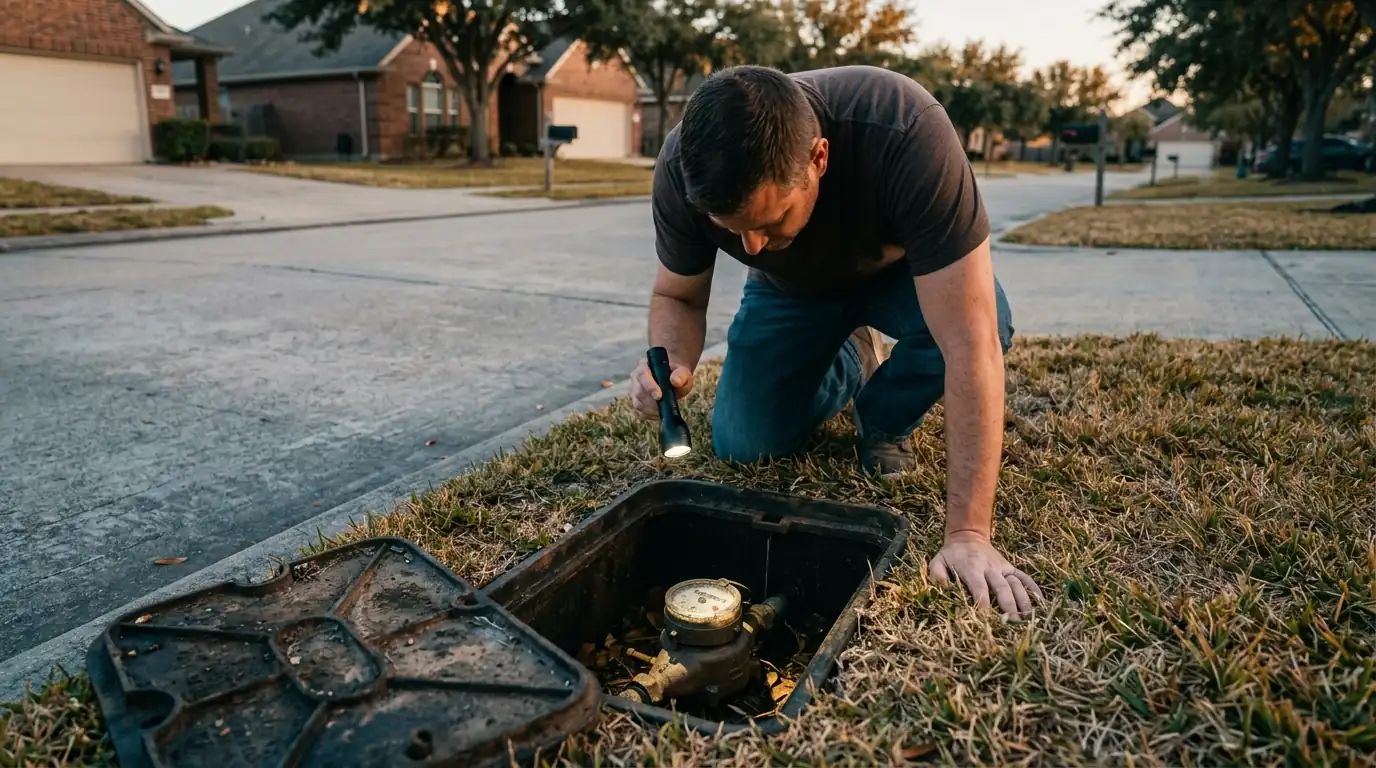
Quick answer
The surest sign of a slab leak is a water meter that keeps moving while every fixture in the house is off. Other clues include a warm strip on tile, the sound of running water near the floor, damp flooring with no pipe above it and a bill that climbs without a change in use. One clue proves little; two together deserve a test.
Why pipes under Pearland slabs give way
Under a slab foundation, the copper or PEX supply lines run through the soil, out of sight and out of reach. When one of those lines opens up, the water has nowhere obvious to go, so the signs show up slowly and in odd places.
The soil is a big part of the story. The USDA's Lake Charles soil series forms in clayey deposits of the Beaumont Formation, is extensive in Southeast Texas, has very slow permeability and develops cracks 1 to 5 cm wide reaching 30 cm or more when dry. Writing in the Houston Geological Society Bulletin, one author notes that Houston sits largely on the Beaumont Formation and that structures on its expansive soils have built-in construction and maintenance problems.
Research presented through the University of Houston adds that Gulf Coast expansive clays shrink with moisture loss and swell with moisture gain, and that the City of Houston normally experiences 12 waterline breaks a day. Pipe under your slab rides the same movement. A thin spot in old copper or a stressed fitting can hold for years, then fail after a long dry spell or the first soaking rain that ends one.
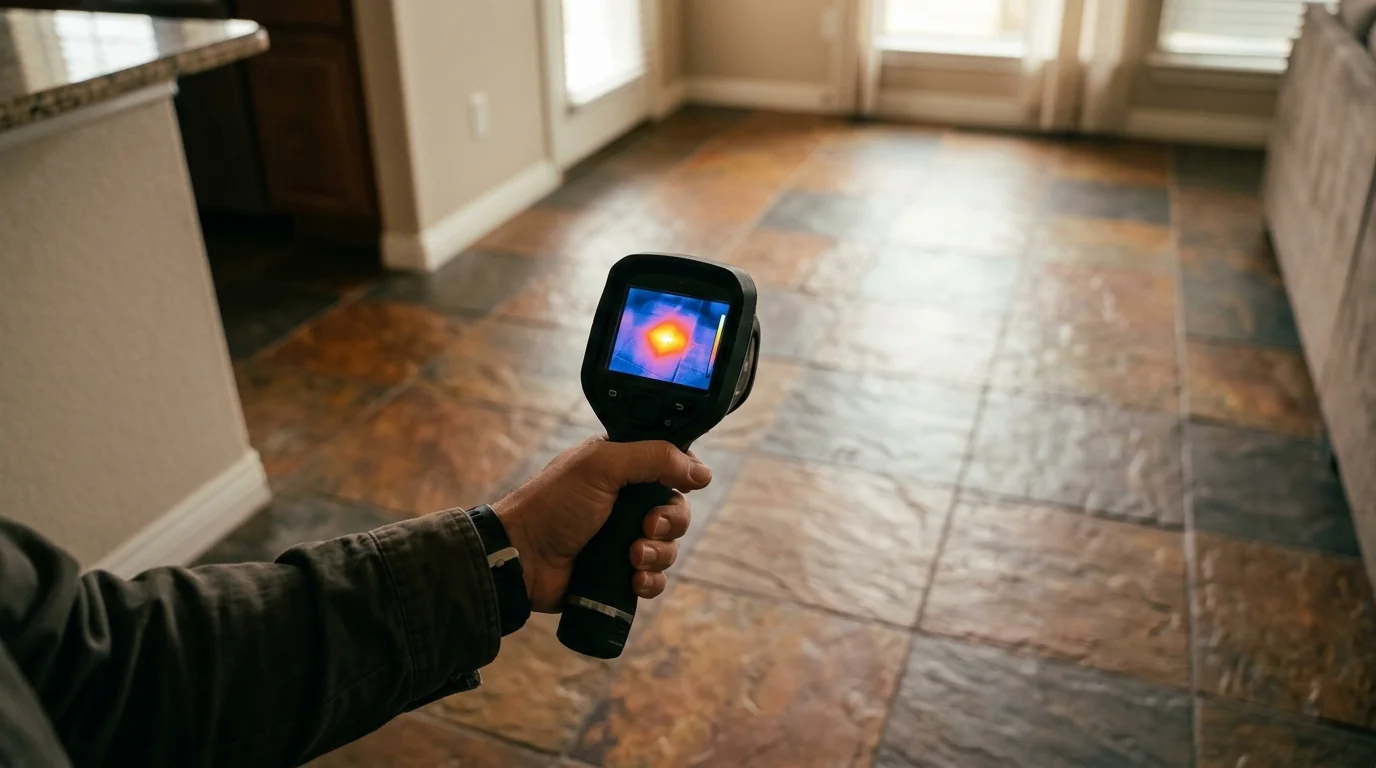
Clues you can see, hear and feel in the house
Slab leaks rarely announce themselves with a puddle. Water under concrete spreads sideways, soaks into the clay or wicks up through hairline cracks, so the first clues tend to be subtle. Walk the house barefoot and listen at night, when everything else is quiet.
- A warm or hot patch on tile or concrete, sometimes in a strip between the water heater and a bathroom
- Running or hissing water you can hear near the floor with every fixture off
- Damp carpet pad, cupping wood planks or swollen baseboards where no pipe runs in the wall above
- A musty smell or mildew along one wall that returns after cleaning
- A water heater that fires more often than it used to
- Weak pressure or slow hot water at one group of fixtures
Run the water meter test yourself
Your meter is the most honest witness in the house, because it counts every gallon that comes in whether you can see the leak or not. The test takes about half an hour and needs nothing more than a flashlight.
- Turn off every faucet, the dishwasher, the washing machine, the ice maker and any sprinkler zones.
- Lift the meter box lid near the street and find the leak indicator, usually a small triangle or star-shaped dial.
- If the indicator turns with the house quiet, write down the full reading, then wait 30 minutes without using any water.
- A higher reading after the wait means water is leaving the system somewhere.
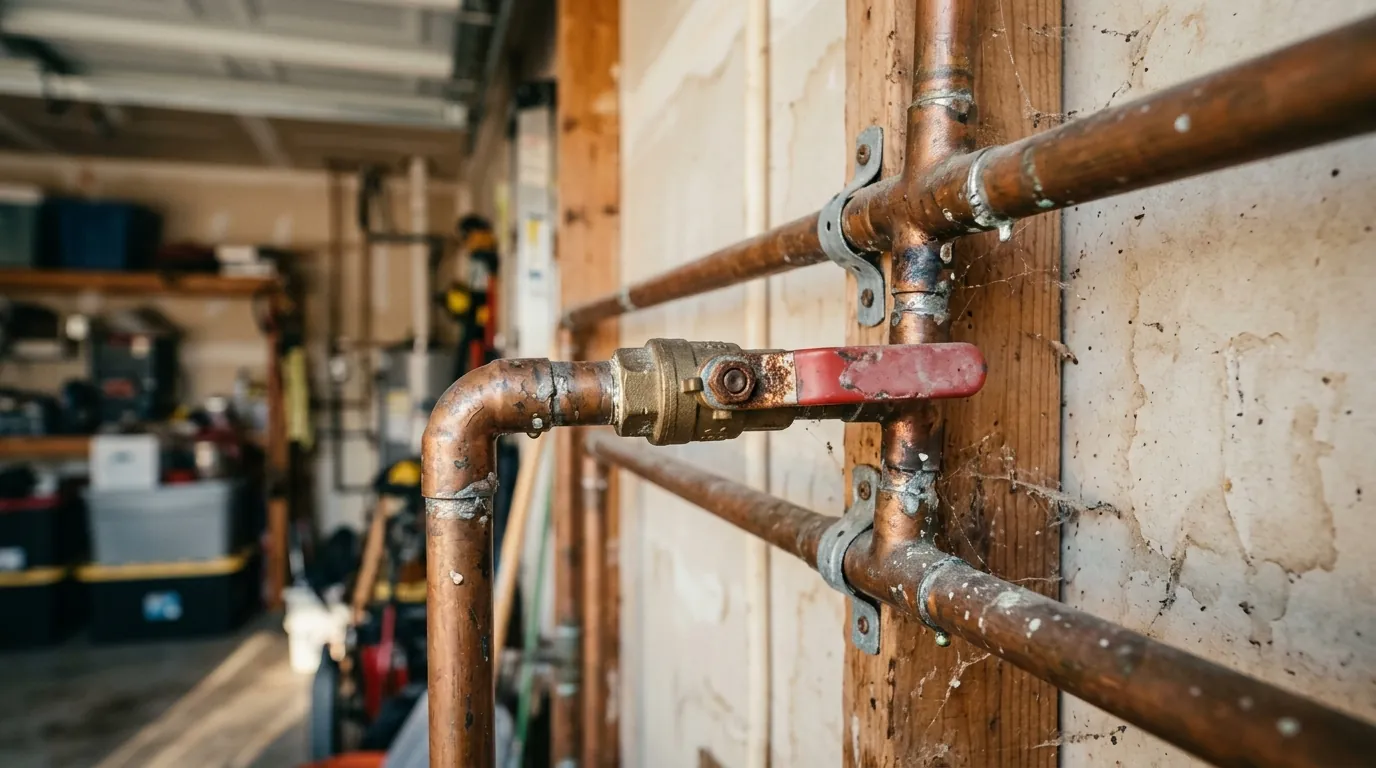
- Close the main shut-off at the house and look again: if the dial stops, the leak is inside; if it keeps turning, suspect the yard line between the meter and the house.
Rather have a plumber look at it?
Call (281) 845-9645Clues that point somewhere other than the slab
Rule out the easy suspects before you assume the worst. A toilet with a worn flapper can move the meter all day without a sound; put a few drops of food coloring in the tank and see whether color reaches the bowl within 15 minutes without a flush. A sprinkler valve that won't seat, a dripping relief valve on the water heater or a weeping supply hose under a sink can do the same.
Cracked tile or a sticking door is another false alarm. Those point to foundation movement, which may or may not involve plumbing. Stains on drywall, bubbling paint or a ceiling spot usually mean a leak in a wall or the attic, not under the floor.
Hot side or cold side: why it changes the clues
Every slab home has two pressurized systems under the floor, and the one that's leaking shapes what you notice. Leaks on the hot side warm the concrete above them, keeps the water heater cycling and raises the gas or electric bill along with the water bill. You may feel heat through tile in a line that follows the pipe.
On the cold side there's no warmth to follow. It tends to show up as a meter that never rests, damp flooring or a pressure drop. To check the hot side yourself, open the main again and close the cold supply valve on top of the water heater. If the meter stops, the leak is almost certainly on the hot side.
How we pin down the spot before cutting concrete
Opening a slab on a guess wastes concrete and flooring. Our leak detection starts by isolating the hot and cold sides with pressure gauges, then uses electronic listening gear and thermal imaging to narrow the leak to a small area of floor. You see the readings and the mark before anything is cut.
Once the spot is marked, the choice is repair or reroute. Slab leak repair can mean opening the floor at the mark and splicing in new pipe, or capping the line and running a new one through the attic and walls. When a house has had two or three slab leaks on aging copper, the honest conversation turns to whole-house repiping, because the rest of the line is the same age and wall thickness.
What to do tonight while you wait for a test
A suspected slab leak is rarely a flood, but it shouldn't wait for a convenient week either. Water under a slab keeps soaking the clay and can carry away soil the concrete rests on.
If the clues point to the hot side, close the cold valve at the water heater and set a gas heater to vacation or pilot, or switch off the breaker for an electric one. Lift rugs off damp spots, photograph the meter readings and any damage for your insurance file, and call us. We answer 24/7 and can talk through next steps on the phone.
Repairs this guide points to
- Slab Leak RepairSpot repair through the slab, Rerouting through the attic or walls
- Leak DetectionHigh water bill with no visible leak, Electronic slab leak location
- Whole-House RepipingPolybutylene pipe replacement, Galvanized pipe replacement
Reader questions
No. Pressurized water keeps pushing through the opening, and the flow usually grows as the edges wear. A leak that seems to stop has often found a new path into the soil, so the meter test is the only reliable check.
Not by itself. Cracked tile, sticking doors and drywall cracks are signs of foundation movement, which a leak can cause but dry clay can cause too. Pair those signs with a meter test before deciding which trade to call first.
Clay under the slab shrinks as it dries and swells again when rain returns. Pipes bedded in that soil flex with it, and a joint or thin wall that has been under strain for months often gives way once the ground moves back.
Usually, if the meter moves slowly and nothing is visibly wet. Go easy on hot water if you suspect the hot side. If water is surfacing through the floor, close the main and call us right away, at any hour.
Policies differ on that point. Some pay for access and the resulting water damage but not the pipe itself, and others exclude gradual leaks. Call your agent with the specifics, and keep the meter readings and photos you collected.
Newer homes often use PEX, which flexes better than copper, but fittings can still fail and lines can be nicked during construction. The soil moves under new slabs as well as old ones, so the same warning signs apply.
Keep reading
- Do You Need a Water Softener in Pearland?What Pearland and Houston water reports say, and softener versus carbon filter.
- Repiping an Older Pearland Home: What to ExpectSigns your pipes are due, PEX versus copper, and how a repipe day runs.
- Freeze-Proofing Pipes After the 2021 StormWhat the February 2021 freeze taught Houston-area homes about attic lines.